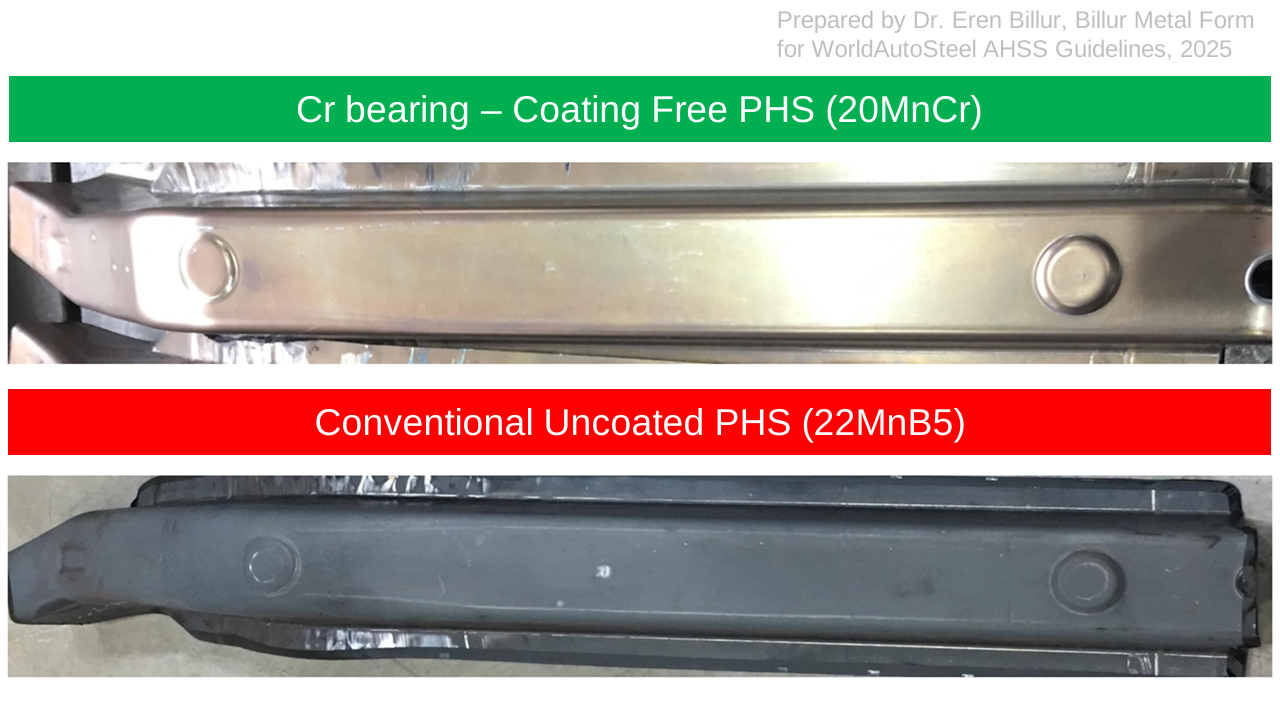
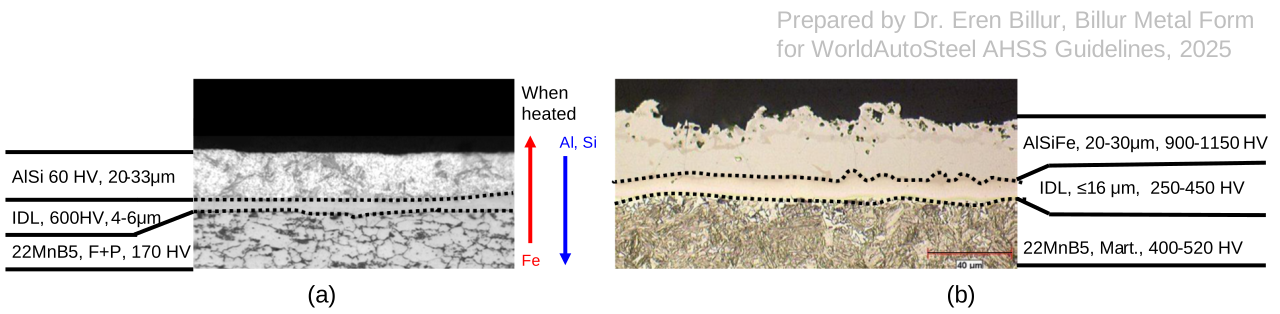
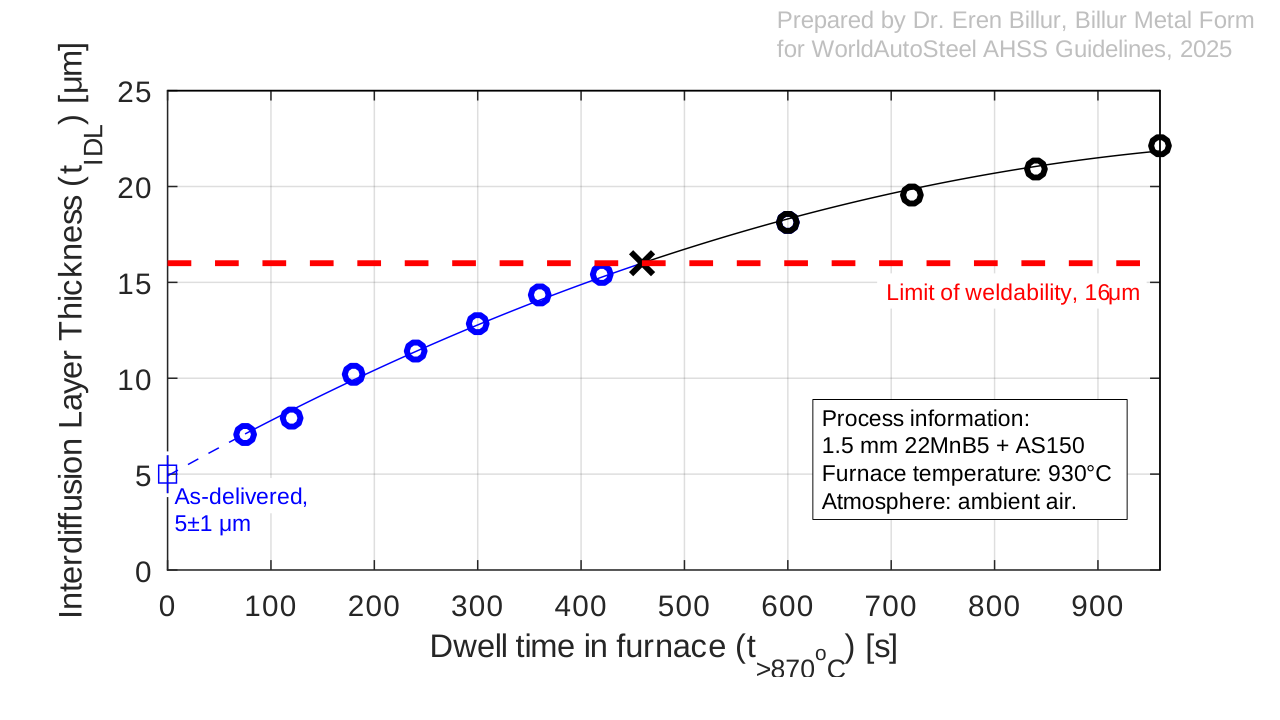
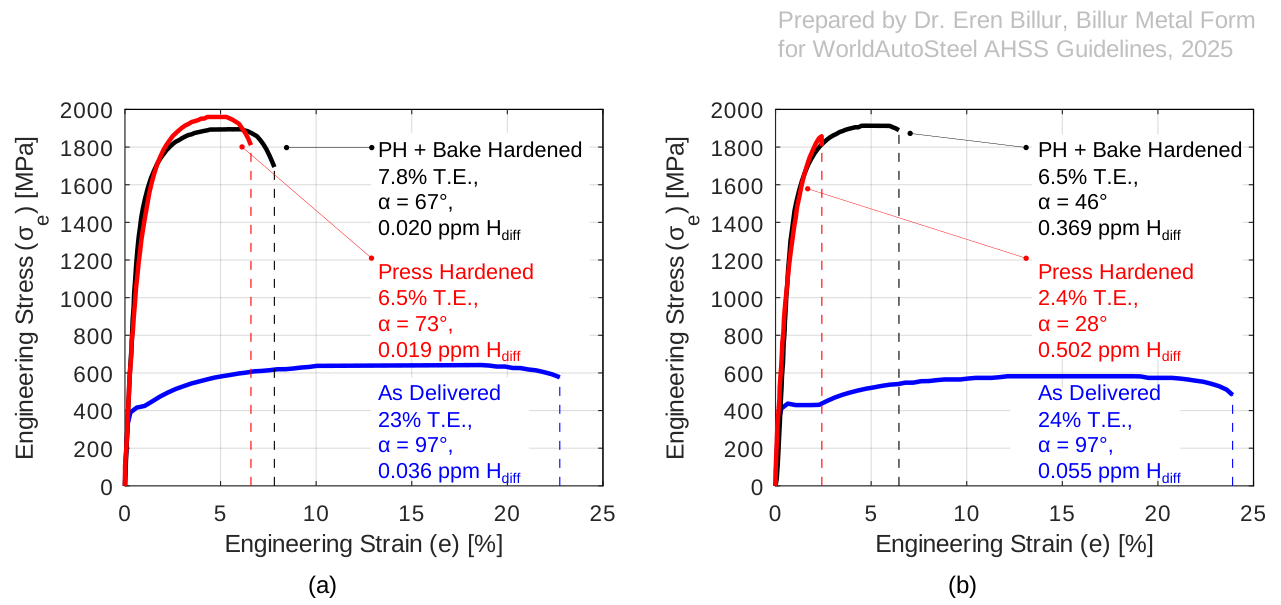
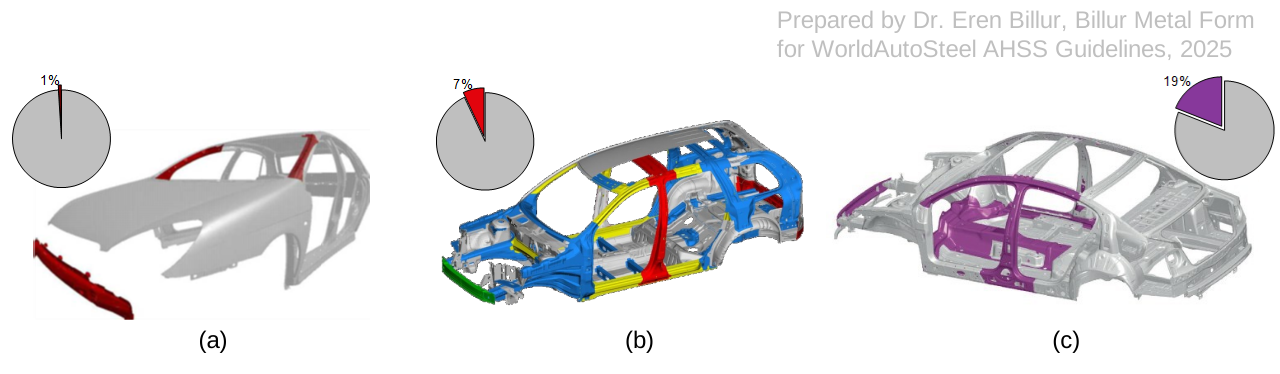
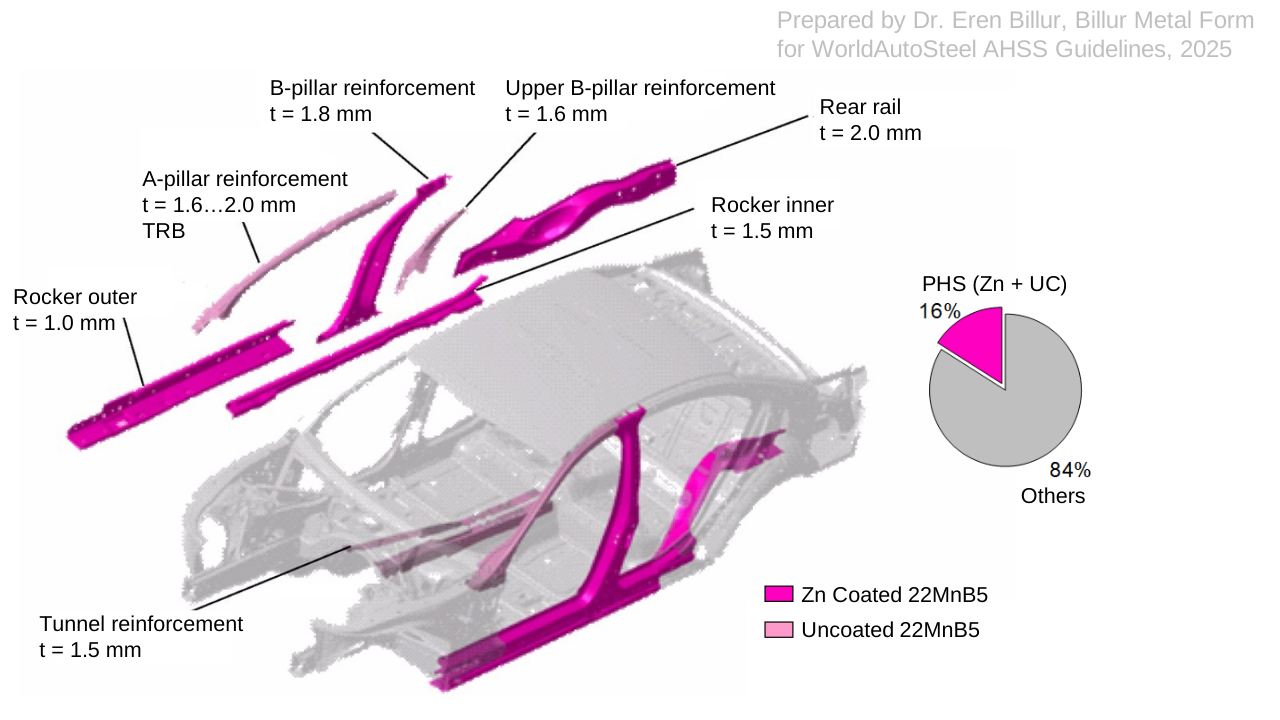
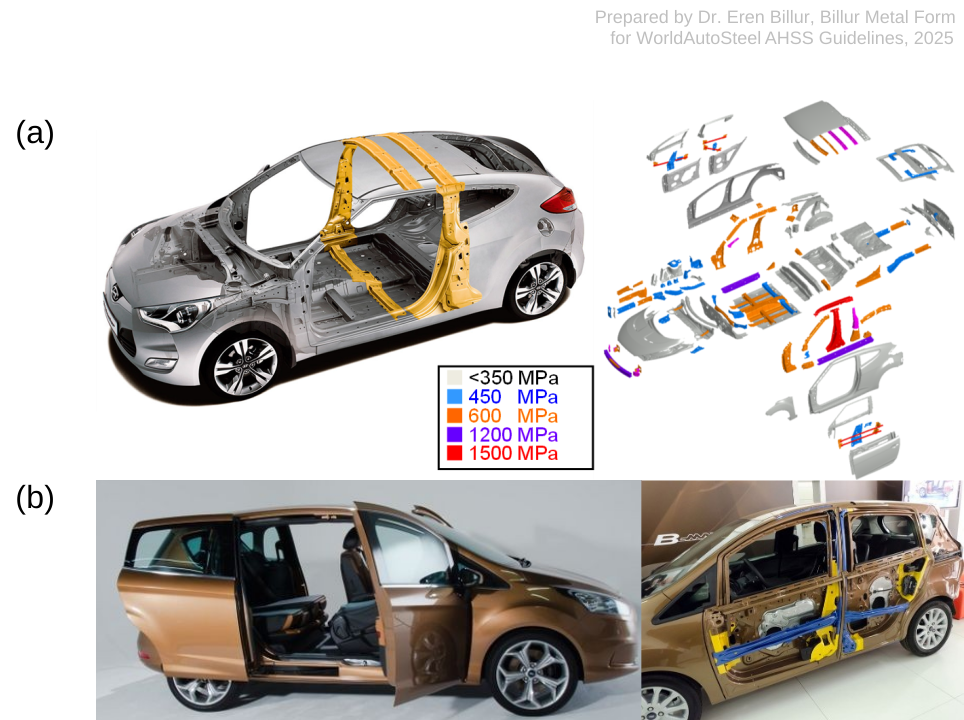
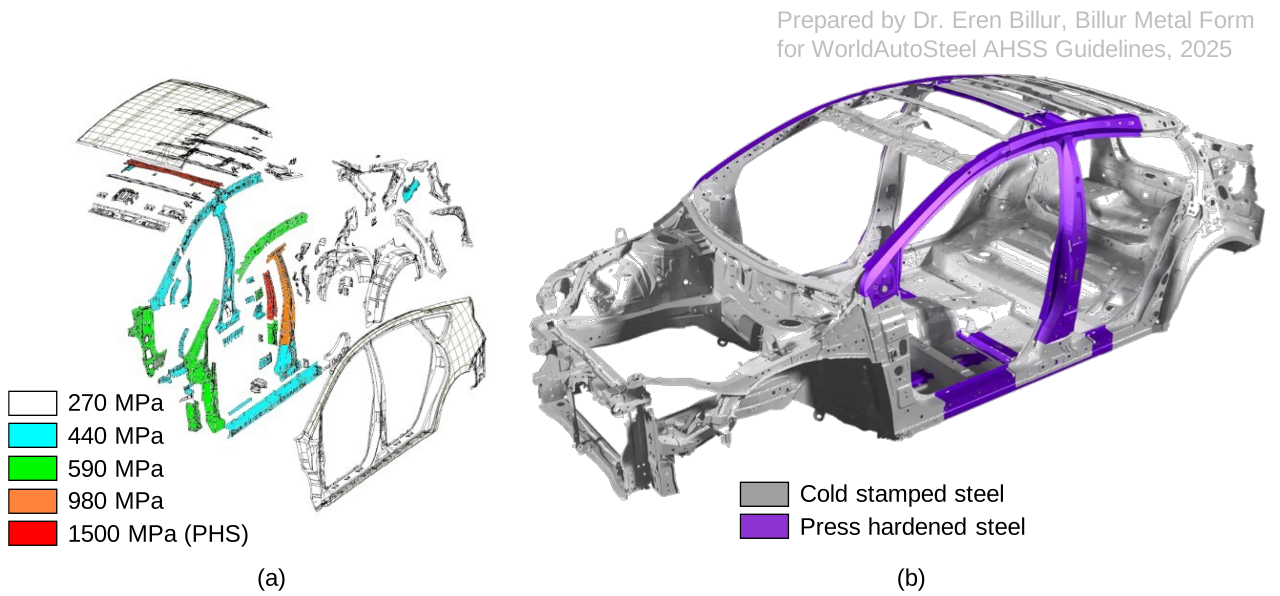
Some automotive components may require higher stiffness, strength, or energy absorbing capacity in a confined local area. One method to achieve these characteristics is to spot weld separate reinforcement panels to the main component. A strategy for improving energy absorption in high-strength components involves joining a second part made from a more ductile but (typically) lower strength material. Neither of these approaches are ideal in terms of manufacturing efficiency and product/process optimization.
Tailored parts are the term given to those parts that may have zones with different thickness, chemistry, and/or heat treatment, resulting in a reduced number of components, weight reduction, and/or lower costs. These goals are achieved through part consolidation and by reducing or in some cases even eliminating joining operations.
In cold stamping operations, tailored parts (tailored products) are typically produced at the incoming coil or blank level, but are typically called “tailored blanks” or the specific process/product produced:
Laser Welded Tailored Blanks (LWTB, also known as Tailor Welded Blanks, or TWB) or Tailor Welded Coils (TWC – not common in press hardening),
Tailor Rolled Blanks (TRB) or Tailor Rolled Coils (TRC),
Tailor Welded Tubes (TWT) or Tailor Rolled Tubes (TRT), or
Patchwork Blanks,
In press hardened components, a single component may be press hardened such that it has what are known as soft zones, or areas of lower hardness possessing increased ductility. The tailored processing of these multi-strength parts can be achieved byB-14:
Controlling the incoming blank temperature, (Tailored Heating, pre-process)
Controlling the quenching rate, (Tailored Quenching, during process)
Partially tempering (Tailored Tempering, post-process). Note that Tailored Tempering is a term used for Tailored Parts, especially in texts translated from the German language.
These are typically called tailored parts or tailor processed parts. Lastly it is also possible to combine two techniques, that is, making a tailored part using a tailored blank.
Laser Welded Tailored Blanks (LWTB) are blanks that are produced by laser butt welding of two or more sub-blanks, as shown in Figure 1. In the industry, the terms Tailor Welded Blanks (TWB) and Laser Welded Blanks (LWB) are also used interchangably.M-46
Figure 1: Steps of making a press hardened laser welded tailored blank (re-created after Citations B-14 and A-8).
Laser welded tailored blanks consist of at least two sub-blanks with:
Different thicknesses, allowing for use of thinner sheet steels in areas of the component having less rigorous loading requirements. Using thinner sheets saves weight.
Different grades, optimizing the energy absorption and intrusion resistance characteristics in each area of the same part (such as an automotive B-pillar, see Figure 6b).
A combination of both.
Laser welded tailored blanks with the same thickness and grade are used to create blanks having dimensions larger than mill rolling or processing capabilities. Another reason for such a tailored blank could be optimizing the material yield ratio by nesting (Figure 10c).
Laser welded tailored blanks offer many paths to weight savings and cost reduction, including:
Reducing the number of parts in the subassembly, such as the need for reinforcements;
Reducing the number of required forming tools, welding fixtures, etc.; and
Improved raw material utilization by sub-blank nesting optimization (see Figure 1 and Figure 10c).
The weld area of press hardened laser welded tailored blanks may not transform to martensite, and therefore may show a significant reduction in the hardness. This can be attributed to weld quality and quenching rate.B-47, W-3
Blanked edge geometry of the sub-blanks (notches, underfillings and weld seam pollution) affects weld quality. Separating the blanking into two operations, rough blanking and precision blanking, may improve blanked edge geometry and the resulting weld quality.M-46
As seen in Figure 1, Aluminium-Silicon (AS) coated sub-blanks may require a secondary ablation operation. The AS coating is removed (ablated) near the weld edge, typically by using a laser. When this AS coating is not removed and filler wire is not used, the aluminium from the coating may pollute the weld. When welding two AS coated PHS1500 sub-blanks together, an aluminium-polluted weld may have significantly lower hardness, as shown in Figure 2. A part made of such a blank will fail at the weld zone, both in quasi-static and dynamic conditions.E-8
Figure 2: Effect of ablation and filler wire on hardness distribution around the laser weld of equal thickness PHS1500+AS150 (re-created after Citation E-8).
Prior to 2023, the European Standard for Laser Welded Tailored Blanks (LWTB), EN 10359D-2, covered only LWTBs for cold stamping materials. This standard was expanded to include press hardened laser welded blanks in 2023. The new standard clearly defines that the average hardness in the weld zone shall not drop below the soft base material’s average hardness minus 30 HV, Figure 2. Al-polluted weld cannot be accepted. The standard also defines a maximum hardness in the weld zone. This cannot be more than 15% of the hardness of the stronger base material if the UTS of the stronger base material is over 1200 MPa. If the LTWB has a maximum UTS lower than 1200 MPa, the weld seam is allowed to have a maximum average hardness of 500 HV. In the weld zone, a minimum of 9 hardness measurements are required to get the average.E-16
Another common type of laser welded tailored blank is where a press hardening steel (typically PHS1500) is welded to a press quenched steel (PQS 450 or 550). Lower strength and higher ductility should be observed in the PQS region. Without ablation, a hardness drop is observed in AS coated welded blank, seen in Figure 3a. In quasi-static tests, fracture was observed in the PQS base metal. In dynamic tests, the part failed at the weld zone. When ablation is applied, a B-pillar with a PQS base absorbs more energy compared to the welded blank without ablation.E-8 In uncoated and Zn-coated steels, ablation is not required since there is no concern about aluminium pollution in the weld.A-68, M-2Figure 3b shows the hardness distribution in the weld seam of galvanized sub-blanks.
Figure 3: Hardness distribution in PHS-PQS laser welded blanks. a) AS coated sub-blanks with and without ablation (re-created after Citation E-8); b) Galvanized sub-blanks without ablation (re-created after Citation M-2). Note that the initial thicknesses of sub-blanks are different.
There are two methods of ablation. Full ablation removes the AS coating and the interdiffusion layer (IDL) in their entirety. In contrast, partial ablation removes only the AS coating, but the IDL remains intact. Full ablation may result in oxidation and decarburization in the weld seam.E-8, W-3
In addition to weld pollution, the hardness drop in the weld seam could also be caused by the local quenching rate. When a welded blank is made using sub-blanks with different thicknesses, misalignment (Δx in Figure 4a) may lower the quenching rate. Misalignment greater than 2 mm could cause over 30% hardness drop, from approximately 500 HV to less than 350 HV.B-47 A filler wire with high-C content could reduce the critical cooling rate, as shown in the Figure 4b. In a particular example using a filler wire containing 0.3% C presented in this image, the critical cooling rate was reduced to approximately 13 °C/s. Due to the high-C content, a 20% increase in the weld seam hardness may be possible,E-8 as indicated in Figure 2.
Figure 4: a) Misalignment of the blank in the die could cause lower quenching rate in the weld seam (re-created after Citation B-47); b) A high-carbon filler wire may reduce the critical cooling rate (re-created after Citation E-8).
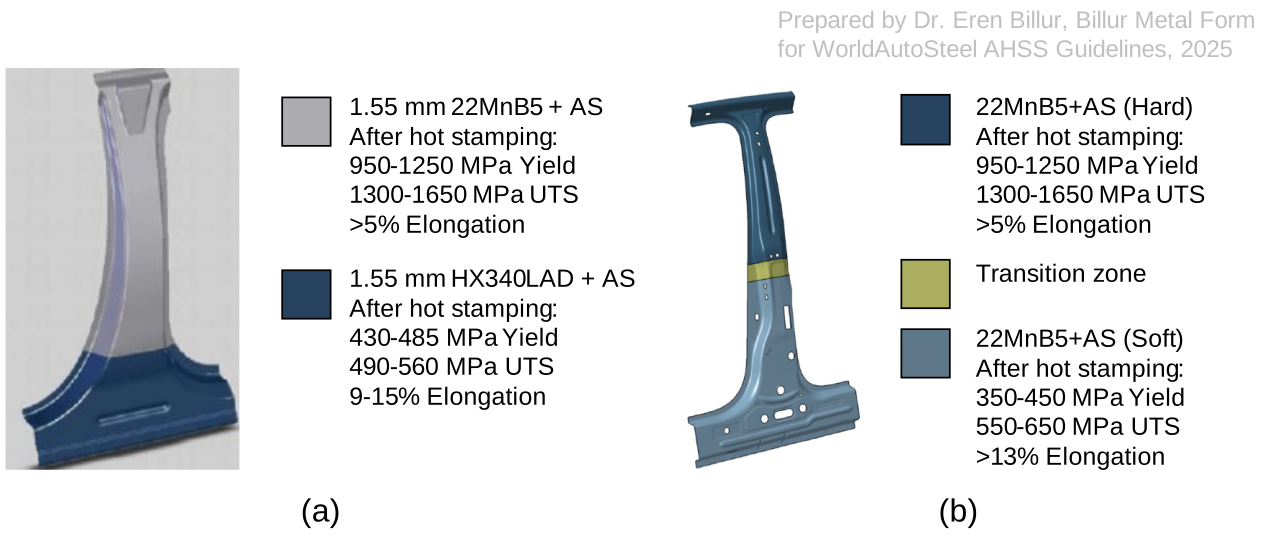
The fourth generation Audi A4 (2008-2016 also known as B8) contained some of the earliest applications of press hardened laser welded tailored blanks. The car had five components made of laser welded tailored blanks: tunnel reinforcement, left/right B-pillar reinforcements, and left/right rear rails, as shown in Figure 5. As PQS grades were not commercially available at that time, High-Strength Low-Alloy (HSLA) steels were used for energy absorbing applications. As delivered, HX340LAD + AS, had a minimum 340 MPa yield strength. Press hardened parts and their final mechanical properties are shown in Figure 5.S-65
Figure 5: PHS applications in Audi A4 (2008-2016). The car had a total of three different components and five parts using laser welded tailored blanks (figure and table re-created using data and images from Citations S-65, D-11, V-21, W-5, and S-13).
In Citation K-25, using a laser welded tailored blank resulted in the highest energy absorbing capacity of a B-pillar reinforcement. In this study, PHS1500 (22MnB5) was laser welded to a HC340LA (uncoated HSLA steel with minimum 340 MPa incoming yield strength). Such a welded blank could absorb 3.3 kJ energy without fracture, whereas a monolithic (same thickness, same hardness all around) PHS1500 failed at 2.3 kJ (see Figure 6). PHS1500 with soft zones (see the Tailored Properties section below) passed a 2.3 kJ test but failed at 3.3 kJ.
Figure 6: Energy absorbing capacity of B-pillars increase significantly with soft zones or laser-welded ductile material (re-created after Citation K-25).
Conventional High-Strength Steels are not designed for hot stamping process. HSLA 340 and 410 MPa grades (minimum yield strength, as delivered) and CMn440 steel (Carbon-manganese alloyed, minimum 440 MPa tensile strength at delivery) may be softer than their as-delivered condition when heated over austenitization temperature and slowly cooled at 15 °C/s cooling rate. Furthermore, if the local cooling rate is over 60 to 80 °C/s, a significant increase in hardness (see Figure 7) and sharp decrease in elongation may be observed.D-22, T-27
Figure 7: Vickers hardness variation of several cold stamping steels after austenitization and at different cooling rates (re-created using data from Citation D-22).
Development of PQS grades started around 2007, targeting consistent mechanical properties over a wide range of cooling rates. Currently, typical laser welded blank applications of PQS450 and PQS550 in the automotive industry include B-pillars, front rails, and rear rails. One such car with LWTB components is the 2nd generation Volvo XC90 (2014-Present). The car has a total of 152 kg hot stamped parts, with approximately 132 kg of PHS1500 and 20 kg PQS450, comprising 33% and 5% of the BIW (excluding doors and closures), respectively. The XC90 has a total of six hot stamped welded blanks (three left and three right), as seen in Figure 8.L-29, L-8 More details about welded blanks with PQS450 and PQS550 are presented in the Grades with Higher Ductility Section within our article on PQS Grades.
Figure 8: Use of laser welded PQS-PHS grades in the 2nd generation Volvo XC90 (re-created after Citation L-29).
Recently PHS1000 and PHS1200 grades have been developed. The yield and tensile strength of these grades increase with hot stamping, and as such are considered press hardening steels (PHS, but not PQS). Y-12, G-30 More details about these grades are presented in the Grades with Higher Ductility Section within our article on PHS and PQS Grades. Renault conducted an experimental study in 2021 to replace PHS1500-PQS550 laser welded tailored blanks with those made from a PHS2000-PHS1000 combination. As seen in Figure 9, the new materials can absorb the same amount of energy with less intrusion. At the same level of intrusion, the energy absorbing capacity improves by 30%.B-62
Figure 9: Stroke vs. energy curves of representative sub-assemblies, emulating B-pillar (re-created after Citation B-62).
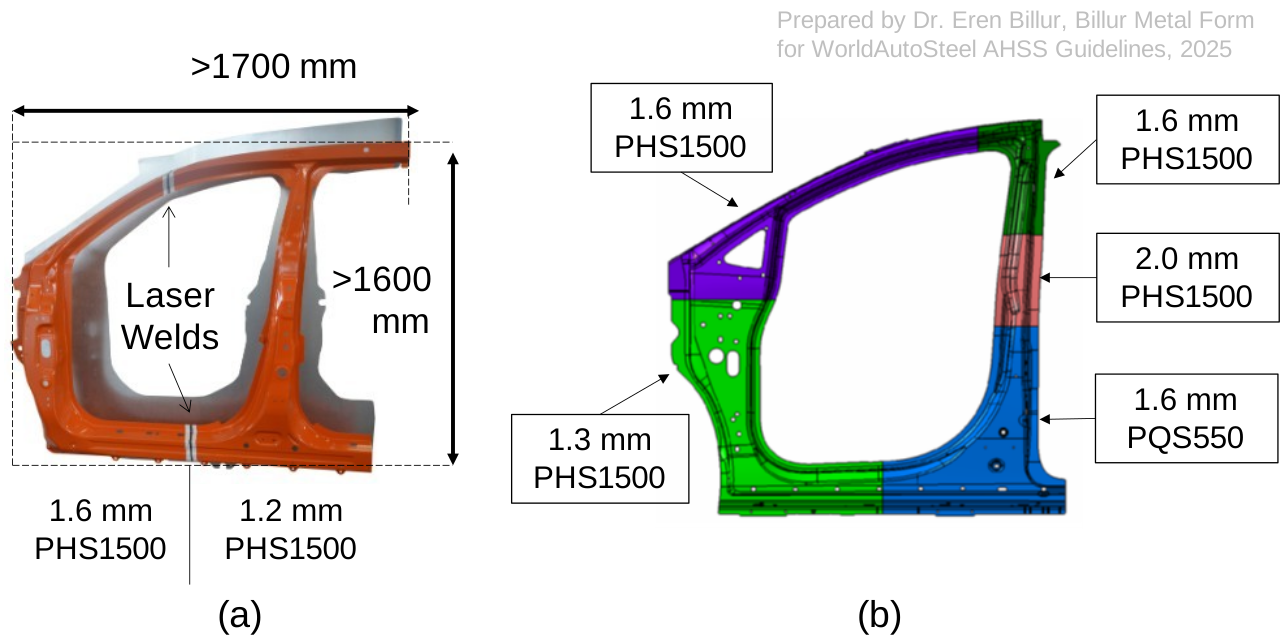
Laser welded tailored blanks may also be used to create larger blanks that may not be otherwise possible or economically feasible.M-4 Door rings represent one such application for hot stamping, as introduced by ArcelorMittal in 2010.A-17 A prototype door ring was produced in 2012, using four sub-blanks, including one PQS550, as shown Figure 10a. The part measured approximately 1500 mm long and 1250 mm high.B-63, T-1 May 2013 saw the first application of a hot stamped door ring with the introduction of the 3rd generation Acura MDX, running from 2013-2020. The vehicle used a two sub-blank LWB door ring, both PHS1500, with thicknesses of 1.2 mm and 1.6 mm. Through sub-blank nesting optimization, material utilization was improved to 63%. Details can be seen in Figures 10b and 10c.M-46
Figure 10: Door rings. a) one of the earliest concepts from 2010T-1; b) the first mass produced door ring of the 2013 Acura MDX; c) sub-blank nesting to improve the material utilization.M-46
For door ring manufacturing, a higher tonnage press with larger bolster area may be required, as well as a wider furnace and heavier capacity transfer systems. In most hot stamping lines, typically two or four parts are formed and quenched in one stroke (known as 2-out or 4-out) to improve productivity and reduce the total cost per piece. Due to the large size and additional requirements, door ring manufacturing is typically 1-out. However, as the part itself replaces four components (A and B pillars, hinge pillar and rocker reinforcement), it can be as cost effective as a 4-out hot stamping operation.W-6
Although not common, the Acura TLX (1st generation 2015-2021) and Hyundai Santa Fe (since 2018, 4th generation) utilize single piece (not from a welded blank) door rings with 1.4 mm and 1.1 mm thicknesses respectively. B-14, H-4 The 2nd generation Acura TLX (2021-present) has the door-ring of the 1st generation model as a carryover.L-61
Since its inception, laser welded door rings have been used in several Honda / Acura models. The number of sub-blanks was increased to 4 with the 2nd generation Honda Ridgeline (2017-present). This was the first door ring application in a pick-up truck.B-52 The Chrysler Pacifica started production in 2017 with 5 sub-blanks, as shown in Figure 11a, including PQS550 for crash energy absorption.T-19 The 5th generation RAM 1500 pick-up truck, which debuted in 2018, has a six sub-blank door ring, as seen in Figure 11b.R-3 In 2018, Acura RDX became the first car to have inner and outer door rings made of PHS1500 laser welded blanks. As seen in Figures 11c and 11d, five and four sub-blanks were used respectively for the inner and outer door rings, all PHS1500. This design further allowed downgauging and lightweighting.R-26
Figure 11: Laser welded door ring applications: (a) Chrysler Pacifica (SOP 2017) has five sub-blanks (recreated after Citation T-19); (b) RAM 1500 (SOP 2018) has six sub-blanks (re-created after Citation R-3); Acura RDX was the first car to have two door rings: (c) inner and (d) outer, both with four sub-blanks of PHS1500 (re-created after R-26).
Tesla Model Y uses a door ring with 4 sub-blanks, including PHS 1000 for the energy absorbing area of the B-pillar.B-79, A-84 One of the most complicated door rings is found in the Voyah Dream, a Chinese minivan that started production in 2022. The main door-ring consists of 5 sub-blanks laser welded to each other. The base of the B-pillar is again PHS1000. In addition to these 5 sub-blanks, 2 patches are also spot welded, where one of these is PHS1900.H-70 Figure 13 of our page on PHS Grades shows these door rings.
Double door rings (see Figure 12 and Figure 13) have been long discussed. One of the earliest applications was found in Tesla Cybertruck (SOP 2023). This was the first in-house hot stamping done at Tesla’s own hot stamping lines.B-81 The second application was found in the compact BEV car, GAC Aion UT (see Figure 13a) in 2025. The full-size SUV Lynk & Co 900 may have the largest double door ring in production as of 2025 (Figure 13b). The hot stamped part has all 4 pillars (A, B, C, and D) integrated into a single piece.
Figure 12: Double door ring of Tesla Cybertruck: (a) approximate dimensions of the inner part (image re-created after M-72), (b) schematic of outer ring and (c) inner ring (re-created after F-49).
Figure 13: Double door ring applications: (a) GAC Aion UT (SOP 2025)G-50, (b) Lynk & Co 900 (SOP 2025)P-30.
A study from 2023 showed that, it was possible to save 22.2 kg per vehicle by using inner and outer double door ring – compared to a legacy design. The total part number was reduced from 14 to 2, also reducing significant area from the body shop. Material utilization was improved to 70% (by means of sub-blank nesting optimization). The total steel usage was reduced from 170.7 kg to 129.1 kg (an almost 25% improvement).G-51 Another study from 2024 showed that B-pillar-less designs can be realized with a hot stamped double door ring.B-82
Tailor Rolled Blanks
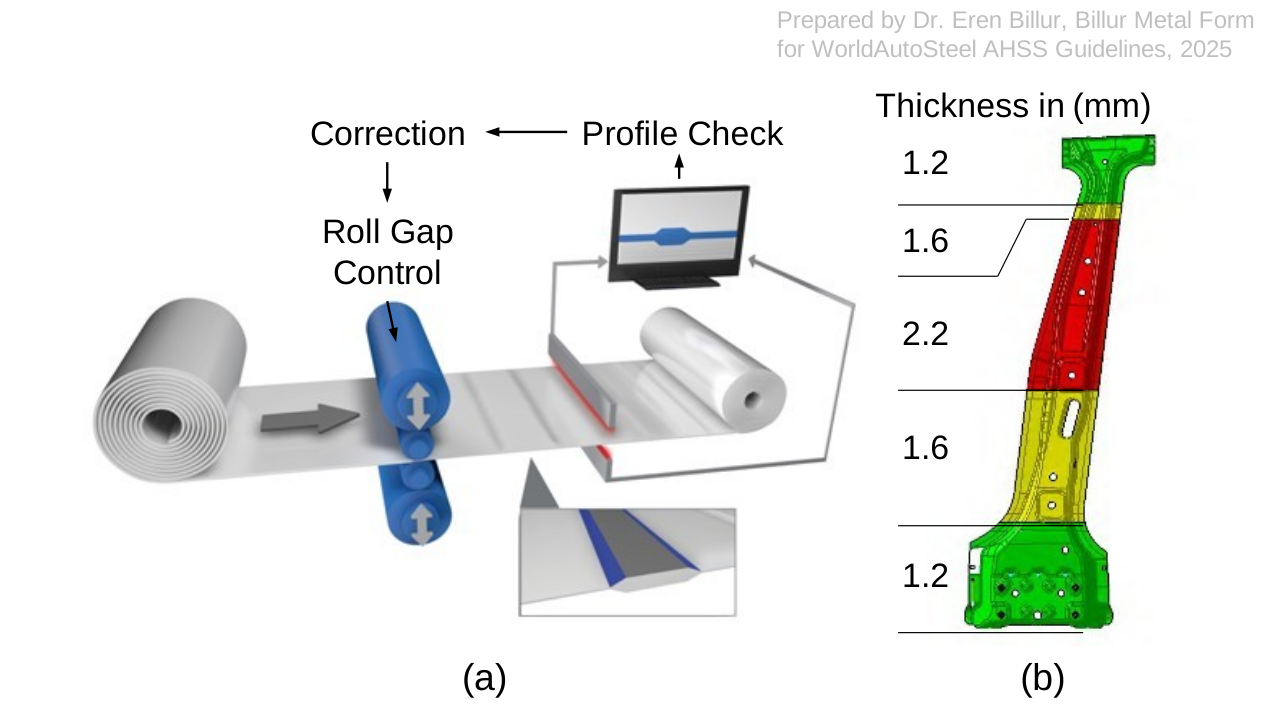
Tailor Rolled Blanks (TRB), also known as flexibly rolled blanks (FRB) or variable thickness rolled blanks (VTRB) are produced by a secondary cold rolling of an already cold rolled and possibly coated coil. In this secondary cold rolling, the roll gap is adjusted during the process so that the thickness can be varied (tailored) locally, shown in Figure 14a. TRBs can be an alternative to “same material-different thickness” welded blanks.B-14 Contrary to an LWTB, thickness changes are not abrupt, but instead are continuous. Thus, TRBs do not have stress concentration due to the notch effect. Problems associated with weld quality in welded blanks (pollution, geometry, quenching rate, etc.) do not apply to TRBs since laser welding is not utilized to create local thickness changes.H-7
Tailor rolled blanks are typically named by their thicknesses from head-to-tail, and symmetrical sections with same thicknesses are written once. For example, the B-pillars of previous generation Ford Focus (2011-2018), as shown in Figure 14b, has five thicknesses in nine zones. This blank would be named as: 1.35-2.30-2.10-2.40-2.70. The process starts with a coil slightly thicker than 2.70 mm, and thickness reductions up to 50% would be completed during the tailor rolling process. The typical slope in the Thickness Transition Zones (TTZ) are 1:100, meaning 1 mm change in thickness would require a 100 mm long TTZ. Different slopes could also be utilized.Q-7, H-8
Figure 14: a) Principle of tailor rolling process (re-created after Citation Z-5); b) thickness profile and nesting of a B-pillar in a tailor rolled coil (re-created after Citation Q-7).
The tailored rolling process squeezes and thins any coating, and possibly damages the coating as well.T-4 For this reason, TRBs are typically used in dry areas. Because of similar reasons, in AS coated TRB applications, AS150 (75 g/m2 on each side, Al-Si coating) is preferred instead of thinner coatings such as AS80.
One of the first press hardened TRB applications was the B-pillar reinforcement of the BMW X5 (2nd generation, 2006-2013). The application saved 4 kg/car, compared to a monolithic press hardened part.P-1 Other applications include: heel piece of MQB (Modularer Querbaukasten, translating from German to “Modular Transversal Toolkit”) platform cars – covering many VW Group cars with transverse engine orientation, since 2012S-107, front crossmember of MLB Evo (Modularer Längsbaukasten, translating from German to “Modular Longitudinal Toolkit”) platform cars – covering Audi vehicles with longitudinal engine orientation, since 2015H-44, and roof crossmember of the 10th generation Honda Accord (2017-present).M-7Figure 15 summarizes these. Many other OEMs use tailor rolled blanks in press hardening, some recent applications include, but not limited to:
2024 Li Mega (A pillar uppers, B-pillars, Hinge pillars)C-42
Figure 15: Several TRB applications in recent vehicles (re-created after Citations H-44, P-1, S-107, and M-7).
Patchwork Blanks
In a patchwork blank, one or more “patch blanks” (reinforcements) are overlapped with a “master blank” and spot welded. The spot-welded blanks are then heated in a furnace and hot stamped as a single piece in one stroke. The final part will have increased thickness in the areas of interest. A patchwork blank may reduce the need for post-forming assemblies of reinforcements, as seen in Figure 16. Since the spot welds are also austenitized and quenched, their hardness distribution is typically better than spot welding after hot stamping, as shown clearly in Figure 17.B-20, U-12, N-3
Figure 16: Master blank and patch geometries of a sample B-pillar: (a) before, and (b) after spot welding, (c) after hot stamping. (re-created after Citations B-14 and L-52)
Figure 17: Hardness distribution in a spot weld, comparing when spot welding is done before or after press hardening. (Re-created after Citations B-14 and U-12)
Patchwork blanks allow for the possibility of reducing the number of forming tools and the associated fixed costs. Stamping and post-process joining costs may be reduced as well, leading to a variable cost reduction. Depending on how the part is engineered, a weight savings may be achieved. These benefits come at the expense of the additional blanking operation to create the patch blanks, and the pre-process welding stations.U-12, T-42
Optimizing the initial geometry of the patch blank helps reduce these costs. One approach is to use a one-step inverse simulation in the early planning / feasibility phase. In this method, the initial outline is estimated based on deformation theory of plasticity, requiring only relatively short CPU-times (in the order of a few minutes using a modern PC), with low accuracy (up to 3 mm deviation is common). A trim optimization method is recommended during the design phase of the patch blank blanking dies. In this method, an incremental solver is used with an initially assumed blank outline. Typically, the result of one-step solution is used for the first iteration. The software then compares the outline of the patch after forming and calculates the differences with the desired geometry. Then the initial geometry is modified accordingly, and another forming simulation is carried out. These iterations continue until the deviation is less than the set tolerances. For example, in a B-pillar patch optimization, ±0.25 mm deviation may be achieved in two to three iterations.W-8, Z-12, S-108
Reducing the number of spot welds also reduces the cost of the patch blank. Minimizing the number of spot welds may also reduce the cycle time in welding stations. In some cases, it may also affect the number of spot-welding stations — thus, the initial fixed cost. However, severe wrinkles may form if using an insufficient number of spot welds. Using finite element analysis may assist in finding the optimum number of spot welds for formability.A-19 In some cases, although the part could be hot formed with a smaller number of spot welds without any problems, more spot welds are applied for crash performance.U-12
Some of the earliest patchwork PHS applications were used in the B-pillars of 3rd generation Volvo V70 (2007-2016) and Fiat 500 (2007-2024). In the Volvo V70, a total of 46 spot welds were used to create the patchwork blank, Figure 18a. Both blanks were uncoated PHS1500, with a 1.4 mm thick master blank and a 2.0 mm thick patch.L-53 In the Fiat 500, the master blank was 2 mm thick, supported by a 1 mm thick patch, both AS coated, as seen in Figure 18b.Z-13 In recent years, patchwork PHS blanks have been used in more car bodies, including but not limited to several parts in the 2nd generation Volvo XC90 (2014-Present)L-29, rear rail of the Fiat 500X (2014-2024)M-45, B-pillar of the Opel Astra K (2015-Present)K-8, B-pillar of the 2nd generation Range Rover EvoqueF-1, and several Subaru models.U-12, A-73
In the rear rail of the Fiat 500X (2015-2024), the master blank is a laser welded tailored blank, consisting of 1.5 mm PHS1500 and 1.6 mm PQS450 sub-blanks. The patch blank is 1.5 mm thick PHS1500, spot welded onto the PHS1500 portion of the laser welded tailored blank.M-45 A similar design with different thicknesses was also used in Fiat Tipo/Egea (2015-present), as shown in Figure 18c.B-14 For the Opel Astra, the master blank is a 1.3 mm thick PHS1500 with soft zones (see the Tailored Properties discussion below). The patch is a TRB with 1.00-1.95-1.00 thickness distribution.K-8 A more recent application is seen in Voyah Dream minivan’s door ring. The door ring is consisting of 5 sub-blanks laser welded to each other and two patches spot welded to the main blank. The details can be seen in Figure 18d.H-70
Figure 18: Sample automotive applications of patchwork PHS: B-pillar reinforcements of (a) 2007 Volvo V70 (re-created after Citation N-4), (b) 2007 Fiat 500 (re-created after Citation Z-13); and (c) rear rail of 2015 Fiat Tipo/Egea (Citation T-43, recreated after Citation B-14); and (d) door ring of 2022 Voyah Dream (re-created after Citation H-70).
Jaguar I-PACE is an aluminium-intensive electric SUV making its debut in 2018. In this car, the B-pillar reinforcement is made up of a patchwork blank. Contrary to most earlier applications, the master blank is a PQS450, which could be joined easily to the rest of the body by mechanical joining. The patch is PHS1500, which improves the side impact and roof crush performance.B-21 In 2018, a global Tier 1 supplier showed the possibility of using PHS2000 master blank and patch for a rear bumper beam.N-6 Using PHS1900 as a patch is also a common method – since weldability of this material after hot stamping may be problematic (See Figure 18d).
Improvements in patchwork blank technology includes the weld type and quality. Conventional resistance spot welding has been used in making patchwork blanks. There are studies on using remote laser welding for this purpose as well. In one study, joining a patchwork blank with approximately 50 welds was completed in 35 seconds using 2.2 kW laser power, and in 23 seconds using 2.8 kW.L-54 Another study showed that when laser welding is used with AS-coated blanks, weld strength is reduced by approximately 40% compared to uncoated blanks.G-1
“Overlap patch blanks” are a sub-set of patchwork blanks. As seen in Figure 19a, instead of a master and patch blanks, two (or more) sub-blanks are spot welded over an “overlap region” to create a blank like a laser welded tailored blank. The technology was initially applied in cold stamped components.P-4 Recently an international tier 1 supplier developed door rings and floor panels made from overlap patch blanks that were press hardened. As seen in Figure 19 b and c, a door ring can be created using 5 sub-blanks, including one PQS (shown in green).G-3
Figure 19: Overlap patch blanks: (a) schematic of a B-pillar blank (re-created after B-75), (b) door ring concept from outer view, and (c) inner view.G-3
One of the benefits of using overlap patch blanks is the ability to build up larger welded blanks of Al-Si coated steel without the need to employ ablation technology. The overlapped sub-blanks can be resistance spot welded together, thereby avoiding the risk of aluminum polluting the weld pool that ablation would otherwise mitigate.
Patches can be engineered to increase stiffness in critical locations, and the spot welds provide easy adjustment to both the blank and weld as needed (Figure 20).S-111
Figure 20: Overlap patch blanks created with resistance spot welding eliminates the need to use laser welding and ablation techniques.S-111
Tailored Properties
Tailored properties is a term used for the technology to make a part with hard and soft zones. Hard zones are nearly 100% martensitic, whereas soft zones have a lower percentage of martensite. This type of part may be called a “multi-strength part”. In Europe, the term “tailored tempering” may be used to denote a part with tailored properties or the technique to make such a part. In this article, the “tailored tempering” term is specifically used to describe a part which was press hardened as a whole and later locally softened to modify properties in specific areas.
Soft zones may be used for several reasons:
To improve crashworthiness: Local areas with higher ductility aid in crash energy absorption. An example B-pillar is shown in Figure 6. This type of usage is very common in B-pillars, front rails, and rear rails, as shown in Figure 8. The first application for this purpose was realized in the B-pillar of the first-generation VW Tiguan (2007-2018).S-13 The technology is also used in rear rails. Both applications are shown in Figure 21. The technology is also used in rear rails of 10th generation Honda Civic (2015-2021)C-22, and 10th generation Honda Accord (2017-2024). In this particular application, shown in Figure 22, soft zones were designed such that the rear frame would deform in a pre-defined manner and absorb the crash energy efficiently.C-22, M-7, K-52 Tailored parts are used for improved energy absorption in numerous models from Audi, BMW, Ford, Honda, Mercedes and others.B-14
Figure 21: Example uses of soft zones for improved energy absorption: (a) first application was in 1st generation (2007-2018) VW Tiguan’s B-pillars (re-created after Citations V-22 and M-8), (b) a more recent application in 2013 Ford Escape’s rear rails (known as Ford Kuga in EU, sold between 2013 and 2019) (re-created after Citation M-59).
Figure 22: Rear rail assembly of Honda Civic (10th gen., 2015-2022): (a) Isometric view of the assembly, (b) bottom view of the frame, during rear crash condition (re-created after Citation K-52). A similar design was also employed in Honda Accord.M-7
To improve weld/joint strength: When base metal hardness is over 350 HV, the heat affected zone (HAZ) in the spot weld may be the weakest point of an assembly.B-20 Several other studies have proven the hardness drop and early fractures around spot weld of fully hardened parts, as summarized in Figure 23. When flanges are induction tempered (see the Tailored Tempering discussion below, a B-pillar assembly may absorb 30% more energy than a fully hardened B-pillar.H-61, F-2 In multi-material mix cars, such as the 2nd generation Audi Q7 (2015-present), “soft flanges” can be used for mechanical joining the PHS B-pillar reinforcement to aluminium components. Hemming of aluminium, around the PHS, can also be used to join the components.H-62 Since development of TemperBox® and Thermal Printer, soft zones for improving weld quality has significantly increased. Several new applications include Renault 5 BEV.G-53 and Mercedes EQE SUV BEV.D-47, as seen in Figure 24.
Figure 23: When spot welding is done on a soft zone: (a) hardness distribution would not have a soft HAZ, and (b) early fractures at spot welds are not observed (re-created after Citations B-14, H-61, and B-64).
Figure 24: Soft zone applications to improve weld quality: (a) Mercedes EQE SUVD-47, and (b) Renault 5 BEVG-53.
For secondary bending operations: Tailored tempering (softening areas of interest after a fully hardened press hardening process) may be used in bumper beams, where a secondary bending may be required to form an inner flange.L-40
To facilitate trimming/piercing: Although not very common, local soft zones may reduce the force/energy requirements and improve the cutting tool life if hard trimming will be used.L-55
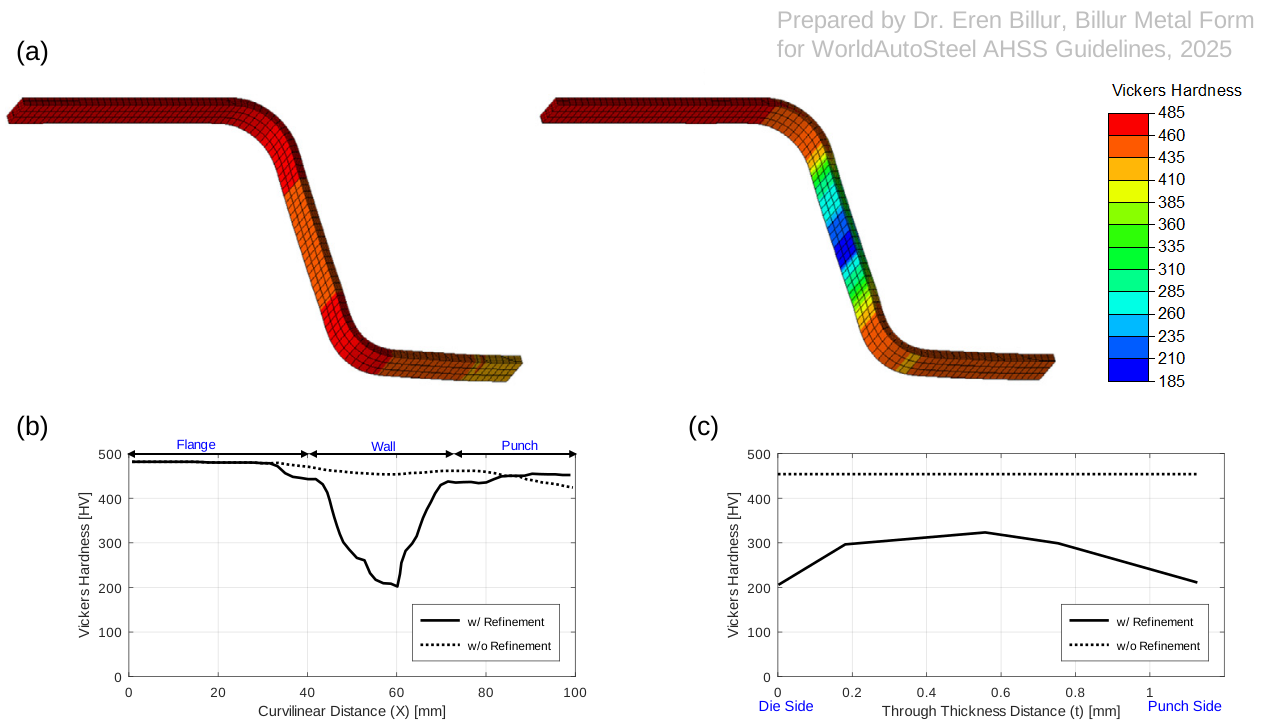
In addition to the engineered use of soft zones, it is possible that they could be produced unintentionally. While the theoretical production press hardening process results in fully martensitic content, the real product may have a multiphase microstructure. For example, there must be good and continuous contact between the sheet and the stamping tools to achieve sufficient heat extraction such that the critical cooling rate is met. However, there may be unexpected regions of poor contact preventing the required rapid cooling. This might occur at the vertical sidewalls of a channel section, or after tooling wear creates an air gap between the punch and cavity. As such, the martensite volume fraction in production PHS may not be 100%. This leads to changes in strength-ductility properties, as well as the cutting force requirements: as the martensite percentage decreases, so does the force required to cold cut processed PHS. These are reflected in Table 1.W-44
Table 1: Mechanical properties and cutting force requirements of 22MnB5 as a function of the martensite volume fraction.W-44
Phase Composition
Yield Strength(MPa)
Tensile Strength(MPa)
Elongation
(%)
Max Cutting Force
(kN)
100% Martensite
1151
1675
8.40
54.42
87% M + 13% B
1003
1529
7.23
53.31
68% M + 32% B
767
1328
9.50
45.23
52% M + 48% B
604
1057
10.28
37.09
23% M + 77% B
567
976
13.83
32.66
100% Bainite
550
809
17.39
28.69
There are three methods to create the soft zones leading to tailored properties:B-14
Tailored heating during austenitization of the blank (typically achieved in the furnace),
Tailored quenching after austenitization (can be achieved in tempering stations or in the forming die),
Tailored tempering after fully hardening a part (after the press hardening process).
1) Tailored Heating (Pre-Process)
In tailored heating, areas of interest (the soft zones) are not fully austenitized. The critical heating temperature has been reported as 750 °C by several researchers. When heated below 750 °C and hot stamped, the part has a tensile strength of approximately 600 MPa and over 15% total elongation. As seen in Figure 25, mechanical properties will stay relatively constant with heating temperatures between 650 and 750 °C. Above this critical heating temperature, hardness (almost directly proportional with tensile strength) may increase significantly.K-53
Figure 25: Effect of blank heating temperature on hardness and converted tensile strength of PHS1500 (re-created after Citation K-53).
There are several methods to achieve tailored heating. In the direct process, where an undeformed blank is being heated, there were four main methods proposed:
Using a divided furnace,
Masking soft zones in furnace,
Heating by segmented contact plates, and
Conduction heating with controlled current flow.
A divided roller hearth furnace may have gas or electric heating for the first half of its length, ensuring a uniform temperature distribution during heating. In the second half of the furnace length (soaking zone), there may be several electric heating zones across the furnace width direction that can be set to different temperatures. To simplify the schematic, Figure 26 shows a two-zone divided furnace. In the soaking zone, five-zone furnaces were already available as early as 2011. By 2018, furnaces with 32 zones were industrially used to make parts for several German OEMs.H-47, E-12, O-13
Figure 26: Divided furnace concept (simplified with two zones): (a) temperature setting in the furnace affects the temperature distribution in the soft and hard zones; (b) in the tailored soaking area, up to 32 zones may be realized (re-created after Citations B-14, E-12, and O-13).
As heating of the blank in furnace is mostly achieved by radiation, an insulating mask may reduce the local temperature in the soft zones. Ceramic insulators or machined steel blocks may be used for masking purposes. Areas that are not masked will be heated above the austenitization temperature, whereas the masked areas will be at lower temperatures.N-3Figure 27 shows a schematic of the process. In addition to masking duty, the inlay should have enough heat capacity to absorb the heat from the blank. When steel inlays (masks) are used, they should be thicker than the blank to have the necessary heat capacity. Stainless steels could be used to avoid scaling of the steel inlay.B-65, B-66
Figure 27: (a) Using masking for tailored heating (re-created after Citations B-14 and N-3); (b) an example mask and blank from Citation K-54.
Although not commonly used for mass production, it was proven that contact plates may be used in tailored heating. Blanks are isolated from the environment during contact plate heating, significantly reducing oxidation on uncoated blanks. Fraunhofer IWU in Chemnitz, Germany, has developed a lab-scale contact plate heater that can generate soft zones. In the hard zones (those heated over 900 °C), the heating rate may be as high as 300 °C/s. The heater and a sample blank are shown in Figure 28.S-109, G-48
Figure 28: Tailored heating in contact plate heating: (a) right after the heating before the discharge, (b) a tailor heated blank with dimensions and approximate temperatures (re-created after Citation S-109).
Two different strategies were developed to generate tailored heat blanks using conductive heating while ensuring no current passes through the targeted soft zones.M-60 These approaches are applicable only to rectangular blanks. Researchers in Hanover University improved the technology to heat non-rectangular blanks with tailored temperature distribution. In a sample (non-rectangular) B-pillar blank, temperature was kept at 950 °C in the heated zones and approximately at 700 °C in the soft zones. Significant temperature drops were observed in the proximity of electrodes, resulting in non-uniform heating.B-67 Neither of the techniques are used in mass production for tailored parts.
In the indirect hot stamping process, the parts are formed prior to heating. Thus, it is not practical to apply any of the earlier strategies to get a cold zone in the part. For such components, soft zones are generated by using machined steel blocks known as absorption masses, which have high heat capacity to absorb the heat from the blank. As seen in Figure 29, correctly sized absorption masses keep the soft zones below 750 °C. When quenched, these areas have approximately 500 MPa tensile strength, over 20% total elongation (A50) and over 150° bending angle according to VDA bending test. The tailored parts have narrow transition zones, and are spot weldable, both in hard and soft zones. The technology is used in the B-pillar reinforcements of several BMW models.M-2, K-53, R-27
Figure 29: Tailored heating of galvanized PHS1500 in the indirect process: (a) Blank temperature evolution in hard and soft zones, in a roller hearth furnace using absorption mass in the soft zone; (b) hardness distribution and approximate tensile strength in hard and soft zones (re-created after Citation K-53).
Tailored heating technologies are beneficial for their energy efficiency, as the soft zones are heated to lower temperatures. The technology may be applied to uncoated and Zn-coated blanks; however, AS-coated blanks are at risk for incomplete coating diffusion in the soft zones. For these reasons, similar technologies (excluding conduction heating) also are used in a secondary heating device after the furnace.O-13 These techniques are listed in the Intermediate Pre-Cooling section below.
2) Tailored Quenching
In tailored quenching methods, the whole blank is austenitized in the furnace and the cooling rate is controlled such that the soft zones cannot develop high percentages of martensite. This can be achieved by two main process routes:
Intermediate pre-cooling, where a secondary furnace is employed where the temperature of hard zones is maintained, but soft zones are allowed to cool.
In-die cooling, where a fully austenitized blank with uniform temperature distribution is placed on the tool, but the part is cooled at different cooling rates through several process routes.
Intermediate Pre-Cooling
Complete coating diffusion may not occur in AS-coated blanks subjected to tailored heating profiles. To ensure the full coating diffusion and uniformity of the coating all around the blank, the blanks must be fully austenitized and soaked in the furnace for a dwell time. One of the earliest approaches kept the hard zones in the roller hearth furnace, while extending the soft zones out of the furnace. This technology produced a part with two zones only, with a linear transition zone (Figure 30). AS-coating is fully developed for weldability and e-coat adhesion. Tailored properties are reproducible. For this furnace-extending method, no extra investment is necessary other than automation programming.L-56
Figure 30: Simplest pre-cooling technology: extending the soft zones out of the furnace. (a) Schematic of extending out of furnace (not to scale, from Citation B-55), (b) B-pillars made by this technology.A-74
Intermediate pre-cooling can also be done in a divided furnace. In this case, contrary to Figure 26a, the uniform heating temperature is set over 885 °C. The soft zone area is then set to a lower temperature and thus pre-cooled. The rear rails of the 2013 Ford Escape (also known as Kuga) shown in Figure 21b are produced with this technique.M-59
Most of the tailored heating strategies discussed so far are suitable only for larger soft zone areas, but not for small areas. Intermediate pre-cooling by extending out of furnace and pre-cooling using a divided furnace strategy can only produce a two-zone tailored part, such as in Figure 31b. Since 2011, there has been an interest in producing three-zone tailored parts. By 2015, the Audi Q7 employed a three zone B-pillar with soft flanges for joining purposes. Soft zones for spot weld purposes are also commonly employed.H-62, A-74, B-68
Figure 31: Tailored B-pillar evolution: (a) monolithic, (b) two-zones tailored, (c) three-zones tailored, (d) three zones + soft flanges, (e) three zones + soft spots (re-created after Citations A-74, B-68, P-3).
To address these challenges, several intermediate cooling systems have been developed. AP&T uses multi-layer furnaces, with an addition of a TemperBox®. The blanks are austenitized in the multi-layer furnace. Before being fed into the press, the blanks are first moved into another layer (the TemperBox®) where re-heating is done with masking. Masked areas cool below 700 °C, whereas the unmasked areas are re-heated to 930 °C. The cycle time varies between 30 and 70 seconds, depending on the thickness of the blanks (Figure 32). For continuous production, one TemperBox® supports five-chamber furnaces.K-41
Figure 32: Time-temperature evolution in the TemperBox®. (re-created after Citation K-41).
Similar technologies have been developed by other furnace makers: Schwartz has developed a thermal printer which can be a stand-alone unit or installed at the end of a roller hearth furnace.L-56
In-Die Tailored Cooling
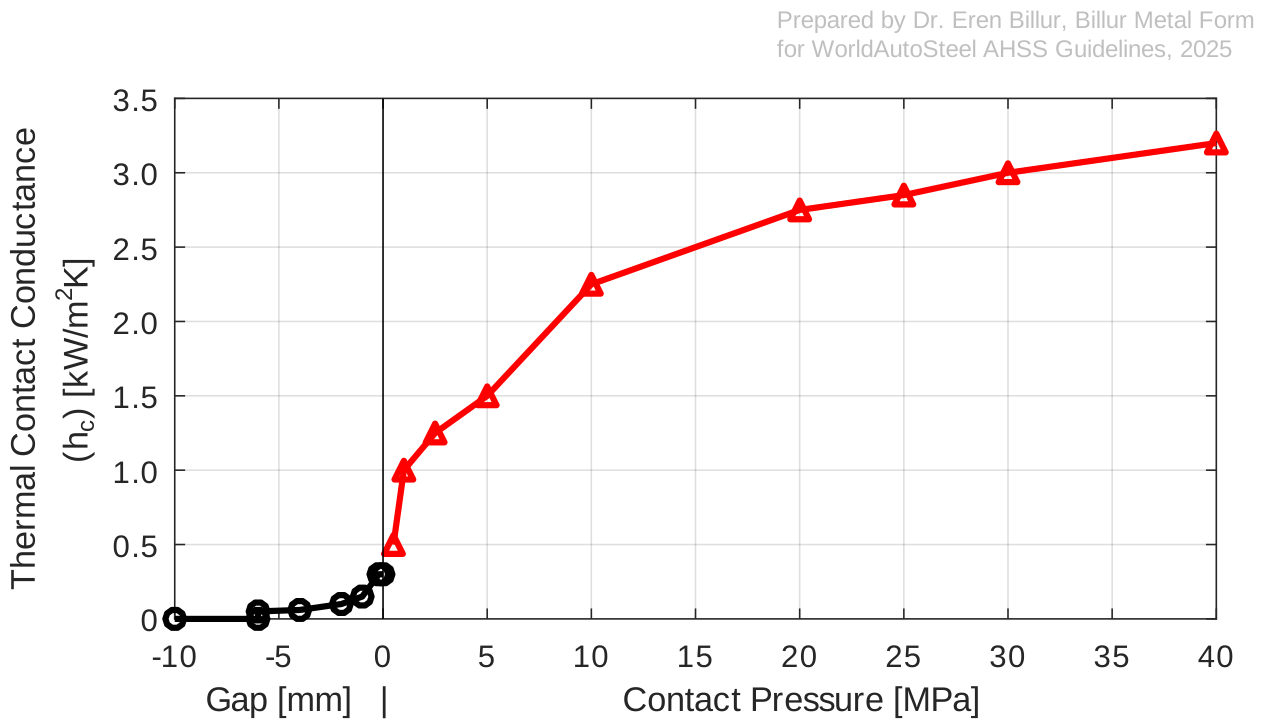
In this process, the blanks are fully austenitized in the furnace, but the cooling rate is locally adjusted. Areas with a local cooling rate over 27 °C/s are expected to transform to nearly 100% martensite. In soft zones, cooling rates should be lower than this critical number. The cooling rate is a function of the thermal contact conductance (see Figure 34a) and the temperature gradient (ΔT) between the tool surface and the blank. Thus, lower cooling rates can be achieved byB-14, M-61:
Heated die inserts,
Die relief method, or
Local die inserts with low thermal conductivity.
If a segment of the die is heated, sections of the blank in contact with this area have a smaller temperature gradient (ΔT), leading to reduced heat flow and lower cooling rates. It is possible for this phenomenon to occur unintentionally if the dies are not cooled efficiently and hot spots are observed.B-14
In the automotive industry, heated die inserts are used typically between 300 °C and 550 °C. Electric cartridge heaters are commonly used, Figure 33a. If the inserts are heated over 420 °C (the martensite start temperature for 22MnB5), no martensite formation occurs while the blank is in contact with the dies. For productivity purposes, sheets should stay in the dies as short as possible. After industrial quenching times (10-15 seconds), soft zones may still have phase transformation during air cooling in the exit conveyor. This may cause distortion in the final part. One simulation study found that 80 seconds of air cooling was needed to transform all the austenite into other phases.B-14, M-61, B-69, B-70
Figure 33: Tailored parts with heated die inserts: (a) Simulation model with cooling channels in hard zones and heating in soft zones, (b) phase transformation may continue in soft zones.B-70
This process has been applied as early as 2009 (if not earlier) in the Audi A5 Sportback.B-20 The car had a three-zone B-pillar, similar to the sketch in Figure 31c. Since then, several complicated geometries have been realized in an industrial scale with “heated die insert” technology. In 2015, the 10th generation Honda Civic was equipped with complicated rear rails, shown in Figure 22. These components are also made with heated inserts.C-22 Also debuting in 2015, the Audi Q7 was equipped with B-pillar reinforcements with soft band and soft flanges (similar to Figure 31d).H-62
Another method to get lower cooling rates is to reduce the contact pressure or introduce an air gap between the blank and the die. As seen in Figure 34a, as the contact is lost, thermal contact conductance (hc, the amount of heat passing through the unit area of blank to the tool) is reduced significantly. For example, at 5 MPa contact pressure, hc is equal to 1.5 kW/m2°K. As soon as the contact is lost, the value is less than 0.3 kW/m2°K.B-70 A Schematic showing an “air gap” design for soft flanges is presented in Figure 34c and compared with a conventional die in Figure 34b.C-4
Figure 34: (a) Thermal contact conductance is less than 0.3 kW/m2°K, once there is an air gap (Citation B-55, raw data from CitationsO-14 and M-62); (b) schematic of a conventional press hardening die, (c) introducing air gap to obtain soft flanges.C-4
Use of insulated die inserts is another method to obtain tailored cooling. These reduce the heat flow from the blank to the die. Typical hot forming tool steels have a heat conductivity of 27-32 W/m2°K. When ceramic insulators with less than 6 W/m2°K conductivity are used (Figure 35a), the inserts will heat over 200 °C after a few strokes. In the meantime, tool steel temperature is around 60 °C, as they can dissipate more heat energy. The strength in the soft zones may be as low as 650 MPa, corresponding to approximately 200 HV hardness.K-55 The method may not be feasible for mass production, as the first few parts will not have the same strength/elongation level until a “steady-state” is achieved, shown in Figure 35b and 35c. In real production conditions, the production may be halted for maintenance, safety, or work hours reasons, thus every re-start will have several “out-of-spec” parts.
Figure 35: Insulating inserts: (a) experimental die set at TU Graz, (b) hardness distribution of the first part, (c) hardness distribution after a few cycles (re-created after Citations B-14 and K-55).
3) Tailored Tempering (Post-Process Annealing)
The last method for obtaining tailored properties is to produce soft zones by annealing a fully hardened part. This can be done by induction or laser, as seen in Figure 36. Post-process annealing is relatively simple to implement, as the blank is heated and quenched uniformly in press hardening line. Annealing is added as a follow-up operation, which adds cost, but gives flexibility. The number of soft zones, their geometries and mechanical properties can be varied during the project timeline. Soft zones could be adjusted for different cars/variants that share the same component but require different soft zones.B-14, G-48, J-22
With this approach, however, final properties of soft zones may vary significantly depending on the temperature-time curves. Several studies have shown yield strength may spread from 450 MPa to 1300 MPa, and tensile strength between 550 and 1350 MPa. In addition, geometric distortion may also occur, since the heating and cooling is done in a local area. Finally, surface and coating conditions may change, affecting weldability, corrosion resistance and/or e-coat adhesion.L-40, M-61, B-72
BMW has been using induction annealed B-pillars in their 3-Series Sedan/Touring (2011-2019) and X5 SUV (2013-2018)R-27, and possibly other vehicles. Volvo has studied the technology with induction annealing, Figure 36a.H-61 Benteler has been using induction annealing for secondary bending of bumper beams.L-40 Gestamp evaluated laser tempering on prototype parts, around 2016, Figure 36b.B-71 Since 2022, Gestamp has been using laser tempering, initially starting with Nissan Ariya BEV.N-29
Figure 36: Post-process tailored annealing can be done by: (a) inductionH-61, and/or (b) laser.B-71
Post Hardening Processing: Trimming
Options include setting the trim line with a developed blank, laser cutting, soft zones, hard trimming, and hot cutting.
A developed blank might be appropriate for areas which can accommodate larger tolerances.
Soft zone development to aid in easier trimming and joining is discussed in the prior section.
Laser trimming leads to improved fatigue strength and raises the failure strains, but suffers from relatively long cycle times, high capital investment and operation and maintenance cost. More powerful high-end lasers measurably reduce cycle times.
Hard trimming is not usually the best long-term option for high volume applications since the hardness of the PHS part can be about the same as the hardness of trim steels. A harder, more wear resistant tool steel would now fail by chipping.
Hard trimming creates burrs, large shear zone, and microcracks in the fracture zone. Each of these lowers the fracture strain required for failure, which lowers component crashworthiness.
Hard trimming of fully hardened PHS needs extra consideration since the scale formed on uncoated PHS may lead to abrasive wear and Al-Si coatings may stick to the tool creating galling conditions. Uncoated blanks may be hard trimmed after sandblasting. PVD coatings improve wear resistance on trimming surfaces. World-class operations which use hard trimming specify advanced powder metallurgy tool steels with advanced tool coatings.
In-die hot cutting may occur after heating but before forming, and is usually limited to approximately 90° cuts. Microstructural changes occurring during the heating and cooling cycle influences flange position tolerances.
Hot cutting may also occur after forming but before quenching. This approach requires less force and causes reduced damage to the tooling and dies since the steel is softer to cut. One challenge is that the formed part is cooling during the cutting operation, with the part changing dimensions as it cools. Hot cutting improves cycle time and may reduce capital investment. Grains of fine ferrite rather than martensite form at hot sheared edge, reducing the delayed fracture risk associated with hydrogen embrittlement.
Honda developed this process to both trim the part as well as pierce holes during hot stamping to replace time- and energy-intensive laser cutting. (Figure 37, Figure 38). Their approach uses a high-speed hydraulic system, and further reduces cooling time by spraying the part with water (see Direct Water Quenching in PHS Processes). The first production application was the 2012 Honda N-Box Center Pillar Reinforcement. H-49, S-112
Figure 37: Honda N-Box Center Pillar Reinforcement created with In-Die Trimming during Hot Stamping.H-49
Figure 38: Internal Die Trimming Process at Honda. (re-created after Citations H-49 and T-40).
In its simplest explanation hot stamping consists of five operations: (1) blanking (or cutting-to-length), (2) forming, (3) heating, (4) cooling (quenching) and (5) trimming/piercing. Each process route listed below has a distinct order or type of these operations.
In most sources, hot stamping is explained with only two processes: Direct hot stamping (also known as Press Hardening) and indirect hot stamping (also known as Form Hardening). Although we define Press Hardening as a synonym to “Direct Hot Stamping” in this context, the term Press Hardening is also used throughout these AHSS Application Guidelines in a broader sense to collectively describe the different hot forming and quenching processes, including these 11 processes for part manufacturing:
Direct Process (Blanking > Heating > Forming > Quenching > Trimming > [Surface Conditioning if uncoated]) a. Direct Process with Direct Water Quenching
The most common process route in hot stamping is still the direct process (also known as press hardening).D-20 Here, previously cut blanks are heated typically in a roller hearth or a multi-chamber furnace to over 900 °C to create a fully austenitic microstructure. Depending on the material handling system, transfer from the furnace to the press may take up 6 to 10 seconds.B-14 During this time, the blank may cool down to 700 °C.G-24 Forming is done immediately after the blanks are transferred on the die, and should be completed before the blank cools below 420 °C.G-24, K-18 The blanks are formed in hot condition (state ❷ in Figure 1), and quenched in the same die to achieve the required properties. For 22MnB5 steel, if the quenching rate is over 27 °C/s, the part will transform to almost 100% martensite. For productivity purposes, higher cooling rates are often realized.K-18 Typical cycle times for a direct process with the 22MnB5 chemistry could be between 10 and 20 seconds, depending on the thickness.B-14 Global R&D efforts target improvements in cycle time.
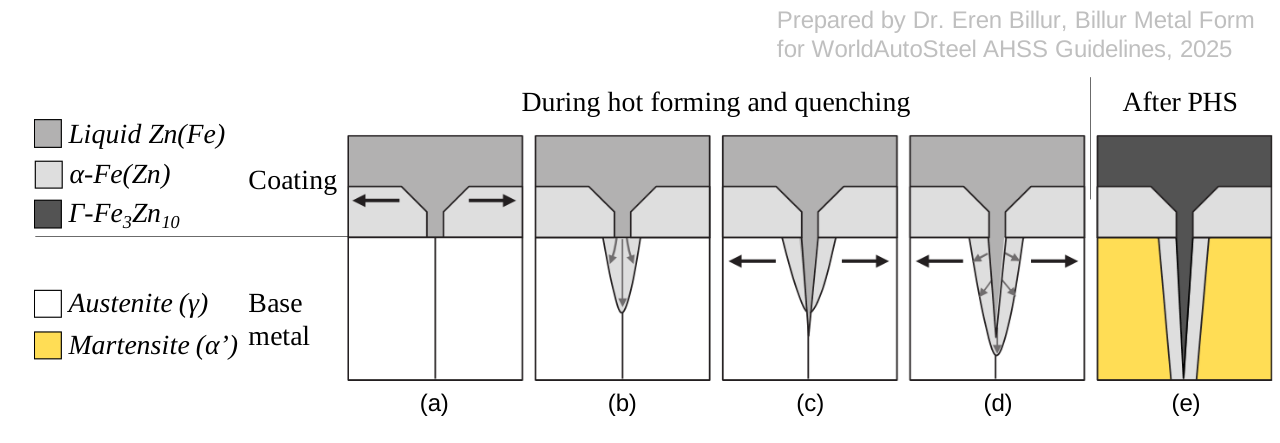
The process is typically used for bare/uncoated steels (UC) or AlSi coated steels (AS). Zn coated blanks (GI or GA) are not suitable for direct process, as pure Zn melts around 420 °C and GA (Zn-Fe) coatings around 530-780 °C. (see Figure 3)G-25 If forming is done with liquid Zn over the blank, microcracks may fill with Zn and lower the fatigue strength of the final part significantly.K-20 A recently developed alloy minimizes these concerns, as explained in the “Pre-cooled Direct Process” section below.
Figure 1: A visual overview of the microstructural and property changes occurring during the press hardening process. In direct press hardening process, forming is done at state ❶, whereas the indirect process occurs at ❷. Re-created after B-14.
Typical Al-Si coatings prevent scale formation and decarburization at elevated temperatures. The aluminum-rich coating contains 7% to 11 wt.% Si, and acts as a barrier to offer corrosion resistance during service.F-14 In automotive industry, typical coating weights are AS150 (75 g/m2 coating on each side) or AS80 (40 g/m2 coating on each side).A-51 Refer to our page on Al-Si coatings for more details.
Formed parts must be trimmed and pierced to final geometry. In the direct process, the most common trimming method is laser cutting. The capital expense and cycle times associated with laser trimming factor into overall part cost calculations. In most plants, every hot stamping line has 3 to 5 laser trimming machines.B-14
When using uncoated blanks, controlled atmosphere in the furnace helps avoid excessive decarburization and scale formation. Surface scale locally changes the critical cooling rate, alters the metal flow and friction, and leads to premature tool wear. When uncoated material is hot stamped, a surface conditioning step like shot blasting may be required after forming to remove the scale.A-52Varnish coatings may also be used with direct hot stamping.
The grades used with the direct process may be referred to as CR1500T-MB-DS (Cold Rolled steel with typical 1500 MPa Tensile strength, Manganese-Boron alloyed for Direct [Hot] Stamping).
Direct Water Quenching
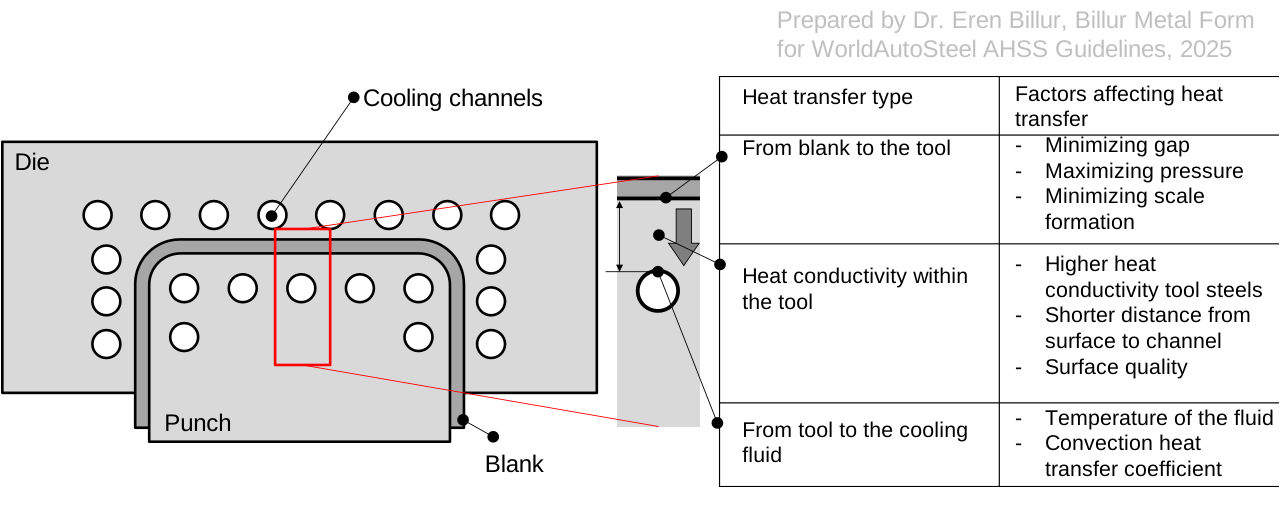
In conventional direct process, quenching is done by pumping water through the cooling channels drilled (or cast) in upper and lower tools. Since 2012, Japanese OEM’s and tier suppliers are commonly using a modification to this process, called “direct water quenching.”T-40 In this method, upper and/or lower tools are drilled with nozzles shown in Figure 2. The technique can be used with coated blanks. N-27
Figure 2: Direct water quenching: (a) schematic of the nozzles [N-27], (b) blank on the lower tool before deformation [T-51].
This technique may lead to productivity improvements: On a 1.4 mm steel, the 10-second quenching time associated with a conventional approach was reduced to 2.5 seconds with direct water quenching.N-28
Quenching time would be especially longer with thick blanks. When patchwork blanks are used, the thickest portion of the part dictates the quenching time duration. One Japanese OEM claims that at 3.8 mm thickness, water quenching may increase the part per minute by 5 times.K-64
Typically used for galvanized blanks, indirect hot stamping, also known as form hardening, starts by cold forming the part (at ❶ in Figure 1) in a transfer press or a tandem transfer line. The direct process is limited in that only one forming die can be used– which also doubles as quenching die. However, the indirect process can accommodate multiple die stations, allowing for the production of more complicated geometries, even those with undercuts. The part has almost the final shape exiting the cold forming press, where piercings and trimming could also be completed. The formed parts are then heated in a special furnace and quenched in a second die set.B-14,K-21,F-15
BMW 7 Series (2008-2015, codenamed F01) was the first car to have Zn-coated indirect hot stamped steel in its body-in-white.P-20 Zn-based coatings are favored for their cathodic protection. Zn-coated blanks may develop a thin oxide layer during heating, even if a protective atmosphere is used in the furnace. This layer helps preventing evaporation of the Zn (pure Zn evaporates at 907 °C at 1 atm. pressure), but must be removed before welding and painting. To achieve this, sandblasting, shot blasting or dry-ice (CO2) blasting are typically used.F-14, F-15 The grades for indirect process may be referred to as CR1500T-MB-IS (Cold Rolled steel with typical 1500 MPa Tensile strength, Manganese-Boron alloyed for Indirect [Hot] Stamping).
The indirect process cannot be applied to Al-Si coated blanks, as they have a hard but brittle intermetallic layer which would crack during cold deformation.F-14
In this process, as summarized in Figure 3, some of the forming occurs at the cold stage [❶ in Figure 1]. The semi-formed part then is heated in the furnace, significantly deformed to a final shape [❷ in Figure 1] and subsequently quenched in the same die. This process had found greater use in Europe, especially for deep drawn parts such as transmission tunnels. To avoid scale formation in the furnace and hot forming, a special varnish-type coating is commonly used. The final part must be surface cleaned with a process like shot blasting before welding to remove the varnish coating.S-63 Since the early 2010s, the process has been replaced by the direct process of Al-Si-coated blanks.N-15
Figure 3: Summary of “hybrid process” where deformation is done both at cold and hot conditions.B-14
A galvannealed (GA) coating primarily contains zinc and iron, and solidifies at temperatures between 530 °C and 782 °C, depending on the zinc content, as shown in Figure 4. Liquid Metal Embrittlement (LME) is not a concern if forming is done in the absence of liquid zinc.G-25 Hensen et al. conducted several studies heating galvannealed 22MnB5 blanks to 900 °C, but forming after a pre-cooling stage. As seen in Figure 5, the microcrack depth is significantly reduced when the forming starts at lower temperatures.H-26
Figure 4: Temperature limit to ensure absence of Zn-rich liquid (re-created after Citations G-25 and G-26)
Figure 5: Crack depth reduces significantly if the forming is done at lower temperature (re-created after Citation H-26)
In the pre-cooled direct process, the blank is heated above the austenitization temperature (approximately 870-900 °C), and kept in the furnace for a minimum soaking time of 45 seconds. Once the blank leaves the furnace, it is first pre-cooled to approximately 500 °C and then formed. Typical 22MnB5 cannot be formed at this temperature due to two reasons: (1) its formability would be reduced and (2) forming could not be completed before the start of martensite formation at approximately 420 °C.K-22, V-8
The development of a “conversion-delayed” hot stamping grade (see PHS Grades with approximately 1500 MPa TS), commonly known as 20MnB8, addresses these concerns. This steel has lower carbon (0.20%, as the number 20 in 20MnB8 implies), but higher Mn (8/4 = 2%). This chemistry modification slows the kinetics of the phase transformation compared with 22MnB5 – the critical cooling rate of 20MnB8 is approximately 10 °C/s. This allows the part to be transferred from pre-cooling stage to the forming die.
Then the blank is transferred to “pre-cooling stage” in less than 10 seconds. Precooling must be done at a rate over 20 °C/s, until the blank is cooled to approximately 500 °C. Then the part is transferred from the pre-cooling device to the press in less than 7 seconds. The forming is done in one hit in a hydraulic or servo-mechanical press, which can dwell at the bottom. The cooling rate after pre-cooling is advised to be over 40 °C/s. The final part may have zinc oxides and surface cleaning may be required.K-22, V-8 The grade may be referred to as CR1500T-MB-PS (Cold Rolled steel with typical 1500 MPa Tensile strength, Manganese-Boron alloyed, for Pre-cooled Stamping process).
Recently, several researchers have shown that pre-cooling may be used for drawing deeper partsO-6 or to achieve better thickness distribution of the final part.G-24 Since formed parts are typically removed from the press at approximately 200 °C, a pre-cooled part may require shorter time to quench, thus may increase the parts per minute.G-24
Multi-Step Process
(Blanking > Heating > Pre-cooling > Forming and Trimming > Air Quenching)
22MnSiB9-5 (see PHS Grades with approximately 1500 MPa TS) is a new steel grade developed by Kobe SteelH-27 for a transfer press process, named as “multi-step”. This steel has higher Mn and Si content, compared to typical 22MnB5. As quenched, the material has similar mechanical properties with 22MnB5. As of 2020, there is at least one automotive part mass produced with this technology and is applied to a compact car in Germany.G-27 Although critical cooling rate is listed as 2.5 °C/s, even at a cooling rate of 1 °C/s, hardness over 450HV can be achieved.H-27 This critical cooling rate allows the material to be “air-hardenable” and thus, can handle a transfer press operation (hence the name multi-step) in a servo press. This material is available only with Zn coating and requires a pre-cooling step before the transfer press operation.B-15 The grade may be referred to as CR1500T-MB-MS (Cold Rolled steel with typical 1500 MPa Tensile strength, for Multi-Step process).
Also known as inline hardening, this process is used to make profiles with constant cross sections and linear shapes. It is also possible to have closed profiles (tubes and similar) with this technology by adding a laser welding to the line (see Figure 6a). The process has been successfully used in many car bodies. Typical uses are: cross members, roof bows, side impact door beams, bumpers (with no sweep), front crash components and similar.G-28, H-28, F-16
Figure 6: Roll form PHS: (a) steps of the lineH-28, (b) photo of the induction heated area.G-28
The heating is typically done with induction heating, see Figure 6b. In one of the installations, the first induction coil operates at 25 kHz and the second at 200 kHz. The total heating power was approximately 700 kW and the line can run as fast as 6 m/s. It was found that if lubrication, speed and bending radius can be optimized, AlSi coated blanks could also be cold roll formed. However, they are not suitable for induction heating and may require a different process, such as form fixture hardening.K-23
The main difference between roll form PHS and form fixture hardening is the secondary “hot bending and forming” in the press. Here, cold roll formed profiles are cut-to-length and heated in a furnace. Heated profiles are then transferred to a press die, where sweep bending and/or further forming operations are completed. The parts are subsequently quenched in the same press die, similar to direct process. A typical line layout can be seen in Figure 7a. The secondary forming makes variable sections possible, as seen in Figure 7b. As the parts are cold roll formed and furnace heated, uncoated, Zn-coated and AlSi-coated (with precautions not to crack AlSi) blanks may be used in this process.H-28, K-23
Figure 7: Form fixture hardening: (a) schematic of a lineK-23, (b) bumper beam of Ford Mustang (2004-2014) made by this process..L-26
Form fixture hardening parts have been used in low volume cars such as Porsche 911 or Bentley Mulsanne. In some cars, form fixture hardening was used to manufacture the A-pillar of the convertible (cabriolet) versions of high-volume cars, especially in Europe. Most of these applications involved uncoated boron alloyed tubes (similar to 22MnB5).H-28 The 5th generation Ford Mustang (2004-2014) had form fixture hardened bumper beams in the front and rear, as seen in Figure 7b.L-26 The form fixture hardening process allows for use of AlSi coatings, since the steel goes through a furnace rather than an induction hardening step. Special care must be taken in cold roll-forming process to ensure the AlSi coating is not damaged.K-23
3-Dimensional Hot Bending and Quenching (3DQ)
(Cut-to-length tube > Local induction heating > 3-D Bending > Direct Water Quenching > Piercing)
In the 3DQ process, a tubular profile with constant cross section is quickly heated by induction heaters. By using movable roller dies, the part is bent. As the material is fed, water is sprayed on the induction heated portion of the tube to quench and harden it. The schematic of the process and the material strength through the process is illustrated in Figure 8. It is also possible to replace the movable roller dies with an industrial robot to bend and twist the tubular part.T-25
Figure 8: Schematic of 3DQ system (re-created after Citation T-25)
In January 2013, Mazda announced that the ISOFIX connection in the rear seats of a Premacy MPV (known as Mazda 5 in some markets) model was produced by this method, as shown in Figure 9a.M-24 In 2016, Honda started production of the sports car NSX (known as Acura NSX in some markets). This vehicle’s A-pillars were produced by 3DQ process, as shown in Figure 9b.H-29
Details of induction heating parameters, robot programming, cooling systems are explained in detail in reference L-71. The technology has been used on uncoated blanks, where a secondary e-coating may be used for corrosion prevention.T-52 In 2019, an academic study showed the feasibility of using Zn coated blanks in the 3DQ process.R-10
Form Blow Hardening / Hot Gas Metal Forming
(Cut-to-length tube or roll formed and welded profile > Heating > Pressure forming > Quenching > Piercing)
In hot gas metal forming, the tube or roll formed closed profile is heated first and placed onto a die set. The ends of the tube are sealed and pressurized gas or granular medium is forced inside the tubular blank. The forming forces are applied by the high pressure built inside the tube.C-16 It is also possible to end-feed material as in the case of (cold) tube hydroforming. After the deformation, the part is quenched either with water (form blow hardening) or by the air inside and the surface of the tool cavity (hot gas metal forming). In the latter case, similar to direct process, a water-cooling channel system inside the die inserts are typically required.K-23
Fraunhofer IWU has developed a hot gas metal forming setup in which both forming and quenching are done by compressed air. As shown in Figure 10a, the internal pressure can be increased to 70 MPa (700 bars) in only 6 seconds. The tools are cooled with internal cooling channels, Figure 10b. The parts produced with this technique have hardness values between 460 and 530 HV. Crashbox and camshafts are among the parts produced.L-27, N-16
Figure 10: Blow forming and quenching with air: (a) change of pressure in the tube and temperature of the tube, (b) simulation of heat transfer to the dies and cooling channels (recreated after Citation N-16)
In 2011, Spanish car maker SEAT published a study on form blow hardening process. In this study, they replaced the A-pillar and cantrail assembly of the SEAT León (Mk2, SOP 2005) with one form blow hardened part. The results were summarized asO-7:
7.9kg weight reduction per car,
Sheet material utilization increased from 40 to 95%,
Number of components in the assembly on one side of the car reduced from 5 to 2, and the roof rail was eliminated.
One advantage of this technology is the possibility to use the same die set for different wall thickness tubes. By doing so, parts can be produced for different variants of a car (i.e., coupe and cabrio, or North American spec. vs. emerging market spec.). This information applies to monolithic (i.e., same thickness throughout the tube) and tailor rolled/welded tubes as well.F-16 In 2017, tubular parts are hot gas formed by using 1900 MPa PHS tubes for customer trials.F-17
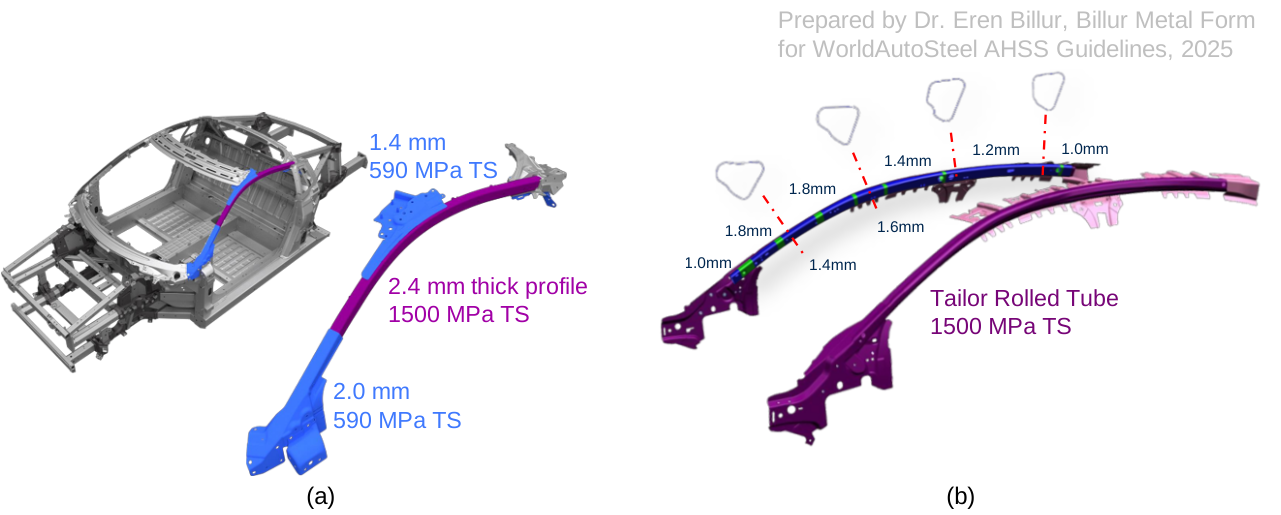
Since 2018, form blow hardening is being used in the Ford FocusB-16 and Jeep Wrangler.B-17 In the Ford Focus, a tailor rolled tube with thicknesses between 1.0 and 1.8 mm is used in Europe, whereas in China it is a monolithic (same thickness everywhere) 1.6 mm thick tube.F-16
A recent study using 42SiCr10 steel tubes of 2.5 mm wall thickness showed that the final part may have as high as 2500 MPa tensile strength. The heat treatment is summarized in Figure 11. When the tubes are removed from the dies (at around 195 °C) and heated in a furnace for 10 minutes at 260 °C, the total elongation is improved to over 20%, while the tensile strength is reduced to about 2000 MPa, as shown in Figure 12.W-43.
Figure 11: Process route of HMGF, including an additional Q&P process (re-created after W-43).
Figure 12: 42SiCr10 tubes after hot metal gas forming and additional partitioning process (re-created after W-43).
Steel Tube Air Forming process (STAF) is a modified and enhanced version of hot gas metal forming. In the STAF process, a metal tube is bent in a small press at room temperature. The preformed tube is transferred to the main press, where it is heated to the critical temperature using electrical conduction (Joule heating) by passing current through the tube. The first step creates the flanges where the press closes on the partially air blow formed tube. In the second step, air pressure completes the process by forming the desired cross section and overall shape.
As seen in Figure 13, the parts made with the STAF process can have a flange area for further welding/joining to other car body components. Some peripheral parts can be integrated into a single STAF part, improving productivity and manufacturing cost. The continuous closed cross section is created without the need for spot welding, improving stiffness and further reducing manufacturing costs. These factors combine to result in mass savings compared with conventional hot formed components, as indicated in Figure 14. F-18,F-41,F-42
Figure 13: The Steel Tube Air Forming process compared with other manufacturing approaches. STAF integrates flange formation without the need for additional spot welding.F-42 HSS stands for High-Strength Steel and may refer to conventional HSS or Advanced High-Strength Steels (AHSS).
Figure 14: The STAF process may reduce part count, assembled weight, and manufacturing complexity compared with other manufacturing approaches.F-41
The following video, kindly provided by Sumitomo Heavy Industries, highlights the STAF process along with associated benefits.F-41
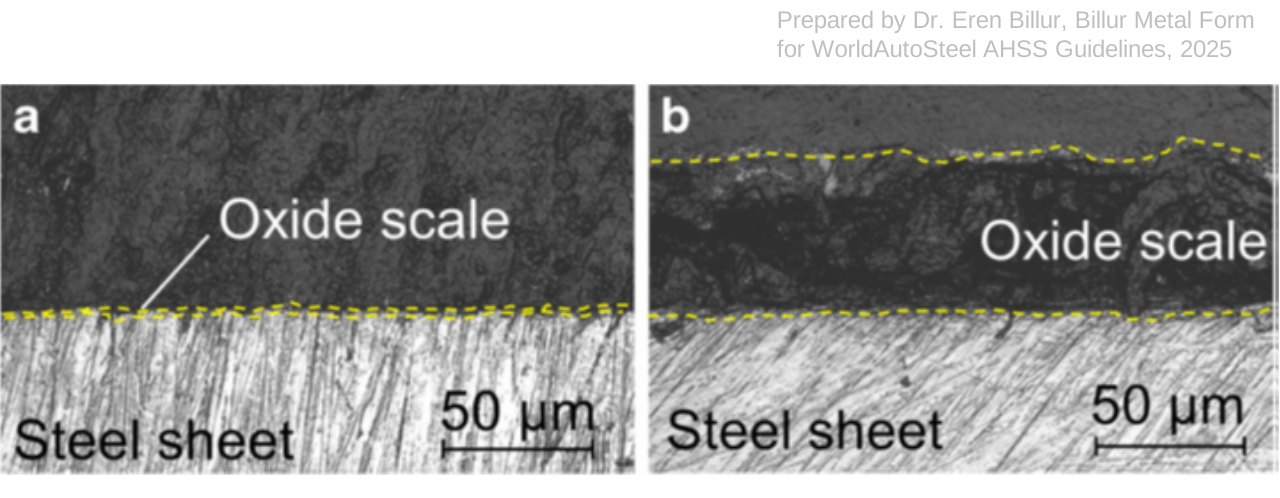
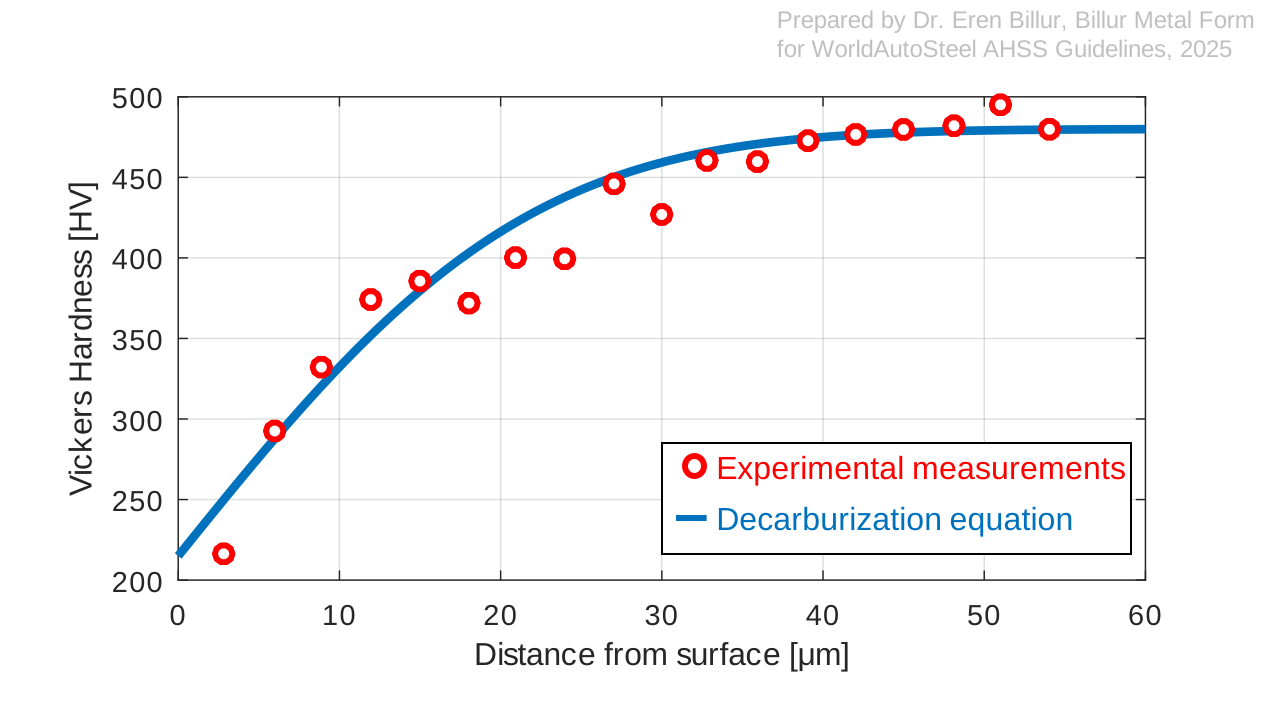
In 2020, a Chinese company developed a new process route, named as vacuum hot stamping. In this technology, uncoated blanks are used. Parts are heated in a vacuum furnace (10-5 to 10-3 atm), resulting in a very thin (< 2μm) oxide layer and a decarburization layer of approximately 30 μm. The parts are formed in conventional hot stamping tools and press. The formed parts are first laser cut and then electro-galvanized. An additional tempering may be applied. Finally the coated parts are oiled for storage purposes. The process route is shown in Figure 15.A-86, A-87
Figure 15: Process route of vacuum hot stamping.A-87
The technique allows using uncoated blanks, thus has the following advantages over AlSi coated blanks:
Higher bending angle
No contamination on the furnace rollers
Fast heating possible
Ablation is not required for LWTB preparation
Since final part is Zn coated, has better corrosion resistance
Compared to uncoated blanks without vacuum forming, the advantages can be listed as:
Thin layer of oxides
No shot blasting required
Final part is Zn coated, has high corrosion resistance.
The initial press hardening steels of the 1970s were delivered bare, without a galvanized or aluminized layer for corrosion protection (i.e., uncoated). During the heating process, an oxide layer of FeOx forms if the furnace atmosphere is not controlled. Through the years, several coating technologies have been developed to solve the following problems of uncoated steels:F-14, F-33
Scale formation, which causes abrasive wear and requires a secondary shotblasting process before welding,
Decarburization, which leads to softening close to the surface,
Risk of corrosion.
The first commercially available coating on press hardening steels was patented in 1998. The coating was designed to solve the scaling problem, but it also offered some corrosion resistance.C-24 Since the coating composition is primarily aluminium, with approximately 9% silicon, it is usually referred to as AlSi, Al-Si, or AS.
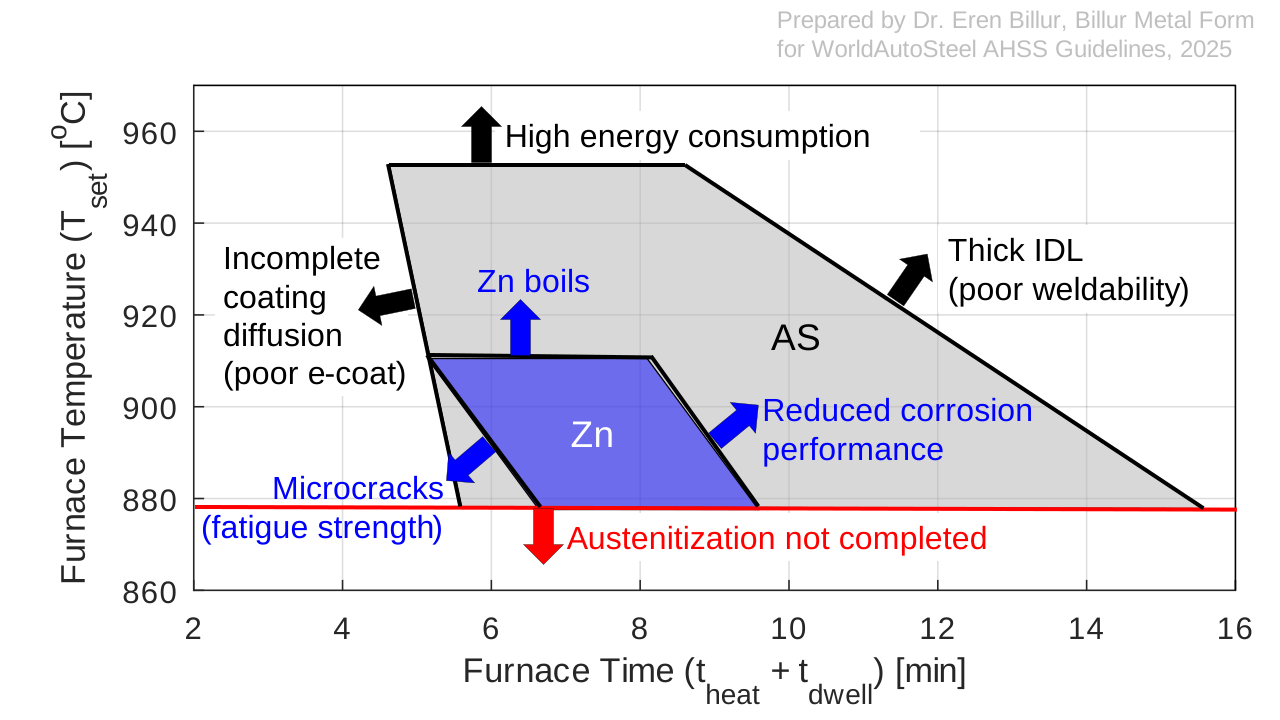
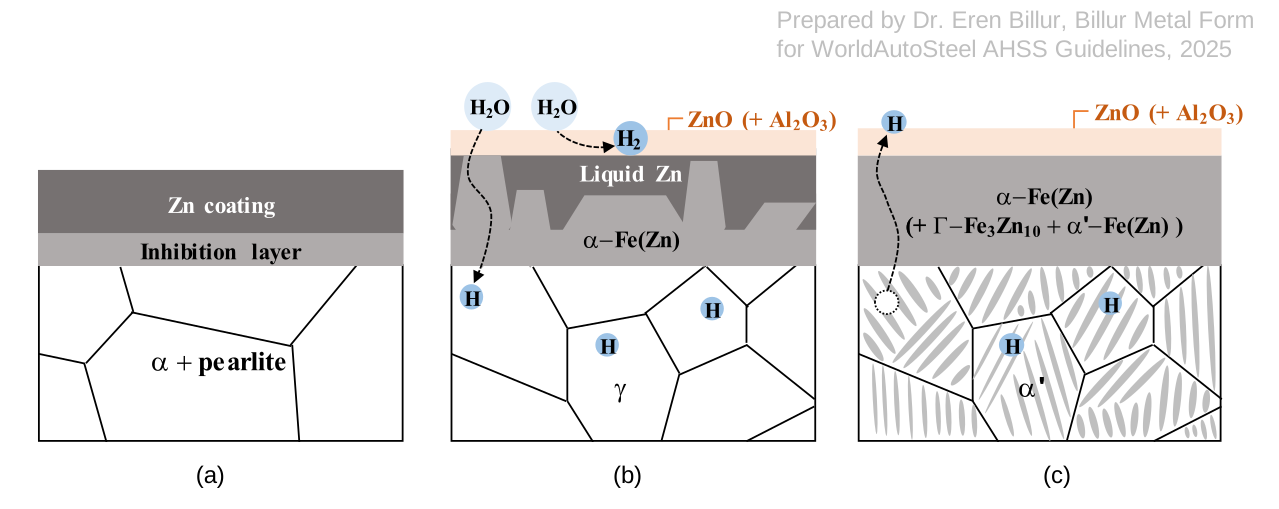
Coating thickness is nominally 25 μm (75 g/m2) on each side and referenced as AS150. A more recent offering is a thinner coating of approximately 13 μm, and is referenced as AS80.A-51 The AS coating requires a special heating curve and soaking time for better weldability, corrosion resistance and running health of the furnace. Most OEMs now include furnace dew point limitations to reduce/avoid hydrogen embrittlement risk.
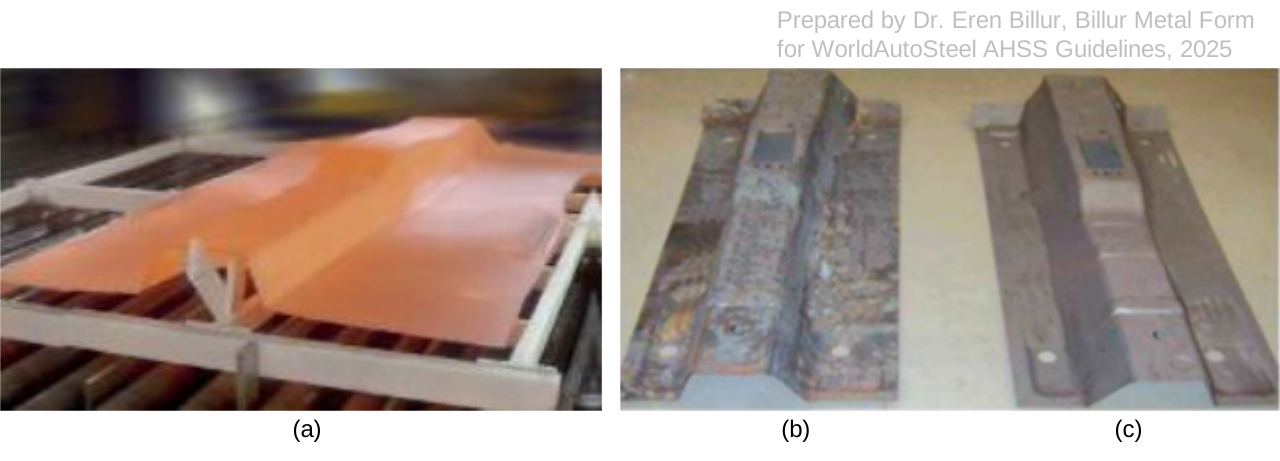
In 2005, Volkswagen was looking for a method to manufacture deep drawn transmission tunnels and other complex-to-form underbody components using press hardened steels. Although AS coatings were available, parts could not be formed to the full draw depth using the direct process, and the coating on the AS coated blanks cracked during the cold forming portion of the two-step hybrid process. Using uncoated blanks led to severe scale formation, which increased the friction coefficient in hot forming. For this particular problem, a varnish coating was developed. The coating was applied at a steel mill, and shipped to Volkswagen’s stamping plant. The varnish coated blanks were first cold pre-formed and then heated in a furnace, as seen in Figure 1a. Hot pre-forms were then deep drawn to full depth tunnels. As shown in Figure 1b, scale formed on parts which did not have the coating. A varnish coated blank could be cold formed first without crack formation in the coating, and then hot formed without any scale, Figure 1c.S-63, F-34 Since then, some other varnish coatings also have been developed.
Figure 1: Transmission tunnel of 6th generation Volkswagen Passat (2005-2014): (a) hot forming of pre-form, and final parts: (a) uncoated blank would suffer from scaling, (c) scale-free parts can be formed from varnish-coated blanks.F-34
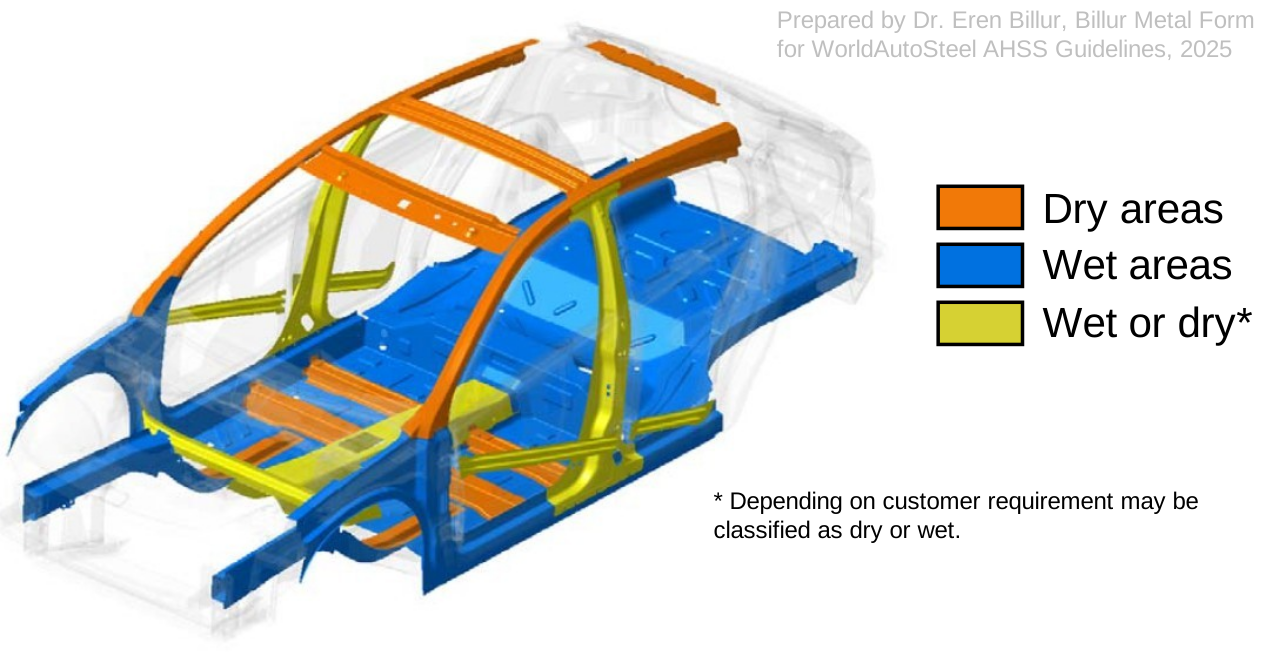
In car bodies, components that are sealed from external moisture are referred to as dry areas. These areas have low risk of corrosion. Areas that may be exposed to moisture are wet areas. Precautions must be taken to avoid corrosion of the sheet metal, such as using galvanized or pre-coated steel. Sealants can also be applied to joints to keep out moisture. The presence of humidity in these areas increases the risk of forming a galvanic cell, leading to accelerated corrosion. These areas have higher risk of corrosion and may require additional measures. Figure 2 shows dry and wet areas. In this figure, parts colored with yellow may be classified as wet or dry, depending on the vehicle design and the OEMs requirements.G-41
Figure 2: Dry and wet areas in a car body. (re-created after G-41)
An estimated ~40% of press hardened components are in dry areas. Thus, high corrosion protection is desired in the 60% of all press hardened components which are employed in wet areas.B-48 Zn-based coatings are favored for their cathodic protection, but require tight process control. The first commercial use of Zn-coated PHS was in 2008, using the indirect process.P-20 Since then, direct forming of Zn-coated PHS has been studied. When direct formed, furnace soaking temperature and time must be controlled carefully to avoid deep microcracks.G-41, K-20 Recently developed are two new Zn-coated press hardening steel grades, 20MnB8 and 22MnSiB9-5, both reaching approximately 1500 MPa tensile strength after processing. Using these grades requires a pre-cooling process after the furnace to solidify the Zn-based coating. 20MnB8 can be direct hot formed after pre-cooling, whereas 22MnSiB9-5 can be formed in a transfer press in the “multi-step” process.K-21, H-27
Depending on the coating type and thickness, the process type, controls and investment requirements may change significantly. For example, some press hardening lines may be designed to form blanks with only Al-based coatings. Table 1 summarizes the advantages and disadvantages of several coating systems.
Table 1: Summary of Coatings Available for PHS.
Coating Type
Advantages
Disadvantages
Uncoated
Lower cost
No corrosion protection
Scale forms during press hardening (shotblasting)
Surface decarburization (reduces strength)
Al-Based
No scale formation
No decarburization
Barrier corrosion protection from surface Al2O3 oxide layer
Weldable without sand blasting (oxide layer is thin enough)
No cathodic protection
Limited to direct process
High maintenance cost in roller hearth furnaces (coating sticks to rollers)
Only for direct process (cracks form if cold stamped)
Hard surface and abrasive
Zn-Based
Cathodic protection
May have lower friction coefficient
No decarburization; no scale
Cathodic corrosion protection
May require indirect or pre-cooled process
Risk of microcracks
Surface oxide slows but does not stop Zn evaporation
Liquid Zn can lead to LME and adhesion of Zn to tools
Sand blasting may be needed to remove oxide layer for welding
Varnish
Fast heating possible
Risk of microcracks
Direct, Indirect, Two-Step Hybrid, Roll-form PHS can be achieved
Applied at stamping facility
May require sandblasting for weldability
Uncoated Blanks
The earliest press hardening steels did not have any coating on them. These steels are still available and may be preferred for dry areas in automotive applications. If the steel is uncoated and the furnace atmosphere is not controlled, scale formation is unavoidable. Scale is the term for iron oxides which form due to high temperature oxidation. Scale thickness increases as the time in furnace gets longer, as seen in Figure 3. Scale has to be removed before welding, requiring a shotblasting stage. Thicker scale is more difficult and more costly to remove.M-53 Early attempts to reduce (if not avoid) scale formation saw the use of an inert-gas atmosphere inside the furnace.A-52 Today, a mixture of nitrogen (N2) and natural gas (CH4) is typically used.F-35 In China, at least one tier supplier is using a vacuum furnace to prevent scale formation.A-68
Figure 3: Oxide layer (scale) on press hardened steel after: (a) fast resistance heating (10 seconds in air), (b) furnace heating (120 seconds in air).M-53
While heating uncoated steel in the furnace, if the conditions are favorable for iron (Fe) oxidation, carbon (C) may also be oxidized. When the carbon is oxidized, layers close to the surface lose their carbon content as gaseous carbon monoxide (CO) and/or carbon dioxide (CO2) is produced.S-87 The depth of the “decarburization layer” increases with dwell time in the furnace, until an oxide layer (scale) formed. Scale acts as a barrier between the bare steel and atmosphere. As the carbon is depleted in the “decarburization layer”, the hardness of the layer is decreased, as seen in Figure 4. Decarburization is usually undesirable since it lowers the strength/hardness and may negatively affect fatigue life.C-26
Figure 4: Hardness distribution of an uncoated steel after 6 minutes in a 900 °C furnace, showing hardness decrease as the surface layers lose their carbon. (Re-created after C-26.
Several methods are available to improve the corrosion resistance of uncoated PHS parts:
E-coating after welding, before painting is a typical step of car body manufacturing, for rustproofing.
If descaling can be done by using chromium shots (in shotblasting), a thin film of chromium-iron may grow on the surface and improve the corrosion resistance.F-14
Vapor galvanizing (also known as Sherardizing) of uncoated steel after descaling, an experimental study described in Citation G-42.
Electro-galvanizing after hot stamping, as described in Citation A-68.
Change the base metal chemistry to one that is more oxidation resistant.L-60 Figure 5 compares the shiny non-oxidized surface appearance of parts made from this grade with that made from a conventional uncoated press hardening grade on the same production line with the same processing conditions.W-28
Figure 5: Oxidation resistant PHS grades may not need descaling or coatings for sufficient corrosion resistance. (re-created after W-28).
Aluminium-Based Coatings
The first commercially available coating on press hardening steels was patented by Sollac (now part of ArcelorMittal) in 1998. This coating was designed to address the scaling problem, but also offers some barrier corrosion resistance.C-24 The nominal coating composition is 9-10 wt.% Si, 2-4 wt.% Fe, with the balance Al.L-39 The coating may be referred to as AlSi, Al-Si, AluSi or more commonly AS. Nominal as-delivered coating thickness is 25 μm (approximately 75 g/m2) on each side, and is usually referred to as AS150, with 150 referencing the total coating weight combining both sides, expressed as g/m2. More recently, a thinner coating of 13 μm (30-40 g/m2 on each side, AS60 or AS80) is now commercially available.A-51 When AS coated blanks are “tailor rolled,” the coating thickness is also reduced in a similar percentage of the base metal thickness reduction. Corrosion protection is similarly reduced, and furnace parameters need to be adjusted accordingly.
As delivered, AS150 has a coating thickness of 20-33 μm and a hardness of approximately 60 HV. The “interdiffusion layer” (abbreviated as IDL) has a high hardness and low toughness at delivery, as seen in Figure 6a. Due to the brittle nature of the IDL, AS coated blanks cannot be cold formed unless very special precautions are taken. During heating, iron from the base metal diffuses to the coating forming very hard AlSiFe (or AlFe) layers close to surface. At the same time, Al and Si of the coating diffuse to the IDL, growing it in thickness and reducing its hardness, Figure 6b. Earlier studies have shown that heating time (and also furnace temperature) has direct effect on the final thickness of IDL, as shown in Figure 7. Once the IDL thickness surpasses approximately 16 to 17 μm, the welding current range (ΔI = Iexpulsion – Imin) may be well below 2 kA.V-15, V-21, W-34 The dwell time must be long enough to ensure proper surface roughness (see Figure 6b) for e-coatability.M-27, T-40Figure 10 summarizes the heating process window of AS coatings. The process window may change with base metal and coating thicknesses.
Figure 6: AS coating micrographs: (a) as-delivered, (b) after hot stamping process (re-created after V-15, V-21, W-34, G-32)
Figure 7: IDL thickness variation with furnace dwell time (Image created by B-55 using raw data from V-21, G-32, K-41.)
Hydrogen induced cracking (HIC, also known as hydrogen embrittlement) has been a major problem for steels over 1500 MPa tensile strength. AS coated steels may have higher diffusible hydrogen, when delivered, due to the aluminizing process occurring at 680 °C. In addition, AS coated grades may have a hydrogen absorption rate up to three times higher during heating.C-27 To reduce the hydrogen diffusion, it is essential to control the heating process (both heating rate and dew point in the furnace). AS coated blanks absorb hydrogen at room temperature; however, this happens at much lower rates than uncoated or Zn-coated blanks.J-21 Diffusible hydrogen can be removed from the press hardened part by re-heating the part to around 200 °C for 20 minutes or longer, in a process called de-embrittlement.V-21, G-32, G-43,J-21
For the abovementioned reasons, AS coated higher strength grades (i.e., PHS1800 and over) are required to have precise “dew point regulations” during the heating in furnace. Their final properties, especially elongation and bending angle, may be guaranteed only after paint baking, as shown in Figure 8.B-32 Paint baking is standardized in Europe as a treatment for 20 minutes at 170 °C, which may act like a de-embrittlement treatment.E-10Some OEMs also require dew point control and “subsequent de-embrittlement treatment” for AS coated PHS1500. This is typically done by the tier supplier, before the paint baking process.
Figure 8: Effect of diffusible hydrogen (Hdiff) on mechanical properties of: (a) uncoated PHS2000, (b) AS coated PHS2000 in an uncontrolled furnace atmosphere (re-created using raw data from C-27).
Another method to reduce the risk of hydrogen embrittlement is to adjust the coating composition. The bath chemistry for a standard AS coating consists of up to 90% aluminium, about 8% to 11% silicon and a maximum of 4% iron. Adding a maximum of 0.5% alkaline earth metals, like magnesium, for example has been shown to result in 40% less hydrogen diffusion into steel.R-29,T-45
Although not common in the industry, Al-Zn and Zn-Al-Mg based coatings have also been developed for press hardening processes.F-14 Recently introduced is an aluminium-silicon coating with magnesium additions. When oxidized with water vapor, Mg releases less H2 and thus may reduce the diffusible hydrogen.S-88
AS coatings may cause costly maintenance issues in roller hearth furnaces, as the coating may contaminate the rollers.B-14 Special care has to be taken to avoid the issue or prolong the maintenance intervals.
Zinc-Based Coatings
AS coatings provide some corrosion protection, known as “barrier protection”, as the coating forms a barrier between the oxidizing environment and the bare steel. It is quite common in Europe for a car to have 12 years corrosion protection warranty. To achieve such corrosion resistance, a typical car may have over 85% of its components galvanized.S-89
The use of Zn-coated PHS has been relatively low, compared to AS coated and uncoated grades. In 2015, 76% of the PHS sold in EU27+Turkey was AS coated. In these markets, 18% of the PHS sold was uncoated and only 6% was Zn coated.D-20 This can be attributed to the susceptibility of Zn-coated PHS to Liquid Metal Embrittlement (LME, also known as Liquid Metal Assisted Cracks (LMAC) and Liquid Metal Induced Embrittlement (LMIE)).C-28, L-46
After heating and soaking in the furnace, the base metal should be in the austenitic phase. During heating, the Zn coating reacts with the base metal and forms a thin solid layer of body-centered-cubic solid solution of Zn in α-Fe, shown as α-Fe(Zn) in Figure 9. During deformation, a microcrack can be initiated in this layer at the grain boundaries of the austenite in the base metal, as indicated in Figure 9a. As the crack propagates, zinc from the α-Fe(Zn) layer diffuses along the austenite grain boundary and combines with iron from the base steel to form additional α-Fe(Zn), Figure 9b. Cracks propagate through the weak a-Fe(Zn) grain boundary layer, allowing liquid zinc (with diffused iron) to advance into the capillary crack (Figure 9c). After quenching, the base metal transforms to martensite and the liquid Zn transforms to a hard and brittle intermetallic phase, Γ-Fe3Zn10.C-28
Figure 9: Schematic illustration of microcrack formation. (re-created based on C-28.)
In the direct forming of Zn-coated blanks, with or without pre-cooling, microcracks in the base metal may be observed. Microcracks less than 10 μm into the base metal does not affect the fatigue strength of the part.K-20 Microcrack depth is a function of coating thickness, furnace conditions (temperature and dwell time, see Figure 10), forming severity and forming temperature. It may be possible to direct form galvannealed (GA coated, ZF or ZnFe in the coating) blanks.
The boiling point of pure zinc (907 °C) is very close to the austenitization temperature of 22MnB5 (885 °C), so the heating process window of Zn-coated blanks must be controlled precisely. When the furnace dwell time is too short, deeper microcracks may be observed. When the furnace dwell time is too long, corrosion performance may be degraded. Thus, heating process window of Zn-coated blanks is significantly narrower than that of AS-coated blanks, as seen in Figure 10.B-14, S-90
Figure 10: Heating process window of AS and Zn coatings (representative data, may not be accurate for all sheet and coating thicknesses, re-created based on B-14, S-90.
Zn-based coatings may result in very low diffusible hydrogen after press hardening. In one studyJ-21, no diffusible hydrogen was detected, as long as the furnace dwell times are shorter than 6 minutes. Even after 50 minutes in the furnace, diffusible hydrogen was found to be around 0.060 ppm. Zn coatings do not act as a barrier for hydrogen desorption (losing H through the surface). Even at room temperature, Zn coated blanks may lose most of the diffusible hydrogen within a few days (also referred to as aging). See Figure 11.
Figure 11: Evolution of galvanized coating: (a) as delivered: Ferrite+Pearlite in base metal, almost pure Zn coating with Al-rich inhibition layer, (b) at high temperatures: austenite in base metal + α-Fe(Zn) and liquid Zn + surface oxides, (c) after press hardening: martensite in base metal + α-Fe(Zn) and Γ-phase coatings + surface oxides. The oxides are removed prior to welding and painting.J-21
Zn-based coatings may have a yellowish color after hot stamping. The surface oxides have to be removed before welding. This is typically done by shotblasting.
PHS blanks with a ZnNi coating were previously available. The ZnNi coating provided a low friction coefficient, a large process window in the furnace, the ability to be cold formed (indirect or two-step hybrid processes were also possible) and decreased susceptibility to LME.B-56 ZnNi coated PHS was used in the rear rail of the Opel Adam city carH-57 for a short period, until the coating was discontinued.C-29
Varnish Coatings
Another method to avoid scaling and decarburization is to apply varnish coatings, Figure 12. In this method, uncoated steel can be either coil coated or blanks can be manually coated with the paint-like varnish coatings.B-14 These coatings may also be referred to as “paint-type” or “sol-gel”.
Figure 12: Manual application of a varnish coating.F-34
Depending on the type of coating, they may allow very fast heating – including induction and conduction heating with electric current. Since the coating does not require time to diffuse, furnace heating may be completed in less than 2 minutes.F-34 Again, depending on the type, surface conditioning may not be required before welding or e-coating.B-14
They were used in automotive industry between 2005 and 2010. By 2015 there were four different types of varnish coatings, some of which are now discontinued.B-14 These coatings may be useful for prototyping and low volume production.
In a 2019 study by a global OEM, finite element analysis was used to determine equivalent performance between different thickness and grade combinations in B-pillars and other crash components.O-10 This study found that a 1.6 mm thick hot stamped PHS1500 B-pillar had similar performance as a B-Pillar cold stamped from 3.1 mm thick mild steel, representing a 42% weight savings, Figure 1. Higher strength PHS grades can save an additional 12% to 15% compared to PHS1500. Thus, it may be possible to achieve almost a 50% weight savings by using PHS2000 rather than mild steel in B-pillar applications.
Figure 1: Lightweight potential of several steel grades, compared to mild steel (re-created after Citation O-10)
Weight savings is one reason to choose press hardened steels over cold stamping grades. Although replacing PHS1500 with an 1180 MPa cold formable grade would have a 7% to 8% weight penalty according to the study summarized in Figure 1.O-10 In some cases, this may seem like an acceptable trade-off between weight and process. In recent years, cold forming of 1310 and 1470 (can also be rounded as 1350 and 1500, respectively) MPa steels have been commercially applied in automotive structural parts.K-45 However, press hardening offers several additional advantages over cold stamping of 980 MPa and higher strength grades:B-42
The formability of cold stamping higher-strength AHSS steels (even 3rd Gen AHSS) is substantially lower than press hardening steels at elevated temperatures. Their formability typically decreases with increased strength. For example, 3rd Gen 1180 MPa grades may have 16 to 18% total elongation,B-85 whereas a 3rd Gen 1470 MPa grade may have 5 to 6%.K-45
Repeatable dimensional accuracy in cold stamping of 980 MPa and higher strength grades is challenging due to springback and the natural and inherent variations in the mechanical properties of the incoming sheet. Cam-forming and several design countermeasures may be required.K-66
Significant wear, chipping, and plastic deformation can be seen in cutting and forming tools, as very high contact pressures may be present.
Cold stamping higher-strength AHSS requires high-capacity presses (both in terms of tonnage and energy).
Hard-to-predict edge cracks are commonly observed in higher-strength AHSS.
Brief History of PHS Usage and Milestones
Press hardenable steel (PHS) production for automotive applications started in 1984. Since this first use through the mid-1990s, door beams were the only press hardened body parts.F-31 Thus, the maximum possible use was limited to 4 parts per car. Depending on a car’s dimensions and the thickness of the sheet, a door beam may weigh between 0.8 kgT-33 to 2.0 kg.M-40 Thus, the total PHS usage at this time was around 3 to 8 kg per car. In a typical mid-size car (D-segment in Europe) the body may weigh around 320 kg without doors and closures, and 420 kg with them.M-41 This results in an estimated usage corresponding to 1% to 2% of the body weight (including doors). By the mid-1990s, several cars had press hardened front and/or rear bumper beams. Thus, the possible maximum usage had been increased to 5 to 6 parts per car.B-43
In 1998, Arcelor patented an aluminium-silicon (Al-Si) coated steel for the press hardening process.L-39 The first automotive application of this coated steel occurred in 2000.V-15 Using coated steel reduces the process cost, since neither the furnace protective atmosphere nor the post-quench sandblasting are requiredV-15, although there is an increase in raw material costs. By 2001, several cars used hot stamped A and/or B-pillars, leading to PHS use in bodies-in-white surpassing 3% for the first time.R-17
In 2002, the first-generation Volvo XC90 had several press hardened and roll form hardened components, making up 6% of the BIW mass. This SUV received 5 stars from EuroNCAP and IIHS frontal and side impact tests.B-44 Ten years after the start of production, the car even achieved a “Good” rating – the highest category – from the very harsh IIHS small overlap test introduced in 2012.I-27
In 2005, Volkswagen rolled out their 6th generation Passat. This car had several components made with a special varnish coating, which facilitated use of a two-step hybrid process in addition to Al-Si coated direct hot stamped components. This car represented the first time press hardening was used on numerous components, including the transmission tunnel and the firewall. For the first time, PHS use in the BIW exceeded 15%.W-31
In 2012, PHS usage surpassed 20% barrier, first with the Volvo V40 (2nd gen. 2012-2019) and then with the Audi A3 (3rd gen. 2012-2020) and VW Golf (7th gen. 2012-2019). The percentage hit 28% with VW Golf.B-45Figure 2 summarizes this growth.
Figure 2: Summary of PHS evolution: total production in million parts per yearO-11, number of linesH-45, parts per car (approximate) and, BIW percentage (approximate). (Car body CAD data is taken from Citation N-20 and modified for visualization).
Since 2015, many European and North American cars have doubled their PHS usage. In Europe, several VolvoS-81, VW GroupH-43, and FordB-16 models have over 30% of their body (in mass) made of PHS. Some cars may have different PHS usage in different countries. For example, PHS makes up 31% of the body structure in the 6th generation VW Polo in Europe, but in Brazil, this number is reduced to 18.5%.V-16
In 2017, Audi started production of the 4th generation A8. In its earlier generations, A8 was 100% aluminum. The car was mostly aluminum in the third generation (2010-2017). This A8 used a two-layer steel B-pillar, with one layer of cold stamped steel and another layer of press hardened steel. PHS usage was around 3% of the BIW, whereas aluminum usage was over 92%F-32. In the 4th generation A8 on the road since 2017, the body now has 17% press hardened steel.H-44 Several other aluminum intensive cars also have press hardened steels in their bodies for improved crash performance.
In North America, PHS usage has increased rapidly in the last decade. It is not uncommon to see over 10% PHS usage in recently introduced cars. For example, whereas the 9th generation (US Spec) Honda Civic introduced in 2011 had only 1% PHS usage, the 10th generation saw the usage increase to 14%.C-22 The 5th generation Ford Explorer (2012-2019) had only 5% press hardened steelM-42, but exceeds 25% in the 6th generation (2019-present).M-40 The new electric SUV Ford Mustang Mach-E is among the highest PHS-using vehicles in North America in 2020, at 29.5% of its BIW.M-43 The latest generation Chrysler Pacifica has over 11%T-19 and Jeep Wrangler over 18%B-17 of the body (excluding doors and closures) made from press hardened steels. Several GM models have also surpassed 10% barrier, such as Chevrolet Bolt EV with 12%.O-12
In addition, Chinese car makers have begun using significant amount of press hardened steels. According to Ma and others, the first hot stamping line in China was established in 2014.M-74Figure 3 shows the High-Strength Steel (HSS) usage in Great Wall Motors’ Haval branded SUVs that started production between 2011 and 2017. PHS usage started in the 2014 Haval H2.W-32 The company (Great Wall Motors) invested in an in-house PHS line in 2015.A-64 After the investment, PHS usage exceeded 10%.W-32 In 2018, the total number of hot stamping lines in China was 180. The number increased to 200 in 2020, and by 2022 approached to 260.M-74 The third generation Haval H6 was introduced in mid-2020. The car has over 71% HSS, a hot stamped door ring and one of the first applications of PHS2000 steel.V-12 China is currently the biggest producer and market of “New Energy Vehicles” (plug-in hybrid electric, battery electric or fuel cell). Several electric cars built in China have over 20% PHS. Since 2021, Voyah Free had over 30% PHS in the body in white.W-33 Similarly the more recent Chinese New Energy Vehicles (NEVs) have very high PHS usage, including 2000 and 2200 MPa grades. These are listed in Table 1.
Figure 3: Increase of PHS usage in Great Wall Motors’ Haval branded SUVs from 2011 to 2017 (re-created after Citation W-32)
The increased use of press hardened steel can be attributed to:
Press hardening grades have high global availability, compared to most other cold formable steels over 980 MPa tensile strength.
More OEMs and tier suppliers around the globe are investing in the technology. Thus, available capacity for press hardening has increased significantly in the last decade.
With the help of commercially available finite element simulation software, more complicated geometries and larger parts can now be designed for press hardening process.
Before the First Automotive Application (1973-1984)
Press hardening, as we know it today, was developed in Luleå, Sweden, by Norrbottens Järnverks AB (abbreviated as NJA, translated as Norrbotten Iron Works). The first patent application was completed in 1973, and awarded in 1977.N-23 In 1975, a six-year long industry-university project was initiated at the Luleå University of Technology, together with Volvo Trucks and NJA. Later in 1978 while the project was ongoing, NJA merged with two other steel companies to form Swedish Steel AB (SSAB).B-45
The technology was first commercialized in agriculture components, where the high strength of press hardened steels are favored for wear resistance. In 1981, Norberg Spades and Tool Plant started the first mass production press hardening process. The company produced over 20,000 spades with a cycle time of approximately 20 seconds, while using uncoated 1.5 mm thick sheets.B-45 In 1982, the rights of the patents were transferred to Plannja AB, which was a subsidiary of SSAB. Plannja, a sheet metal forming company, formed Plannja HardTech to specialize in press hardening.
In 1984, automotive application of press hardened steel started with the Saab 9000 side impact door beams, as seen in Figure 4. A total of 4 parts were used in this car.A-66 The uncoated blanks were almost half the thickness of a cold stamped beam.T-26
Figure 4: Door beams of the Saab 9000 (1984-1998): (a) A see-through car in Saab MuseumS-82, (b) the hot stamped door beam part.L-42
More Automotive Applications (1984-2005)
In 1986, Jaguar XJ (XJ40) also used press hardened door beams.L-43 In 1991, Plannja HardTech received a contract from Ford to supply the door beams of Mondeo, a car to be built and sold both in Europe and North America. The production started in 1993.L-43, B-49 Until December 1994, Plannja HardTech was the sole supplier of press hardened components. By the end of 1994, as the patent rights expired, Accra Teknik AB was established for hot forming of profilesB-46 and Benteler started production of door beams for the VW Polo.L-40
The majority of the press hardened parts were door beams through the mid-1990s, with Plannja HardTech producing approximately 6 million beams in 1996. By this time, the demand for bumper beams was also increasing.F-31 In 1996, the new version of the Renault Safrane included a press hardened bumper beam. The steel was uncoated and supplied by Usinor.B-43 By the end of 1996, EuroNCAP (European New Car Assessment Program) was formed, which increased the pressure on the OEMs for improved crashworthiness.T-26 Plannja HardTech was renamed as SSAB HardTech in 1997. In 1998, both the new Volvo S80L-44 and Ford FocusL-43 were equipped with press hardened bumper beams. SSAB HardTech opened its first plant in North America, in 1998, in Mason, MI.T-26
1998 saw the development of one of the most important breakthroughs in press hardening technology. French steel maker Usinor developed an aluminium-silicon (AS) pre-coated steel, commercialized as Usibor® 1500 (indicating the typical tensile strength, 1500 MPa).C-24, L-39
In 2000, BMW rolled out its new 3 series convertible, the E46 model. In this vehicle, the A-pillar is made from 3 mm thick uncoated, press hardened sheet. This was the first PHS application at BMW, and one of the first PHS A-pillar reinforcements.S-83, S-84 Accra started delivering roll formed PHS components for the Volvo V70, initially an optional 3rd row seating support. Approximately 10,000 parts/year were supplied.G-28
AS-coated steel was first hot stamped at a French tier 1 supplier, Sofedit.V-15 This grade was first used in the front bumper beam of 2nd Generation Renault Laguna (2000-2007). Laguna 2 was the first car to receive a 5-star safety rating from Euro NCAP.V-10 AS-coated blanks were also used in PSA Group’s Citroën C5 (1st Gen: 2001-2007) in the front bumper beam, and the right/left A-pillars. These three parts weighed a total of 4.5 kg, approximately 1% of the total BIW weight, Figure 5a. About one month later, PSA Group started production of the compact hatchback Peugeot 307. This car had five hot stamped components (right/left A-pillar, right/left B-pillar and rear bumper beam). Unlike the Citroën C5, these parts were uncoated. The total weight was 12 kg, corresponding to 3.4% of the BIW weight.R-17, P-27
Figure 5: Increase in press hardened component usage: (a) 2001 Citroën C5P-27, b) 2002 Volvo XC90L-29 and (c) 2005 VW Passat.H-50
Volvo started producing the XC90 SUV in 2002. The body-in-white with doors and closures weighed 531 kg.B-44 A total of 10 parts, weighing 37 kg are either roll form hardened or direct stamped PHS. This accounts for approximately 7% of the BIW weight.L-43 During its time, this was the highest use of PHS in car body. In Figure 5b, the press hardened components other than the 2nd row seat frame – which is a load bearing body part – are shown.
Accelerated Use and Globalization (Since 2005)
The use of press hardened parts increased rapidly after the introduction of the VW Passat in 2005. This car had approximately 19% of its BIW (by weight) made from press hardened steels, Figure 5c. Some parts in this car saw the first use of varnish coated blanksin a two-step hybrid process. Three parts were produced using either an indirect or hybrid process, including the transmission tunnel.H-50 In the same year Ford Mustang (5th Gen: 2005-2014) was rolled out. The car had “form fixture hardened” front and rear bumpers, supplied by Accra.G-28 The bumper geometry and the production method are highlighted in Figure 7 at this link.
In 2006, the Dodge CaliberK-37 and BMW X5P-28 were among the first cars to have tailor-rolled and press hardened components in their bodies. Tailor-rolling is a special process where the thickness of the blank is varied by a flexible rolling process, shown in Figure 6a. The incoming blank is a press hardening steel grade at the thickness equal to or slightly thicker than the targeted thickest portion of the part, and flexibly cold rolled to have a variable thickness distribution. Figure 6b shows the BMW X5 B-pillar.
Figure 6: (a) Tailor Rolling ProcessZ-5, (b) B-pillar of BMW X5 (2nd Gen: 2006-2013).P-28
Figure 7: B-pillars of: (a) Audi A4, which had a tailor welded blank with HSLA in the lower section, whereas (b) VW Tiguan created a tailored part with a soft zone (re-created after Citations H-32, B-20).
BMW 7 Series (5th Gen: 2008-2015) became the first car to have Zn-coated press hardened components in its body-in-white. The car also contained uncoated parts, as shown in Figure 8. The total PHS usage in this car was approximately 16%.P-20
Figure 8: PHS usage in BMW 7 Series (5th Gen: 2008-2015) (re-created using Citation P-20).
Since 2010, almost all automakers are using hot stamped steel in their car bodies. In 2012, VW Group unveiled the 3rd generation Audi A3 and 7th generation VW Golf. Both cars were sharing the modular transverse platform (MQB) and had over 24% of their BIW hot stamped. This number was 28% in the 2012 Golf. As of 2020, there are many global cars built on MQB platform (NAFTA, EU, China), and most of them have over 24% hot stamped components.B-14
As the technology advanced, press hardened components found uses beyond lightweighting. One such application reduced the width of the A-pillars to improve the driver’s vision. Some roof bows need to be removed in cars with a panoramic sunroof. In such designs, safety is maintained by reinforcing the A-pillars and cantrails with press hardened steel.N-21
Press hardening allowed car makers to create unconventional cars. In 2011, Hyundai rolled out the 1st generation Veloster. The car was a 3-door coupé (also known as 2+1, with one door on the driver side and 2 doors on the passenger side), and as such contained axisymmetric front doors. Thus, the car could not have a full B-ring, as illustrated in Figure 9a.B-14, R-19 Another unconventional design was the Ford B-Max subcompact MPV sold in Europe between 2012 and 2017. The car had conventional swing doors in the front and two sliding rear doors. The B-pillar was integrated in the doors and was made of press hardened steels. PHS components (integrated B-pillar in front and rear doors, door beams and cantrail) are shown with blue color in Figure 9b.B-14, L-45
Figure 9: Unconventional car designs with PHS: (a) Hyundai Veloster, asymmetric 2+1 doors coupé (re-created after Citation R-19), and (b) Ford B-Max, sub-compact MPV with integrated B-pillars in the doors.L-45
A door ring, as seen in Figure 10, is a single piece that covers the A and B-pillars, hinge pillar, and front portion of the rocker reinforcement. In 2013, the Acura MDX (3rd Gen: 2013-2020) became the first car to have a hot stamped door ring. The part was a tailor welded blank of two sub-blanks, as shown in Figure 10a. The design saved about 6.2 kg weight per car and had high material utilization ratio thanks to sub-blank nesting optimization.A-67, M-46 Currently several Honda (& Acura) and FCA models have hot stamped door rings. One of the most recent applications was in 2017 Chrysler Pacifica with 5 sub-blanks, as shown in Figure 10b. This car also has a PQS550 sub-blank at the lower B-pillar region.D-28
Figure 10: Hot stamped door rings: (a) First application in 2013 Acura MDX had 2 sub-blanks, (b) a more recent application in 2017 Chrysler Pacifica has 5 sub-blanks with PQS550 at the lower B-pillar (re-created after Citations B-14, A-67, D-28)
Since 2013, tubular “hardened steels” are also found in car bodies. One of the first applications was in Mazda Premacy (Mazda 5 in some markets). In this case, a special 3-D hot bending and quenching (3DQ) was employed. The same process was also used in making the A-pillars of the 2nd generation Acura NSX (also known as Honda NSX in some markets, 2016-2022), as seen in Figure 11a.H-29 Since 2018, tubular parts formed with internal pressure — form blow hardened parts — are being used in Ford Focus (4th Generation) and Jeep Wrangler (4th Generation). In the European version of the Ford Focus, a tailor rolled tube with thicknesses between 1.0 and 1.8 mm is used, as depicted in Figure 11b.B-16, B-17
Figure 11: Tubular hardened steel usage in A-pillars of: (a) 2016-2022 Acura NSXH-29, (b) 2018-Present Ford Focus.B-16
PHS Use in xEVs: Hybrid Electric, Battery Electric, Plug-in
Hybrid Electric, & Fuel Cell Electric Vehicles
The first commercially available Hybrid Electric Vehicle (HEV) was the Toyota Prius (1st Gen: 1997-2003). The second-generation Prius (2003-2009) had very few press hardened components, as shown with red color in Figure 12a. This was the first time Toyota used hot stamped components.M-47 The third generation Prius (2009-2015) had approximately 3% of its BIW press hardened. In the 4th generation Prius released in 2015, the share of >980 MPa steels has risen to 19%.U-10Figure 12b shows the press hardened parts in the 4th generation Prius.K-38 The 5th generation Prius still has some hot stamped components,T-54 but the body has a number of cold formed 1180 and 1470 MPa gradesF-50, possibly reducing the hot stamped steel usage.
Figure 12: PHS usage in Toyota Prius: (a) 2nd generation (2003-2009) and (b) 4th generation (2015-2022) (re-created after Citations M-47, K-38)
Tesla started production of Battery Electric Vehicles (BEV) in 2008, with the Tesla Roadster. This was a low volume vehicle with aluminum and carbon fiber body. Relatively higher volume vehicles, Model S and Model X had aluminum bodies, with PHS reinforcements in the pillars and the bumpers. Model S is known to have a roll-formed PHS bumper beam. High volume Model 3 and Model Y have a significant amount of press hardened components in their bodies.T-35
In 2011, General Motors started production of its first Plug-in Hybrid Electric Vehicle (PHEV), the Chevrolet Volt (known as Opel Ampera in EU and Vauxhall Ampera in the UK). This car had six hot stamped components, including A and B pillars, accounting for slightly over 5% of the BIW mass.P-29
In 2013, Chevrolet modified its supermini car Spark to have a BEV variant. The Spark with internal combustion engine weighed around 1040 kg and had good results from all IIHS tests. In the roof crush test, the car’s upper body was able to carry a total of 4615 kg, approximately 4.4 times of its weight. The EV version, on the other hand, had to carry the weight of the batteries and weighed around 1350 kg. The under body was modified to protect the battery from impacts. The upper body had to be modified to improve the load the roof can withstand in the roof strength test. PHS was used both in upper and underbodies, accounting for 14% of the BIW (Figure 13).H-51
Figure 13: Distribution of different steel families in Chevrolet Spark and Spark EV (re-created after Citation H-51).
Recent years have seen many BEVs developed and marketed in North America, EU and China markets. Table 1 shows PHS usage in some of these vehicles. For the car bodies listed, only the Nissan Leaf does not have any components made from PHS.T-36 The Jaguar I-PACE, with an aluminum intensive car body, has an innovative PQS-PHS patchwork B-pillarB-21, shown in detail in Figure 12a on the PHS Grades page. Most other BEVs had PHS usage over 10% of their BIW mass by the early 2020s. Renault ZOET-37, Chevrolet BoltO-12 and Opel Corsa-eS-85 are all subcompact cars (B-segment in EU) with steel intensive bodies. Chevrolet Bolt has aluminum doors and closures.O-12 Nissan Leaf and VW ID.3 are compact cars (C-Segment), both have steel intensive bodies. The 1st generation Nissan Leaf had aluminum doors and closuresT-36 and VW ID.3 used extruded aluminum to protect the battery from side impacts [54]. The Audi e-tronE-9, Jaguar I-PACEB-21 and Aiways U5S-86 are medium size SUVs with significant aluminum usage, yet all have some percentage of PHS in their bodies. Polestar 1 is a plug-in hybrid sports car, built-in China and sold under the Volvo Car performance brand, Polestar. The car’s upper body is almost exclusively carbon fiber reinforced polymer (CFRP), whereas the under body is 93% steel, including significant amount of PHS.N-22 ORA R1 is a small city car (A-segment), produced by Great Wall Motors.S-86 The car was the 3rd best-selling EV in China in October 2020.M-48 Voyah, a new brand of Dongfeng Motors, released the iFree SUV.W-33
Table 1: PHS usage in several battery electric vehicles (BEVs) around the world.
* BIW (exc. d/c) = Body in White excluding doors and closures
In December 2020, Hyundai announced their new electric platform, E-GMP. The platform will utilize press hardened steel components to secure the batteries.H-52
Another xEV technology is Fuel Cell Electric Vehicle (FCEV), which uses hydrogen as fuel to generate electricity. One of the first FCEV cars was the 2009 Honda FCX Clarity. The car was not sold, but leased in limited numbers. There were less than 50 cars leased in the US.V-18
Since 2015, Toyota has been selling its Mirai FCEV. The car has to carry high pressure hydrogen tanks (2 in the 1st generation and 3 tanks in the 2nd generation), battery, and electric motor. The car is similar in size with Camry, but is about 350 kg (770 lbs) heavier. The first generation Mirai had only B-pillars, cantrails and lateral floor members press hardened.T-38 The second generation has a number of parts with PHS in its under body as well.T-39
The second-generation Honda Clarity FCV was introduced in 2016. This BIW has approximately 15% press hardened components, by weight (including doors and closure weight).K-39 In 2018, Hyundai Nexo became the first fuel-cell car to be tested by EuroNCAP and received 5 stars. The car has A and B pillars, rocker reinforcements, and several under body components made from PHS, as seen in Figure 14.H-53
Figure 14: Press hardened steel usage in Hyundai Nexo Fuel Cell vehicle: (a) side view and (b) top view (re-created after Citation H-53).
Since the early 2020s, electrification has been the main focus of automotive industry. Heavier batteries add at least two segments of weight. To put this in perspective, a subcompact BEV may be as heavy as a mid-size ICE car. Thus the cars had to endure higher roof strength loads as part of federal test requirements (but not part of IIHS), along with requirements associated with various frontal crash conditions. In addition, the severity of EuroNCAP and IIHS side impact tests have increased. EuroNCAP’s side impact energy has been increased by 55%, whereas IIHS’s new side impact test has 82% higher energy compared to the previous tests. EuroNCAP’s new full frontal test also needs higher energy absorbing capability in the front end.B-79
Another big change since 2020 has been using a common upperbody with different underbodies containing different powertrains. Some examples include: BMW X3 (ICE) vs. iX3 (BEV) and Volvo XC40 (ICE) vs. EX40 (BEV). Since BEVs have very high torsional stiffness due to the battery pack, some of the stiffening parts in the upperbody may be removed in the BEV versions.
Before the 2020s, lightweighting was emphasized for the interrelated targets of carbon emission reduction or fuel consumption reduction. With the electrification of the vehicle fleet, the importance of lightweighting now is to enhance the EV range – or payload capacity in commercial vehicles, as seen in next subsection.
In 2024, the Tesla Cybertruck became the first vehicle to have a press hardened double door ring. The technology quickly became popular in China, with several other cars adopting the technology (see Figures 12 and 13 in PHS Tailored Products). As of 2025, the maximum usage of PHS is still around 38% of the body in white weight. However, there are many cars with over 30% PHS usage, as listed in Table 1 – mostly xEVs.
PHS Use in Commercial Vehicles
Press hardening steels improves safety and contributes to lightweighting in passenger vehicles with conventional internal combustion engines and in xEVs. In commercial vehicles, lightweighting can help to increase the payload, as typically these vehicles are limited by their gross vehicle weight (GVW = curb weight + payload). Electrification (HEV, PHEV or BEV) in commercial vehicles further increases the need for press hardened steels in these vehicles.
In Europe, van type commercial vehicles are popular. There are at least 4 distinct classes of panel vans. The smallest ones are typically based on sub-compact (B-segment) car platforms. These cars may be between 3.8 m and 4.2 m long. Vans like Fiat Fiorino and Ford Transit Courier, shown in Figure 15a, can be classified as subcompact. Compact vans are based on C-segment cars and could be sold as commercial or passenger cars. Fiat Doblo (sold as Ram Promaster City, in North America), Ford Transit Connect (shown in Figure 15b), Opel Combo, Peugeot Rifter, Renault Kangoo, VW Caddy are in this segment. These vehicles may have short or long wheelbase (SWB and LWB) versions. Typical lengths are between 4.4 m and 4.5 m in SWB; and between 4.7 m and 4.85 m in LWB. Small vans include Fiat Talento, Ford Transit Custom (shown in Figure 15c), Mercedes Vito/V-Klass, Opel Vivaro/Zafira Life, Peugeot Expert/Traveler, Renault Trafic, and VW Transporter/Caravelle. These cars can be sold as vans or minibuses, with 4.6 m to 5.3 m length options. Lastly, the largest volume and heaviest payload can be carried in full-size vans. Fiat Ducato (Ram ProMaster in North America), Ford Transit, Mercedes Sprinter (Freightliner Sprinter in US), Peugeot Boxer, Renault Master and VW Crafter (shown in Figure 15d) (length data is taken from Wikipedia.org). With new generation commercial vans, over 15% PHS is now also common in Europe.
Figure 15: European panel vans of different sizes: (a) Ford e-Transit Courier (sub-compact)A-89A-89, (b) Ford Transit Connect (Compact)C-25, (c) Ford Transit Custom (Small)B-51, and (d) Volkswagen Crafter (Full-size).V-19
In North America, pick-up trucks are popular for both commercial and leisure uses. Most OEMs offer pick-up trucks in three different segments: compact, mid-size and full-size. The US Environmental Protection Agency (EPA), on the other hand, classifies trucks as small and standard. Almost all of these pick-up trucks are built as body-on-frame construction with 3 main components: (1) a ladder frame carrying the powertrain and suspension, (2) a cab where the occupants sit and (3) a box which would carry the goods. Honda Ridgeline is one of the exceptions, a standard-size (EPA class) truck with a unibody construction, meaning it does not have a separate frame.B-52
For full-size trucks, the first use of PHS at Ford started with 12th generation F-series in 2009. The largest cab option (commonly called a crew-cab) used a press hardened B-pillar, as shown in Figure 17a. The total weight of PHS components was estimated to be around 8.5 kg, approximately 3% of the total cab weight.M-49 In its 13th generation, Ford switched to an aluminum intensive (92% Al) cab, which did not use PHS in the cab.K-40 However, in the ladder frame of some F-series trucks, additional load transfer parts can be found, as shown in Figure 16c. These parts are produced by the form fixture hardening method. In 2015, trucks without these parts (such as seen in Figure 16a) received a marginal score at IIHS small overlap test. Those with the additional parts (highlighted in Figure 16b) received the “Top Safety Pick” designation.I-19, M-50
Figure 16: Undercarriage view of Ford F-Series: (a) Extended cab, and (b) Crew cab. (c) The tubular parts are made by form fixture hardening process (re-created after Citations I-19, M-50)
In 2015, Chevrolet Colorado (and its badge engineered version GMC Canyon) was introduced. This mid-size truck has A and B-pillars hot stamped, accounting for 6% of the cab weight. The truck’s B-pillar reinforcement was a tailor rolled blank with thickness varying between 1.0 and 2.0 mm.M-51 Toyota Tacoma, a direct competitor to Colorado in size, also has press hardened steels in its A and B-pillars.H-54
Figure 17: Hot stamped steel usage in truck cabs: (a) 12th generation Ford F-150 (2009-2015)M-49, (b) 2nd generation Chevrolet Colorado (2011-2024).M-51 *Percentage values are for cab only.
In 2017, the 2nd generation Honda Ridgeline became the first truck to have a hot stamped door ring, Figure 18a. As opposed to most other pickup trucks, Ridgeline has a unibody design – with no separate frame. Thus, the body and the cab have to be reinforced and weighs about 593 kg. Door rings are tailor welded from 4 sub-blanks, all PHS1500, and weigh approximately 17 kg per side.B-52 In 2018, FCA started production of the 5th generation RAM 1500. This truck also has press hardened door rings, as well as other PHS components in the under and upper body, accounting for almost 15% of the cab and box weight (Figure 18b). These door rings are made from a 6-piece tailor welded blank, with a thickness range between 1.2 and 1.8 mm. A PQS550 sub-blank is used as the lower B-pillar section.R-3
Figure 18: PHS door rings are found in (a) 2017 Honda RidgelineB-52 and (b) 2019 RAM 1500R-3 *Percentage values include cab and box.
PHS has also found several uses in heavy commercial trucks. The cab of the 2nd generation Scania truck weighs around 388 kg (including doors). 4% of the cab is made of PHS to pass ECE R29 safety tests. A-pillars have soft zones to further improve toughness of the spot welds.B-53 The Mercedes Actros truck has a roll formed PHS rear bumper, with a rectangular closed profile of 100 x 60 mm and a wall thickness of 3.5 mm. Crossmembers of the frame are also made with the same process.H-55
There are several electric commercial vehicles in production and in development. In Europe, the Mercedes e-Sprinter and VW e-Crafter are commercially available. Ford e-Transit (which will be also sold in NAFTA) is under development. The body is not modified in either the VW e-Crafter nor the Ford e-Transit.V-20, H-56 The battery is attached to the under body with additional elements. Typically, payloads are reduced due to the battery weight. The two battery options offered for the e-Sprinter are one with a long range at the expense of reduced payload and another allowing for increased payload but reduced range.M-52
Rivian developed one of the new generation electric pick-up trucks. Although there has not been an official facelift or a 2nd generation, the BIW has been modified throughout the production of this vehicle. A 2025 presentation has revealed that some aluminum components have been replaced with steel in their so-called 2nd generation body. Press hardened steels have been used in A and B pillars, as well as the hinge pillar, as seen in Figure 19.B-88
Figure 19: PHS usage in Rivian R1T: (a) first generation, (b) second generation (re-created after Citation B-88).
The Tesla Cybertruck (SOP 2024) has become the first vehicle to introduce a double door ring. This was – at the time of start of production – considered to be the largest single piece hot stamping. The part can be seen in Figure 12 in our article on PHS Tailored Products.
Supply
By 2015, hot stamping industry was a 6 billion USD industryV-17 with approximately 100 companies involved.B-14 The industry can be divided into 5 layers:
Raw materials: steel mills, service centers, cold rolling companies (including tailor rolled blanks), blanking companies, laser welded blank companies, and similar.
Tool makers: die makers, die spotting companies, and similar.
Tier suppliers: Tier 1 or Tier 2 suppliers, typically for automotive OEMs.
OEMs: Original equipment manufacturers, or the vehicle producers themselves.
Raw Material Suppliers
SSAB was the first PHS steel producer, and supplied PHS steel to the first Tier 1 PHS stamping company – which was SSAB subsidiary SSAB HardTech AB. Until 1994, HardTech was the only press hardened component supplier and produced approximately 3 to 4 million door beams per year.F-31, T-26 At the time, the estimated total PHS steel supply was on the order of a few thousand tons per year. At the end of 1994, Accra was established as the second Tier 1 supplier.B-46 The company, at least initially, also sourced their steel from SSAB.G-28
Benteler started supplying hot stamped parts to Volkswagen in 1994.L-40 Benteler specified a narrow standard for 22MnB5, commonly known as BTR165 (or sometimes shortened as BTR). In the early 2000s, several OEMs were using this abbreviation for uncoated PHS steels.
By 1996, Usinor (the French steel company which later merged with Spanish steel producer Aceralia and Luxembourg-based Arbed to form Arcelor) is known to supply uncoated PHS grade to Renault.B-43 In 1998, Usinor developed the AS coatingL-39, which would be commercialized in 2000 with the USIBOR 1500® name.V-15
In 2003, the annual European usage of press hardening steel was estimated to be between 60,000 and 80,000 tons.H-46 While the AS-coated steel usage was only 5,000 tons/year in 2006, it increased to 220,000 tons/year by 2009. Five steel mills had the capability to produce AS-coated PHS material in 2009, with three owned by ArcelorMittal, and one each by ThyssenKrupp and Nippon Steel. The latter two companies were running under an ArcelorMittal license.V-15
Earlier projections of future PHS usage have almost always underestimated the growth rate. In 2009, it was projected that in 2013, AS-coated steel usage would be close to 700,000 tons/year.V-15 In reality, nine steel mills produced AS-coated steel in 2013, with the total production exceeding 850,000 tons. In 2013, it was estimated 3 million tons would be achieved by 2020.E-8 Consumption surpassed the 3 million tons threshold in 2018 (Figure 20).B-32
Figure 20: Press hardening steel demand had surpassed the previous estimates.V-15, E-8, B-32
Once the steel coils are produced, they are typically sent to steel service centers, where the coils could be slit and/or cut to length. Some service centers may also have blanking lines and laser welding capabilities capable of producing tailored blanks using PHS and/or PQS grades.
In 2014, ArcelorMittal Tailored Blanks (AMTB) had at least three ablation lines for PHS/PQS grades, giving them an annual capacity of producing 3 million tailor welded blanks.E-8 By 2015, the total PHS TWB market was estimated to be 8.4 million blanks. WISCO Tailored Blanks (now known as Baosteel Tailored Blanks) was supplying approximately two thirds of the demand.B-47 By 2019, AMTB had invested in four additional ablation lines.J-20 Estimates of their capacity now exceeds 7 million welded blanks per year.
Tailor rolled blanks (TRB) are mostly supplied by the German company Mubea. An estimated 6,000,000 hot stamped TRB components have been produced per year in 2017. As of 2025, Mubea operates 8 tailor-rolling lines in 3 continents.
Tier Suppliers
Currently there are over 700 press hardening lines around the world. Approximately 10% of them are run by OEM’s. A minority of the lines are run for die tryout, R&D and training purposes by steel mills, die makers, tier suppliers, and equipment manufacturers. There are over 60 tier supplier companies, running approximately 75% of the all press hardening lines. Three big tier suppliers are currently operating over 40% of all the lines. Figure 21 summarizes the press hardened part supply as of 2020.H-45More recent data is kept confidential.
Figure 21: Distribution of press hardening lines in 2020.H-45 (see contact information in Citation B-55 for more up-to-date information).
In 2003, there were 15 lines in Europe. This number increased to 42 lines in 2009H-46 and over 60 lines by 2012.B-48 According to Billur Metal Form’s Hot Stamping Lines DatabaseH-45, there were over 180 lines in EU27+Turkey in 2020.
The first Tier supplier for press hardened components was HardTech, initially with lines located in Luleå Sweden. The first North American line was also established by HardTech in 1998 in Mason, MI, USA. By 2011, there were already 51 lines in North America.B-48 The number in 2020 was over 130 according to Billur Metal Form’s Hot Stamping Lines Database.H-45
In 2011, over 85 percent of the press hardening lines were in Europe or North America. China, Korea and the rest of the world had only 19 lines.B-48 Only 5 hot stamping lines existed in China in 2010, but the number increased rapidly to 40 by 2015.M-44 By 2020, the total number of lines in China approached 200. South Korea was home to over 40 hot stamping lines in 2020.H-45 A recent study has shown in 2022, China was home to about 260 hot stamping lines.M-74
Figure 22 is a plot containing parts produced per year (in millions) shown in red and the number of PHS lines globally in blue, showing that they track well at least through approximately 2017. This leads to the conclusion that until that time, the average hot stamping line produced 1 million parts per year. The divergence beginning around 2017 may indicate productivity improvements, since the annual parts produced are outpacing the number of additional lines commissioned. However, since post-2015 production numbers are from an estimate made in 2015, current values may suggest different line productivity trends. Also note that a “double door ring” may be counted as 1 part, when it is actually replacing at least 5 pieces (A-B-C pillars, cantrail, rocker).
Figure 22: Number of hot stamping lines and parts produced per year (literature data from Citations B-48, A-52, H-47, O-11; database information is from Citation H-45)
Original Equipment Manufacturers
Volkswagen was the first OEM to invest in an in-house press hardening line. By September 2004, there were already 6 press hardening lines within the VW Kassel plant.K-36 The lines were designed to work with the Direct PHS Process, as well as the two-step Hybrid PHS Process. The 6th Generation Passat started production in March 2005. The car had a total of 15 press hardened parts: 12 through the direct process and 3 using the two-step hybrid process, with varnish coatings.W-31 Since 2010, only Al-Si coated blanks have been used with the direct process within Volkswagen. As of 2020, there are a total of 14 press hardening lines at VW: 11 in Kassel and 3 in Wolfsburg. Many current Volkswagen models have over 25% press hardened components in their bodies.
Fiat became the second OEM to invest in press hardening. In 2008, their Cassino plant had five press hardening lines. The lines were accompanied by two trimming presses and eight laser cutting machines.R-18 Fiat models typically have around 5% to 15% of their body components formed using of press hardened steels, as seen in Figure 23.M-45 In 2013, Fiat Group’s Alfa Romeo brand started production of the 4C sport car. In this vehicle, an underbody aerodynamic component was hot formed Al 6016, which also was produced on a press hardening line (not necessarily in-house).C-23
Figure 23: Press hardened component usage in former FCA group (now part of Stellantis) cars between 2006-2018 (re-created after Citation B-14),
In 2009, BMW became the third OEM to have in-house press hardening lines. Contrary to VW and Fiat, BMW uses zinc-coated blanks formed using the Indirect Process. Their first car to have in-house press hardened components was the BMW 5 GT (F07, 2009-2017).G-38 In the latest generation 5 series (G30, 2016-2023), the PHS usage has surpassed 22% of the body-in-white mass.A-65
As of January 2021, other OEM’s having in-house press hardening lines include (but are not limited to) these companies:
Audi: 2 lines in Ingolstadt, since 2009; 2 more lines in Münchsmünster, since 2013.
Honda: 1 line in Japan, operating since 2012.
SEAT: 3 lines in Martorell.
Proton: 1 line in Malaysia, since 2012.
Toyota: 1 line in Japan.
Volvo: 2 lines in Olofström Sweden, since 2014.
Renault: 1 line in Valladolid Spain; 1 more in Douai France, both running since 2014.B-14
Ford: 2 lines in China, 2 in Saarlouis, Germany and 3 in Woodhaven, MI, USA.
Great Wall Motors: 1 line in Xushui Baoding, China, running since 2015.G-39
Opel, 1 line in Kaiserslaitern Germany, started operation on 15 January 2021.L-41
Some OEMs may have access to press hardening lines within their subsidiary tier suppliers. These include Toyota through Toyotetsu and Hyundai through the lines within Hyundai Steel. These are included under “Others” in Figure 21.
Forming simulation of cold forming processes has matured to the point where most commercial simulation software packages easily predict global formability concerns such as necking failures. The strain distribution and final mechanical properties in the formed part come from details such as the hardening curve, yield surface, and constitutive laws, along with assumptions of tribology through the coefficient of friction.
In contrast, simulation of hot forming is substantially more complex due to the interactions of mechanical properties with temperature and microstructure. These are all interrelated, and are summarized in Figure 1. In most processes, tools are drilled with cooling channels for heat extraction. In some simulation software the heat transfer to the coolant medium may also be calculated. B-14
Figure 1: Physics involved and their interrelations (re-created after B-14).
In 2000’s metal forming simulation software was lacking the capacity to couple the multi-physics shown in Figure 1. General purpose Finite Element Analysis (FEA) software was able to run coupled thermo-mechanical processes. However, one study in 2007 found that hot forming of a blank of 420 x 170 mm, 1.75 mm thickness took 10 hours to complete.T-53Figure 2 shows a study from 2008, where a forming simulation software was used to run : (a) isothermal simulation, no thermal calculations, considering uniform temperature distribution, and (b) non-isothermal simulation. When temperature effects were not considered, thinning was estimated to be 14%. The non-isothermal simulation however showed a maximum thinning of almost 40%.H-69
Figure 2: Some of the earliest hot stamping simulation results: (a) isothermal simulation, (b) non-isothermal simulation (re-created after H-69).
In terms of the material characterization, mechanical properties as determined in a tensile test are temperature dependent. Further influencing the stress-strain response is the strain rate at which the deformation occurs (Figure 3). For hot stamping purposes, it is also important to note that these tensile tests are done after austenitizing followed by soaking then slowly cooling to test temperature. In other words, the test at 700°C is not just heating to 700°C, but heating to over 900°C, soaking there, slowly cooling to 700°C and then testing at 700°C.B-14
Figure 3: Flow stress curves at various temperatures and strain rate levels (re-created after B-14).
Material properties such as the Elastic Modulus and Poisson’s ratio also change with temperature, along with heat conductivity and specific heat. These parameters are summarized in Table I using data from Citation S-93.
Table 1: Temperature dependent mechanical material properties for 22MnB5 press hardening steel.S-93
Temperature (T) [°C]
20
100
200
300
400
500
600
700
800
900
1000
Elastic modulus (E) [GPa]
212
207
199
193
166
158
150
142
134
126
118
Poisson’s Ratio (ν) [-]
0.284
0.286
0.289
0.293
0.298
0.303
0.310
0.317
0.325
0.334
0.343
Heat Conductivity (k) [W/m·°C]
30.7
31.1
30.0
27.5
21.7
23.6
25.6
27.6
Specific Heat (Cp) [J/kg]
444
487
520
544
563
573
581
586
590
596
603
Several research groups tried to implement forming limit curves, tested at different temperatures.S-92 However, the effects of strain rate and cooling rate are mostly missing in these curves. The necking initiation can also be predicted by strain rate changes in neighboring elements. Figure 4 shows both approaches.B-84
Figure 4: Necking prediction in hot stamping simulations: (a) temperature dependent forming limit curveS-92, (b) onset of necking by strain rate in high strain element (re-created after B-84).
Temperature distribution on the part has critical importance on the thinning distribution and necking initiation. The blank loses temperature to the tool via a thermal contact conductance (TCC, typically shown by hc). New generation software can use a TCC to be a function of gap and pressure, as shown in Figure 5.B-14
Figure 5: Thermal contact conductance (TCC) as a function of both gap an pressure (re-created after B-14).
The spacing, diameter, and distance from the surface of these channels all influence the heat transfer capabilities of the tool design. The tool material as well as the flow and heat transfer characteristics of the cooling fluid also plays a significant role. The factors affecting heat extraction from the blank to the cooling fluid are summarized in Figure 6. Many hot stamped parts achieve tailored properties across the part, through either using tailor welded/rolled/patch blanks or undergo differential heating or cooling to produce soft zones. Accurate simulation predictions require capturing the forming and cooling differences of these approaches. Further improvements occur when simulations incorporate how temperature influences the changes which occur to tool deformation and tooling thermal expansion.
Figure 6: Different modes of heat transfer for extracting the heat from blank to the cooling fluid (re-created after B-14).
Key to heat extraction is good contact between the sheet steel and the tool surfaces. However, this is challenging to achieve with vertical or near-vertical walls. These areas may be severely deformed and thinned. Thus, these areas are at risk of not achieving the desired microstructure and strength if the lack of tool contact prevents sufficient heat extraction. Locally, this also changes the residual stress distribution.
Incorporating all details related to the forming and cooling of press hardened steels requires the use of coupled thermo-mechanical-metallurgical finite element models which capture the deformation and phase transformations which occur throughout the the different stages of the process, as shown in Figure 7.
Figure 7: Stages of a hot stamping simulation and the physics involved in each stage (re-created after B-14)).
Improved accuracy occurs with additional refinement in the models, such as incorporating the effects of deformation occurring while the steel is still fully austenitic. Austenite grain boundaries are major nucleation sites for diffusional transformation to ferritic phases, and deformation increases dislocation density and reduces the grain size, promoting the conditions for at least some ferrite formation instead of martensite.
A 2014 study considered both conditions, where a grain refinement model included the effects of prior austenite deformation in the hot stamping simulation of a hat-shaped part.B-57 Without considering austenitic deformation, sidewall hardness remains above 450 HV and therefore can be assumed to be fully martensitic (Figure 8a). Incorporating the influence of part deformation occurring while the steel is in the austenite region, the model shows a substantial strength reduction in the highly-deformed wall region (Figure 8b). The model projects hardness levels close to 200 HV on the surface layers where the deformation is more severe than the core layer of the part. In contrast, core layer hardness is projected to be slightly over 300 HV, as indicated in Figure 8c which shows the cross-sectional profile in the thickness direction. These hardness levels suggest that martensitic transformation has not fully occurred in this location along the sidewall, either at the surface or at the core.
Nonetheless, this phenomenon can be avoided by using proper die and process design capable of providing sufficiently rapid cooling rates.
Figure 8: Incorporating prior austenite grain size in simulation lowers predicted hardness in highly deformed areas. (re-created after B-57)

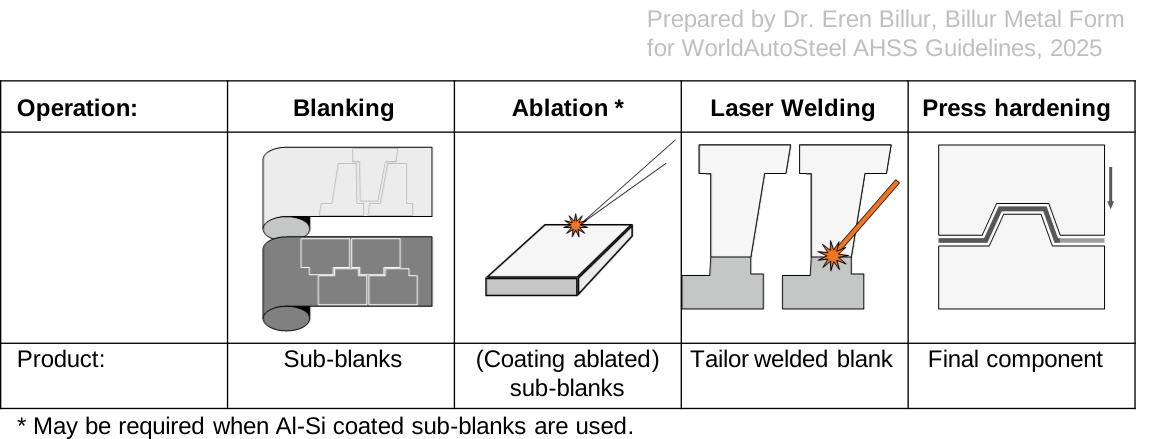
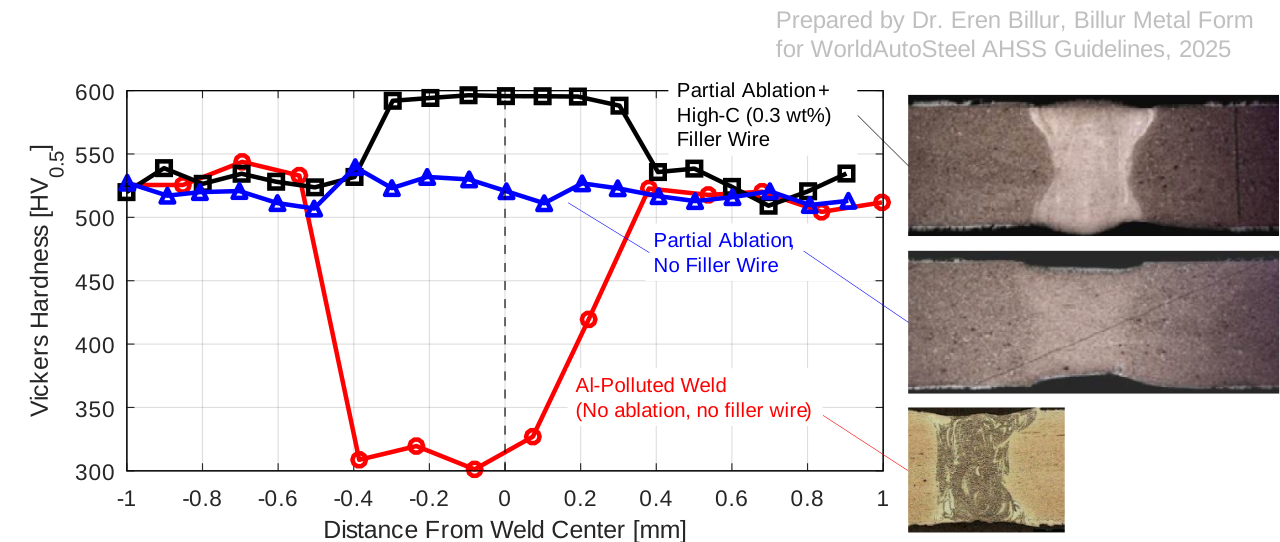
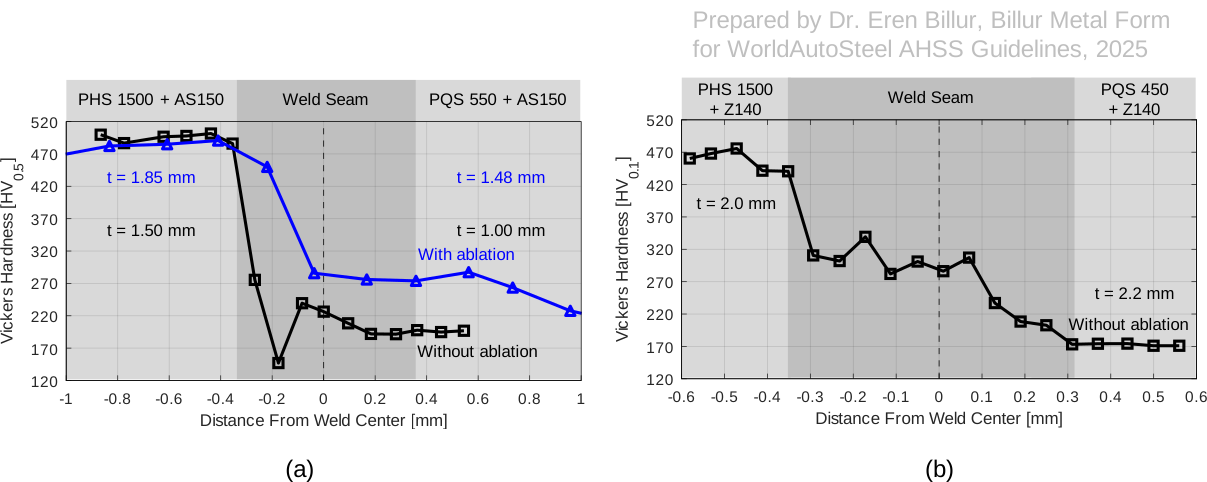
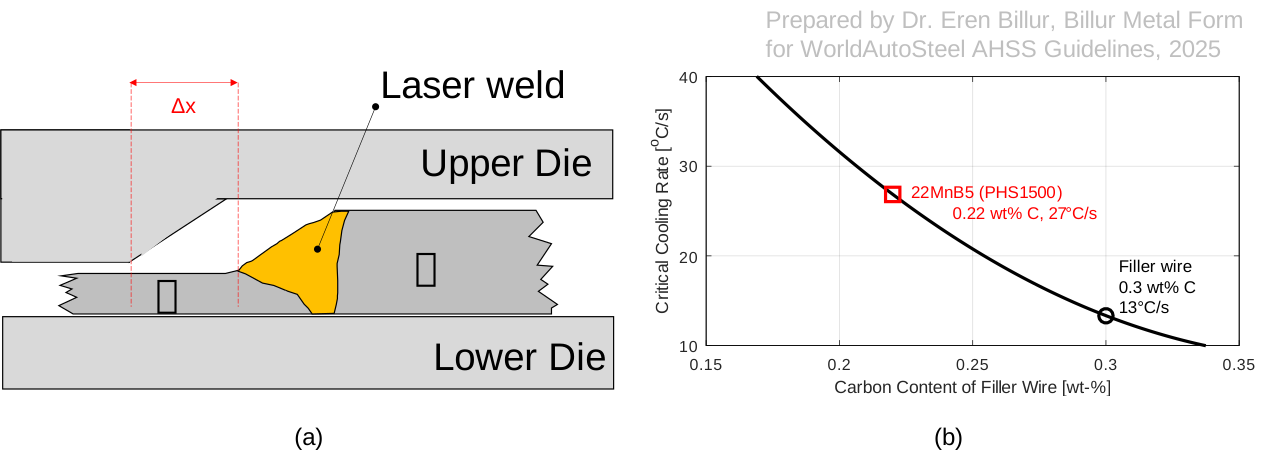
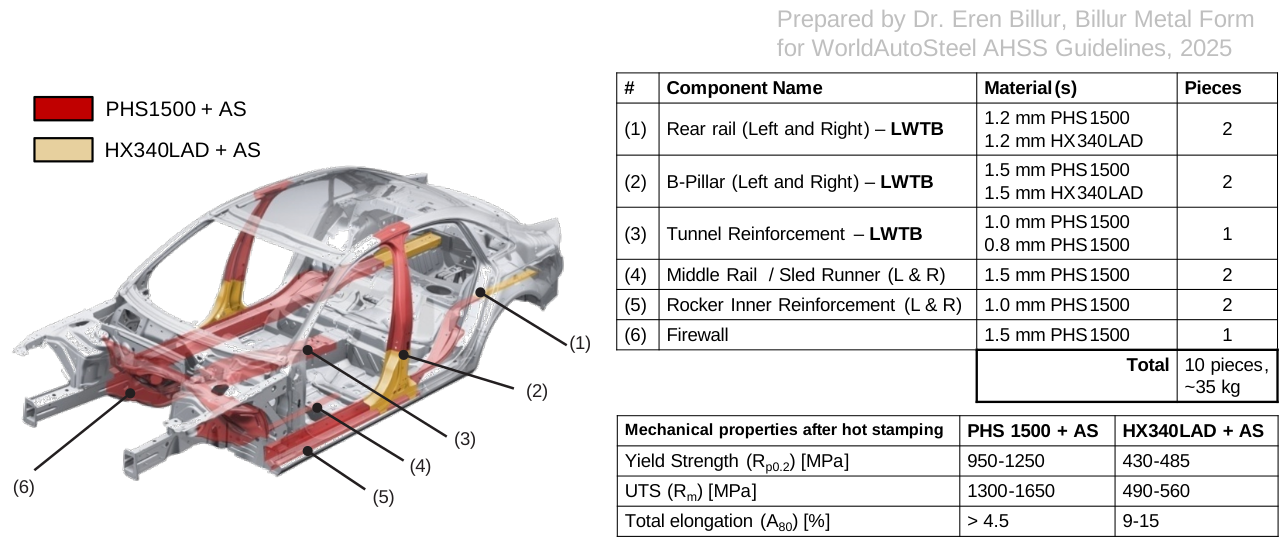
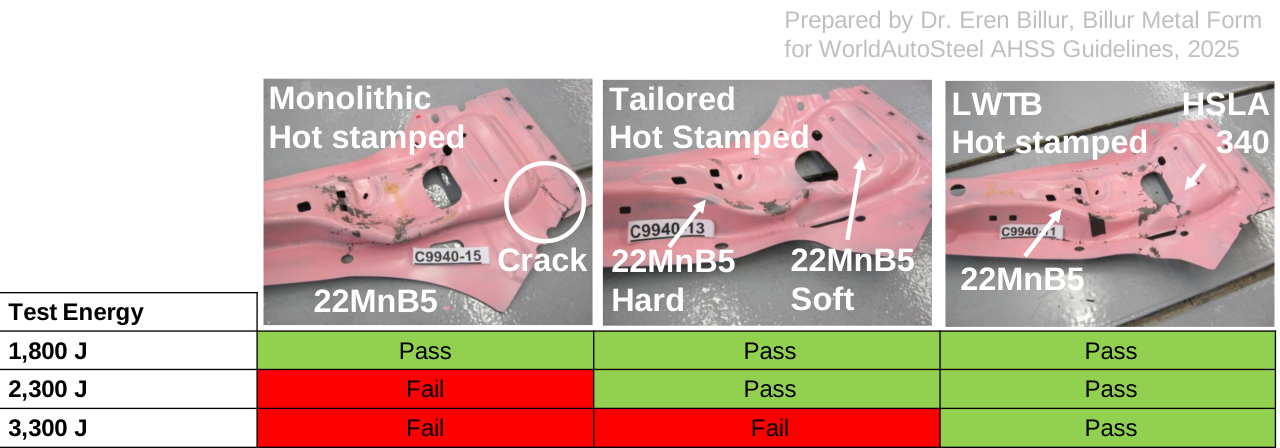
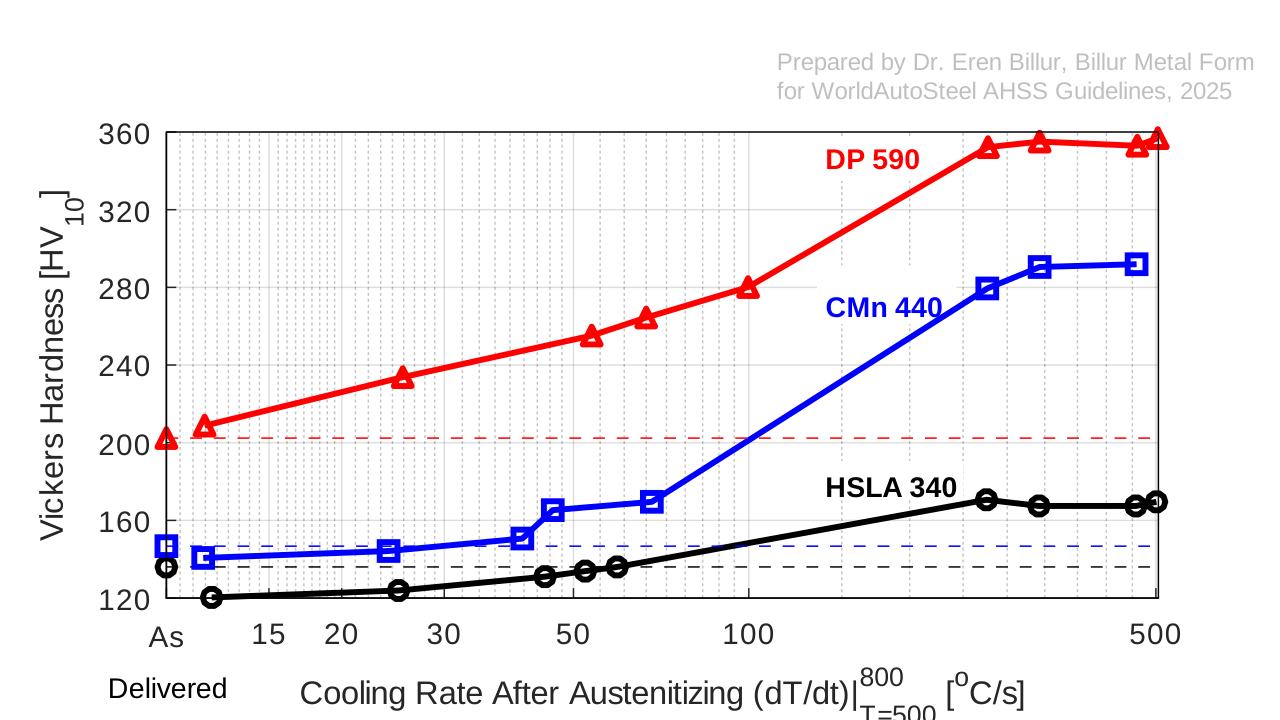
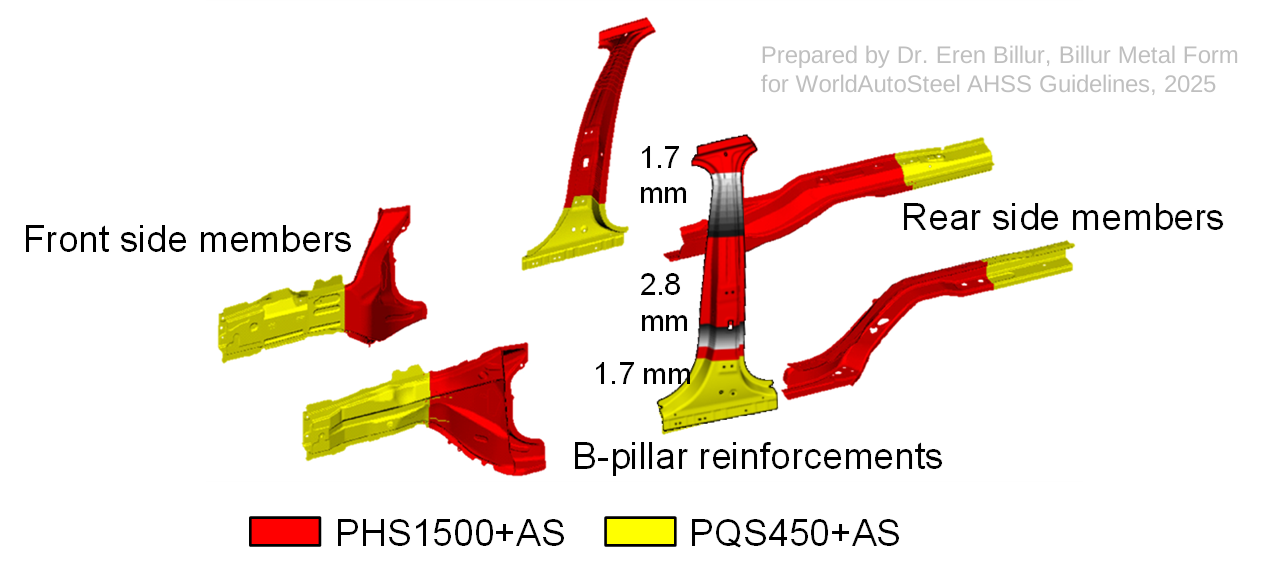
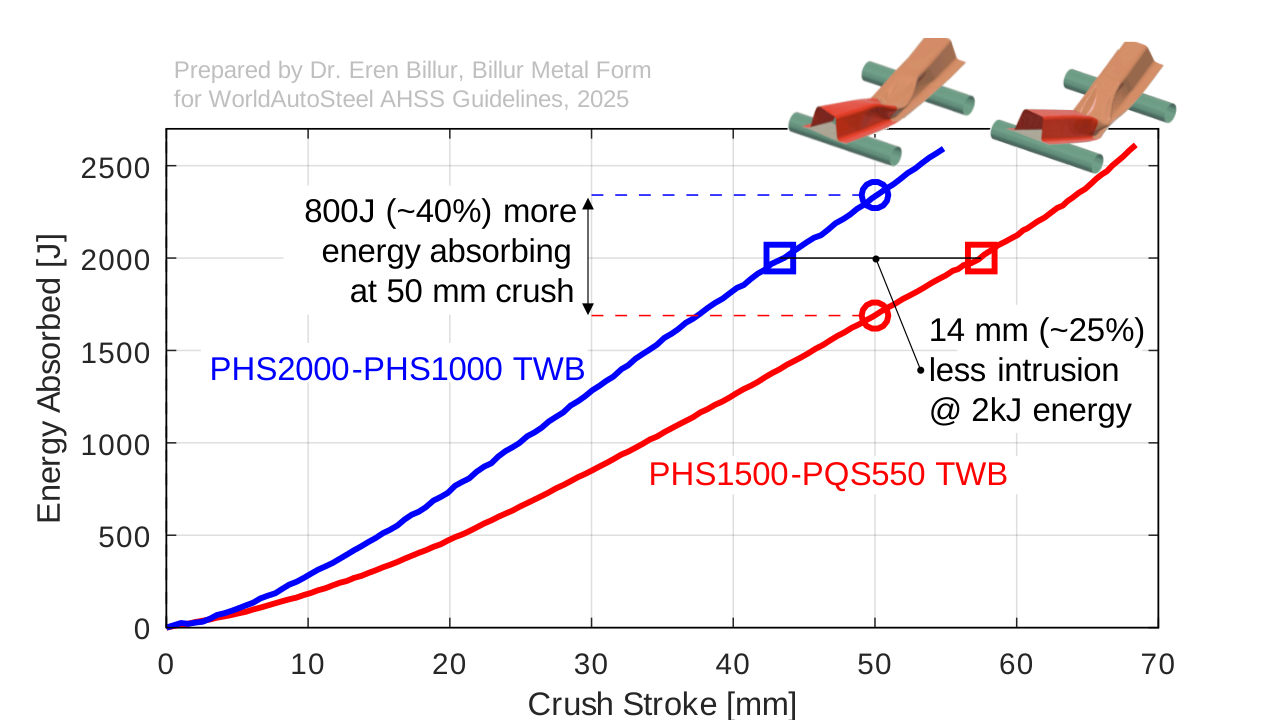
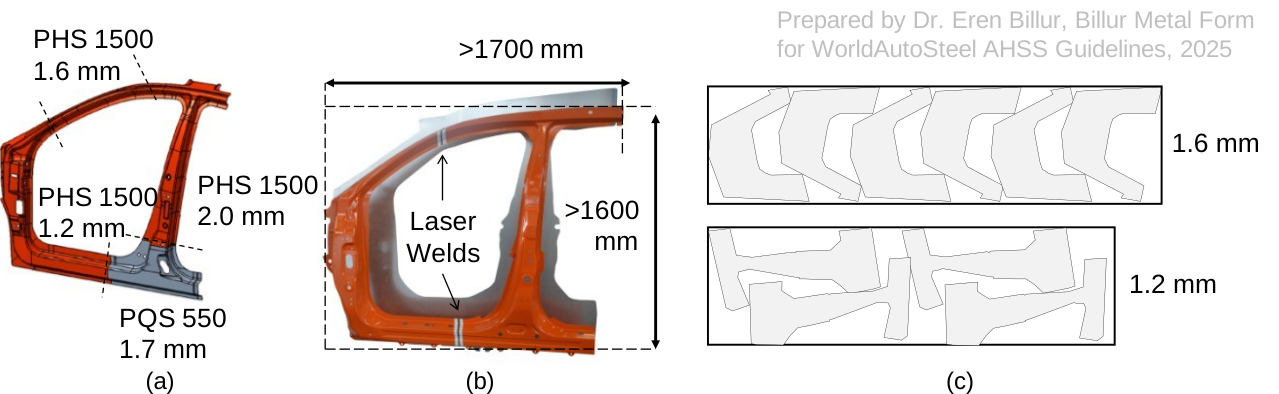
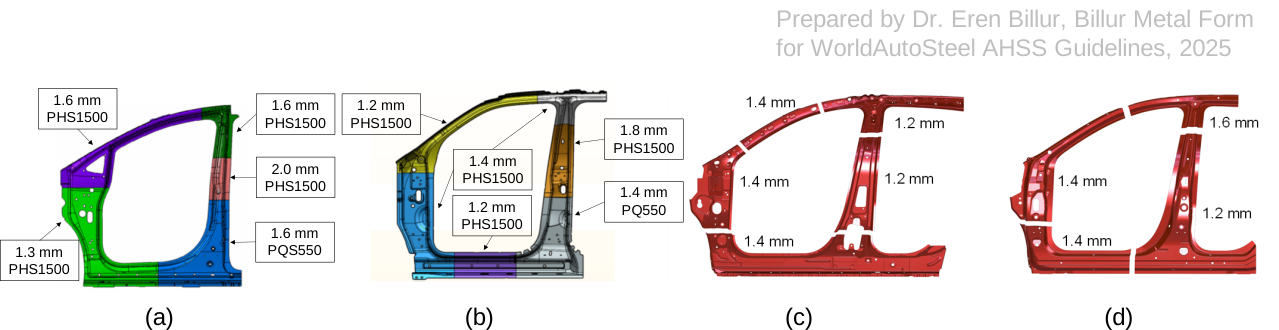
![Figure 12: Double door ring of Tesla Cybertruck: (a) approximate dimensions of the inner part (image re-created after [3]M-72), (b) schematic of outer ring and (c) inner ring (re-created after [4]=F-49).](https://ahssinsights.org/wp-content/uploads/2025/09/PHS-TailoredProps-Figure-12.svg)
![Figure 13: Double door ring applications: (a) GAC Aion UT (SOP 2025) [5]=G-50, (b) Lynk & Co 900 (SOP 2025) [6]=P-30.](https://ahssinsights.org/wp-content/uploads/2025/09/PHS-TailoredProps-Figure-13.svg)
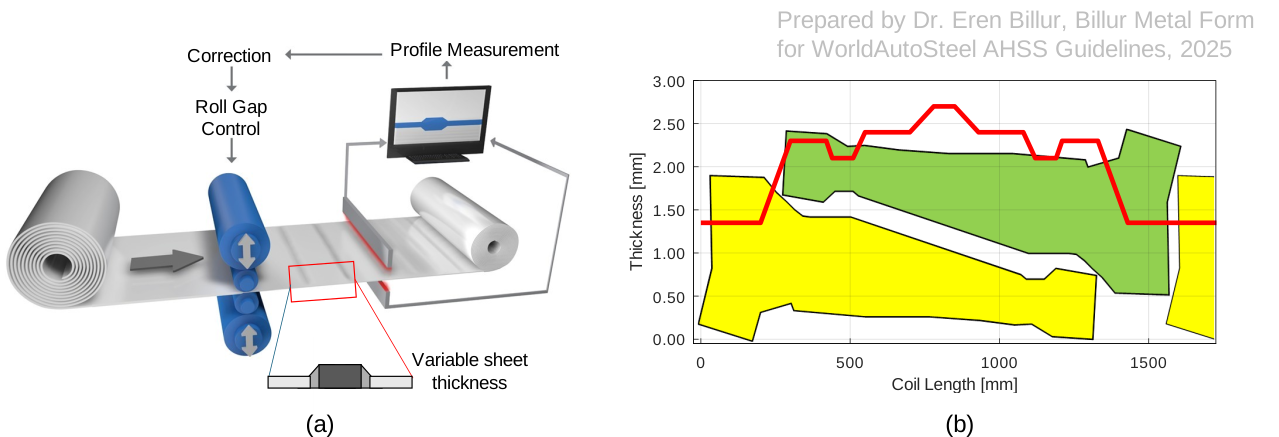
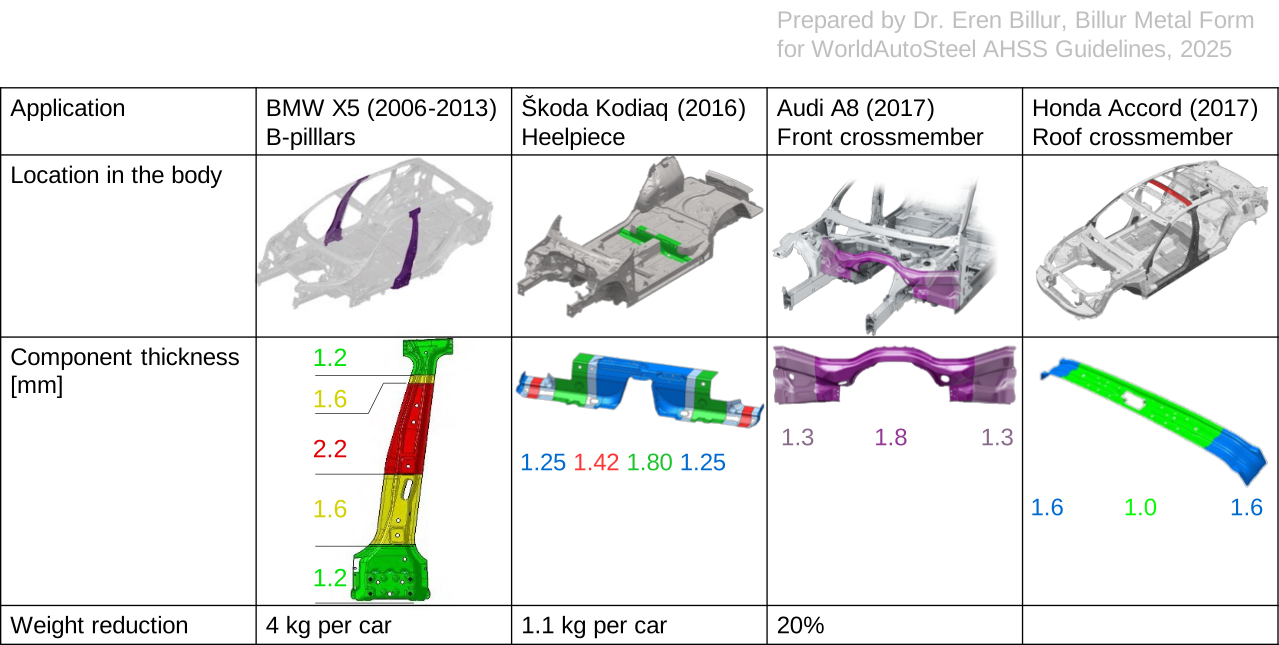
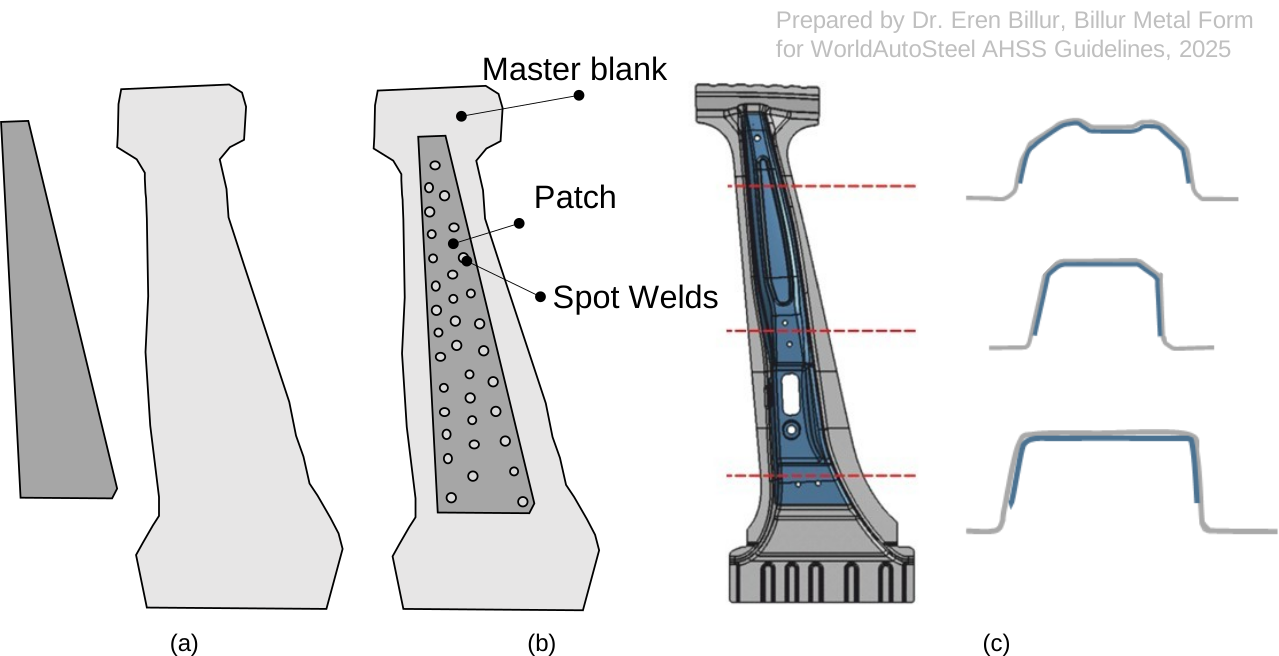
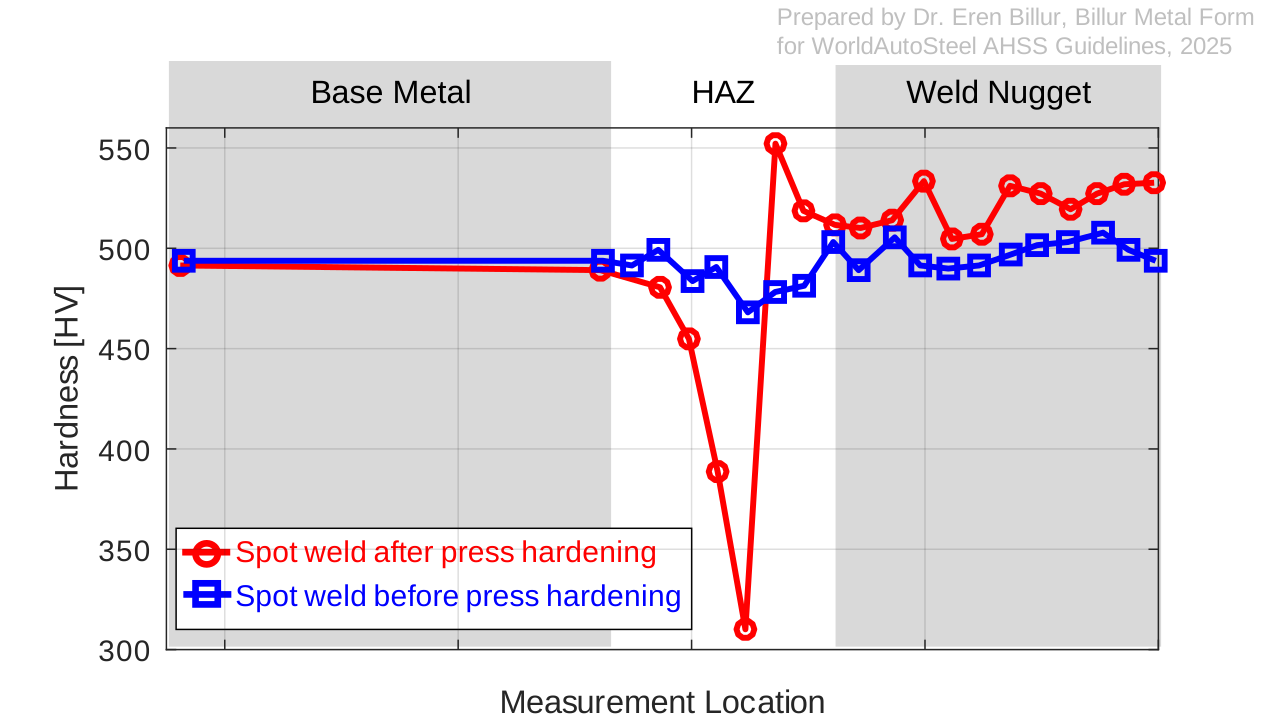
![Figure 18: Sample automotive applications of patchwork PHS: B-pillar reinforcements of (a) 2007 Volvo V70 (re-crated after Citation N-4), (b) 2007 Fiat 500 (re-created after Citation Z-13); and (c) rear rail of 2015 Fiat Tipo/Egea (Citation T-43, recreated after Citation B-14); and (d) door ring of 2022 Voyah Dream (re-created after Citation [13]).H-70](https://ahssinsights.org/wp-content/uploads/2025/09/PHS-TailoredProps-Figure-18.svg)
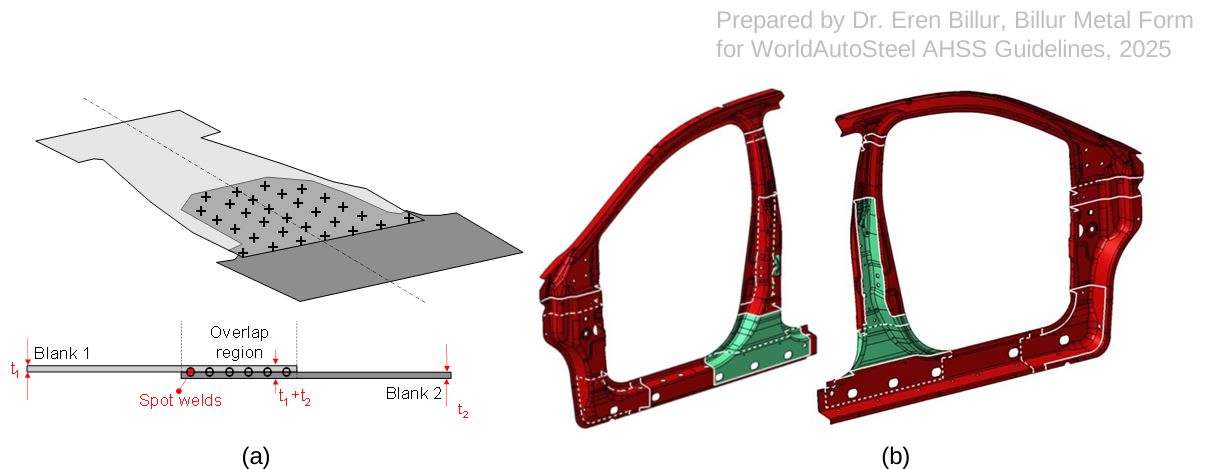
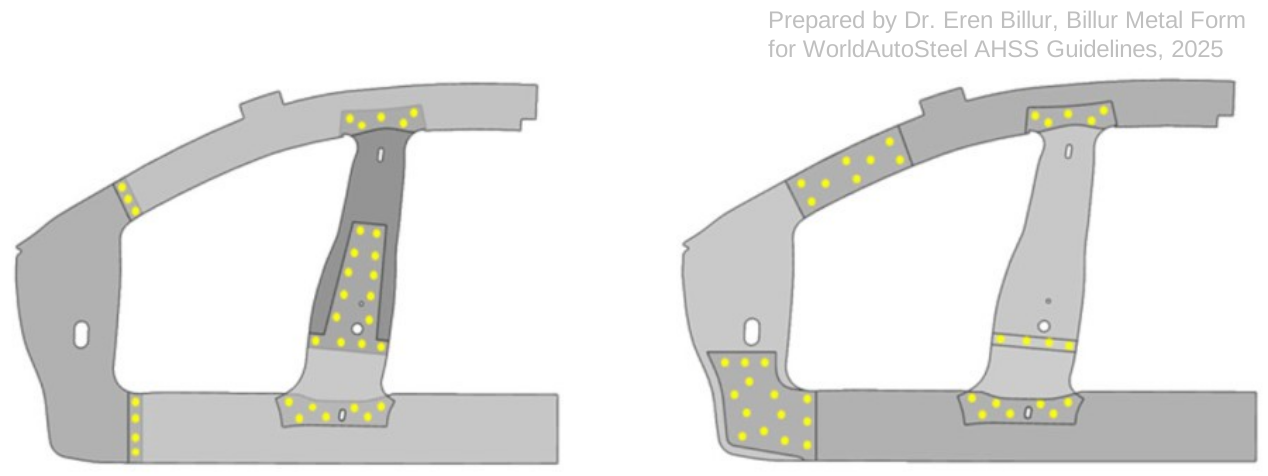
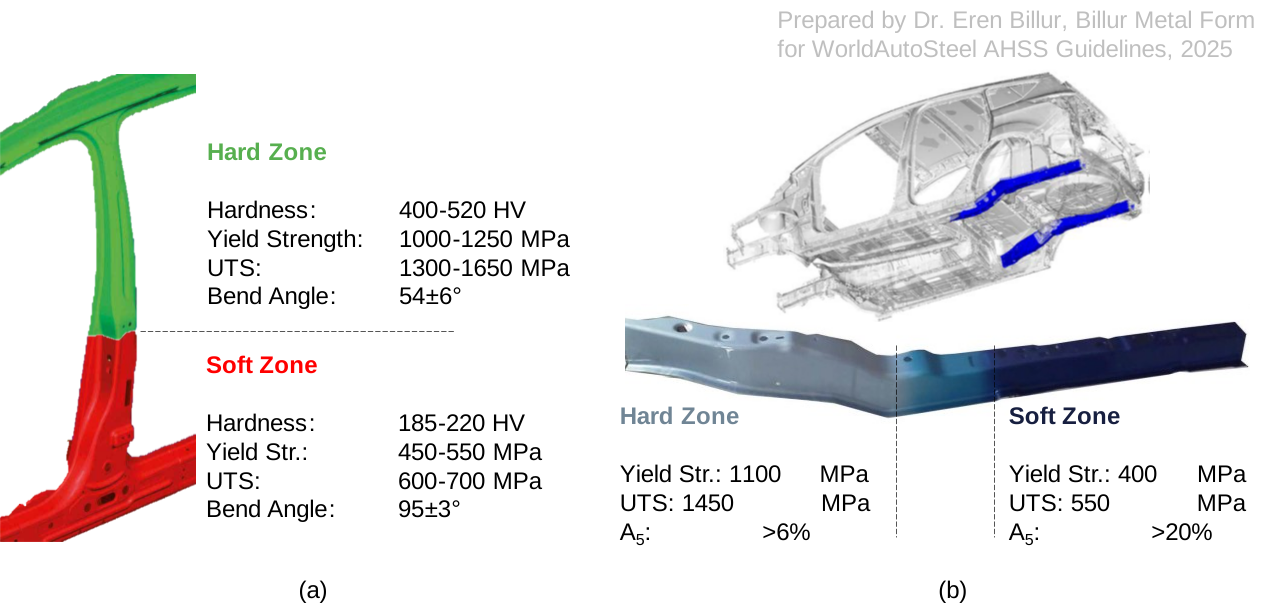
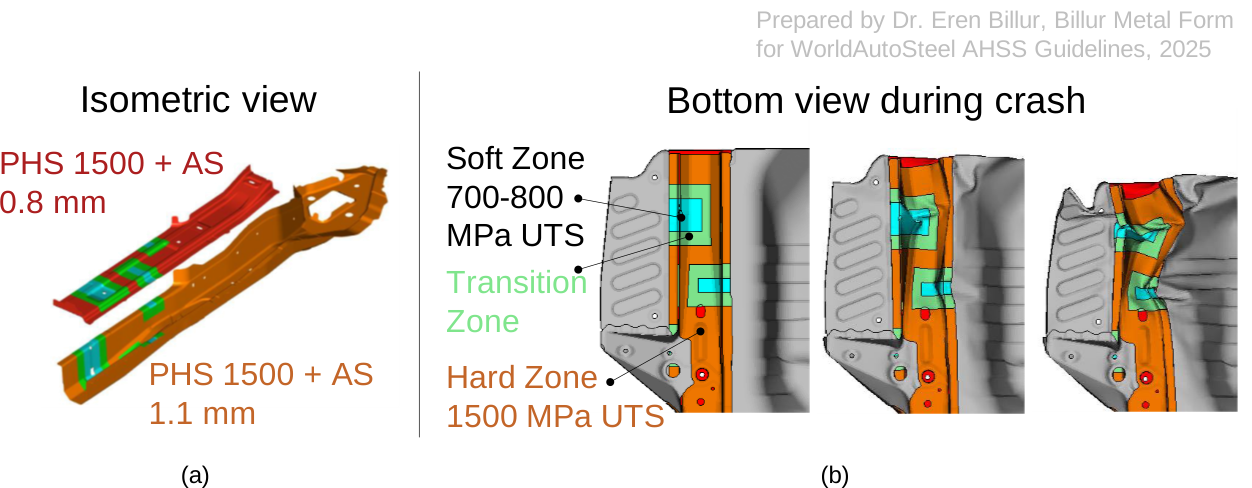
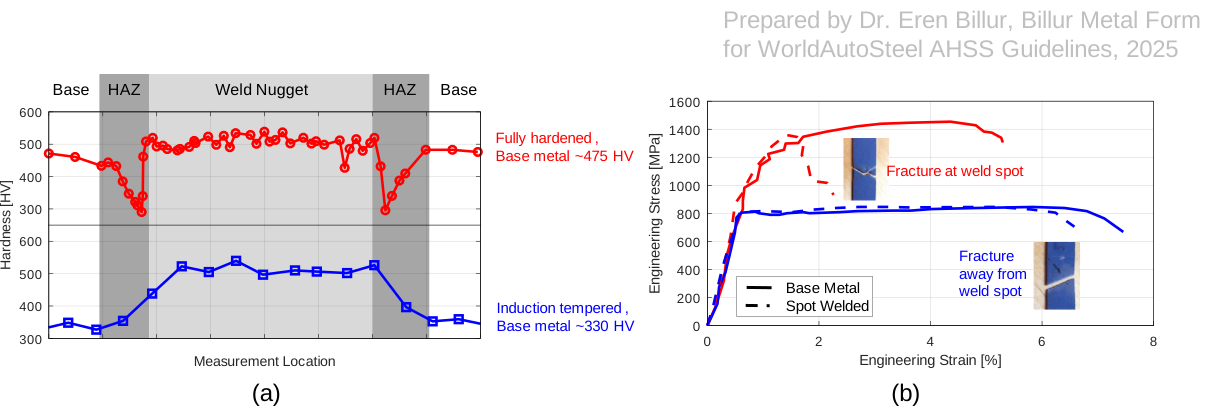
![Figure 24: Soft zone applications to improve weld quality: (a) Mercedes EQE SUV [15]=D-47, and (b) Renault 5 BEV [14]=G-53.](https://ahssinsights.org/wp-content/uploads/2025/09/PHS-TailoredProps-Figure-24.svg)
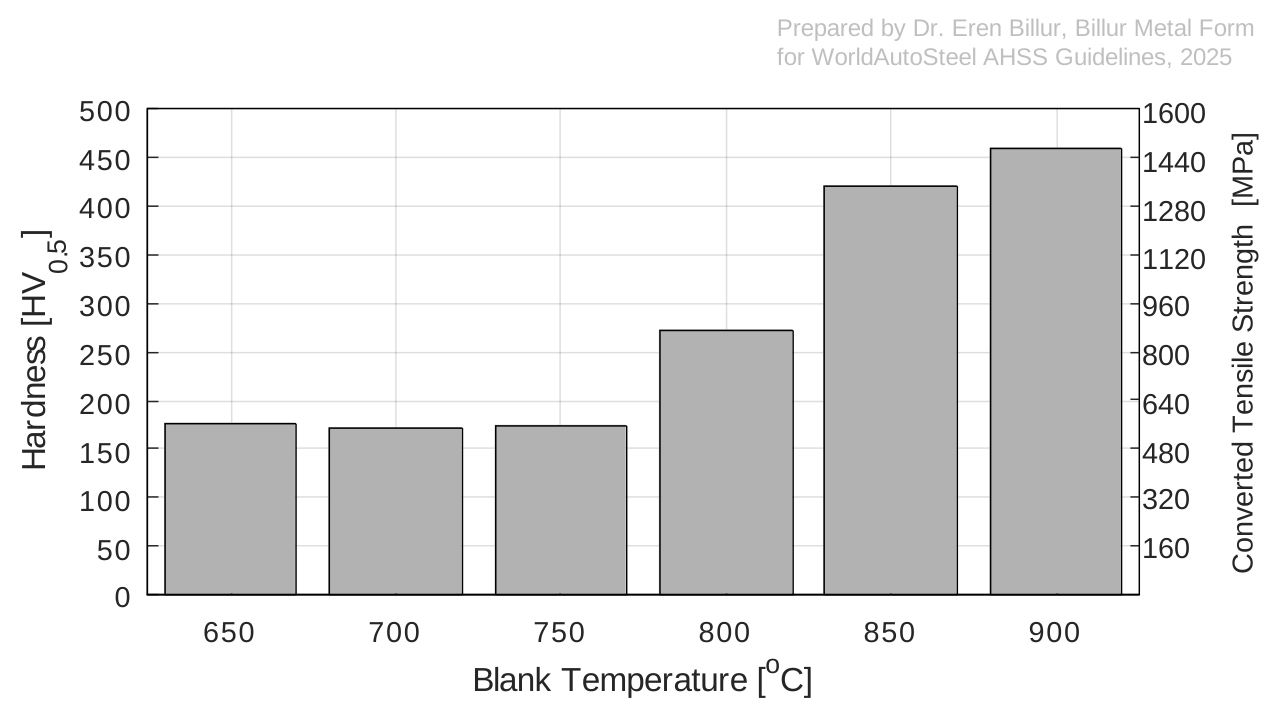
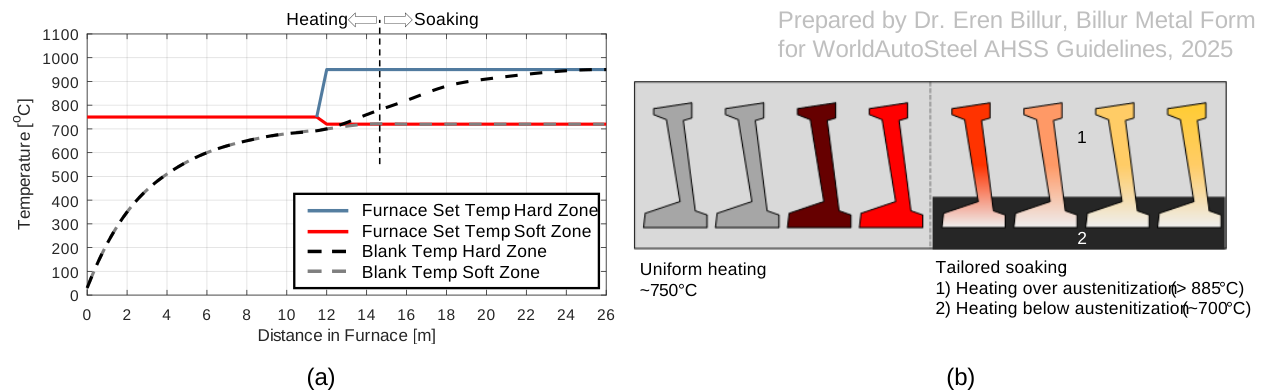
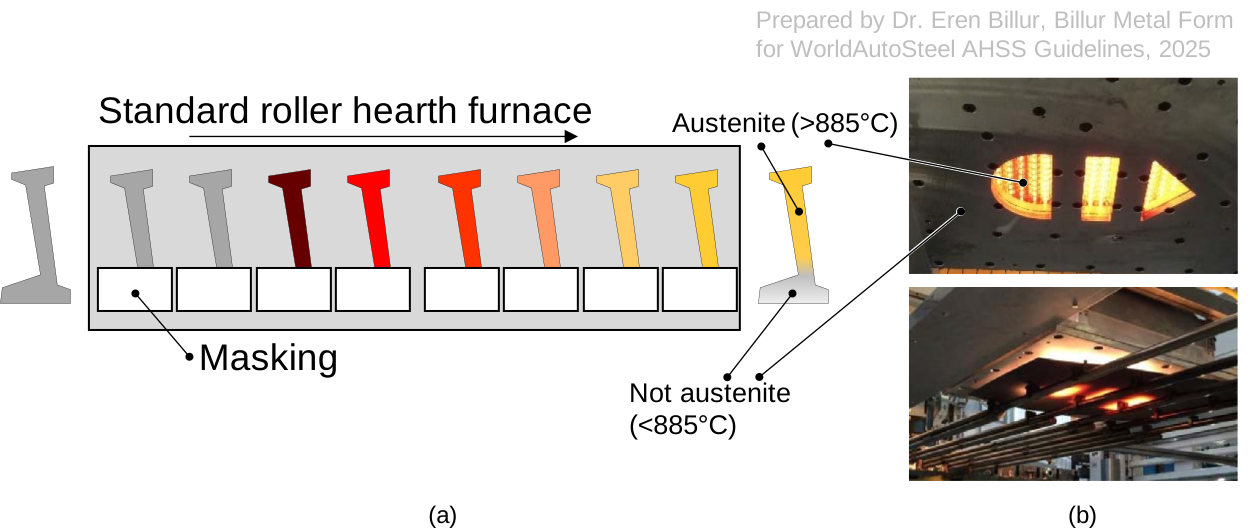
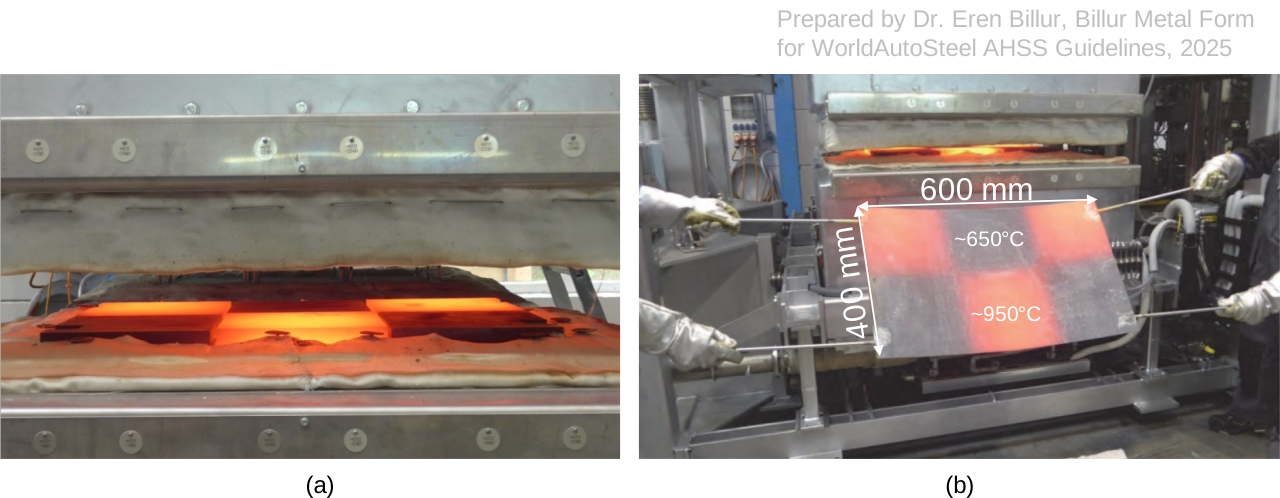
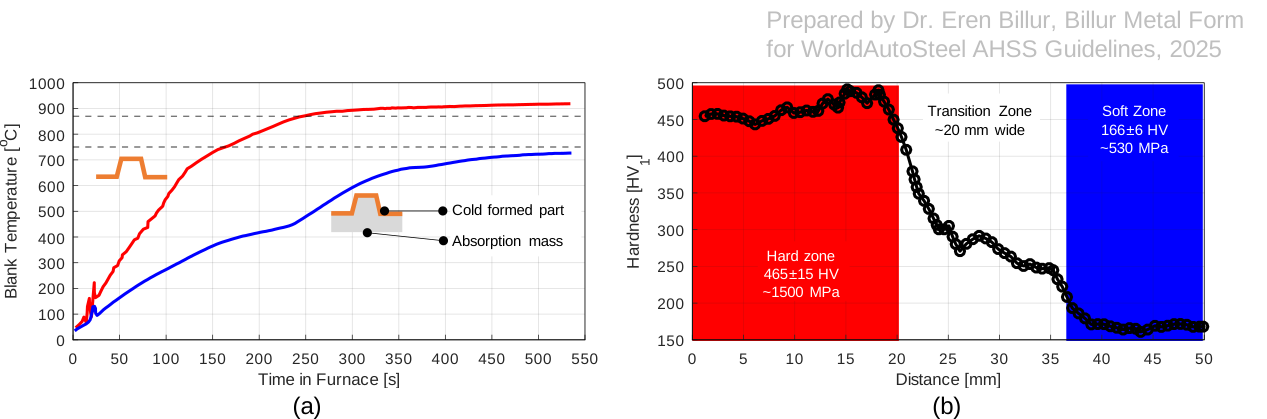
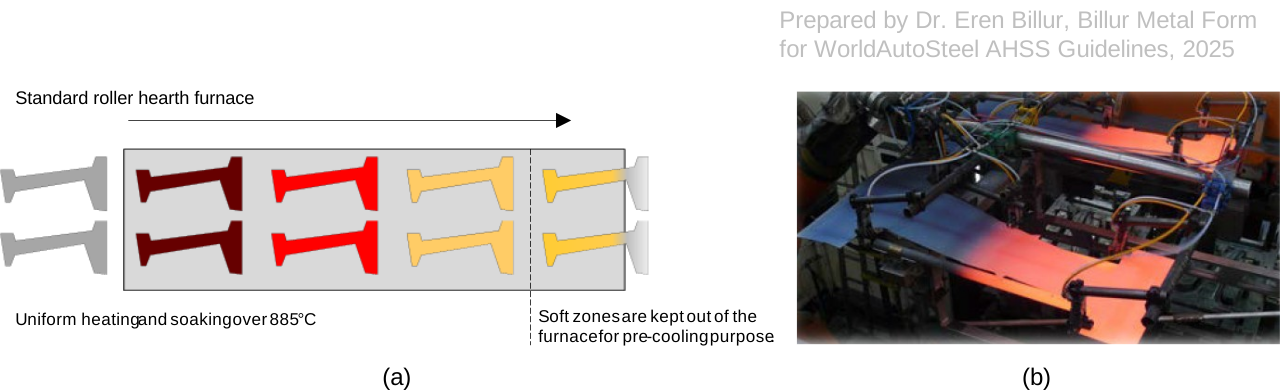
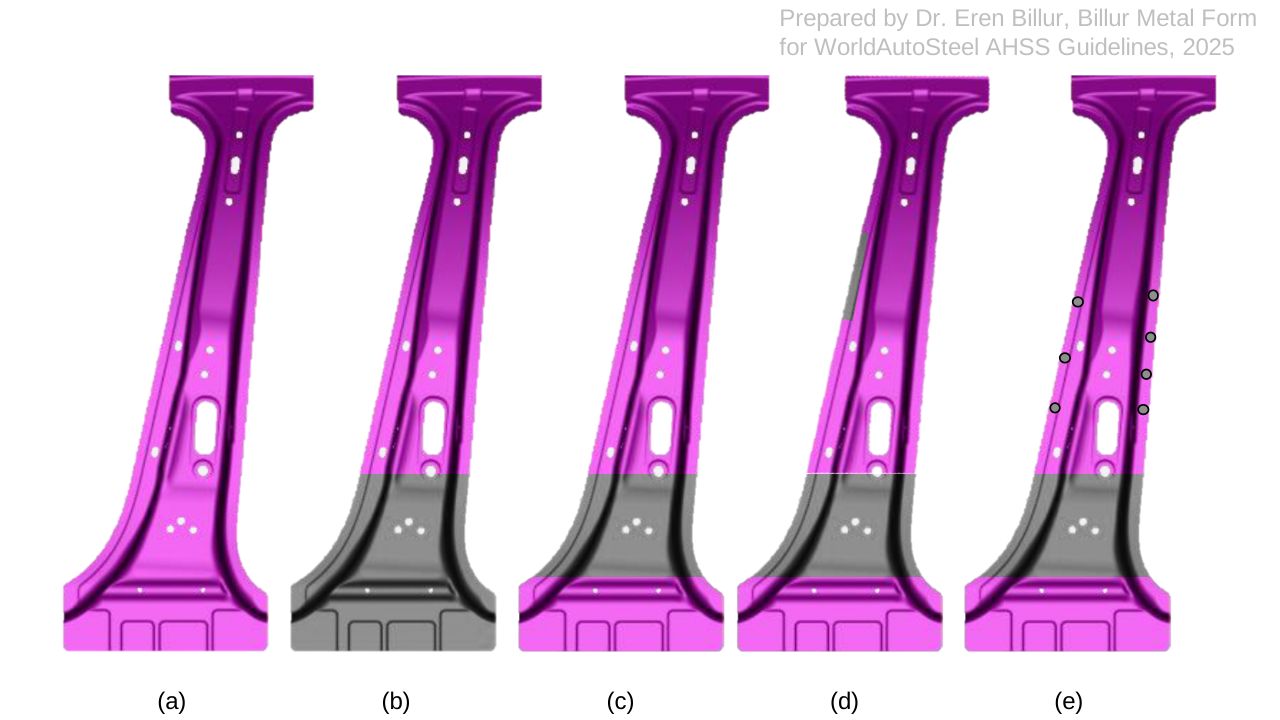
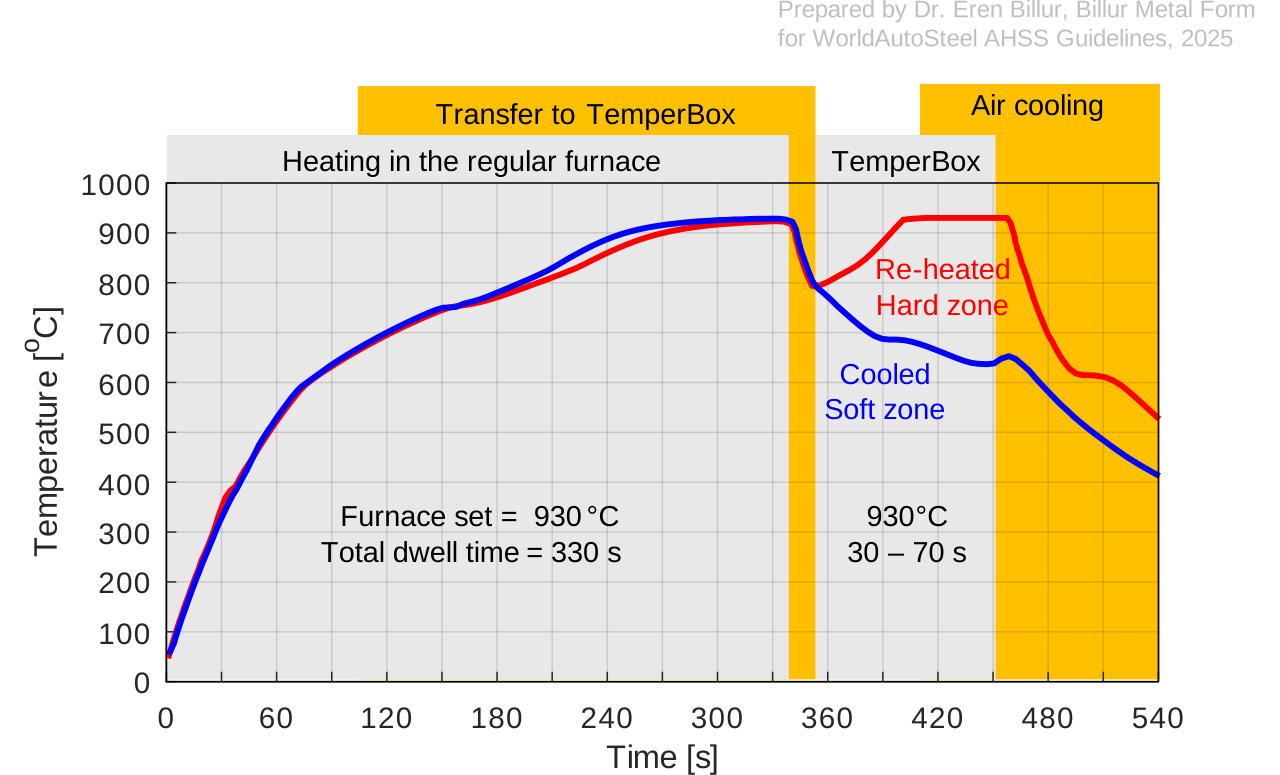
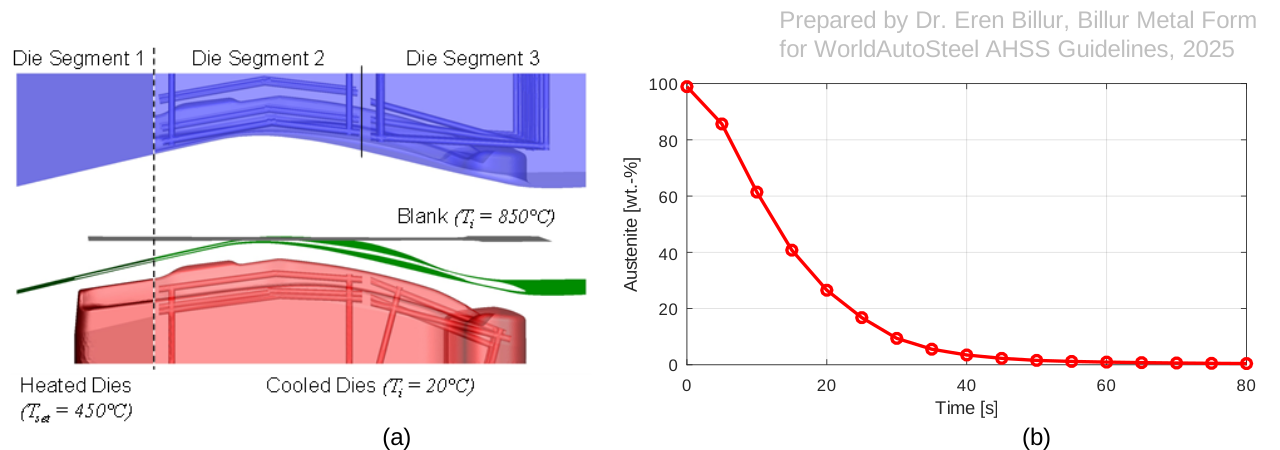
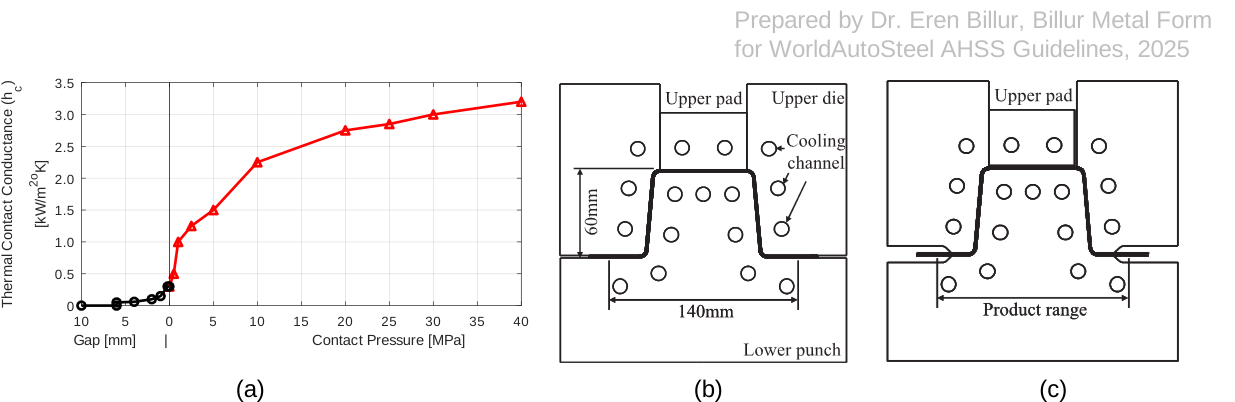
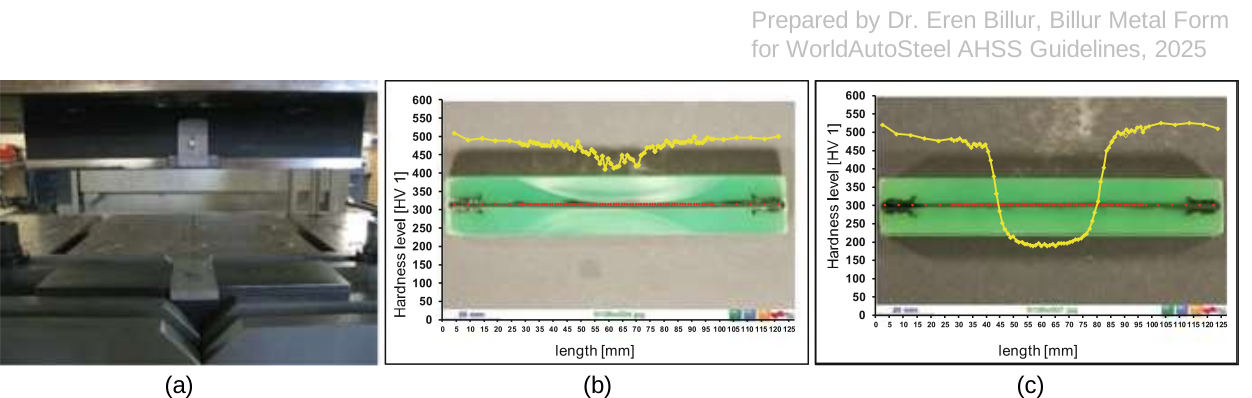
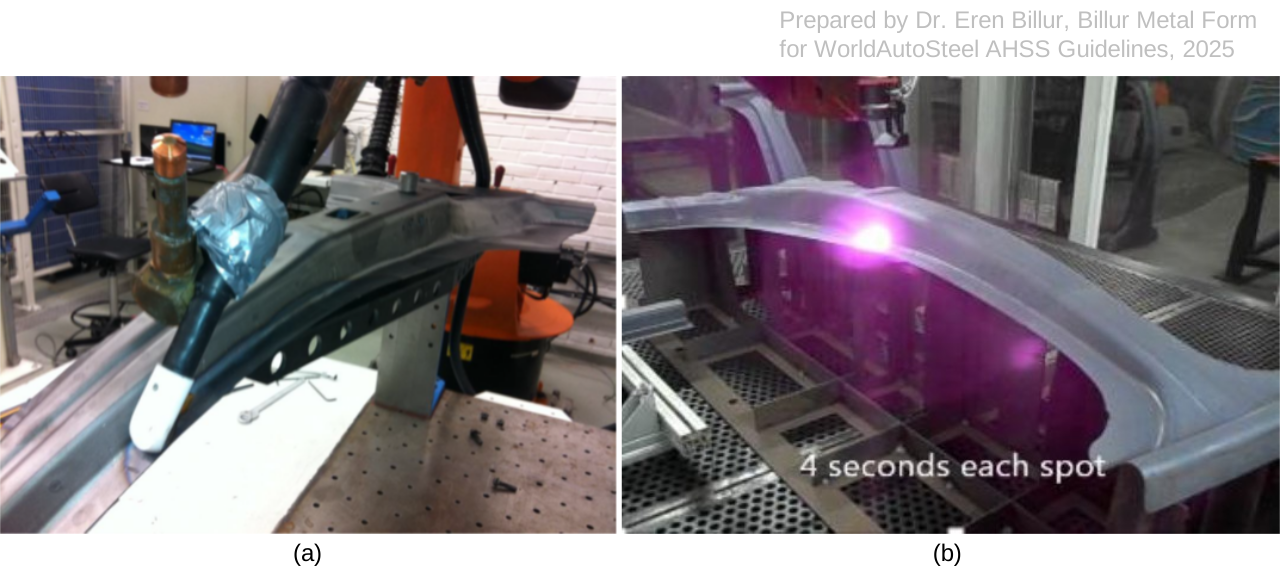
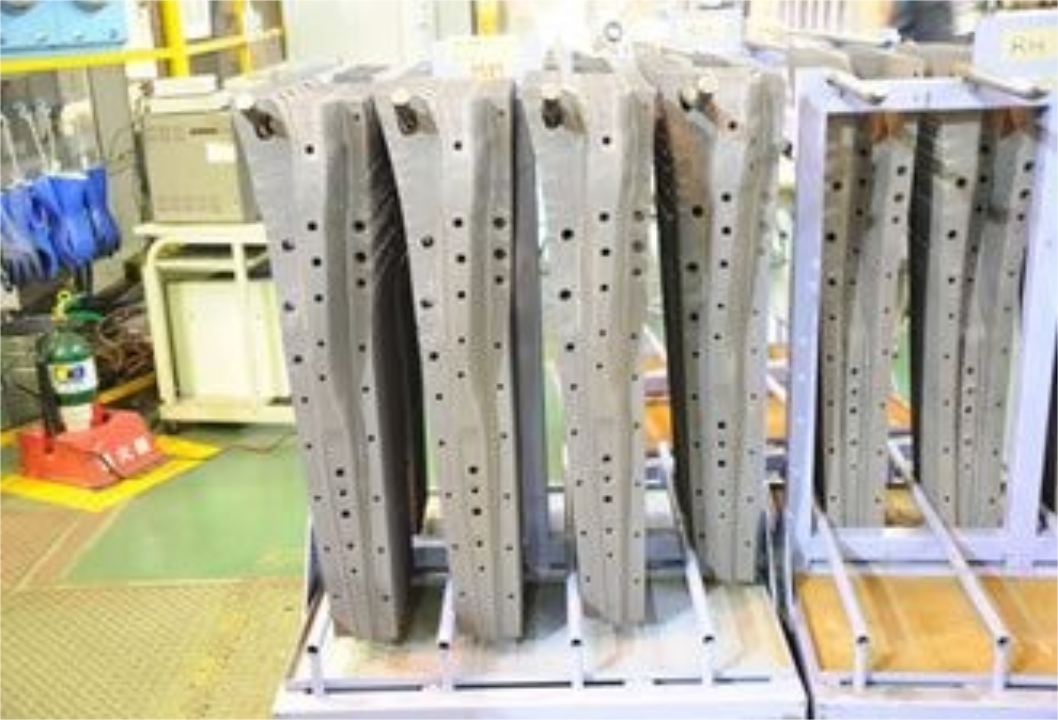
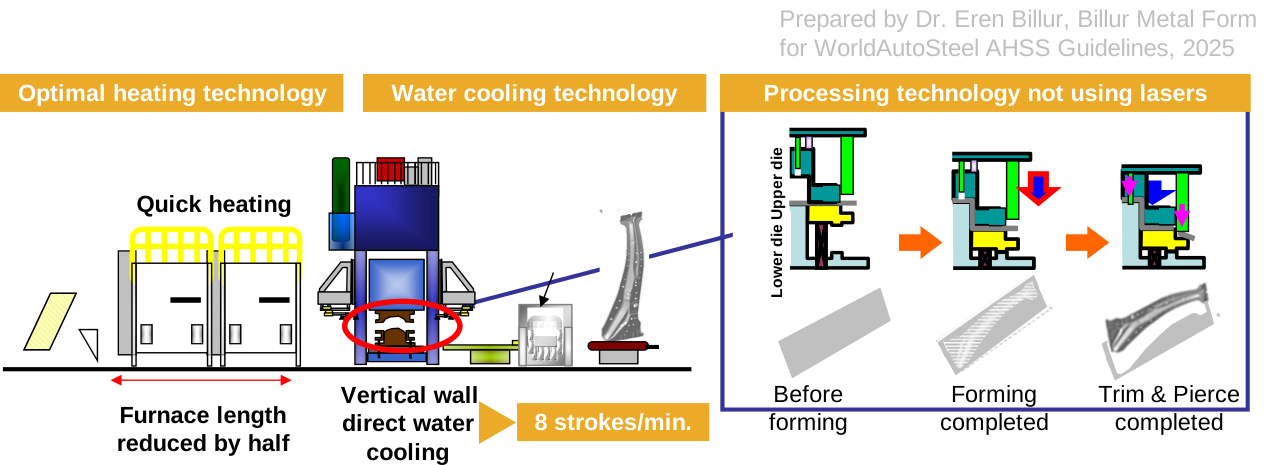

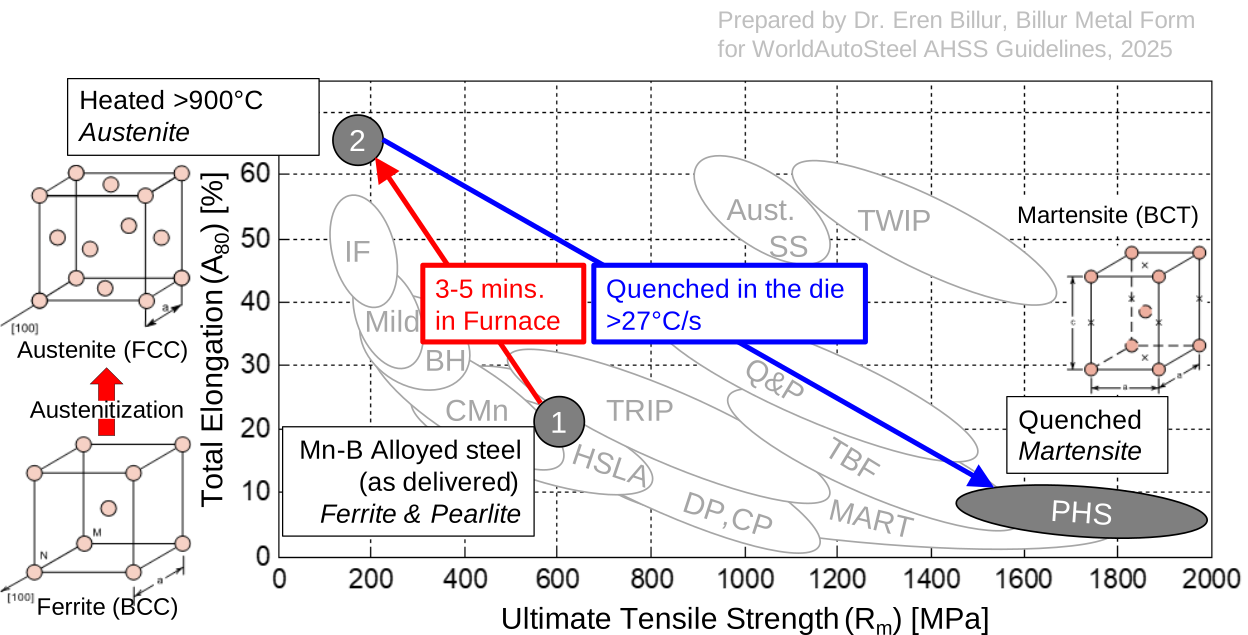
![Figure 2: Direct water quenching: (a) schematic of the nozzles [N-27], (b) blank on the lower tool before deformation [T-51].](https://ahssinsights.org/wp-content/uploads/2025/09/2-PHS-ProdMethods-Fig-2.svg)
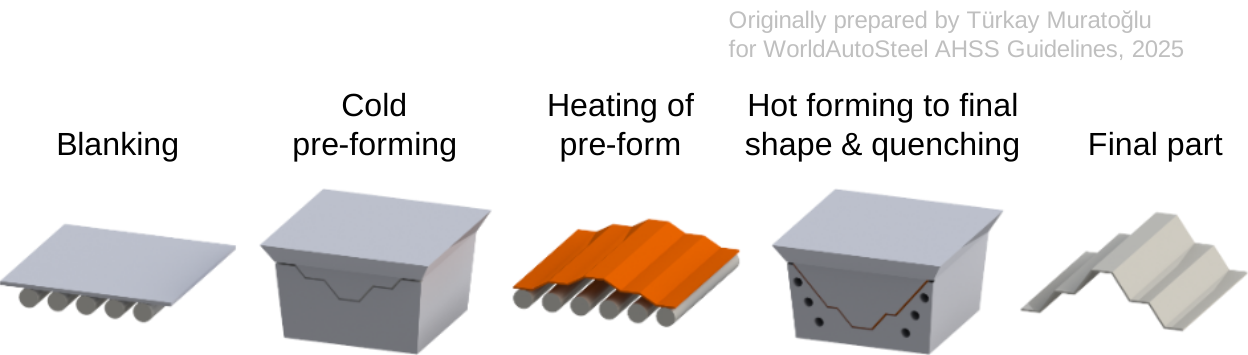
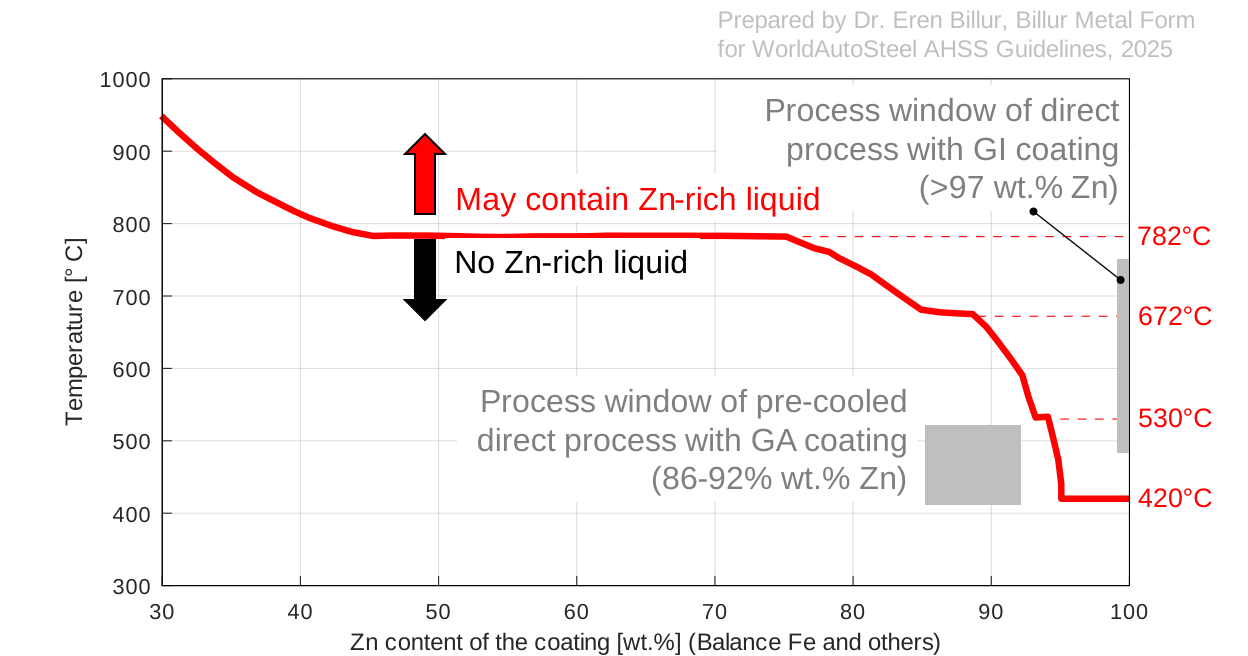
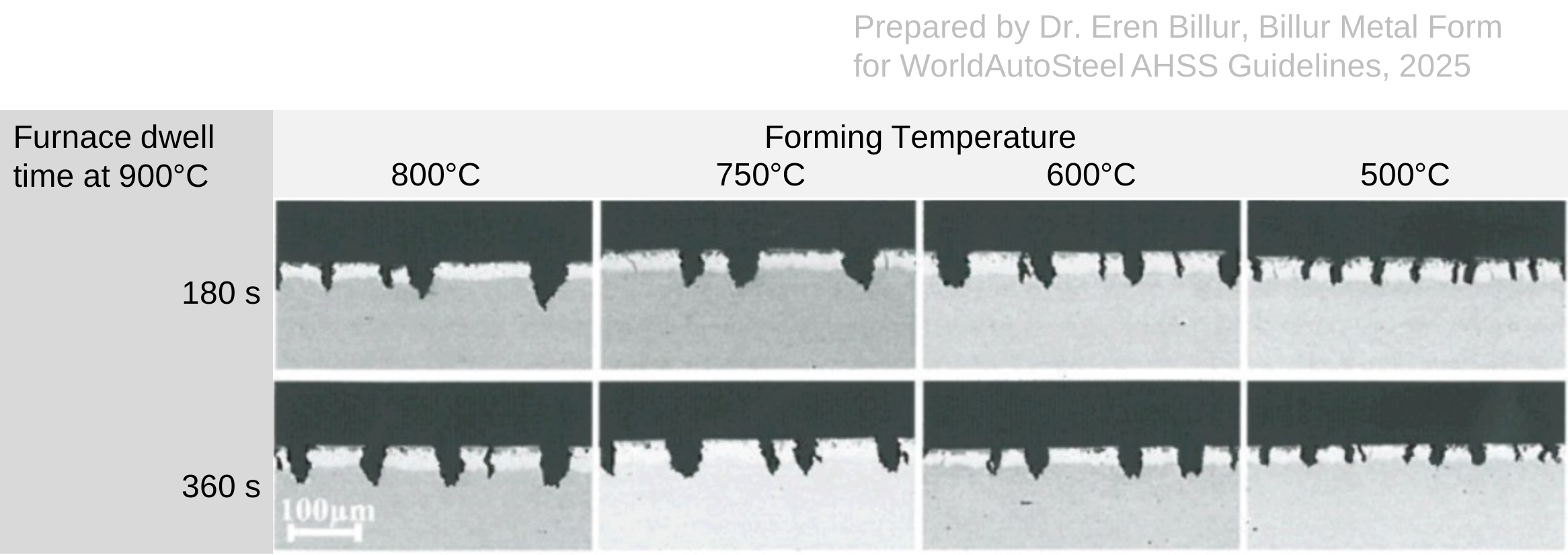
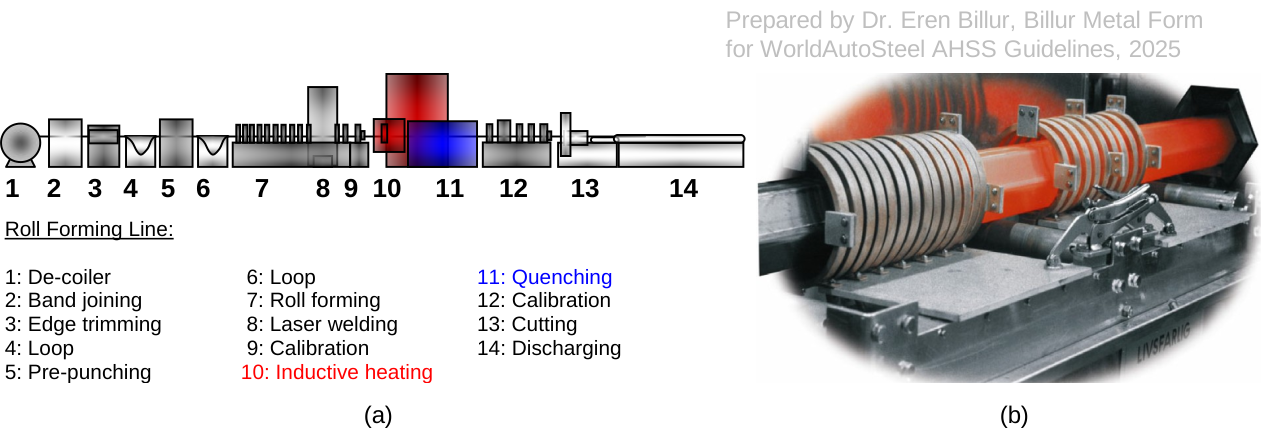
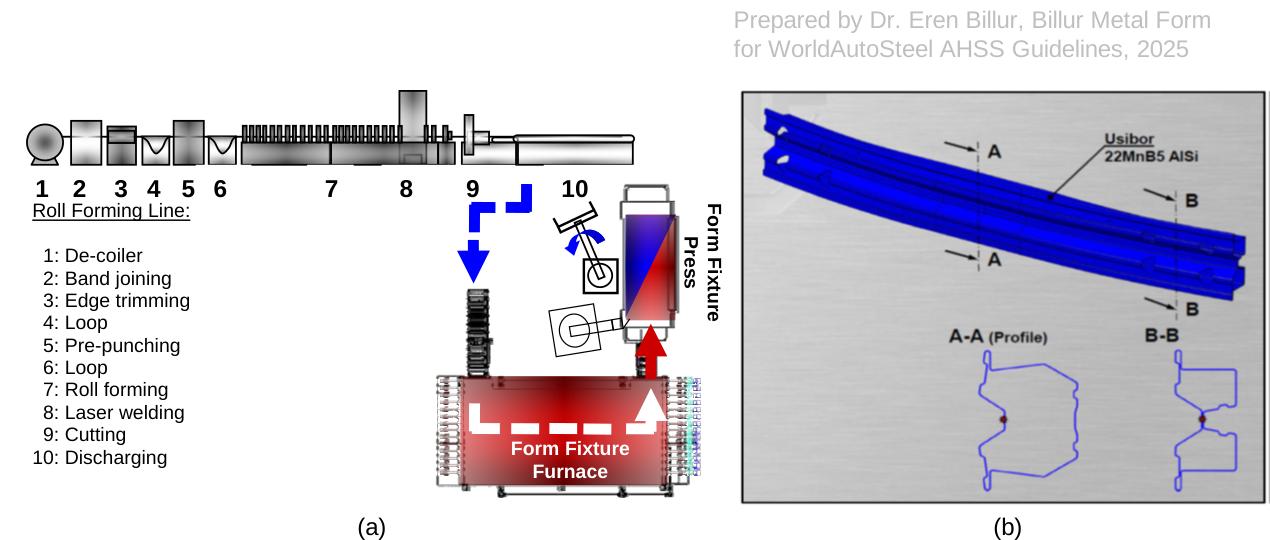
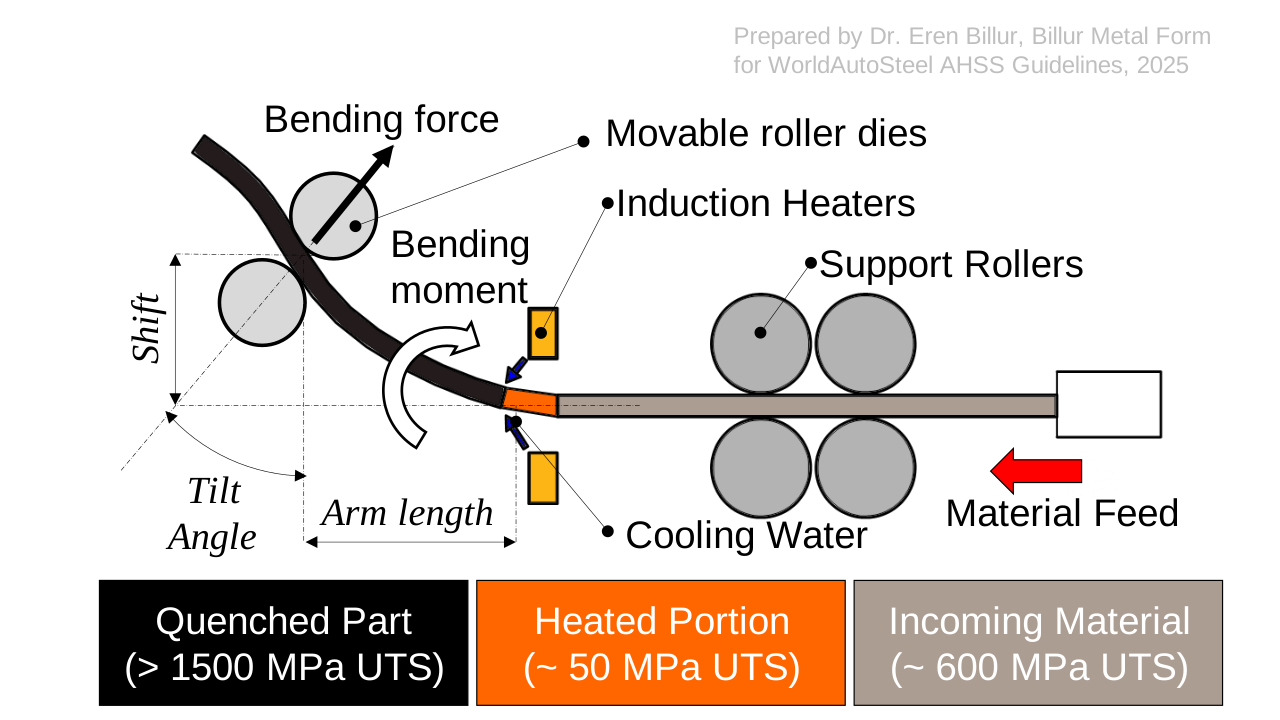
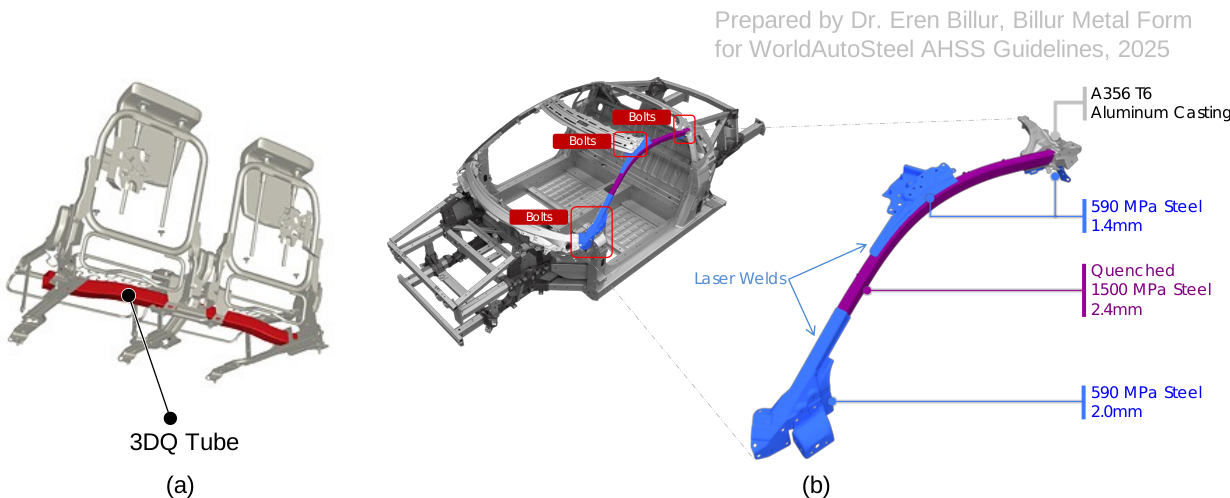
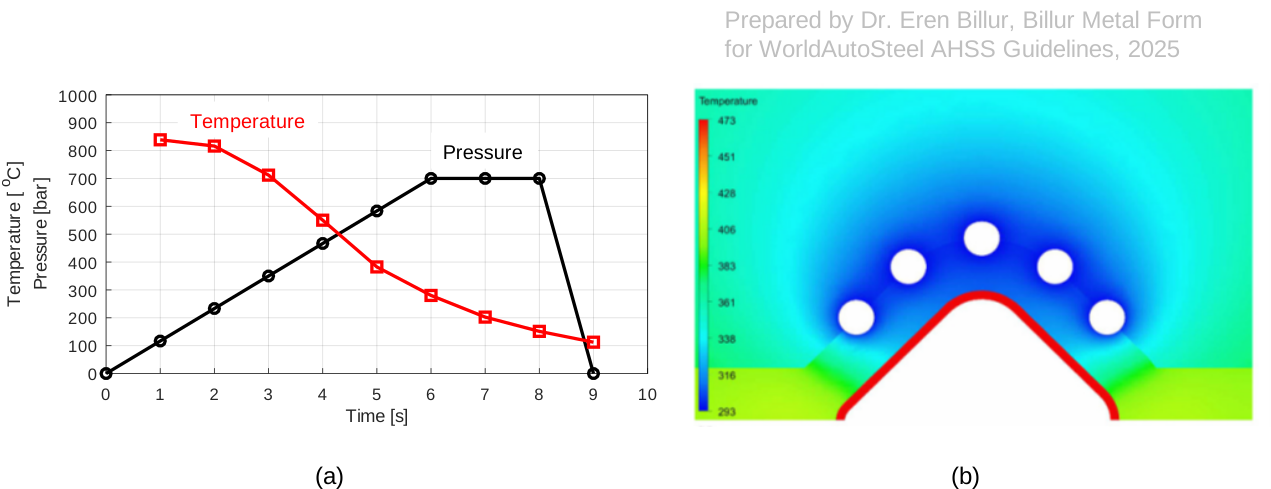
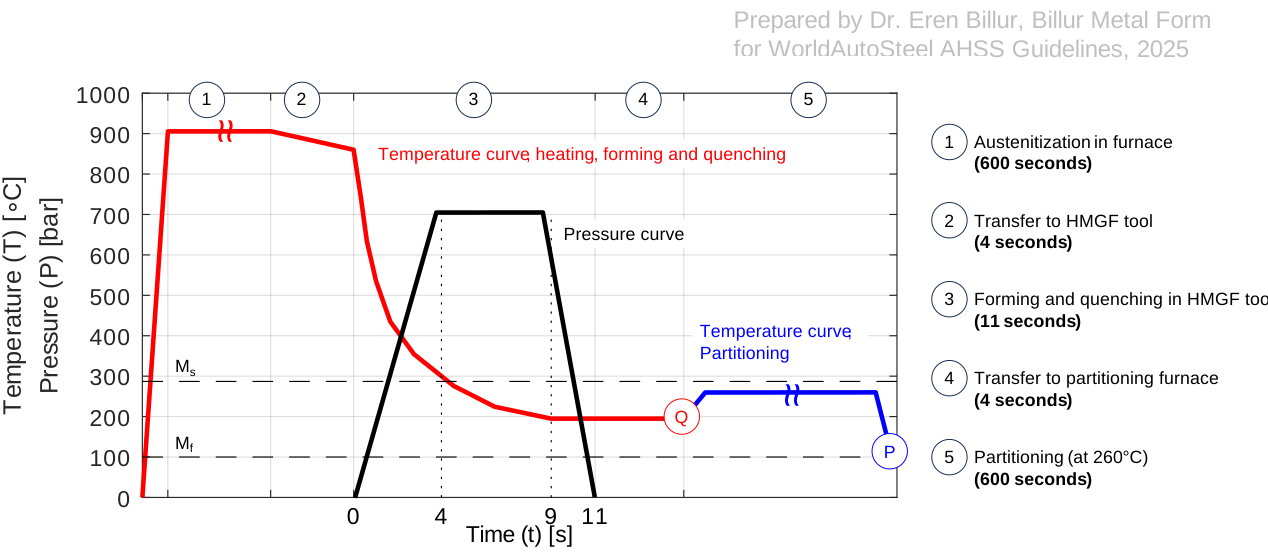
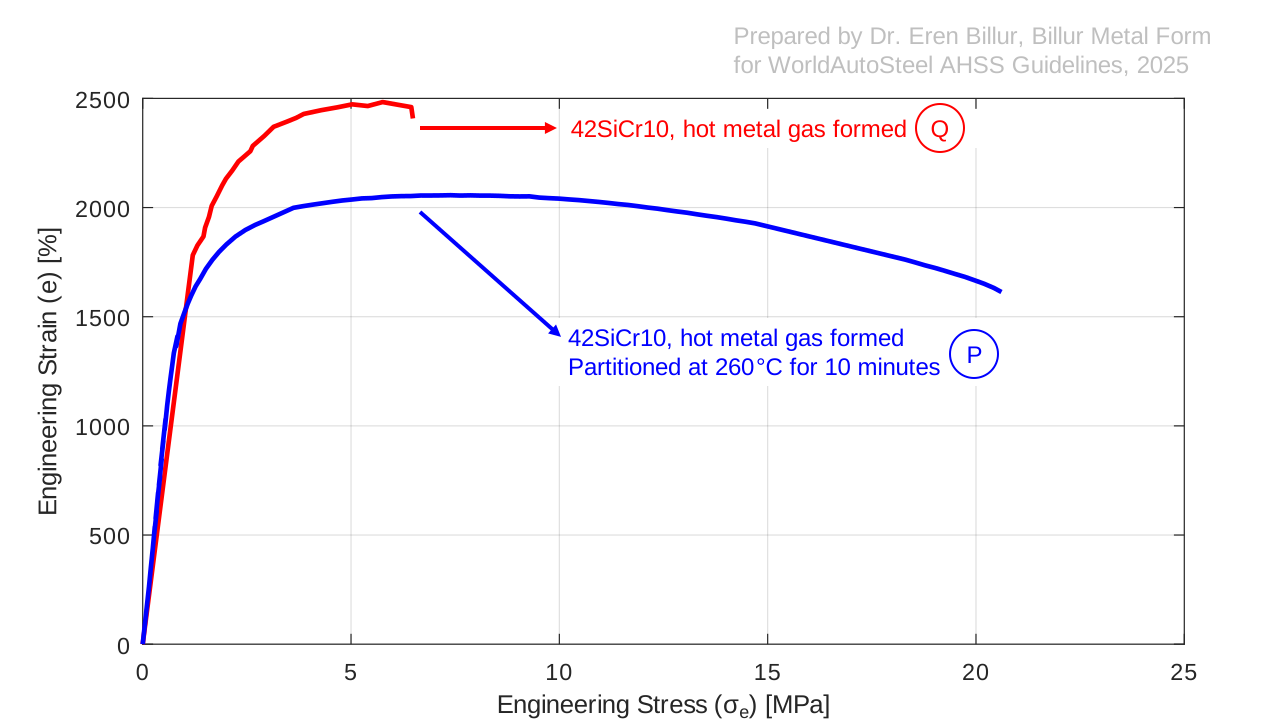
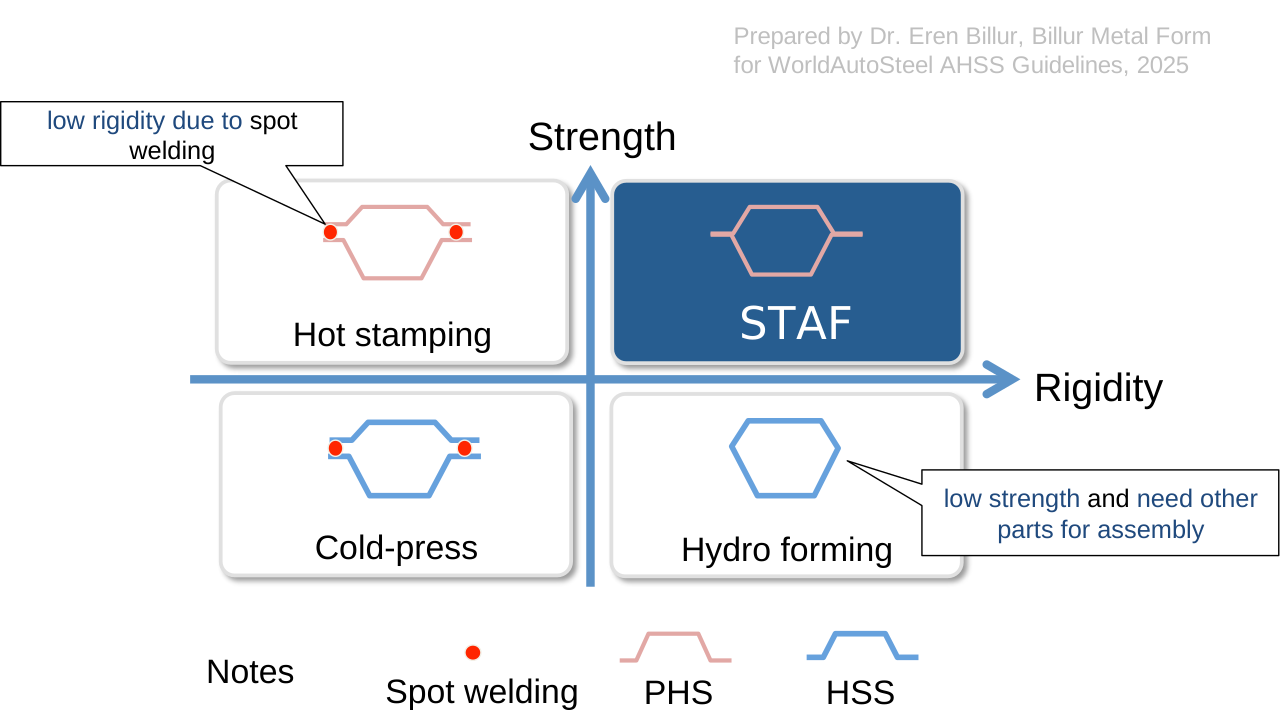
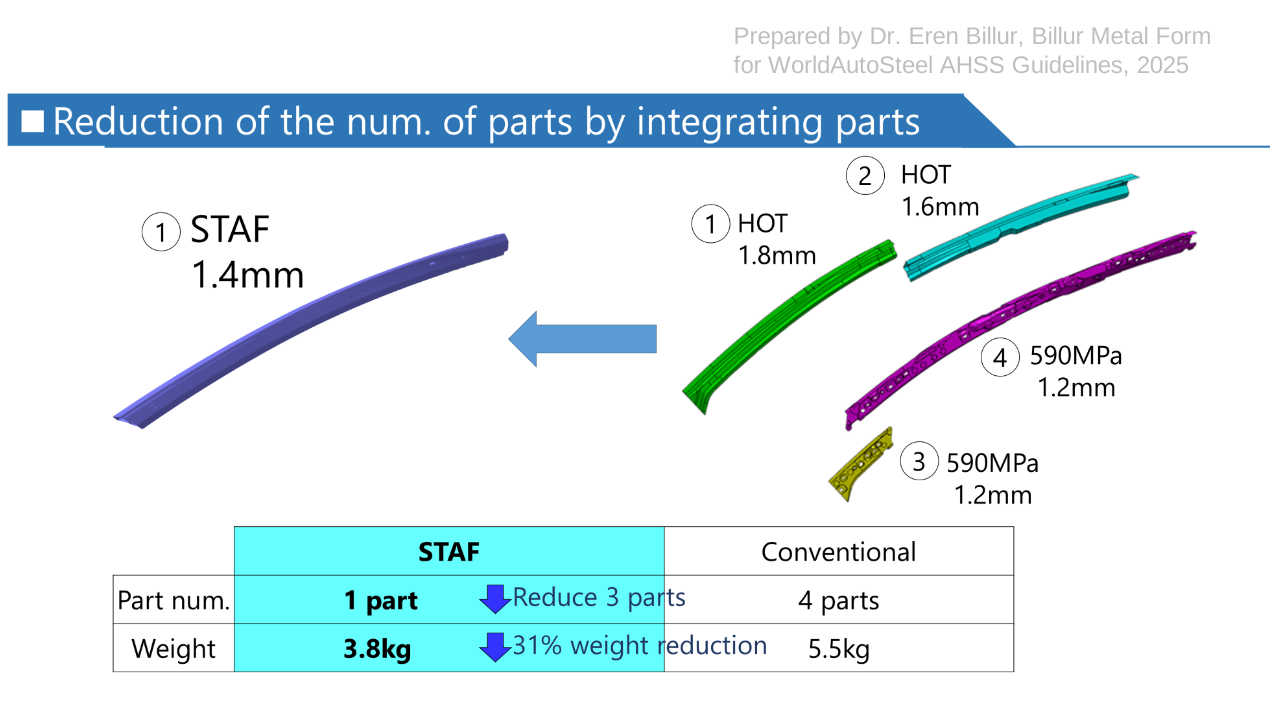
![Figure 15: Process route of vacuum hot stamping [A-87]](https://ahssinsights.org/wp-content/uploads/2025/09/2-PHS-ProdMethods-Fig-15.svg)