Press hardening steels (PHS) are typically carbon-manganese-boron alloyed steels, specifically designed for hot forming process in the automotive industry. They are also commonly known as:
Press Hardening Steels (PHS)
Hot Press Forming Steels (HPF), a term more common in Asia
Boron Steel: although the name may also refer to other steels, in automotive industry boron steel is typically used for PHS
Hot Formed Steel (HF), a term more common in Europe.
Press Quenched Steels (PQS) are basically low-alloy steels, however they are specifically designed to have consistent mechanical properties after hot forming process, even at very wide cooling rate ranges.
The most common PHS grade is PHS1500. In Europe, this grade is commonly referred to as 22MnB5 or 1.5528. As received, it has ferritic-pearlitic microstructure and a yield strength between 300-600 MPa depending on the cold working. The tensile strength of as received steel can be expected to be between 450 and 750 MPa. Total elongation must be over a minimum of 10% (A80, with this minimum possibly different for A50 or A), but depending on coating type and thickness may well exceed 18% (A80), see Figure 1*. Thus, the grade can be cold formed to relatively complex geometries using certain methods and coatings. When hardened, it has a minimum yield strength of 950 MPa and tensile strength typically around 1300-1650 MPa, Figure 1.B-14 After hardening, the total elongation requirement changes from OEM to OEM. Some OEM’s require miniature specimens and ask for elongation of these specific specimens (such as A30) which cannot be comparable with A50 or A80. Typically about 3.5% to 6% minimum total elongation is required, depending on the thickness of the sheet and the type of the specimen (A30, A50 or A80) V-9.
Figure 1: Stress-Strain Curves of PHS1500 before and after quenching * (re-created after U-9, O-8, B-18)
AHSS grades are almost always named after their “minimum” tensile strength. For example, DP590 is a steel with “minimum” tensile strength of 590 MPa. However, PHS and PQS grades may be named after their “typical” tensile strength level. Thus, PHS1500 may have a minimum tensile strength of 1300 MPa, as shown in Table 1. Some companies name PHS and PQS grades with their yield and tensile strength levels, such as PHS950Y1500T. It is also common in Europe to see this steel as PHS950Y1300T, and thus aiming for a minimum tensile strength of 1300 MPa after quenching. The numbers in the commercial names may also significantly differ from the minimum and/or typical. Thus, it is always important to check the specifications to see if the numbers used in the name are showing minimum or typical strength levels.
* A is the elongation after break for a proportional specimen with L0 = 5,65 √S0
** The minimum requirement may be dependent on material thickness.
*** A50, ISO Type 1 elongation after break.
“~” is used for typical values
Superscript PB means after paint bake cycle.
The PHS1500 name may also be used for the Zn-coated 20MnB8 or air hardenable 22MnSiB9-5 grades. The former is known as “direct forming with pre-cooling steel” and could be abbreviated as CR1500T-PS, PHS1500PS, PHSPS950Y1300T or similar (PS standing for Pre-Cooled Stamping). The latter grade is known as “multi-step hot forming steel” and could be abbreviated as, CR1500T-MS, PHS1500MS, PHSMS950Y1300T or similar (MS standing for Multi-Step Stamping).V-9
In the last decade, several steel makers introduced grades with higher carbon levels, leading to a tensile strength between 1800 MPa and 2000 MPa. Hydrogen induced cracking (HIC) and weldability limit applications of PHS1800, PHS1900 and PHS2000, with studies underway to develop practices which minimize or eliminate these limitations.
Lastly, there are higher energy absorbing, lower strength grades, which have improved ductility and bendability. These fall into two main groups: Press Quenched Steels (PQS) with approximate minimum tensile strength levels of 450 MPa and 550 MPa (noted as PQS450 and PQS550 in Figure 2) and higher ductility PHS grades with approximate minimum tensile strength levels of 1000 and 1200 MPa (shown as PHS1000 and PHS1200 in Figure 2).
Apart from these grades, other grades are suitable for press hardening. Several research groups and steel makers have offered special stainless-steel grades and recently developed Medium-Mn steels for hot stamping purposes. Also, one steel maker in Europe has developed a sandwich material by cladding PHS1500 with thin PQS450 layers on both sides.
Figure 2: Stress-strain curves of several PQS and PHS grades used in automotive industry, after hot stamping for full hardening* (re-created after Citations B-18, L-28, Z-7, Y-12, W-28, F-19, G-30).
PHS Grades with Tensile Strength Approximately 1500 MPa
Hot stamping as we know it today was developed in 1970s in Sweden. The most used steel since then has been 22MnB5 with slight modifications. 22MnB5 means, approximately 0.22 wt-% C, approximately (5/4) = 1.25% wt-% Mn, and B alloying.
The automotive use of this steel started in 1984 with door beams. Until 2001, the automotive use of hot stamped components was limited to door and bumper beams, made from uncoated 22MnB5, in the fully hardened condition. By the end of the 1990s, Type 1 aluminized coating was developed to address scale formation. Since then, 22MnB5 + AlSi coating has been used extensively.B-14
Although some steel makers claim 22MnB5 as a standard material, it is not listed in any international or regional (i.e., European, Asian, or American) standard. Only a similar 20MnB5 is listed in EN 10083-3.T-26, E-3 The acceptable range of chemical composition for 22MnB5 is given in Table 2.S-64, V-9
Table 2: Chemical composition limits for 22MnB5 (CR1500T-MB-DS/IS or HR1500T-MB-DS/IS) (listed in wt.%).S-64, V-9
[wt. %]
C
Mn
B
Si
P
S
Al
Ti
Nb
Cr
Mo
Ni
Cu
N
Min.
0.20
1.10
0.0020
0
0
0
0.015
0.02
–
0
0
0
0
0
Max.
0.25
1.50
0.0050
0.50
0.025
0.005
0.080
0.050
–
0.25
0.35
0.10
0.20
0.01
VDA239-500, a material recommendation from Verband Der Automotbilindustrie E.V. (VDA), is an attempt to further standardize hot stamping materials. The document was first published in December 2021. According to this standard, 22MnB5 may be delivered coated or uncoated, hot or cold rolled. Depending on these parameters, as-delivered mechanical properties may differ significantly. Steels for the indirect process, for example, has to have a higher minimum total elongation to ensure cold formability.V-9Figure 1 shows generic stress-strain curves, which may vary significantly depending on the coating and selected press hardening process.
For 22MnB5 to reach its high strength after quenching, it must be austenitized first. During heating, ferrite begins to transform to austenite at “lower transformation temperature” known as Ac1. The temperature at which the ferrite-to-austenite transformation is complete is called “upper transformation temperature,” abbreviated as Ac3. Both Ac1 and Ac3 are dependent on the heating rate and the exact chemical composition of the alloy in question. The upper transformation temperature (Ac3) for 22MnB5 is approximately 835-890 °C.D-21, H-30Austenite transforms to other microstructures as the steel is cooled. The microstructures produced from this transformation depends on the cooling rate, as seen in the continuous-cooling-transformation (CCT) curve in Figure 3. Achieving the “fully hardened” condition in PHS grades requires an almost fully martensitic microstructure. Avoiding transformation to other phases requires cooling rates exceeding a minimum threshold, called the “critical cooling rate,” which for 22MnB5 is 27 °C/s. For energy absorbing applications, there are also tailored parts with “soft zones”. In these soft zones, areas of interest will be intentionally made with other microstructures to ensure higher energy absorption.B-14
Figure 3: Continuous Cooling Transformation (CCT) curve for 22MnB5 (Published in Citation B-19, re-created after Citations M-25, V-10).
Once the parts are hot stamped and quenched over the critical cooling rate, they typically have a yield strength of 950-1200 MPa and an ultimate tensile strength between 1300 and 1700 MPa. Their hardness level is typically between 470 and 510 HV, depending on the testing methods.B-14
Once automotive parts are stamped, they are then joined to the car body in body shop. The fully assembled body known as the Body-in-White (BIW) with doors and closures, is then moved to the paint shop. Once the car is coated and painted, the BIW passes through a furnace to cure the paint. The time and temperature for this operation is called the paint bake cycle. Although the temperature and duration may be different from plant to plant, it is typically close to 170 °C for 20 minutes. Most automotive body components made from cold or hot formed steels and some aluminum grades may experience an increase in their yield strength after paint baking. The so-called Bake-Hardening Index (yield strength increase due to paint baking) is calculated based on EN 10325 or OEM standards.
In Figure 4, press hardened 22MnB5 is shown in the red curve. In this particular example, the proof strength was found to be approximately 1180 MPa. After processing through the standard 170 °C – 20 minutes bake hardening cycle, the proof strength increases to 1280 MPa (shown in the black curve).B-18 Most studies show a bake hardening increase of 100 MPa or more with press hardened 22MnB5 in industrial conditions.B-18, J-17, C-17
Figure 4: Bake hardening effect on press hardened 22MnB5. Named as BH0, is shown since there is no cold deformation pre-strain. (re-created after Citation B-18).
There are two modified versions of the 22MnB5 recently offered by several steel makers: 20MnB8 and 22MnSiB9-5. Both grades have higher Mn and Si compared to 22MnB5, as shown in Table 3.
Table 3: Chemical compositions of PHS grades with 1500 MPa tensile strength (all listed in wt.%).V-9
[wt. %]
C
Mn
B
Si
22MnB5
0.20-0.25
1.10-1.50
0.0020-0.0050
≤0.50
20MnB8
0.17-0.23
1.70-2.50
0.0020-0.0050
≤0.50
22MnSiB9-5
0.20-0.25
2.00-2.40
0.0015-0.0040
1.00-1.40
Both of these relatively recent grades are designed for Zn-based coatings and are designed for different process routes. For these reasons, many existing hot stamping lines would require some modifications to accommodate these grades.
20MnB8 has been designed for a “direct process with pre-cooling”. The main idea is to solidify the Zn coating before forming, eliminating the possibility that liquid zinc fills in the micro-cracks on the formed base metal surface, which in turn eliminates the risk of Liquid Metal Embrittlement (LME). The chemistry is modified such that the phase transformations occur later than 22MnB5. The critical cooling rate of 20MnB8 is approximately 10 °C/s. This allows the part to be transferred from the pre-cooling stage to the forming die without any phase transformations. As press hardened, the material has a typical yield strength of 1050 MPa and 1500 MPa typical tensile strength. Once bake hardened (170 °C, 20 minutes), yield strength may exceed 1100 MPa.K-22, V-24 This steel may be referred to as PHS950Y1300T-PS (Press Hardening Steel with minimum 950 MPa Yield, minimum 1300 MPa Tensile strength, for Pre-cooled Stamping) or CR1500T-MB-PS (Cold Rolled, typical 1500 MPa Tensile strength, Manganese-Boron alloyed, Pre-cooled Stamping) V-9.
22MnSiB9-5 has been developed for a transfer press process, named as “multi-step”. As quenched, the material has similar mechanical properties with 22MnB5 (Figure 5). As of 2020, there is at least one automotive part mass produced with this technology and is applied to a compact car in Germany.G-27 Although the critical cooling rate is listed as 5 °C/s, even at a cooling rate of 1 °C/s, hardness over 450HV can be achieved, as shown in Figure 6.H-27 This allows the material to be “air-hardenable” and thus, can handle a transfer press operation (hence the name multi-step) in a servo press. This material is also available with Zn coating.B-15 This steel may be referred to as PHS950Y1300T-MS (Press Hardening Steel with minimum 950 MPa Yield, minimum 1300 MPa Tensile strength, for Multi-Step process) or CR1500T-MB-MS (Cold Rolled, 1500 MPa typical Tensile strength, Manganese-Boron alloyed, Multi-Step Process).
Figure 5: Engineering stress-strain curves of 1500 MPa level grades (re-created after Citations B-18, G-29, K-22)
Figure 6: Critical cooling rates of 1500 MPa level press hardening steels (re-created after Citations K-22, H-31, H-27)
Grades with Higher Ductility
Press hardened parts are extremely strong, but cannot absorb much energy. Thus, they are mostly used where intrusion resistance is required. However, newer materials for hot stamping have been developed which have higher elongation (ductility) compared to the most common 22MnB5. These materials can be used in parts where energy absorption is required. These higher energy absorbing, lower strength grades fall into two groups, as shown in Figure 7. Those at the lower strength level are commonly referred to as “Press Quenched Steels” (PQS). The products having higher strength in Figure 7 are press hardening steels since they contain boron and do increase in strength from the quenching operation. The properties listed are after the hot stamping process.
Typical tensile strength levels of 450 and 550 MPa, with minimum 12% total elongation, listed as PQS450 and PQS550.
950 to 1250 MPa tensile strength level and minimum 5% total elongation, listed as PHS1000 and PHS1200.
Figure 7: Stress-strain curves of several PQS and PHS grades used in automotive industry, after hot stamping for full hardening* (re-created after Citations B-18, Y-12).
Currently none of these grades are standardized. Most steel producers have their own nomination and standard, as summarized in Table 4. There is a document by German Association of Automotive Industry (Verband der Automobilindustrie, VDA), which specifies the incoming properties of these grades. In the standard, VDA239-500, the steel shown here as PQS450 is listed as CR500T-LA (Cold Rolled, 500 MPa typical Tensile strength, Low Alloyed). Similarly, PQS550 in this document is listed as CR600T-LA. PHS1000 and PHS1200 in this document is similar to VDA239-500’s CR1100T-MB (Cold Rolled, MPa typical Tensile strength, Manganese-Boron alloyed).V-9 Some OEMs may prefer to name these grades with respect to their yield and tensile strength together, as listed in Table 4.
Table 4: Summary of Higher Ductility grades. The terminology descriptions are not standardized.
Higher Ductility grade names are based on their properties and
terminology is derived from a possible chemistry or OEM description.
The properties listed here encompass those presented in multiple sources
and may or may not be associated with any one specific commercial grade.Y-12, T-28, G-32, M-71, S-115
Terminology
VDA 239-500
Equivalent
OEM Nomenclature
Proof Strength
(Rp0.2)
[MPa]
Tensile Strength
(Rm or σUTS)
[MPa]
Elongation
(A*)
[%]
VDA Bending
Angle **
(α) [°]
PQS450
6Mn3
CR500T-LA
PQS340Y410T
PSC340Y460T
340-500
410-650
13
>120
PQS550
6Mn6
CR600T-LA
HS550T/370Y-MP
PQS370Y550T
PSC370Y550T
370-600
550-800
12
>85
PHS1000
8MnB7
CR1100T-MB
HS1000T/800Y-MP
PHS800Y1000T
PSC750Y950T
750-1000
950-1250
7
>80
PHS1200
12MnB6
>75
9MnCr
~850
~1080
~6
~80
Higher energy absorbing grades have been under development at least since 2002. In the earliest studies, PHS 1200 was planned.R-11 Between 2007 and 2009, three new cars were introduced in Europe, having improved “energy absorbing” capacity in their hot stamped components. VW Tiguan (2007-2016) and Audi A5 Sportback (2009-2016) had soft zones in their B-pillars (Figure 8B and C). Intentionally reducing the cooling rate in these soft zone areas produces microstructures having higher elongations. In the Audi A4 (2008-2016) a total of three laser welded tailored blanks were hot stamped. The soft areas of the A4 B-pillars were made of HX340LAD+AS (HSLA steel, with AlSi coating, as delivered, min yield strength = 340 MPa, tensile strength = 410-510 MPa) as shown in Figure 8A. After the hot stamping process, HX340LAD likely had a tensile strength between 490 and 560 MPaS-65, H-32, B-20, D-22, putting it in the range of PQS450 (see Table 3). Note that these were not the only cars to have tailored hot stamped components during that time.
Figure 8: Earliest energy absorbing hot stamped B-pillars: (A) Audi A4 (2008-2016) had a laser welded tailored blank with HSLA material; (B) VW Tiguan (2007-2015) and (C) Audi A5 Sportback (2009-2016) had soft zones in their B-pillars (re-created after Citations H-32, B-20, D-22).
A 2012 studyK-25 showed that a laser welded tailored B-Pillar with 340 MPa yield strength HSLA and 22MnB5 had the best energy absorbing capacity in drop tower tests, compared to a tailored (part with a ductile soft-zone) or a monolithic part, Figure 9. As HSLA is not designed for hot stamping, most HSLA grades may have very high scatter in the final properties after hot stamping depending on the local cooling rate. Although the overall part may be cooled at an average 40 to 60 °C/s, at local spots the cooling rate may be over 80 °C/s. PQS grades are developed to have stable mechanical properties after a conventional hot stamping process, in which high local cooling rates may be possible.M-26, G-31, T-27
Figure 9: Energy absorbing capacity of B-pillars increase significantly with soft zones or laser welded tailored blank with ductile material (re-created after Citation K-25).
Conventional High-Strength and Advanced High-Strength Steels are not designed for hot stamping process. HSLA340 (minimum yield strength, as delivered) and CMn440 steel (Carbon-manganese alloyed, minimum 440 MPa tensile strength at delivery) may be softer than their as-delivered condition when heated over austenitization temperature and slowly cooled at 15 °C/s cooling rate. Furthermore, if the local cooling rate is over 60 to 80 °C/s, a significant increase in hardness (see Figure 10) and sharp decrease in elongation may be observed.D-22, T-27 PQS550 and PHS1000 have relatively more stable mechanical properties at high cooling rates.S-116, S117
Figure 10: Vickers hardness variation of several cold stamping steels after austenitization and at different cooling rates (re-created using data from Citations D-22, S-116, and S117).
PQS grades have been in use at latest since 2014. One of the earliest cars to announce using PQS450 was VolvoXC90. There are six components (three right + three left), laser welded tailored blanks with PQS450, as shown Figure 11.L-29 Since then, many carmakers started to use PQS450 or PQS550 in their car bodies. These include:
Fiat 500X: Patchwork supported, laser welded tailored rear side member with PQS450 in crush zonesD-23,
Fiat Tipo (Hatchback and Station Wagon versions): similar rear side member with PQS450B-14,
Renault Scenic 3: laser welded tailored B-pillar with PQS550 in the lower sectionF-19,
Chrysler Pacifica: five-piece front door ring with PQS550 in the lower section of the B-Pillar areaT-29, and
Chrysler Ram: six-piece front door ring with PQS550 in the lower section of the B-Pillar area.R-3
Figure 11: Use of laser welded tailored blanks with PQS and PHS grades in 2nd generation Volvo XC90 (re-created after Citation L-29).
Several car makers use PQS grades to facilitate joining of components. The B-Pillar of the Jaguar I-PACE electric SUV is made of PQS450, with a PHS1500 patch that is spot welded before hot stamping, creating the patchwork blank shown in Figure 12a.B-21 Early PQS applications involved a laser welded tailored blank with PHS 1500. Since 2014, Mercedes hot stamped PQS550 blanks not combined with PHS1500. Figure 12b shows such components on the Mercedes C-Class.K-26
Figure 12: Recent PQS applications: (a) 2018 Jaguar I-PACE uses a patchwork B-pillar with PQS450 master blank and PHS1500 patchB-21, (b) 2014 Mercedes C-Class has a number of PQS550 components that are not laser welded to PHS1500.K-26
PHS1000 is also used for energy absorbing purposes, as well as facilitating weldability. Figure 13 shows some of the recent examples of PHS1000 usage.
Figure 13: PHS1000 applications: (a) Door ring of Tesla Model Y (SOP 2020)B-79,A-84; (b) Door ring of Voyah Dream (SOP 2022)H-70.
Whereas the microstructure of PHS with a targeted strength of 1500 MPa is martensite, the microstructure of PQS grades contain a combination of ferrite, martensite, and bainite. This indicates that these sections require different thermal profiles.
A publication from 2023 compares the effects of two thermal profiles on the properties of a PQS grade with a mating PHS 1500 grade, as indicated in Table 5. There is little effect on the PHS 1500 properties, but the second profile shows better ductility and a smaller thickness of the Al-Si alloy layer – both of which are preferred.L-74
Table 5: Performance comparison of two processes.L-74
Process
HC370 / 550HS + AS
HC950 / 1300HS + AS
Yield Strength
(MPa)
Tensile Strength
(MPa)
Elongation
(%)
Al-Si Layer Thickness
(µm)
Yield Strength
(MPa)
Tensile Strength
(MPa)
Elongation
(%)
Al-Si Layer Thickness
(µm)
1
509
640
14.00
14
1189
1500
6.74
18
2
365
606
24.72
8
1180
1492
7.72
8
PHS Grades over 1500 MPa
The most commonly used press hardening steels have 1500 MPa tensile strength, but are not the only optionsR-11, with 4 levels between 1700 and 2000 MPa tensile strength available or in development as shown in Figure 14. Hydrogen induced cracking (HIC) and weldability problems limit widespread use in automotive applications, with studies underway to develop practices which minimize or eliminate these limitations.
Figure 14: PHS grades over 1500 MPa tensile strength, compared with the common PHS1500 (re-created after Citations B-18, W-28, Z-7, L-30, L-28, B-14, O-15).
Mazda Motor Corporation was the first vehicle manufacturer to use higher strength boron steels, with the 2011 CX-5 using 1,800MPa tensile strength reinforcements in front and rear bumpers, Figure 15. According to Mazda, the new material saved 4.8 kg per vehicle. The chemistry of the steel is Nb modified 30MnB5.H-33, M-28Figure 16 shows the comparison of bumper beams with PHS1500 and PHS1800. With the higher strength material, it was possible to save 12.5% weight with equal performance.H-33
Figure 15: Bumper beam reinforcements of Mazda CX-5 (SOP 2011) are the first automotive applications of higher strength (>1500 MPa) press hardening steels.M-28
Figure 16: Performance comparison of bumper beams with PHS1500 and PHS1800 (re-created after H-33).
PHS 1800 is also used in the 2022 Genesis Electrified G80 (G80EV) and the new G90, both from Hyundai Motor. A specialized method lowering the heating furnace temperature by more than 50℃ limits the penetration of hydrogen into the blanks, minimizing the risk of hydrogen embrittlement. L-64.
MBW 1900 is the commercial name for a press hardening steel with 1900 MPa tensile strength. An MBW 1900 B-pillar with correct properties can save 22% weight compared to 590DP and yet may cost 9% less than the original Dual-Phase design.H-34 Ford had also demonstrated that by using MBW 1900 instead of PHS 1500, a further 15% weight could be saved.L-30 Since 2019, VW’s electric vehicle ID.3 has two seat crossbeams made of MBW 1900 steel, as seen in Figure 15.L-31 The components are part of MEB platform (Modularer E-Antriebs-Baukasten – modular electric-drive toolkit) and may be used in other VW Group EVs. MBW 1900 can be ordered as uncoated or AS Pro coated (Aluminum-Silicon with Magnesium).T-50
Figure 17: Underbody of VW ID3 (part of MEB platform).L-31
USIBOR 2000 is the commercial name given to a steel grade similar to 37MnB4 with an AlSi (AS) coating. Here, it will be described as PHS2000+AS.. Final properties are expected only after paint baking cycle, and the parts made with this grade may be brittle before paint bake.B-32 In June 2020, Chinese Great Wall Motors started using PHS2000+AS in the Haval H6 SUV.V-12
Since 2023, PHS2000+AS has been used in the A-pillar of Stellantis’ Maserati Grecale SUV. The design allowed downgauging from 1.4 mm PHS1500 to 1.3 mm PHS2000 with comparable crash performance. This weight savings corresponds to 0.8 kg per car. B-80 In late 2023, Toyota introduced the 2nd generation C-HR. This vehicle has a 2 GPa B-pillar with no additional reinforcement. The previous generation had PHS1500 B-pillar with a secondary reinforcement also from PHS1500. The new design not only saved 3.5 kg per vehicle, but also saved cost.A-83See Figure 18 for these applications. PHS2000+AS is also used as a patch in the door ring of Voyah Dream, as pictured in Figure 13b.H-70
Figure 18: PHS2000+AS applications: (a) A-pillar of Maserati GrecaleB-80 and (b) B-pillar of Toyota C-HR.D-45
HPF 2000, another commercial name, is used in a number of component-based examples, and also in the Renault EOLAB concept car.L-28, R-12 An 1800 MPa grade is under development.P-22 Docol PHS 1800, a commercial grade approximating 30MnB5, has been in production, with Docol PHS 2000 in development.S-66 PHS-ultraform 2000, a commercial name for a Zn (GI) coated blank, is suited for the indirect process.V-11
General Motors China, together with several still mills across the country, have developed two new PHS grades: PHS 1700 (20MnCr) and PHS2000 (34MnBV). 20MnCr uses Cr alloying to improve hardenability and oxidation resistance. This grade can be hot formed without a coating, and thus named as coating free PHS (CFPHS). The furnace has to be conditioned with N2 gas. The final part has high corrosion resistance, approximately 9% total elongation (see Figure 12) and high bendability (see Table 4). 34MnBV on the other hand, has a thin AlSi coating (20g/m2 on each side). Compared with the typical thickness of AlSi coatings (30 to 75 g/m2 on each side), thinner coatings are preferred for bendability (see Table 6).W-28More information about these oxidation resistant PHS grades, as well as a 1200 MPa version intended for applications benefiting from enhanced crash energy absorption, can be found in Citation L-60.
A research team, including Volkswagen Group Innovation, have recently developed 37SiB6 steel. They named the grade as SIBORA (Silicon – Boron alloyed steel with Retained Austenite). The grade when hot stamped has a yield strength of approximately 1600 MPa and a tensile strength of 2050 MPa. The microstructure has 3-5% retained austenite, giving it a very high total elongation of 10% (A80, measured on an ISO Type 2, 20×80 tensile specimen). The research team also developed a process called BQP, Bainitizing, Quenching and Partitioning. With this method, several strength-ductility levels can be achieved from the same alloy.O-15 BQP process is explained in the next section under Single Alloy Concepts.
Figure 19: 37SiB6, also known as SIBORA, before and after hot stamping (re-created after O-15).
Single Alloy Concepts
In 2021, a research group from China came up with the Uni-Steel proposal, where the whole car body can be built by using a single alloy concept. The material is similar to 22MnB5 but has higher Cr and Si content, and some Nb alloying. When hot stamped, the material would have a yield strength of 1400 MPa (typical) and tensile strength of 1600 MPa (thus named as PHS1600 in Figure 20a). When different heat treatments are applied, the material can be as soft as 420 MPa yield / 600 MPa tensile. This is named as HSLA in Figure 20a. The authors specified 6 different process routes, ending up 6 different material specs as shown in Figure 20. There was also a car body design made of single alloy, different strength levels, as shown in Figure 20c.L-68
Figure 20: Uni-Steel concept: (a) Different variants, b) their engineering stress-strain curves, (c) a concept BIW design using these variants (re-created after L-68).
SIBORA, or 37SiB6, can also be processed using a Bainitizing, Quenching and Partitioning (BQP) process to generate different variants. In the BQP process, the sheet metal is first austenitized around 930°C and then rapidly cooled to bainitizing temperature, between 360 and 460°C, as seen in Figure 21a. The bainitizing temperature and time affect tensile properties. By tailoring both variables, tensile strength can be altered between 1150 and 2050 MPa, total elongation can be altered between 19% and 9%, Figure 21b.O-15
Figure 21: (a) Schematic time-temperature curve of BQP process, (b) several variants of SIBORA (37SiB6) using hot stamping and BQP process routes (both re-created after L-15).
Other Steels for Press Hardening Process
In recent years, many new steel grades are under evaluation for use with the press hardening process. Few, if any, have reached mass production, and are instead in the research and development phase. These grades include:
Studies of press hardening of stainless steels primarily focus on martensitic grades (i.e., AISI SS400 series).M-36, H-42, B-40, M-37, F-30 As seen in Figure 22, martensitic stainless steels may have higher formability at elevated temperatures, compared to PHS1500 (22MnB5). Other advantages of stainless steels are:
No scale formation at high temperatures, no controlled atmosphere is required in the furnaceL-70
better corrosion resistance of the final partM-37,
allow higher heating rates (i.e., induction heating), since the blanks are uncoated (no rules for coating diffusion) F-30,L-70
possibility of air hardening – allowing the multi-step process — as seen in Figure 23aH-42,
Disadvantages include (a) higher material cost, (b) higher furnace temperature (up to around 1050-1150 °C – see Table 6), and (c) high Cr content would significantly reduce weldability.M-37, F-30 As of 2025, there are only two commercially available stainless steel grades specifically developed for press hardening process.A-85At least one more stainless steel maker have also developed a grade for hot stamping (420C), however, it was not listed in their commercial offerings, as of 2025.
Figure 22: Tensile strength and total elongation variation with temperature of (a) PHS1500 = 22MnB5M-38 and (b) martensitic stainless steel.M-36
Figure 23: (a) Critical cooling rate comparison of 22MnB5 and AISI SS410 (re-created after Citation H-42, (b) Room temperature forming limit curve comparison of DP600 and modified AISI SS410 (re-created after Citation M-37.
Final mechanical properties of stainless steels after press hardening process are typically superior to 22MnB5, in terms of elongation and energy absorbing capacity. Figure 24 illustrates engineering stress-strain curves of the two commercially available grades (1.6065 and 1.4064), and compares them with the 22MnB5 and a duplex stainless steel (Austenite + Martensite after press hardening and tempering). The duplex grade was also developed by a stainless steel maker, but is still not commercially available. These grades may also have bake hardening effect, abbreviated as BH0, as there will be no cold deformation.B-40, M-37, F-30
Figure 24: Engineering Stress-Strain curves of press hardened stainless steels, compared with 22MnB5 (re-created after Citations B-40, M-37, F-30, B-41).
Table 6: Summary of mechanical properties of press hardenable stainless steel grades. Typical values are indicated with “~”. (Table generated from Citations B-40, M-37, F-30, and D-46.)
Terminology
Furnace
Temperature
(Theat)
[°C]
Secondary
Tempering
Proof Strength
(Rp0.2)
[MPa]
Tensile Strength
(Rm or σUTS)
[MPa]
Elongation
(A*)
[%]
VDA Bending
Angle **
(α) [°]
1.4034
420C
1150
400°C, 5 min.
1100-1300
1700-1850
12-16
–
1.4003
410L
950
–
~830
~1020
~7
–
1.4021
420
1030
–
~1125
~1750
~5
–
1.4021
420
1030
600°C, 10 min.
~930
~1090
~9
–
1.6065
Modified 410
1050
–
~1200
~1600
≥7
~70
1.6065
Modified 410
950
–
~870
~1130
≥10
~100
** VDA Bending angle may depend on thickness and method of measurement (α0 or αM)
Other than these, there is also a study where 27MnB5 was cladded with AISI 304 on both top and bottom. This study is explained in detail in Composite Steels section.
Medium-Mn Steels
Medium-Mn steels typically contain 3 to 12 weight-% manganese alloying.D-27, H-30, S-80, R-16, K-35 Although these steels were originally designed for cold stamping applications, there are numerous studies related to using them in the press hardening process as well.H-30 Several advantages of medium-Mn steels in press hardening are:
Austenitization temperature may be significantly lower than compared to 22MnB5, as indicated in Figure 19.H-30, S-80 Thus, using medium-Mn steels may save energy in heating process.M-39 Lower heating temperature may also help reducing the liquid-metal embrittlement risk of Zn-coated blanks. It also may reduce oxidation and decarburization of uncoated blanks.S-80
Martensitic transformation can occur at low cooling rates. Simpler dies could be used with less or no cooling channels. In some grades, air hardening may be possible. Thus, multi-step process could be employed.S-80, B-14
Some retained austenite may be present at the final part, which can enhance the elongation, through the TRIP effect. This, in turn, improves toughness significantly.S-80, B-14
Figure 25: Effect of Mn content on equilibrium transformation temperatures (re-created after Citations H-30, B-14).
The change in transformation temperatures with Mn-alloying was calculated using ThermoCalc software.H-30 As seen in Figure 25, as Mn alloying is increased, austenitization temperatures are lowered.H-30 For typical 22MnB5 stamping containing 1.1 to 1.5 % Mn, furnace temperature is typically set at 930 °C in mass production. The multi-step material 22MnSiB9-5 has slightly higher Mn levels (2.0 to 2.4 %), so the furnace temperature could be reduced to 890 °C. As also indicated in Table 6, the furnace temperature could be further lowered to 650°C in hot forming of medium-Mn steels.
A study in the EU showed that if the maximum furnace temperature is 930 °C, which is common for 22MnB5, natural gas consumption will be around 32 m3/hr. In the study, two new medium-Mn steels were developed, one with 3 wt.% Mn and the other with 5 wt% Mn. These grades had lower austenitization temperature, and the maximum furnace set temperature could be reduced to 808 °C and 785 °C, respectively. Experimental data shows that at 808 °C natural gas consumption was reduced to 19 m3/hr, and at 785 °C to 17 m3/hr.M-39 In Figure 26, experimental data is plotted with a curve fit. Based on this model, it was estimated that by using 22MnSiB9-5, furnace gas consumption may be reduced by 15%.
Figure 26: Effect of maximum furnace set temperature (at the highest temperature furnace zone) on natural gas consumption (raw data from Citation M-39).
Lower heating temperature of medium-Mn steels may also help reducing the liquid-metal embrittlement risk of Zn-coated blanks. It also may reduce oxidation and decarburization of uncoated blanks.S-80
Medium-Mn steels may have high yield-point elongation (YPE), with reports of more than 5% after hot stamping. Mechanical properties may be sensitive to small changes in temperature profile. As seen in Figure 27, all studies with medium-Mn steel have a unique stress-strain curve after press hardening. This can be explained by:
differences in the chemistry,
thermomechanical history of the sheet prior to hot stamping,
heating rate, heating temperature (see Figure 28), and soaking time, and
secondary heat treatments such as quenching and partitioning.W-41
In a recent study, various heating temperatures were examined. As seen in Figure 28, both the stress-strain behavior and the phase fractions change significantly with heating temperature.W-42
Figure 27: Engineering Stress-Strain curves of several press hardened medium-Mn steels, compared with 22MnB5. See Table 7 for an explanation of each tested material (re-created after Citations S-80,L-37, W-30, L-38).
Figure 28: Engineering stress-strain curves of 4% Mn steel, heated to different temperature (760. 800 and 840°C). Phase fractions are also affected by the heating temperature (re-created after W-42).
Table 7: Summary of mechanical properties of press hardenable Medium-Mn grades shown in Figure 27.
Typical values are indicated with “~”.
Toughness is calculated as the area under the engineering stress-strain curve.
Items 4 and 5 also were annealed at different temperatures and therefore have different thermomechanical history.
Note that these grades are not commercially available.
Based on Citations L-38, W-30, L-37, S-80, and W-42.
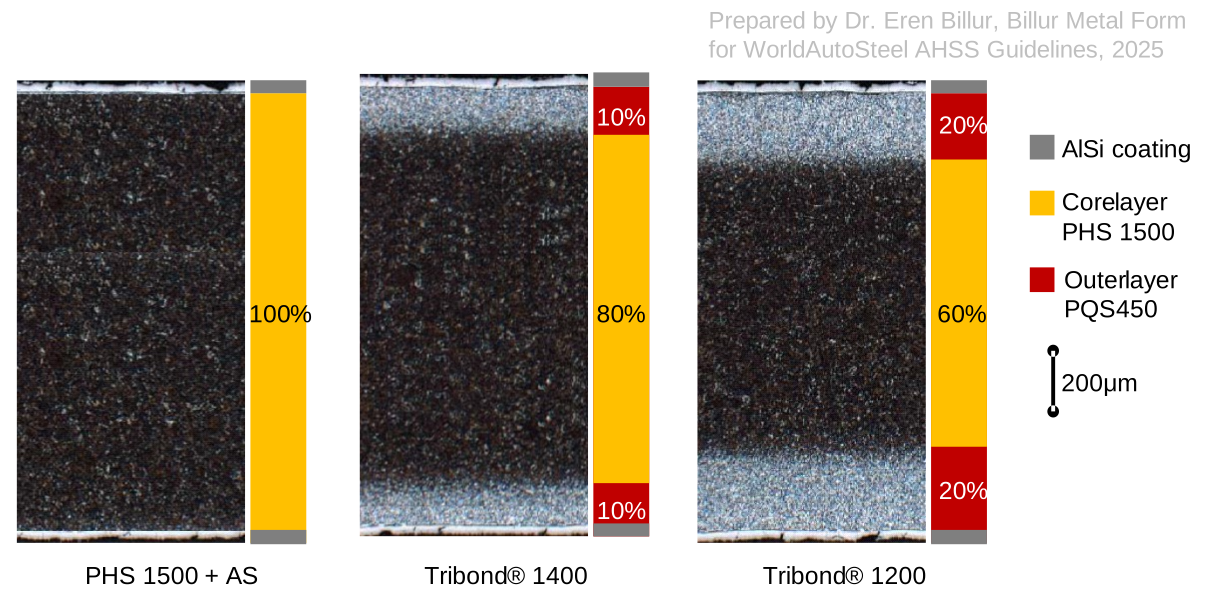
TriBond ® is the name given to a family of steel composites.T-32 Here, three slabs (one core material (60 to 80% of the thickness) and two cladding layers) are surface prepared, stacked on top of each other, and welded around the edges. The stack is hot rolled to thickness. Cold rolling could also be applied. Initially, TriBond ® was designed for wear-resistant cladding and ductile core materials.
The original design was optimized for hot stamping.B-14 The core material, where bending strains are lower than the outer layers, is made from generic 22MnB5 (PHS1500). Outer layers are made with PQS450. The stack is cold rolled, annealed and AlSi coated.Z-9 Two grades are developed, differing by the thickness distribution between the layers, as shown in Figure 29.R-14
Figure 29: Sample microsections of the conventional hot stamping grade PHS1500+AS, the high strength composite Tribond® 1400 and the high energy absorbing composite Tribond® 1200. The Tribond® 1200 microsection is experimental and is taken from Citation R-14. The other two images are renditions created by the author for explanation purposes. (re-created after Citations R-14, R-15)
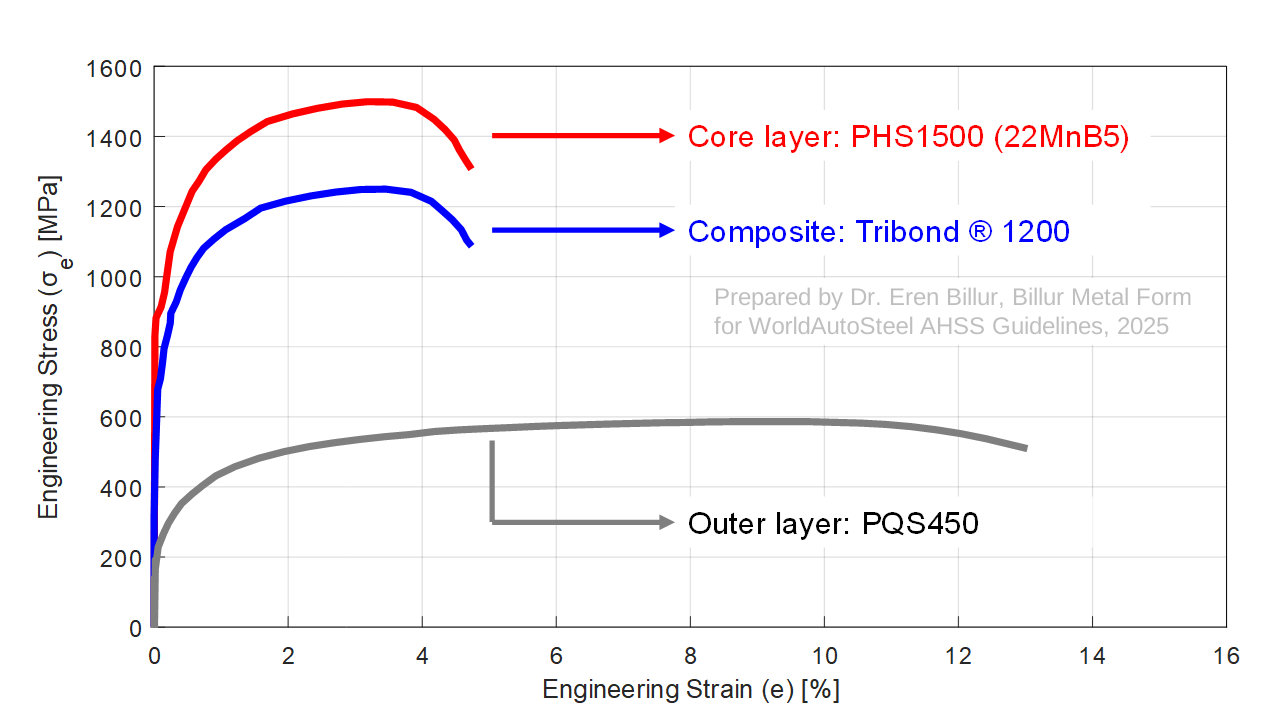
Total elongation of the composite steel is not improved, compared to PHS1500, as shown in Figure 30. The main advantage of the composite steels is their higher bendability, as seen in Table 8. Crashboxes, front and rear rails, seat crossmembers and similar components experience axial crush loading in the event of a crash. In axial crush, Tribond® 1200 saved 15% weight compared to DP780 (CR440Y780T-DP). The bending loading mode effects B-pillars, bumper beams, rocker (sill) reinforcements, side impact door beams, and similar components during a crash. In this bending mode, Tribond® 1400 saved 8 to 10% weight compared to regular PHS1500. Lightweighting cost with Tribond® 1400 was calculated as €1.50/kgsaved.G-37, P-26
Figure 30: Engineering Stress-Strain curves of core layer, outer layer and the composite steel (re-created after Citation P-26).
In 2021, two German universities developed a similar composite steel, this time the core was 27MnCrB5-2 with stainless steel 1.4301 (AISI 304) claddings at the top and bottom. The details of the study is summarized in Table 8.K-63
Table 8: Summary of composite steels and comparison with conventional PHS and PQS grades.
Typical values are indicated with “~”. (Table re-created after Citations B-14 and K-63.)
Grade
Composition
through
thickness
Proof Strength
(Rp0.2)
[MPa]
Tensile Strength
(Rm or σUTS)
[MPa]
Elongation
(A80)
[%]
Bending
angle (α) [°]
PQS450
100% PQS450
~400
~550
~17
140-155
Tribond ® 1200
20% PQS450
60% PHS1500
20% PQS450
≥730
≥1100
≥5
≥135
Tribond ® 1400
10% PQS450
80% PHS1500
10% PQS450
≥890
≥1300
≥5
≥75
PHS1500
100% PHS1500
≥1000
≥1400
≥5
≥55
AISI304
100% AISI 304
~300
~640
–
–
Composite Steel
12.5% AISI 304
75% 27MnCrB5-2
12.5% AISI304
~820
1300
–
–
27MnCrB5-2
100% ‘7MnCrB5-2
~1020
~1500
–
–
* Graphs in this article are for information purposes only. Production materials may have different curves. Consult the Certified Mill Test Report and/or characterize your current material with an appropriate test (such as a tensile, bending, hole expansion, or crash test) test to get the material data pertaining to your current stock.
For more information on Press Hardened Steels, see these pages:
First Generation Advanced High-Strength Steels (AHSS) are based on a ferrite matrix for baseline ductility, with varying amounts of other microstructural components like martensite, bainite, and retained austenite providing strength and additional ductility. These grades have enhanced global formability compared with conventional high strength steels at the same strength level. However, local formability challenges may arise in some applications due to wide hardness differences between the microstructural components.
The Second Generation AHSS grades have essentially a fully austenitic microstructure and rely on a twinning deformation mechanism for strength and ductility. Austenitic stainless steels have similar characteristics, so they are sometimes grouped in this category as well. 2nd Gen AHSS grades are typically higher-cost grades due to the complex mill processing to produce them as well as being highly alloyed, the latter of which leads to welding challenges.
Third Generation (or 3rd Gen) AHSS are multi-phase steels engineered to develop enhanced formability as measured in tensile, sheared edge, and/or bending tests. Typically, these steels rely on retained austenite in a bainite or martensite matrix and potentially some amount of ferrite and/or precipitates, all in specific proportions and distributions, to develop these enhanced properties.
Individual automakers may have proprietary definitions of 3rd Gen AHSS grades containing minimum levels of strength and ductility, or specific balances of microstructural components. However, such globally accepted standards do not exist. Prior to 2010, one steelmaker had limited production runs of a product reaching 18% elongation at 1000 MPa tensile strength. Starting around 2010, several international consortia formed with the hopes of achieving the next-level properties associated with 3rd Gen steels in a production environment. One effortU-11, S-95 targeted the development of two products: a high strength grade having 25% elongation and 1500 MPa tensile strength and a high ductility grade targeting 30% elongation at 1200 MPa tensile strength. The “exceptional-strength/high-ductility” steel achieved 1538 MPa tensile strength and 19% elongation with a 3% manganese steel processed with a QP cycle. The 1200 MPa target of the “exceptional-ductility/high-strength” was met with a 10% Mn alloy, and exceeded the ductility target by achieving 37% elongation. Another effort based in EuropeR-22 produced many alloys with the QP process, including one which reached 1943 MPa tensile strength with 8% elongation. Higher ductility was possible, at the expense of lower strength.
3rd Gen steels have improved ductility in cold forming operations compared with other steels at the same strength level. As such, they may offer a cold forming alternative to press hardening steels in some applications. Also, while 3rd Gen steels are intended for cold forming, some are appropriate for the hot stamping process.
Like all steel products, 3rd Gen properties are a function of the chemistry and mill processing conditions. There is no one unique way to reach the properties associated with 3rd Gen steels – steelmakers use their available production equipment with different characteristics, constraints, and control capabilities. Even when attempting to meet the same OEM specification, steelmakers will take different routes to achieve those requirements. This may lead to each approved supplier having properties which fall into different portions of the allowable range. Manufacturers should use caution when switching between suppliers, since dies and processes tuned for one set of properties may not behave the same when switching to another set, even when both meet the OEM specification.
There are three general types of 3rd Gen steels currently available or under evaluation. All rely on the TRIP effect. Applying the QP process to the other grades below may create additional high-performance grades.
TRIP-Assisted Bainitic Ferrite (TBF) and Carbide-Free Bainite (CFB) are descriptions of essentially the same grade. Some organizations group Dual Phase – High Ductility (DP-HD, or DH) in with these. Their production approach leads to an ultra-fine bainitic ferrite grain size, resulting in higher strength. The austenite in the microstructure allows for a transformation induced plasticity effect leading to enhanced ductility.
Quenching and Partitioning (Q&P) describes the processing route resulting in a structure containing martensite as well as significant amounts of retained austenite. The quenching temperature helps define the relative percentages of martensite and austenite while the partitioning temperature promotes an increased percentage of austenite stabile room temperature after cooling.
Medium Manganese steels have a Mn content of approximately 3% to 12%, along with silicon, aluminum, and microalloying additions. This alloying approach allows for austenite to be stable at room temperature, leading to the TRIP Effect for enhanced ductility during stamping. These grades are not yet widely commercialized.
TRIP Assisted Grades, like TRIP-Assisted Bainitic Ferrite (TBF)
and Carbide-Free Bainite (CFB)
During the slow cooling of conventional steels, austenite transforms into a microstructure containing alternating regions of ferrite and cementite. Note that cementite is the name given to iron carbide with the composition Fe3C. At higher magnification, this microstructure looks like Mother-of-Pearl, leading to its name of pearlite.
Depending on the chemistry and thermal profile, rapid controlled cooling produces new microstructures which are not achievable with slow cooling, including martensite, austenite, and bainite. Bainite consists of regions of dislocation-rich (higher strength) ferrite separated by austenite, martensite, and/or cementite. These phases within bainite have relatively small hardness differences, leading to improved local formability compared with conventional dual phase or TRIP steels. Producing a fully-bainitic microstructure is challenging, so bainite is usually accompanied by other phases, resulting in ferrite-bainite steels or complex phase.
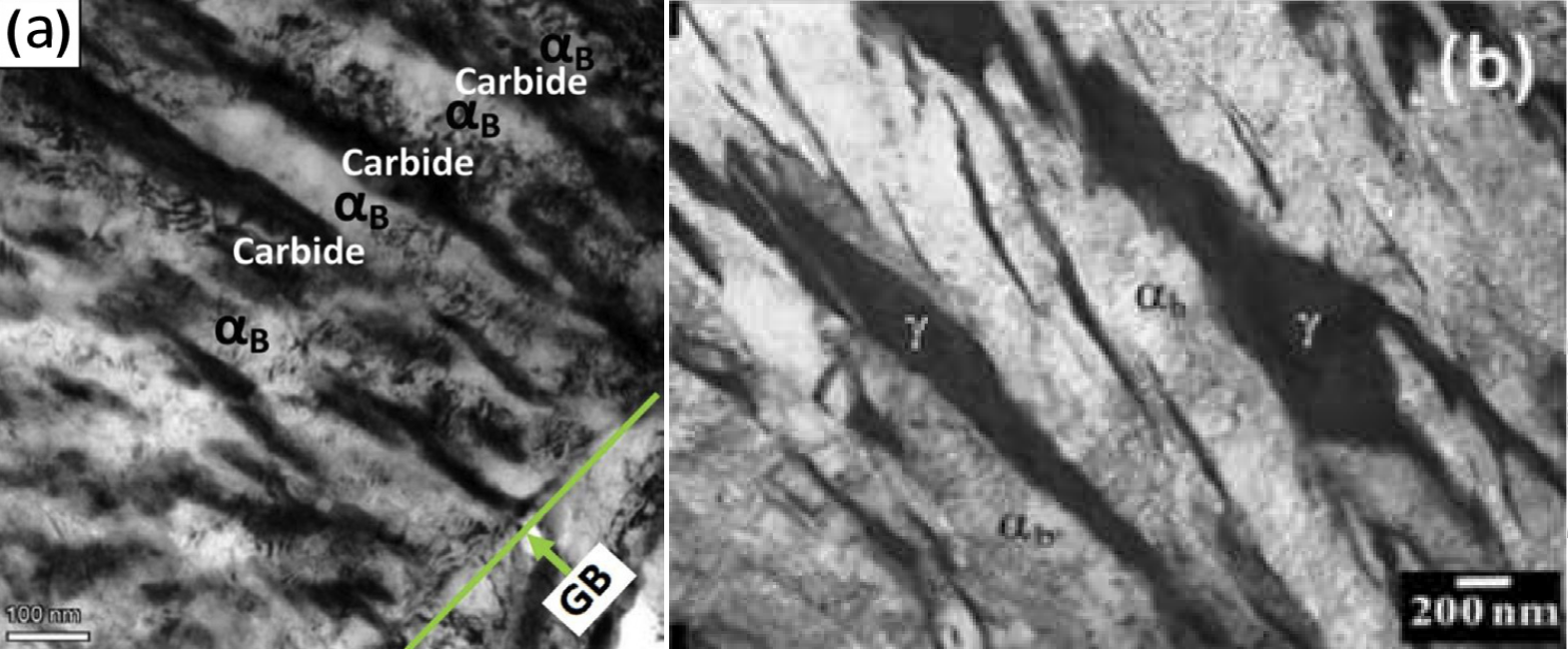
With an appropriate chemistry and use of specific thermal profiles capable of holding at specific temperatures and even reheating after quenching further reduces the size of these microstructural components, and essentially eliminates the production of the low-ductility cementite (iron carbide). Large “blocky” austenite, characteristic of 1st Generation TRIP steels, is minimized and instead thin fine submicron austenitic laths form (Figure 1).
Figure 1: On the left, the typical bainitic structure showing bainitic ferrite laths with interlath carbideS-96; On the right is the microstructure of TRIP Assisted Bainitic Ferrite / Carbide Free Bainite showing bainitic ferrite laths interwoven with thin films of untransformed retained austenite.C-31 αb is bainitic ferrite and γ is retained austenite. Note the slightly different magnification.
The fine components result in higher strength, similar to fine grain size being associated with increased strength. Since the ferrite is higher strength than conventional bainite due to the fine component size and even greater dislocation density, the component hardness difference is further minimized, leading to additional improvements in local formability. The austenite promotes the TRIP effect, resulting in greater uniform elongation and enhanced global formability. Combined, these features result in calling this microstructure either TRIP Assisted Bainitic Ferrite (TBF) or Carbide Free Bainite (CFB). Some sources suggest this is the same product as “Dual Phase with High Ductility,” abbreviated as DP-HD or simply DH.H-18, A-70, R-23, B-58 TBF, CFB, DP-HD, and DH are used interchangeably.
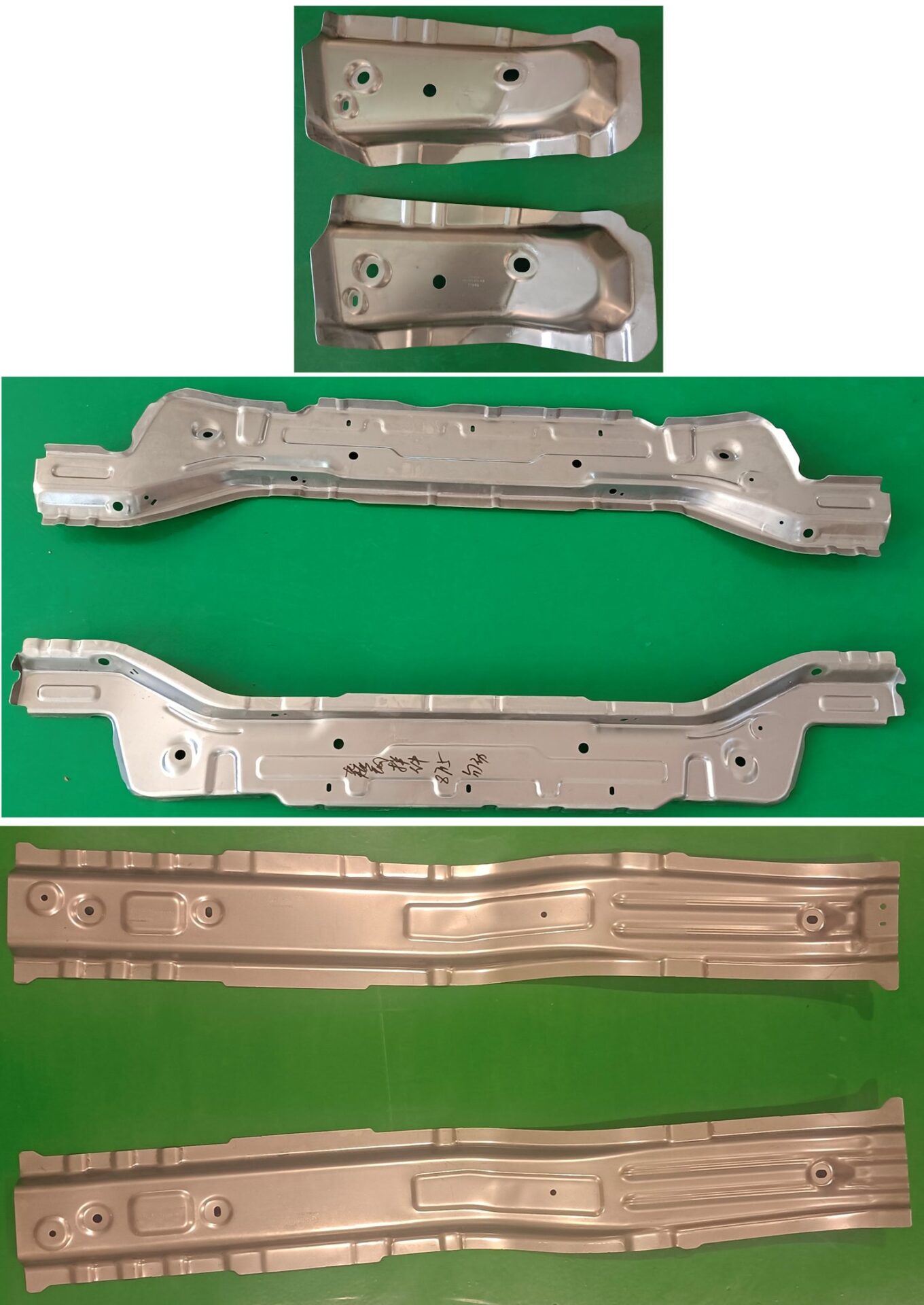
Examples of parts made from DH steels are found in Figure 2. The retained austenite in the microstructure improves the edge ductility and bendability, making these parts feasible.
Figure 2: Parts made from DH steels. Crossmember component (CR330/590DH, top image), Seat crossmember (CR440/780DH, middle image), and Crossmember Front Floor (CR550/980DH, bottom image).
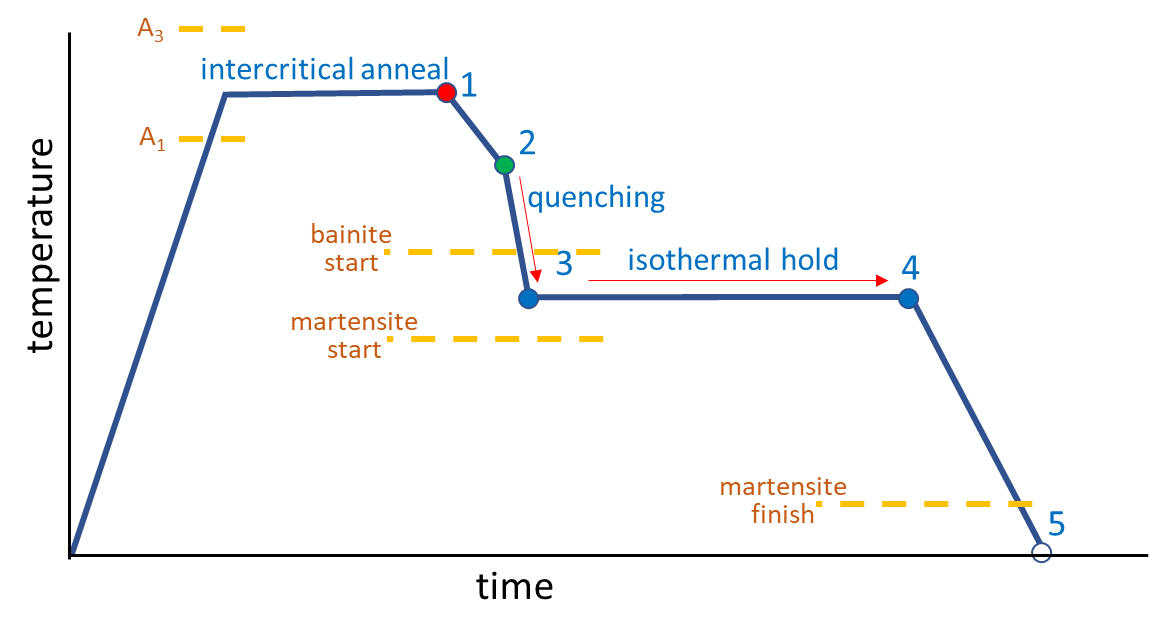
One potential processing route (Figure 3) may involve intercritical annealing in the two-phase austenite+ferrite region, cooling slightly to promote ferrite formation (1→2), and then quenching (2→3) to a temperature below the start of bainite formation (Bs) while remaining above the Ms temperature, the start of martensitic transformation. Once the targeted amount of bainite has formed in an isothermal overaging step (3→4), the steel is then quenched to room temperature (4→5).
Figure 3: Potential thermal cycle to produce TRIP assisted Bainitic Ferrite (Carbide-Free Bainite).
These steels are characterized by a good balance of strength and global formability (as measured by high TSxEL, uniform elongation, and total elongation combined with low YS/TS) against local formability (as measured by bend angle and hole expansion ratio).C-31 A YS/TS ratio of approximately 0.7, similar to DP steels, is a characteristic of these grades.H-59,C-31
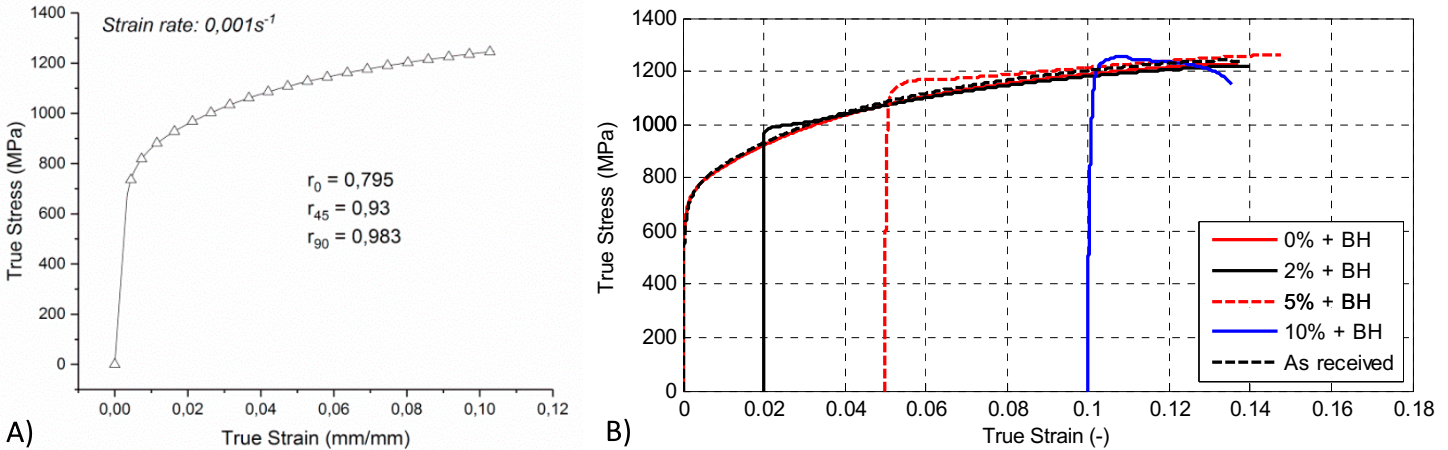
These steels exhibit a significant bake hardening response. One study found a BH kick of over 200 MPa after a 4% prestrain and a bake cycle of 30 minutes at 200 °C. The total hardening response (strain hardening plus bake hardening) was almost 800 MPa.T-41 However, in production, this paint bake cycle is not likely to be practical due to paint over curing and the preference for faster cycle times. A different study evaluated TBF700Y/1050T and found after 15 minutes at 195 °C, samples prestrained to 4.5% had a BH kick of 150 MPa, with a total hardening response in excess of 350 MPa.B-60
Challenges exist when producing these grades with a galvanized or galvannealed coating. The relatively higher silicon content needed to suppress carbide formation may lead to difficulties galvanizing and with galvanized surface quality. Replacing silicon with aluminum helps with the coating issues, but makes the thermal cycle more complex. The chosen thermal cycle needs to be appropriate for the selected chemistry and targeted properties, and constrained by the capabilities of the existing mill equipment. Descriptions of the capabilities of equipment used in the production of cold rolled and galvanized AHSS are found elsewhere.K-43, B-59
The 2013 Infiniti Q50 is one of the earliest production applications for TBF 1180, where it formed 4% of the Body-In-White mass. Applications included A- and B-pillar reinforcements, sill reinforcements, and roof rail and side reinforcements. Adjusted welding techniques resulted in the same stress concentration as seen when welding mild steels.I-22, K-44 The same grade applied on the 2015 Nissan Murano in the A-Pillar Inner and reinforcements allowed numerous components to be downgauged from 1.6 mm to 1.2 mm compared with the prior version.C-32 1180TBF represented over 6% of the mass of the 2016 Nissan Maxima body-in-white, primarily applied in the A- and B-Pillar Reinforcements. Typically, 1.4 mm thick 980 grade steel was downgauged to 1.2 mm.C-33
A sample of commercially available TBF1180 was shown to have 946 MPa yield strength, 1222 MPa tensile strength, 18% elongation (JIS sample) , with a 40% hole expansion ratioM-54, which is consistent with the minimum properties listed by one automotive OEM: YS: 850 MPa minimum, TS: 1180 MPa minimum, elongation: 14% JIS minimum, and 30% minimum hole expansion ratio.F-36 Stretch formability as tested using a dome height evaluation was shown to be comparable to a conventional DP980 product, with deep drawability characterized by forming height in a cup draw test being superior to both conventional DP980 and DP1180.
Stress-strain curves of TBF700Y/1050T are found in the literature and presented in Figure 4 for reference. Note that these are random samples from a commercially available product tested at different laboratories, and therefore may not be representative of all products of this grade.
Figure 4: Stress strain curves of commercially available TBF 700Y/1050T. A) YS=775 MPa, TS = 1235 MPa, EL = 10%G-44; B) YS=751 MPa, TS = 1035 MPa, EL = 17%. Also shown is the pre-strain and bake hardening response for 1.0 mm thick blanks, tested after a 20 minute dwell time in a 170 °C furnace.B-60
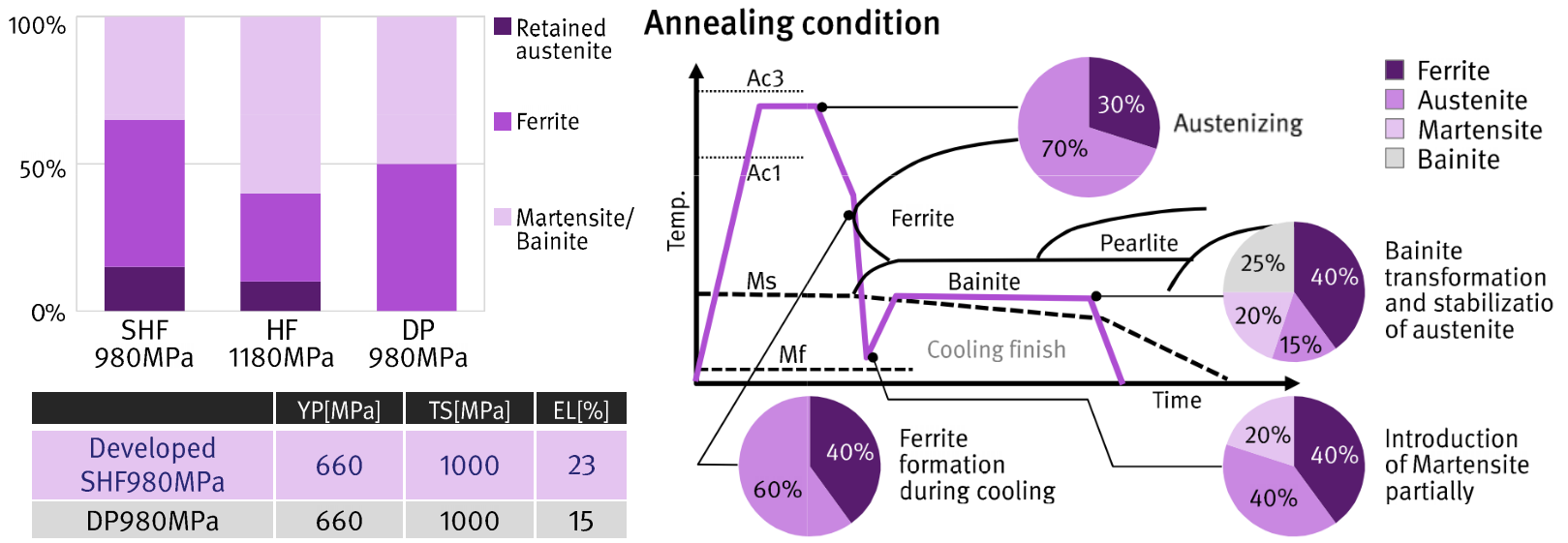
The 2018 Infiniti QX50 SUV is an example of a vehicle believed to have TBF980 in the body structure.I-23 The product shown is called SHF980, and has a microstructure of approximately 50% ferrite, approximately 10% retained austenite, with the remainder as martensite/bainite, which is consistent with expectations for a TBF product. The thermal processing route to achieve this microstructural balance is consistent with a Quenching & Partitioning process (Figure 5). Both SHF980 and the reference DP980 are shown to have 660 MPa yield strength and 1000 MPa tensile strength. However, where DP980 has 15% elongation, SHF980 has 23% elongation. In addition, SHF980 is capable of 10% greater energy absorption over DP980 at the same thickness.I-23
Figure 5: Production and properties of SHF980, possessing a TBF microstructure.I-23
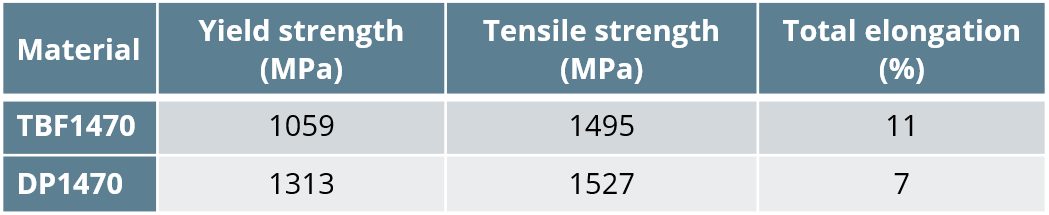
The highest strength TBF grade commercially available has 1,470MPa minimum tensile strength. Properties in Table 1 are compared with DP1470.
Table 1: Tensile properties of 1.2mm steels with 1470 MPa minimum tensile strength.M-55
Case Study: Production Application Where 3rd Gen Steels
Reduced Weight and Improved Performance
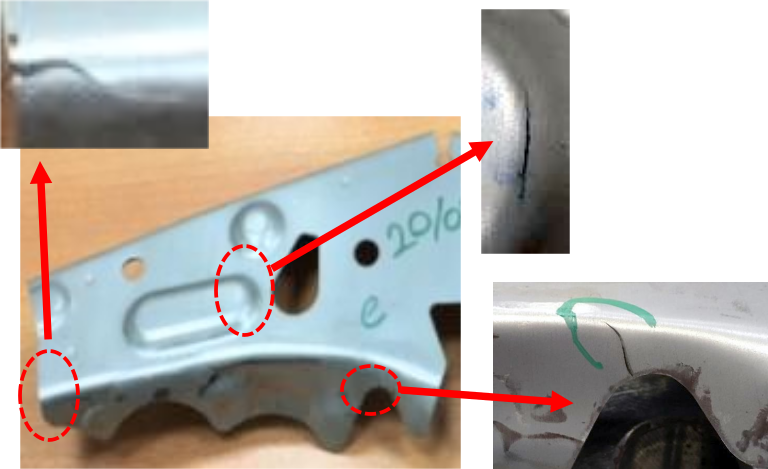
Toyota Motor Europe designed a part requiring a minimum tensile strength of 980 MPa, but when stamped using a conventional AHSS grade, experienced both global formability (necking) failures and local formability (sheared edge) failures (Figure 6). In the search for a grade which blended the high elongation of dual phase grades and the high hole expansion of complex phase grades, Toyota chose TBF980, a TRIP-assisted bainitic ferrite grade with the same yield and tensile strength of a conventional 980 grade but with improved elongation of approximately 14% and hole expansion of approximately 65%.A-1
Also reported were grade and design changes in a production vehicle where the strength of TBF980 allows for a 20% thickness reduction over the prior model. The improved formability of TBF980 facilitated a reduction in packaging space of the component, with the new design being 6% narrower and 20% shorter. Combined, these improvements reduced the vehicle weight by 1 kg.A-1
Figure 6: 980 MPa part with global and local formability failures. Converting the steel to TBF980 eliminated both types of splits. Image adapted from Citation A-1.
Quenched and Partitioned Grades, Q&P or simply QP
Quenching and partitioning (Q&P, or QP) describes a multi-step heat treatment which produces high tensile strength, high global ductility (total elongation) and high local ductility (hole expansion and bendability), compared with other similar strength steels. The QP process was first explained in 2003 by Speer et al.S-97, S-98, S-99
Among the unique aspects of the required thermal cycle is that after the first quench from the fully austenitized or intercritical annealing temperature, the steel may be reheated to a higher temperature, and then quenched to room temperature.
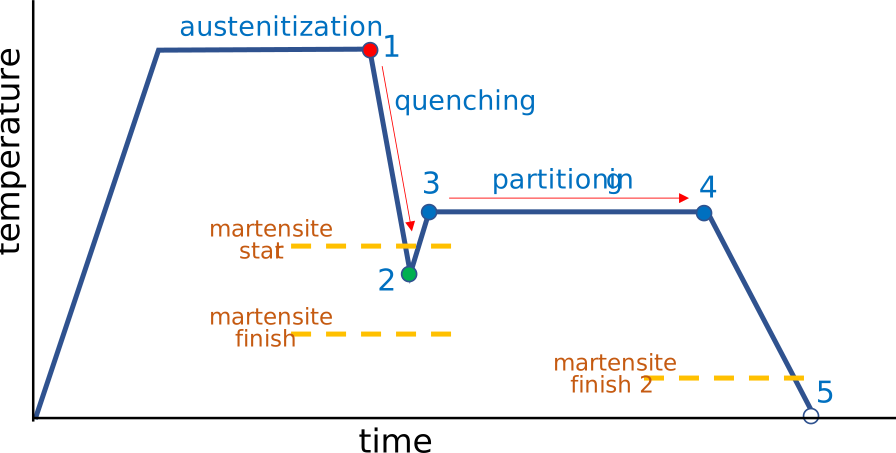
Figure 7 provides a general overview of the QP thermal cycle. After austenitization in either the single phase austenite region or the two-phase ferrite+austentite (intercritical annealing), the steel is quenched to a temperature below the start of martensitic transformation (Ms) but above the Mf (temperature at which all austenite has transformed to martensite), as indicated by segment 1→2. In the two-step QP process, the temperature is raised above Ms, shown in segment 2→3. No temperature increase is seen in the one-step QP process, meaning 2=3. Then the steel is held at this partitioning temperature for the appropriate time to generate the targeted microstructure and properties, segment 3→4. Once reached, the steel is quenched again (4→5), this time to a temperature below Mf, the temperature below which all transformation to martensite has occurred.
Figure 7: Thermal cycle for the Quenching and Partitioning Process.
The QP microstructure contains martensite and austenite. Ferrite is also present if intercritical annealing in the two-phase region is employed rather than in the single-phase austenitic region. The first quench forms a controlled volume fraction of martensite. With a QP chemistry containing C between 0.15 and 0.4%, Mn between 1.5 and 2.5%,and (Al + Si) around 1.5 wt.%, the quenching temperature usually lies in the range 200 to 350 °C.S-100 After raising to the partitioning temperature typically between 300 to 500 °CS-100, an isothermal hold allows carbon from the carbon-supersaturated martensite to diffuse into the untransformed austenite. This enriches the austenite with carbon while similarly depleting the martensite. The carbon enriched austenite increases its room temperature stability. Since the partitioning temperature above that required for martensite formation, some of the martensite transforms to tempered martensite. Tempered martensite provides high strength with more ductility than untempered martensite. After the partitioning step, the final quench results in the formation of fresh martensite.
When stamping parts from this steel, the austenite transforms to newly formed martensite through the TRIP effect, enhancing the ductility and strength. Adjusting the chemistry, quenching temperature, partitioning temperature, and partitioning time affects the amount, morphology, and stability of the retained austenite, leading to a wide range of potential properties.D-32 The microstructure of commercial Q&P steels is composed of martensite (50–80%) formed during quenching, ferrite (20–40%) formed as austenite slowly cools, and dispersed retained austenite (5–10%) stabilized by carbon enrichment during partitioning. Higher strength QP steels will have reduced amounts of ferrite.W-35 This is mostly consistent with a study highlighting commercially produced QP980 and QP1180 which showed that both products have approximately 10-12% retained austenite, with QP980 containing 56% ferrite / 32% martensite and QP1180 containing 21% ferrite / 69% martensite.W-36
Common alloying additions for strengthening include manganese (Mn) and Silicon (Si), at levels of more than 2.2% and 1.5%, respectively, in QP steels. During annealing, both elements move from the bulk substrate to the strip surface, and oxidize in the annealing atmosphere. These surface oxides lead to poor wettability of both the phosphating solution and molten Zn on the steel surface, leading to surface defects.S-120, S-121
Addressing these concerns means controlling the selective surface oxidation. One approach used is tuning the dew point of the annealing furnace atmosphere by converting the external oxidation into internal oxidation.Z-19
There is no standard processing route with defined chemistry and temperatures. The complex thermal cycle needs to be appropriate for the selected chemistry and targeted properties, and constrained by the capabilities of the existing mill equipment. Citation K-43 presents descriptions of the equipment and capabilities used at one location. Process variants exist, such as a one-step approach using the same temperature for the initial quench and the partitioning.S-98 Other modifications allow for production of a Carbide-Free Bainitic structure during the first quench, improving the damage resistance due to additional strain-hardening capacity within the local plasticity deformation zone near the tips of micro-cracks.G-45
The Q&P process is applicable to other products as well, including stainless steelsM-56, M-57, S-101 and Press Hardening Steels.A-71, A-72, X-1 A one-step Q&P approach was applied to a laser welded blank with 22MnB5 and TRIP components, resulting in tailored properties to improve the intrusion resistance and energy-absorption capabilities in the pertinent regions.K-46
Complex phase steels with High Ductility (CP-HD, or CH) have similar microstructural constituents, along with bainite. Although CH steels reach high hole expansion values, they do not have the elongation levels typically associated with QP steels. Still, some sources equate CH and QP steels.H-18
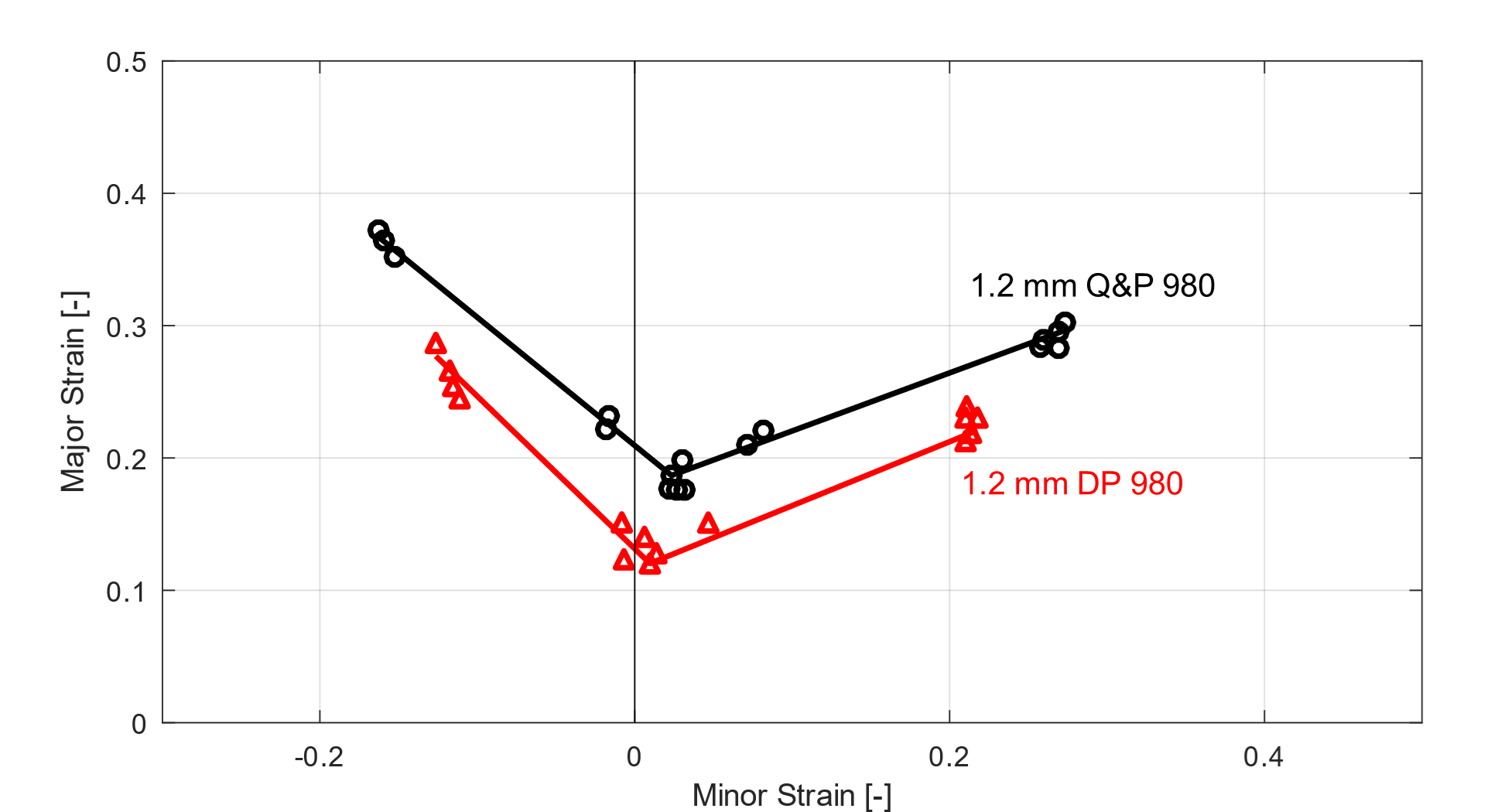
Two levels of Quenched & Partitioned steels are in global production, 980 MPa and 1180 MPa. The enhanced properties of QP steels offer benefits over similar-strength steels of other microstructures. Compared against Dual Phase steel with similar yield and tensile strength, a Quenched & Partitioned steel showed higher uniform elongation, total elongation, work hardening index, and FLC0, highlighted in Table 2 and Figure 8.C-34 A different production supplier of QP980 reports similar strength and elongation properties, with a targeted 23% hole expansion ratio.G-46
Table 2: Tensile properties of production DP980 and QP980.C-34
Figure 8: Comparison of Forming Limit Curves of production DP980 and QP980.C-34
QP980 is seeing expanded use in automotive production. The 2016 Chevrolet Sail from SAIC-GM represented the first application at General Motors.H-60 The 2021 Ford Bronco uses hot dip galvanized QP980 in five components of the front and rear floor assemblies.S-102 Sixty percent of the body structure of the 2021 Jeep Grand Cherokee L is made from AHSS, with some parts stamped from 3rd Gen steels.F-37
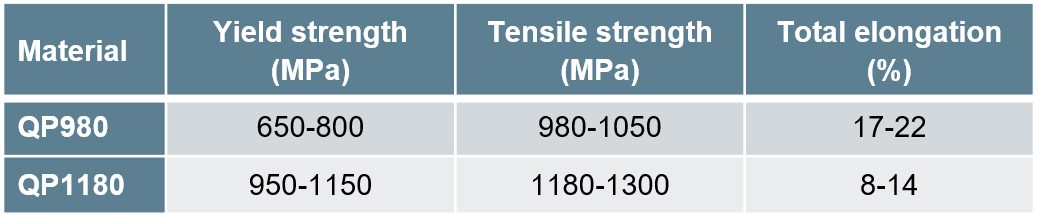
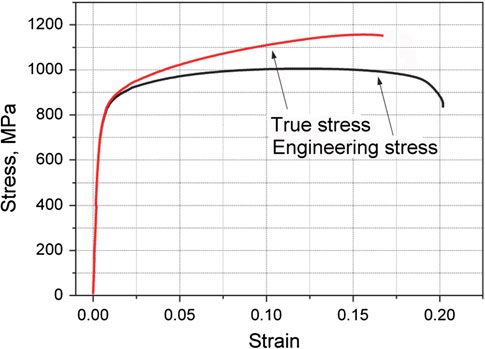
Table 3 contains typical mechanical property ranges for industrially produced QP980 and QP1180.W-35 A typical strain–stress curve of QP980 is shown in Figure 9.
Table 3: Typical mechanical property ranges for industrially produced QP980 and QP1180.W-35
Figure 9: Stress-strain curve of industrially produced QP980.W-35
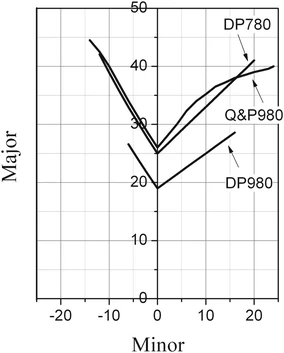
Of course, there are additional characteristics beyond strength and elongation that impact successful use in manufactured products. Typical forming-limit curves for cold rolled QP980, DP780, and DP 980 steels are shown in Figure 10, highlighting that the formability of QP980 is comparable to that of DP780.
Figure 10: Forming-limit curves for 1 mm thick Q&P 980, DP 780, and DP 980.W-35
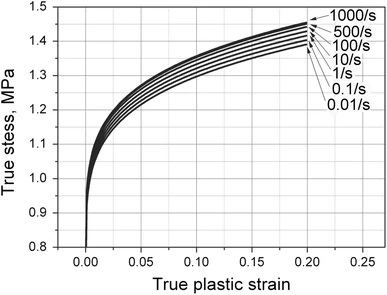
Figure 11 contains the results of high strain rate tensile testing, confirming that QP980 has positive strain rate sensitivity and therefore has the potential for improved crash energy absorption.
Figure 11: True stress-strain curves for QP980 generated at different strain rates.W-35
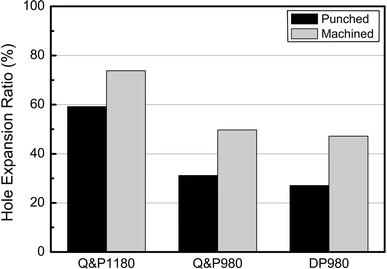
Sheared-edge ductility is also a concern in AHSS grades. Hole expansion of QP1180, QP980, and DP980 is compared in Figure 12, with similar results seen in QP980 and DP980. QP1180 had the highest hole expansion, possibly because of its microstructure containing components of relatively uniform hardness.
Figure 12: Hole expansion of QP1180, QP980, and DP980, generated from either punched or machined holes.W-35
The bending under tension test was used to determine the critical R/t value below which the risk for shear fracture increases. These experiments showed that critical R/t values of QP980 were close to those of other steels having 600 MPa tensile strength.W-35
Similar springback was observed in QP980 and DP980 when a 5 mm radius was used in the bending-under-tension test, with QP980 exhibiting less springback when a 12.7 radius die was used instead.W-35
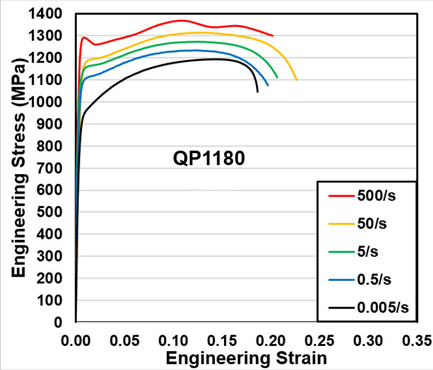
General Motors provided stress-strain curves for production QP700/1180 tested at different strain rates (Figure 13), showing increases in strength and ductility as strain rates increase.H-60
Figure 13: Engineering stress-strain curves for QP700Y/1180T at different strain rates.H-60
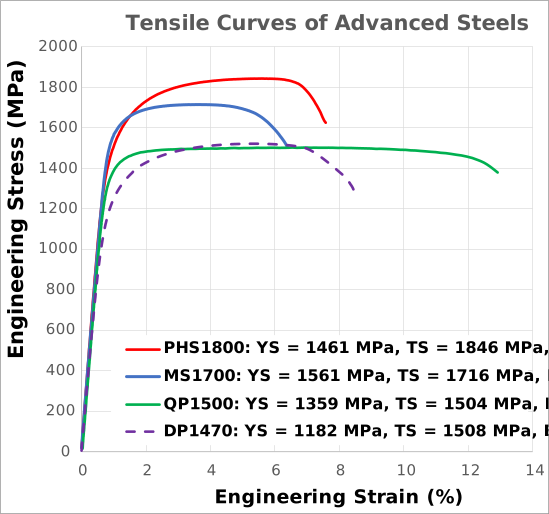
The stress-strain curves of some advanced steels are compared in Figure 14. The ductility benefit of Quenched and Partitioned steels is seen in the greater elongation.
Figure 14: Stress strain curves of four advanced steels.
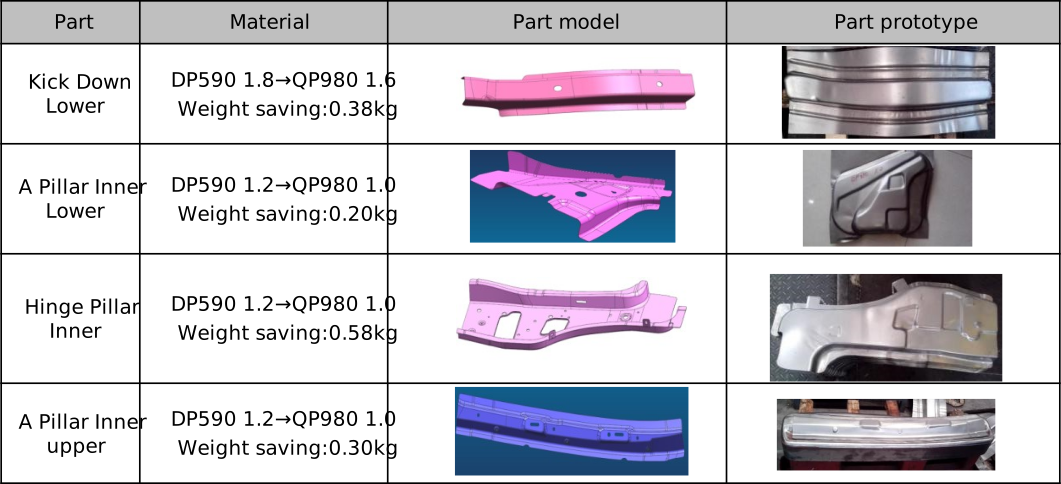
A recent conference highlighted several applications (Figure 15) where thinner gauge QP980 replaced DP590 in General Motors vehicles.W-37
Figure 15: Replacing DP590 with QP980 allows for downgauging.W-37
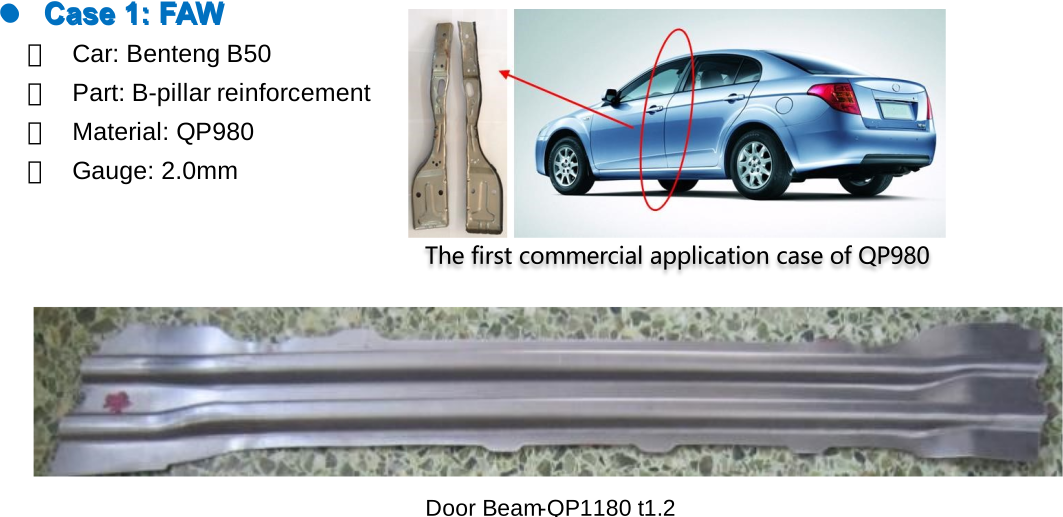
The same presentationW-37 showed the example of QP980 replacing press hardening steels in B-pillar reinforcements and door anti-intrusion beams in a First Auto Works vehicle, Figure 16.
Figure 16: QP980 may replace press hardening steels in some safety applications.W-37
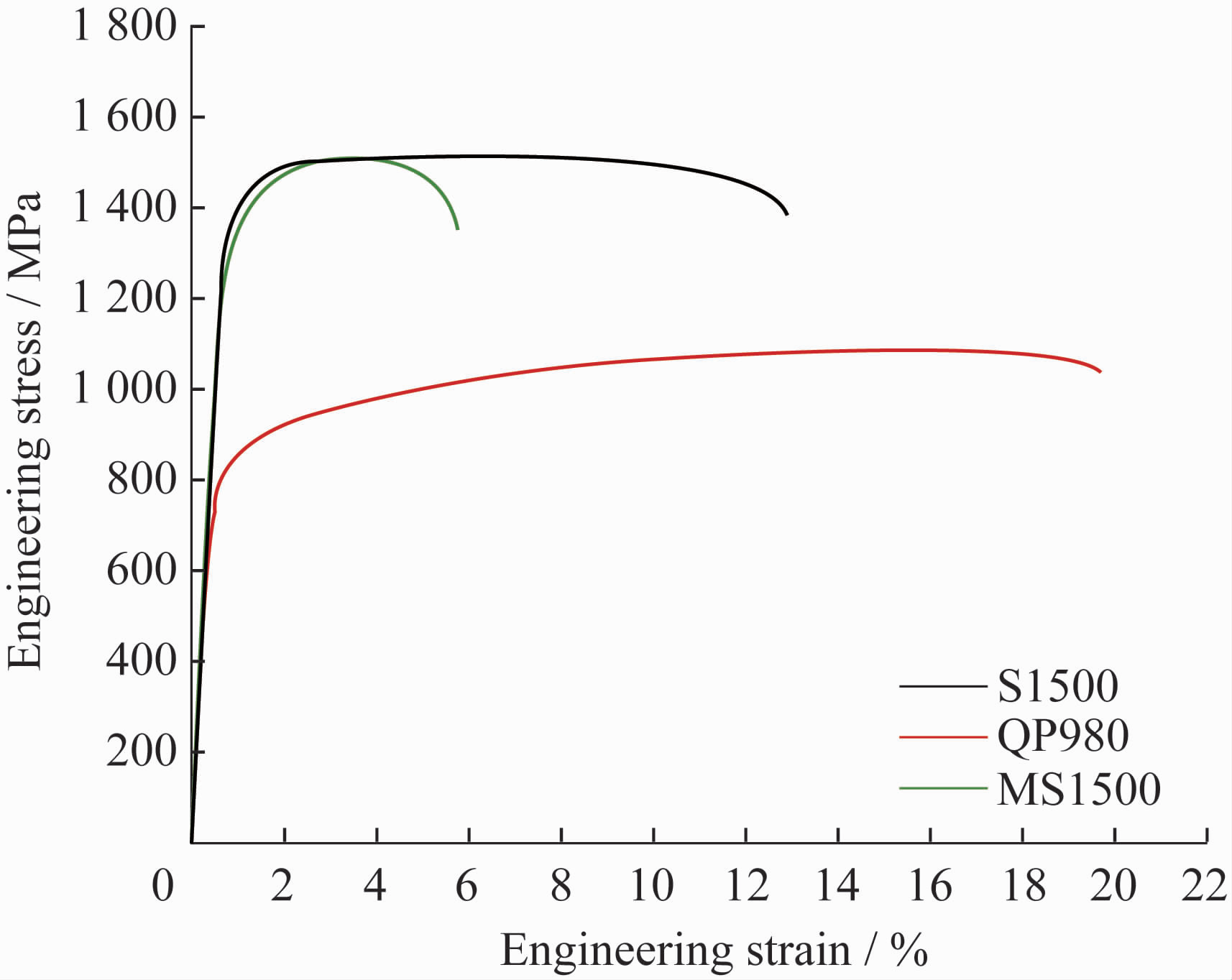
Development work continues to extend the upper limits of strength. A grade referred to as S1500 has a martensitic matrix with retained austenite dispersed throughout. It is similar to QP980, but with a higher martensite content and a lower retained austenite content than QP980. S1500 has yield and tensile strength comparable to MS1500, but with substantially higher elongation to fracture (a measure of global ductility) and fracture strain within a very small region (a measure of local ductility).J-27
Table 4 shows the properties of these three grades, and a comparison of stress-strain curves can be found in Figure 17.
Table 4: Properties of Three Advanced High Strength Steels. Table based on Citation J-27.
Steel
Type
Thickness
(mm)
YS
(MPa)
TS
(MPa)
Fracture
Elongation (%)
n
r0
r45
r90
Fracture strain:
0.5 mm x 0.5 mm
S1500
1.5
1363
1503
12.90
0.04
0.79
0.83
0.80
0.520
MS1500
1.2
1311
1502
5.76
0.04
—
—
—
0.357
QP980
1.4
764
1085
19.70
0.16
0.85
0.91
1.03
0.441
Figure 17. Stress-Strain curves of MS1500, QP980, and S1500.J-27
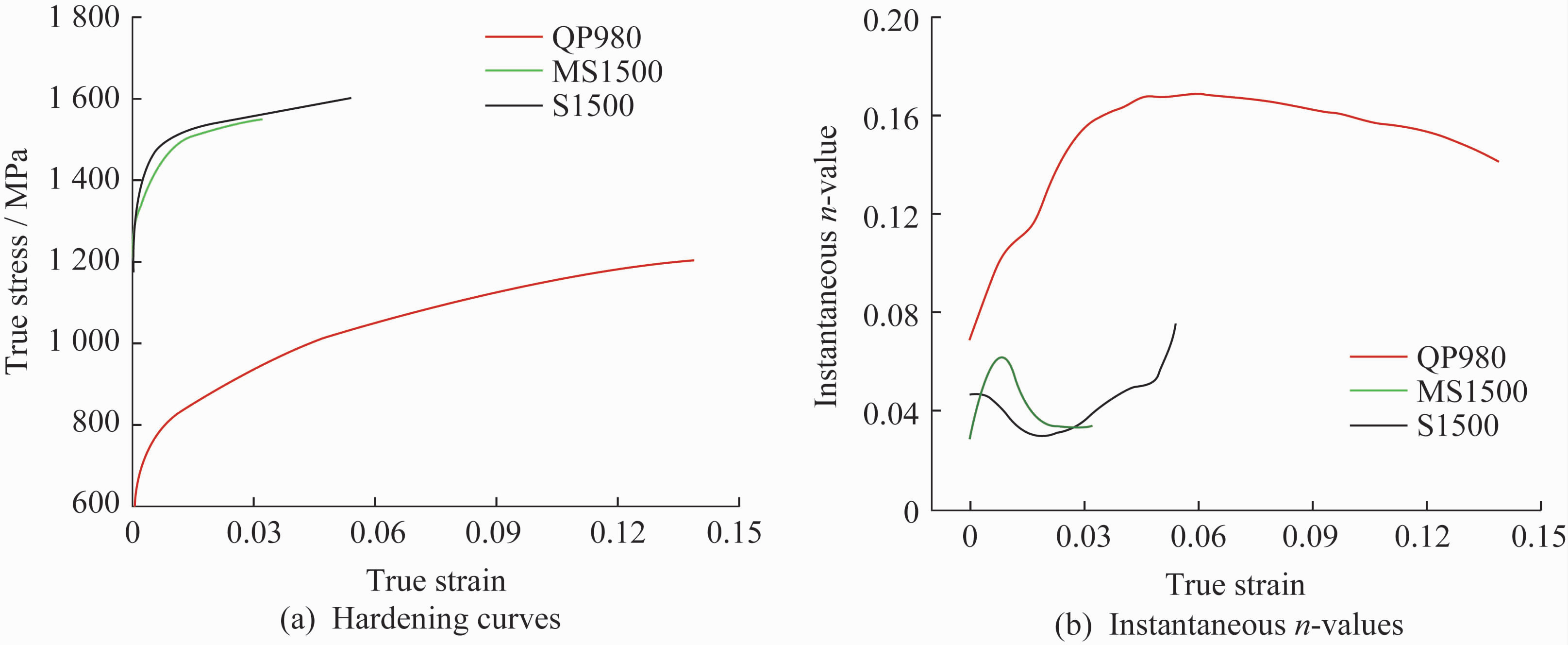
The phase transformations occurring in the two grades containing retained austenite, combined with the impact on instantaneous n-value, help explain the difference in forming behavior with the grade that is 100% martensite, Figure 18.
Figure 18: Hardening curves and instantaneous n-values of S1500, MS1500, and QP980.J-27
Without any phase transformation in MS1500 (green curves in Figure 18), the instantaneous n-value peaks and drops down. Limited strengthening in this grade leads to relatively low elongation at break.
The relatively high n-value associated with QP980 (red curves in Figure 18) indicates a superior ability to distribute strains over a wider region than the other two grades, and is associated with substantial strengthening with strain (work hardening). The greater amount of retained austenite leads to the TRIP effect occurring early in the application of strain, leading to a rise in n-value in these early stages. QP980 continues to maintain a high n-value in the later stage of uniform deformation, leading to high elongation at break.
The S1500 (black curves in Figure 18) has a microstructure of nearly 90% martensite, so it is not surprising that during the initial application of strain, the behavior is similar to that seen in MS1500: The martensite deforms first. After an early peak in instantaneous n-value, it decreases rapidly. However, as application of strain continues, n-value begins to rise in the S1500 grade. This occurs because the retained austenite in the microstructure undergoes the TRIP effect and produces fresh strain-induced martensite.
MS1500 does not increase in the later stage of uniform strain. These differences may be correlated with the volume fraction of the retained austenite.
Enhancing the TRIP Effect in QP Steels
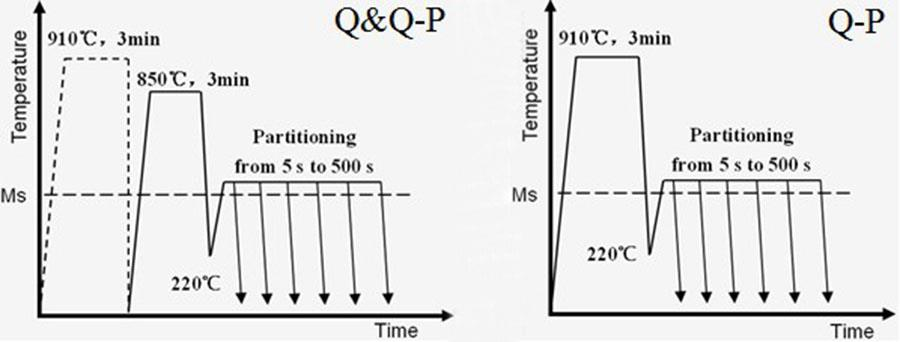
The strength-ductility balance of quenched and partitioned steels results from the TRIP effect. The magnitude of the TRIP effect is controlled by the amount of retained austenite in the microstructure. A thermal cycle known as Q&Q-P (pre-quenching followed by quenching & partitioning) can increase the volume fraction of retained austenite, and therefore improves the mechanical properties of these alloys.Z-17
The pre-quench process consists of austenitizing followed by quenching to room temperature. This results in a fine martensitic microstructure. This starting point leads to an increased density of austenite grain nucleation sites during subsequent annealing, producing fine austenitic grains. The second quench of the Q&Q-P process, or the initial quench of the Q-P process, is not taken to room temperature, but instead to a temperature between the martensite-start (Ms) and martensite-finish (Mf) temperatures. In the partitioning step, these quenched sheets are held either at or above this initial quenching temperature in order to enrich the untransformed austenite by carbon diffusion from supersaturated martensite.
A reduction in the austenite grain size from the pre-quench step increases the austenite stability by lowering the starting temperature for martensitic transformation, thereby suppressing the martensite transformation, meaning that the TRIP effect continues to enhance ductility even at greater forming strains. Smaller austenite grain size results in increased strength, and increases the mechanical free energy required to transform into martensite.
A schematic of the Q&Q-P and Q-P process is shown in Figure 19.
Figure 19: Schematic of the Q&Q-P (with prequench) and Q-P (Quenching & Partitioning) heat treatment cycles.Z-17
The time of partitioning influences properties due to the change in the volume fraction of retained austenite, as indicated in Table 5. Even with the impact of the partitioning time, the pre-quench process results in a substantial increase in retained austenite.
Table 5: Volume fraction (%) of retained austenite as a function of partitioning time in the Q-P and Q&Q-P process. Z-17
5 s
10 s
20 s
50 s
100 s
200 s
Q-P
13.9
11.6
11.3
10.5
12.1
11.2
Q&Q-P
19.3
19.9
22.5
20.4
20.4
21.6
The microstructure of Q-P samples consists of martensite and retained austenite, where the martensite deforms plastically in the early strain stage, leading to local stress concentration occurring at small strains. The retained austenite transforms in order to relieve the local stress concentration and is exhausted at these small strains.
In contrast, the Q&Q-P samples contain ferrite, which is the first to deform preferentially in the early strain stages. This behavior, plus the higher volume fraction of retained austenite, allows the Q&Q-P samples to continue deforming by the TRIP effect at higher strains. Depending on the partitioning time, 1000 MPa tensile strength with elongation approaching 30% is achievable.Z-17
Medium Manganese Steels, Medium-Mn, or Med-Mn
Manganese has a lower density than iron, so using alloys with higher amounts of manganese truly creates lightweight products. 1st Generation steels typically contain no more than around 2% Mn. 2nd Generation TWIP steels have about 20% Mn. Lean medium-manganese (MedMn) steels typically use between 3% and 12% manganese along with silicon, aluminum, and microalloying additions.R-16, D-27, S-80, K-35 Aluminum in these steels further lowers the density.
No standard chemistry or processing route exists, but several studies use a thermal cycle similar to that seen with Q&P steels. This approach leads to a complex multiphase fine-grained microstructure. Compared with QP steels at the same strength levels, the higher manganese levels of Med-Mn steels promote greater amounts of retained austenite, and therefore greater ductility through the TRIP Effect. One study showed a combination of 1400 MPa tensile strength and a total elongation of 18%.S-103
One difference from the thermal cycle to produce QP steels used by some researchers to process Med-Mn steels is that after intercritical (two-phase) annealing, the quench is to room temperature rather than simply below Ms, the start of martensitic transformation.S-80 This is facilitated by the high levels of manganese, which adjusts the Mf below room temperature. Quenching a steel containing 0.25% C, 8.23% Mn, 1.87% Si, 0.05% Ni, and 0.24% Mo to room temperature and subsequently partitioning at 300 °C led to tensile strengths greater than 1800 MPa combined with total elongations of approximately 15%.S-80
In addition to lowering the Mf (martensite finish) level below room temperature, the manganese levels are sufficiently high enough that the coils after hot rolling may be either partially or fully martensitic. This phenomenon means that it may be possible to produce hot rolled Med-Mn steels.
Another production method called Austenite-Reverted Transformation (ART) annealing results in a large percentage of retained austenite in medium manganese steels. The fully or partially martensitic hot or cold rolled coil is heated to the single phase austenite region or the intercritical two phase austenite+ferrite region where the martensite reverts to austenite – hence the name of the process. The austenite nucleates on the former sites of fine martensitic features. This approach results in a final product with extremely fine features. During annealing, diffusion of both carbon and manganese occurs, which determines both the phase fraction and stability of the retained austenite. Processing of Fe–0.3C–11.5Mn–5.8Al resulted in a microstructure with 60% retained austenite.B-59
Multi-step thermal treatments are one approach to control the relative proportions of martensite, ferrite, and austenite. One example, termed “double-soaking” (DS), aims for substantial Mn-enrichment of austenite in a first soaking step followed by a second soaking step at a higher temperature which leads to a greater fraction of martensite in the final product. The brief second soak is long enough to allow the carbon to partition, but not long enough for manganese partitioning to occur, producing regions of higher and lower Mn within the austenite. The higher-Mn regions allow for greater amounts of austenite in the final product, while the lower-Mn regions transform to martensite, leading to TRIP-effect ductility and high strength.S-80, G-47 In an industrial environment, the initial soak may be done in a batch anneal furnace, with the brief second soak targeted for the time and temperature available in continuous annealing or galvanizing lines.
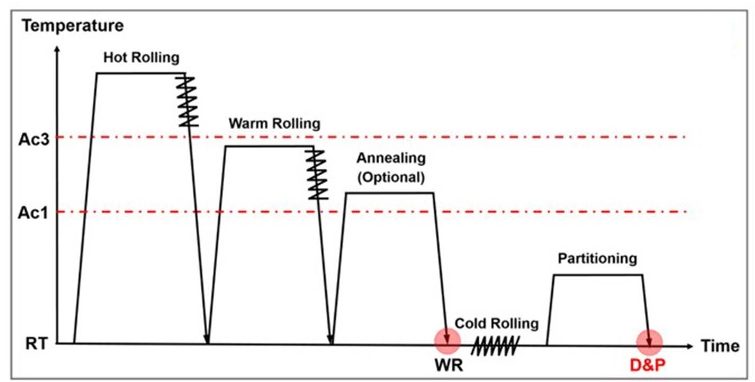
Still another production method proposed is known as Deforming and Partitioning (D&P). This route uses a warm rolling followed by cold rolling to generate an extremely high dislocation density. A subsequent partitioning treatment relieves the residual stresses from rolling and stabilizes the retained austenite via carbon enrichment. Figure 19 shows a representative Deforming and Partitioning thermal cycle. A D&P MedMn steel with a composition of 0.47C–10Mn–2Al–0.7V reached a yield strength of 2.2 GPa (2,200 MPa) and a uniform elongation of 16%.H-65
Figure 19: Representative Deforming and Partitioning (D&P) thermal cycle.H-65
Medium-manganese steels with Mn contents between 3 wt.% and 10 wt.% have a microstructure consisting of an ultra-fine grained ferritic matrix (grain size < 1 μm) with up to 40 vol.% retained austenite.K-47 A chemistry of Fe-7.9Mn-0.14Si-0.05Al-0.07C resulted in 39% retained austenite with the processing route evaluated.Z-10
Properties are dependent on all aspects of the chosen chemistry and thermal cycle. With an appropriate approach, the steel may exhibit both a transformation-induced plasticity (TRIP) effect and a twinning-induced plasticity (TWIP) effect.
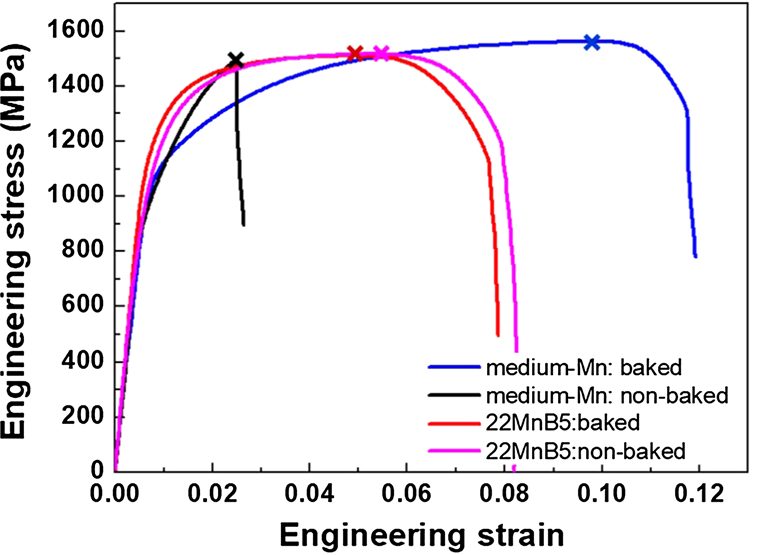
Studies indicate that Medium Manganese steels are also suitable for use in press hardening applications. A studyL-63 indicates that an alloy with 0.14 %C – 7.0 %Mn rivals conventional 22MnB5 PHS1500 in strength, but has more ductility. After hot forming and processing through a typical paint bake cycle, 22MnB5 exhibited a tensile strength of 1510 MPa, a uniform elongation of 4.6%, and a total elongation of 7.3%. The MedMn steel showed values of 1565 MPa, 9.6% and 11.7% respectively, Figure 20. These enhanced properties are suspected to be associated with the high volume fraction (15%) of retained austenite found in the Medium Manganese steels.
Figure 20: Engineering stress–strain curves of the medium-Mn martensitic steel and 22MnB5.L-63
Unlike TBF and QP steels, Medium-Manganese steels may exhibit discontinuous yielding, also known as yield point elongation or Lüders bands. Depending on chemistry and processing, these may extend beyond 5% engineering strain.
Medium manganese steels are not yet widely commercialized. They were the focus of an entire issue of a technical journal.M-58 The lead Editorial presents an overview of prior studies and highlights areas of interest.R-16
The WarP-AHSS project seeks to develop end-to-end processing of warm press-formed parts from zinc-coated Medium Manganese Steels. This approach is expected to reduce the reheating and warm press-forming temperatures, making the process greener and energy-efficient, while allowing the use of zinc-coated sheets without liquid metal embrittlement-induced micro-cracking during warm-forming.
Partners in the WarP-AHSS research project include a steelmaker, an automaker, a university, and two research institutions. The project runs from October 2023 through March 2027.
The European Research Executive Agency has funded another multi-year study, Sup3rForm, that seeks to optimize the production and use of both 3rd Generation Q&P and medium-Mn steels. The Sup3rForm consortium, coordinated by Eurecat Technology Centre, is made up of eight partners, including steelmakers, an automaker, tier suppliers, and universities. Sup3rForm runs from July 2023 through December 2026.


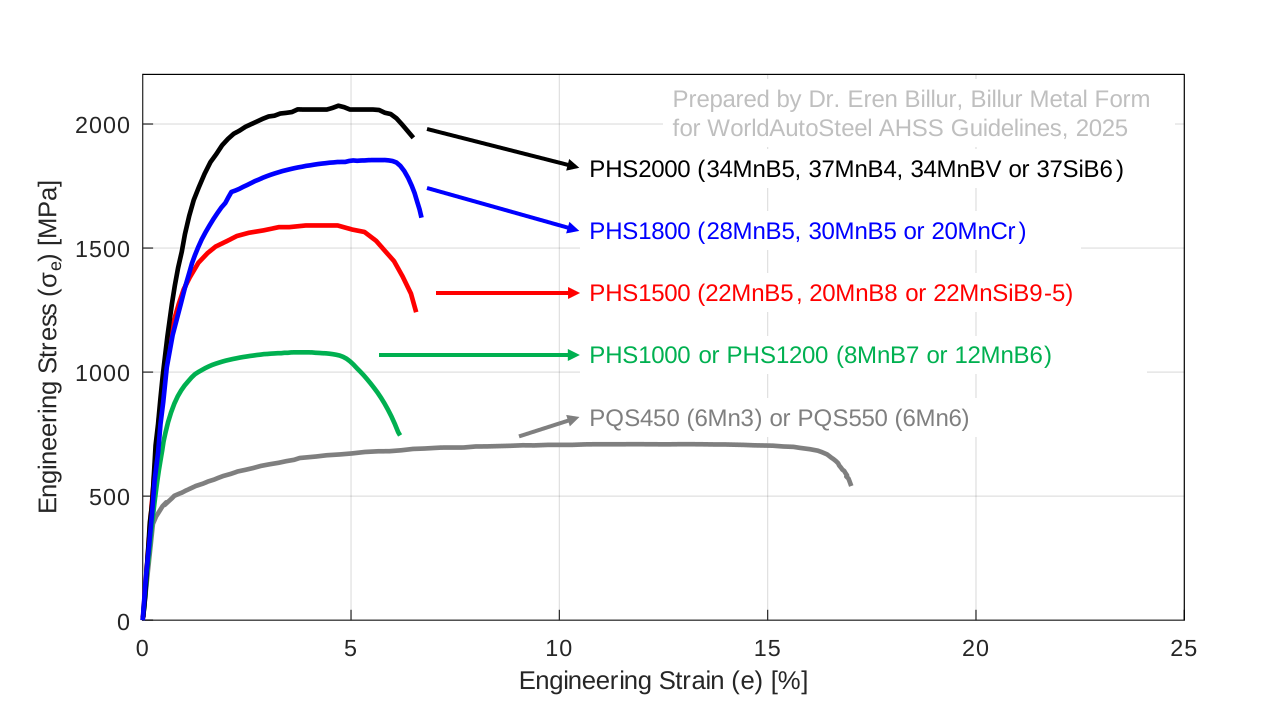
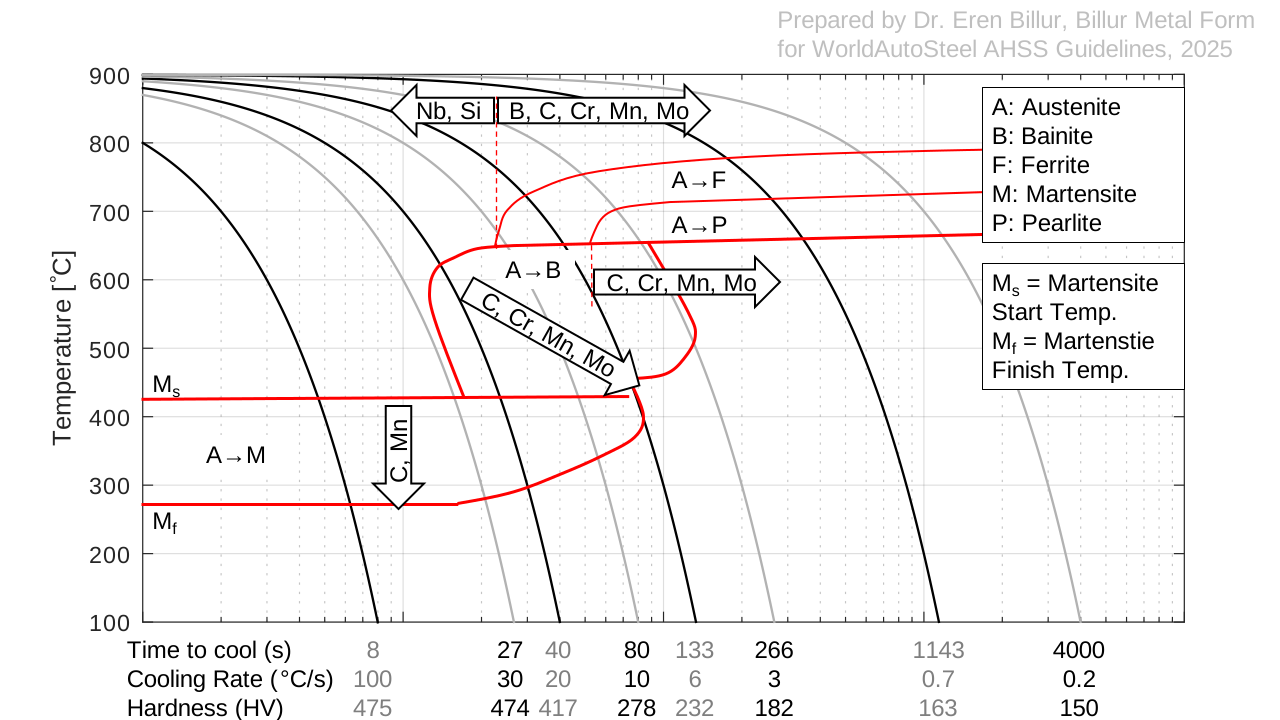
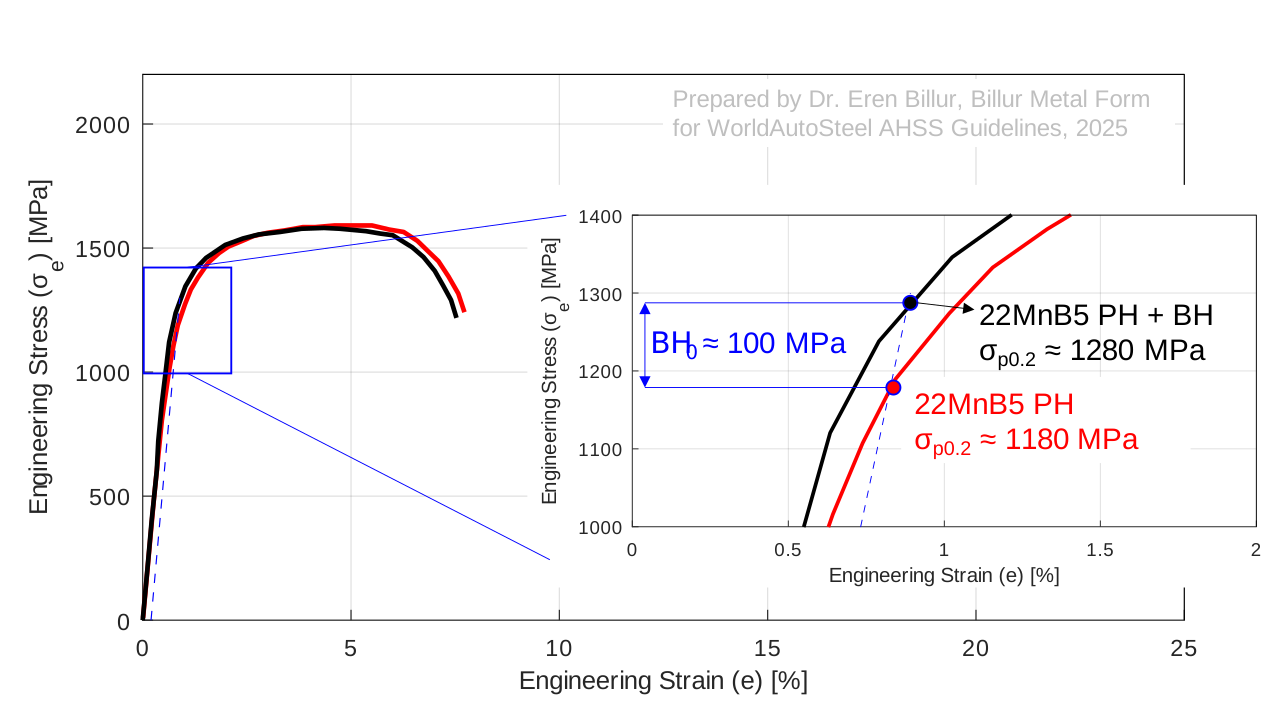
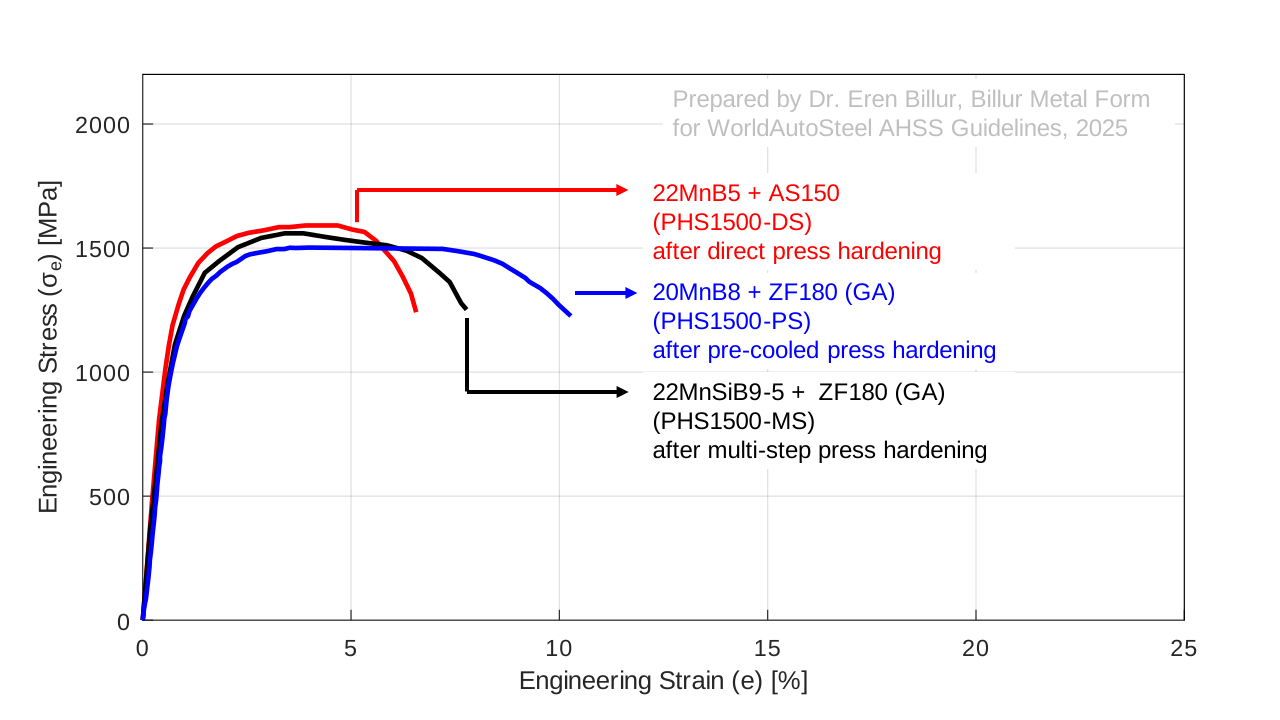
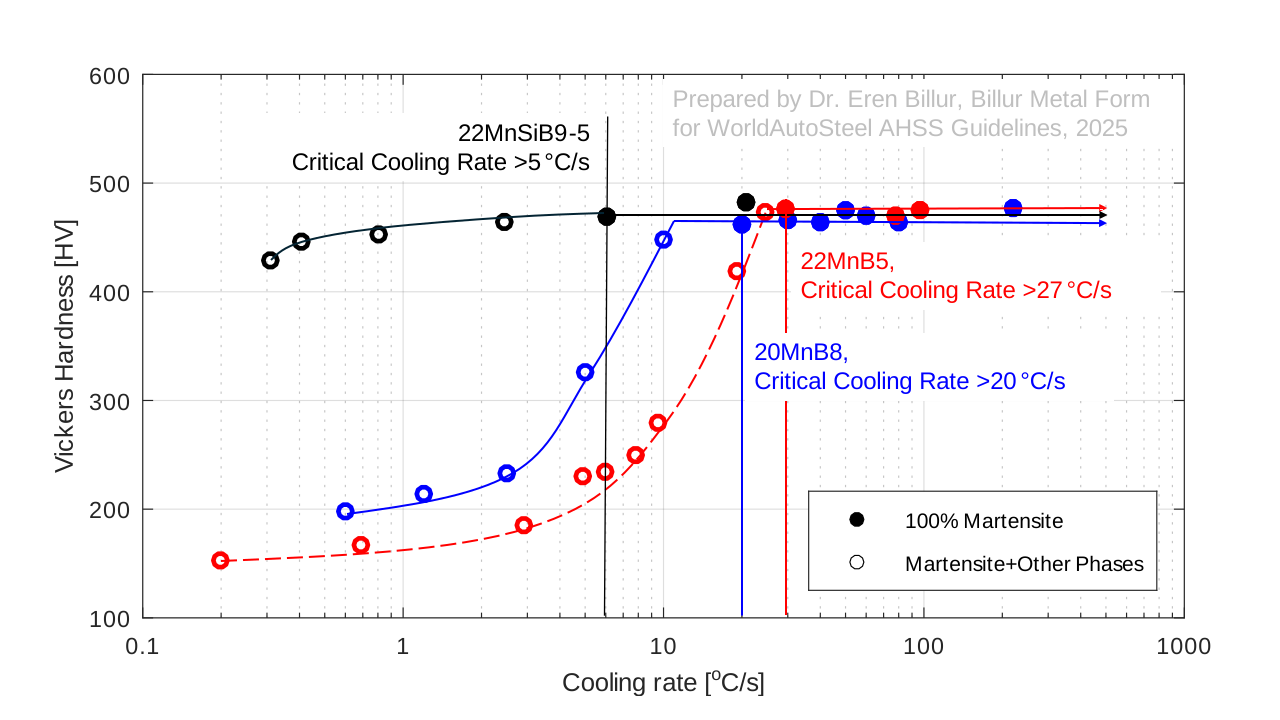
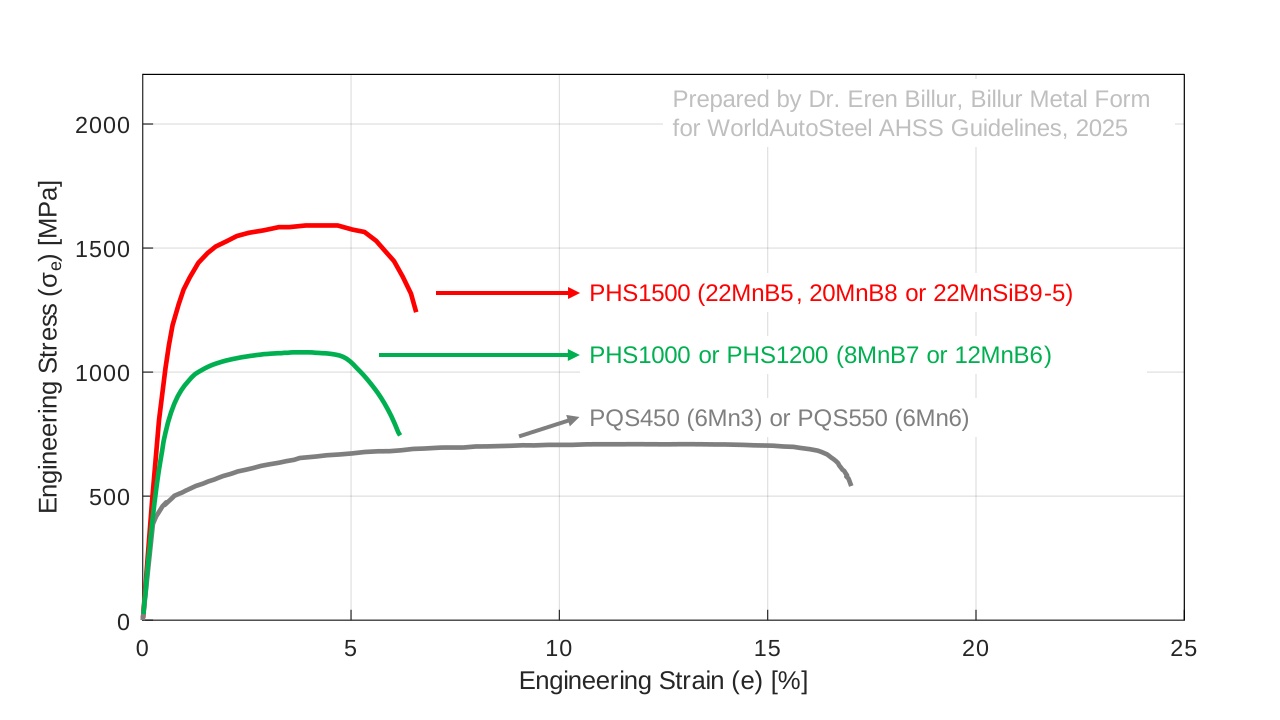
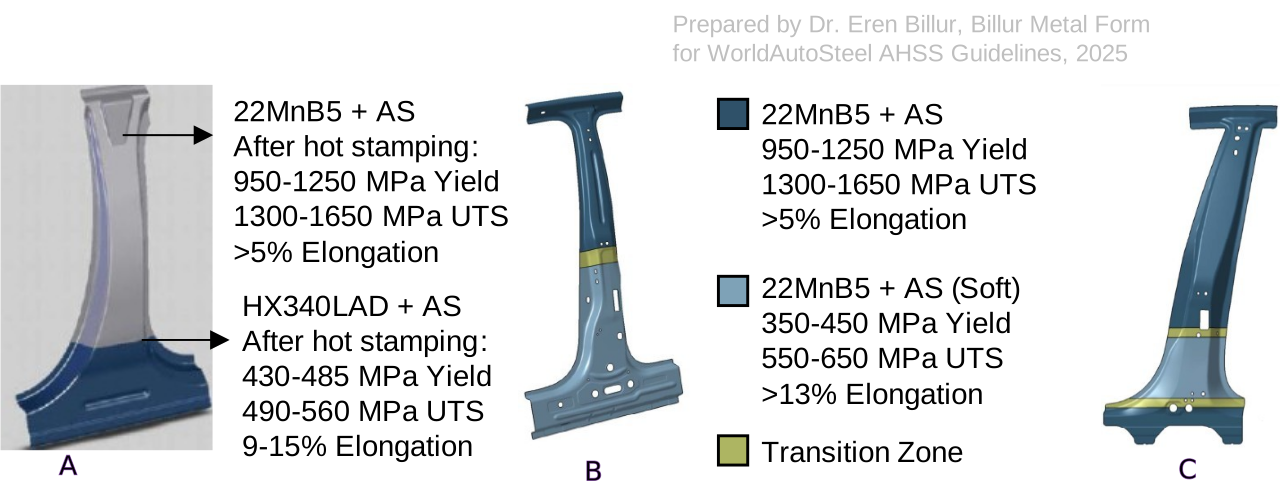
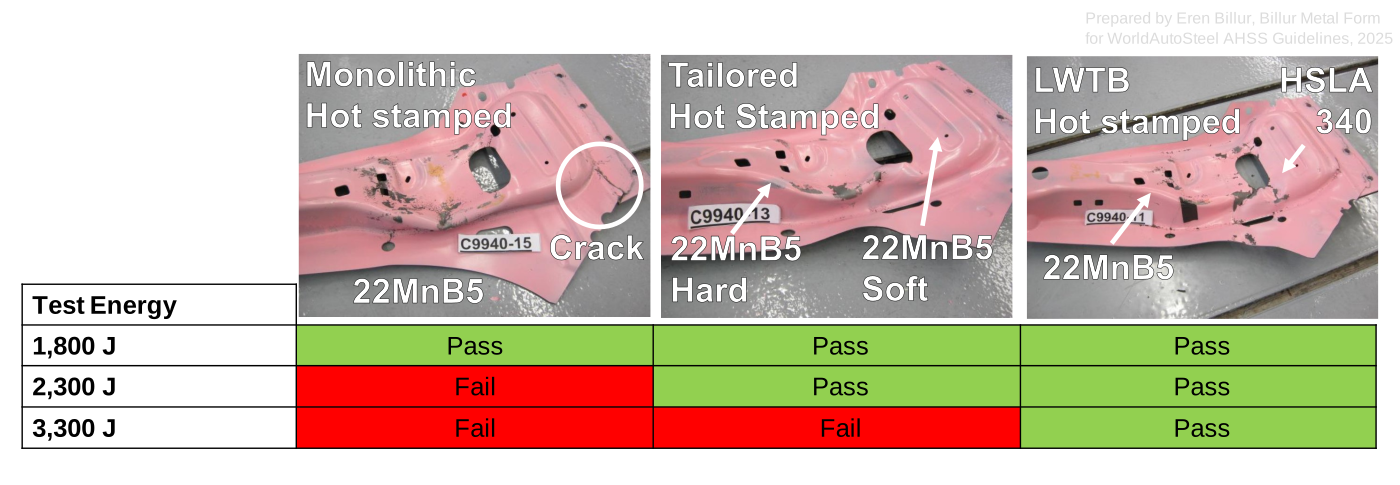
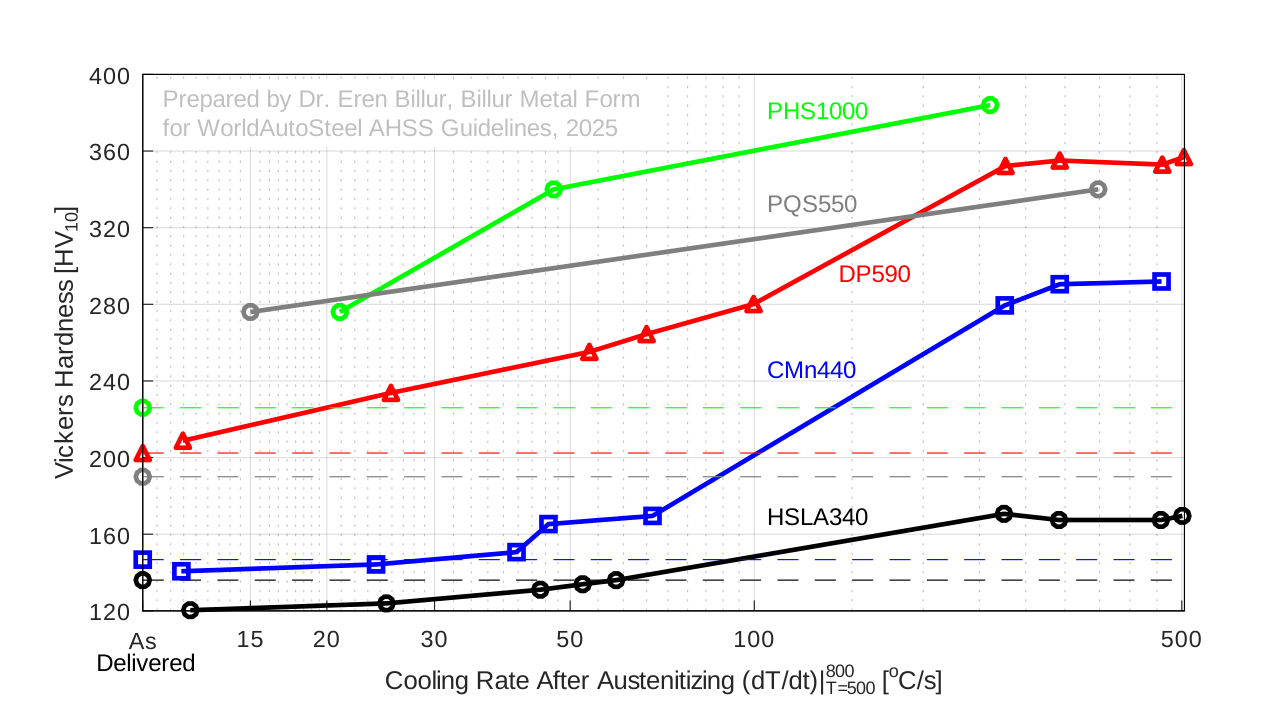

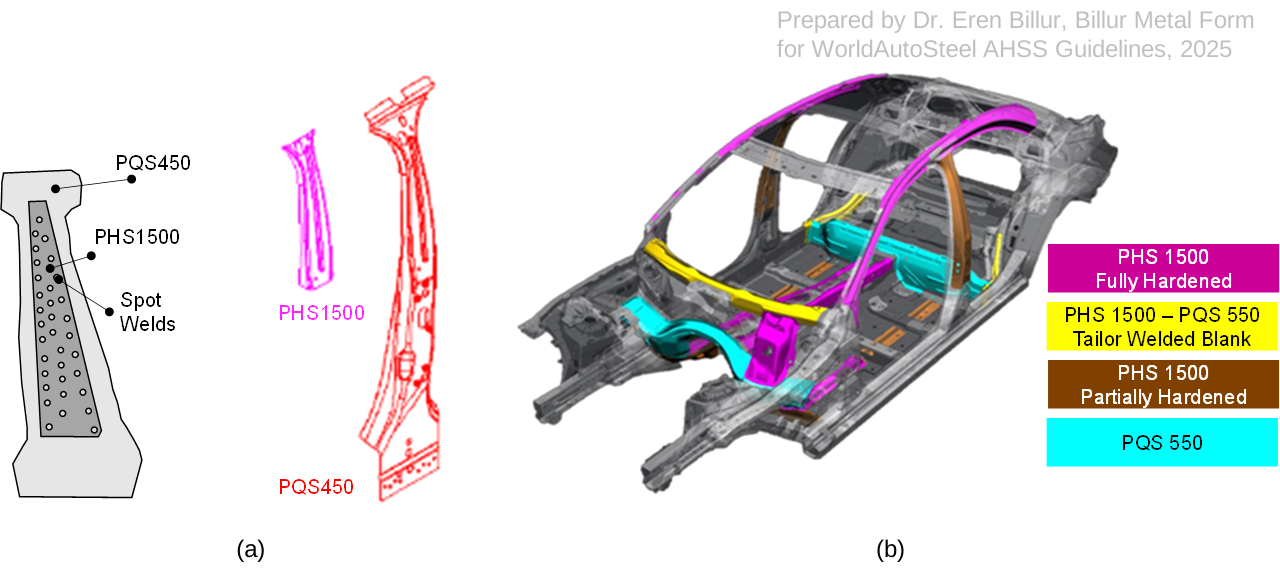
![Figure 13: PHS1000 applications: (left) Door ring of Tesla Model Y (SOP 2020) [Citations B-79 and A-84], (right) Door ring of Voyah Dream (SOP 2022). [Citation H-70].](https://ahssinsights.org/wp-content/uploads/2025/11/PHS-Grade-RevFig-13.svg)
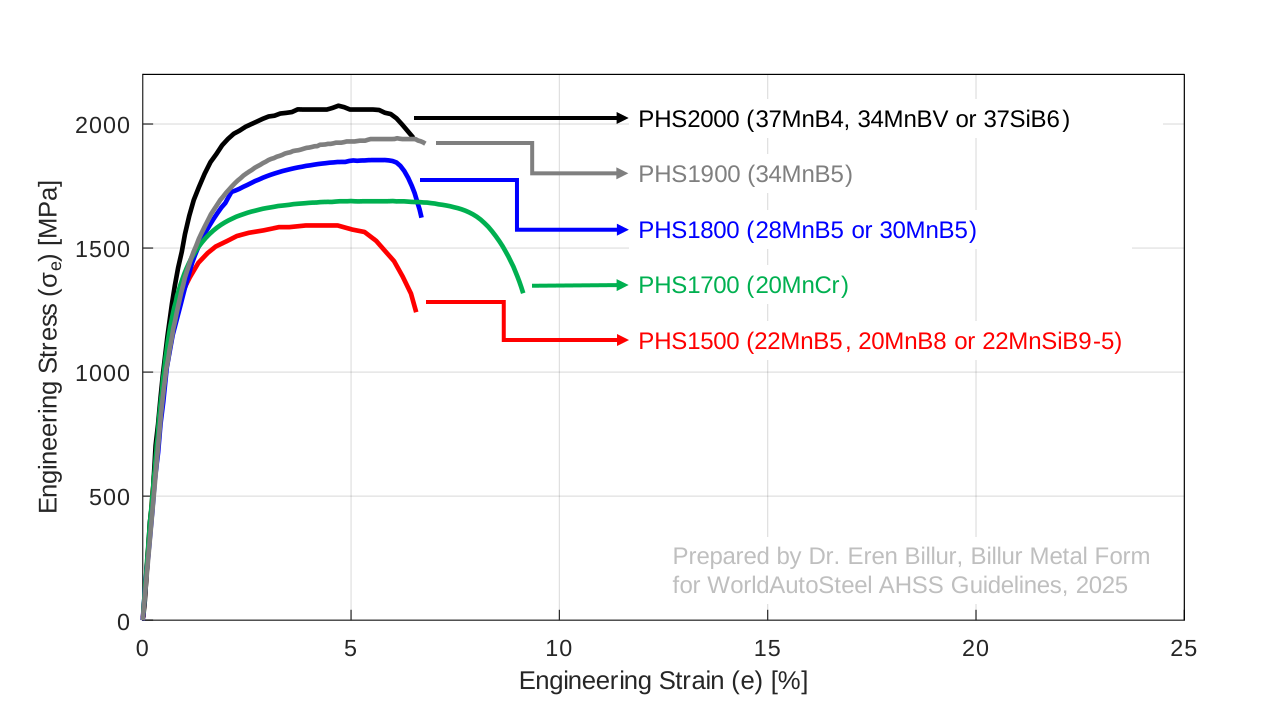
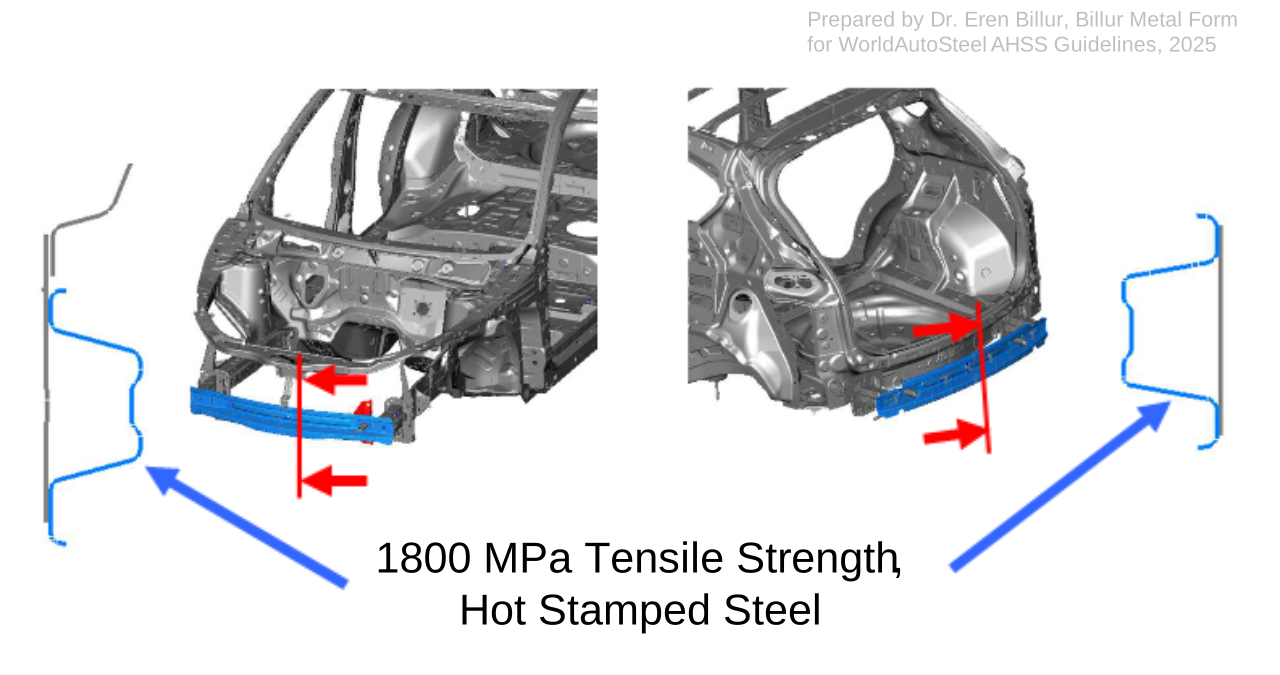

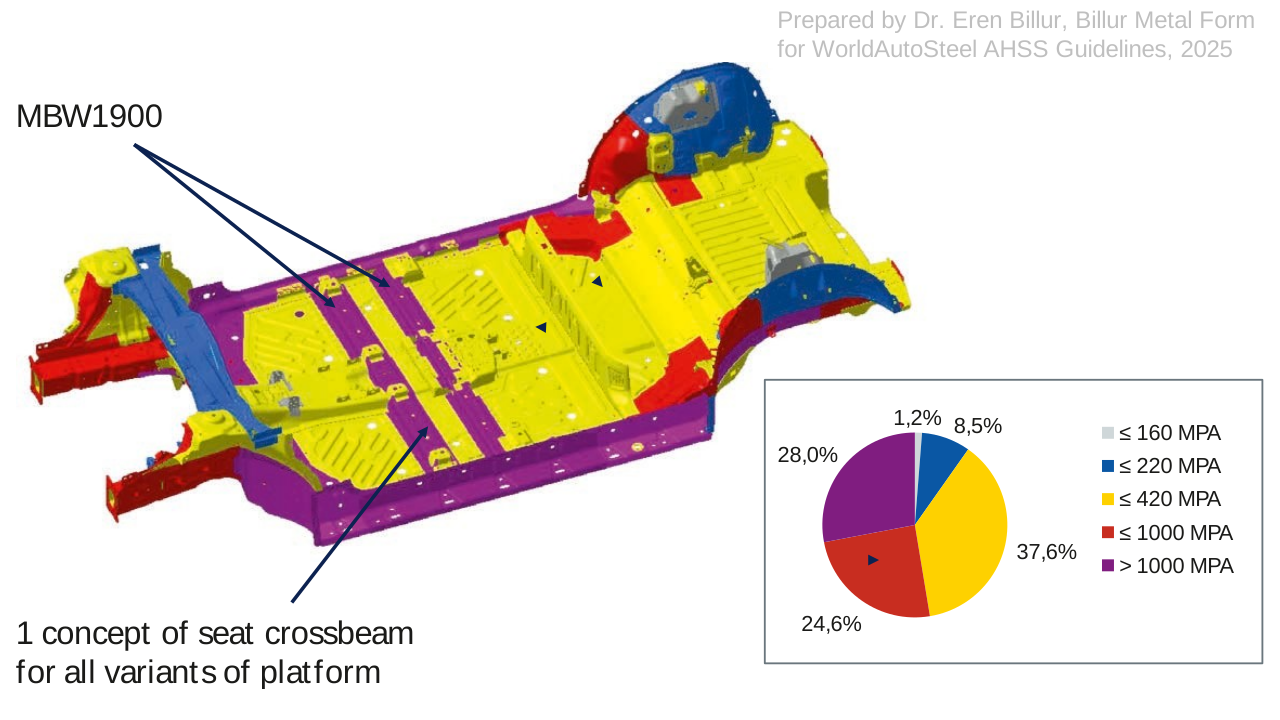

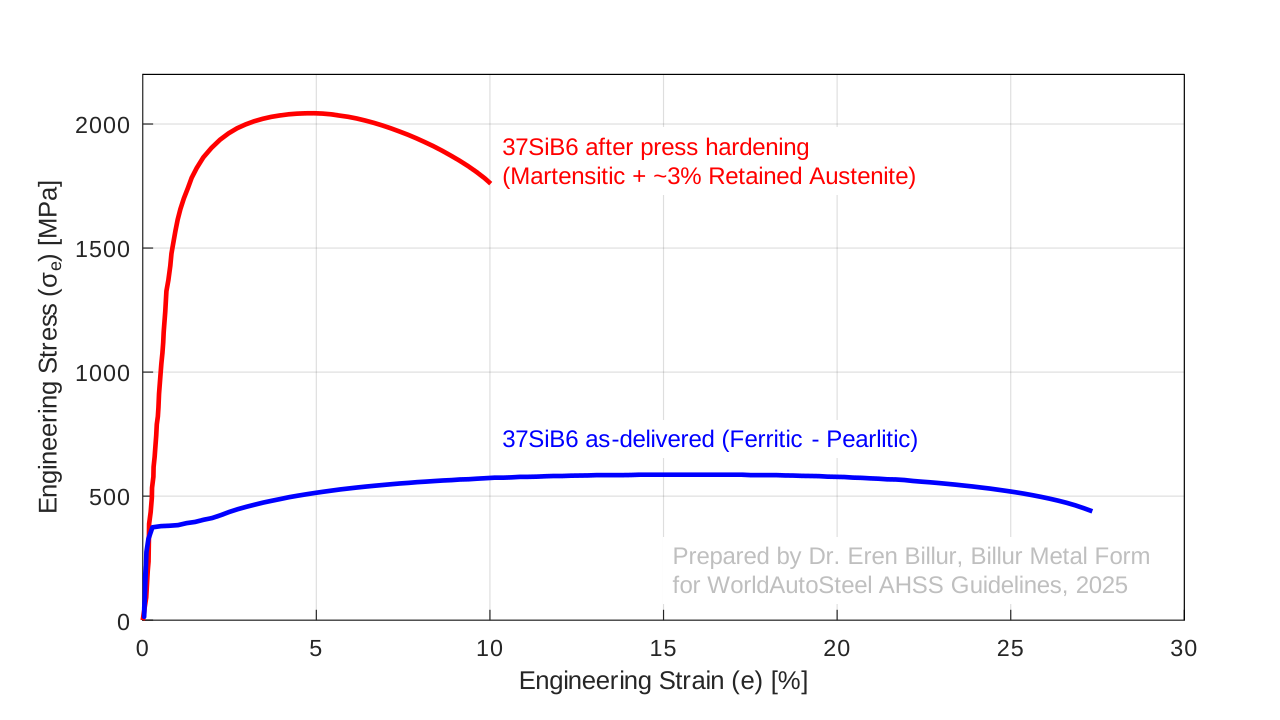


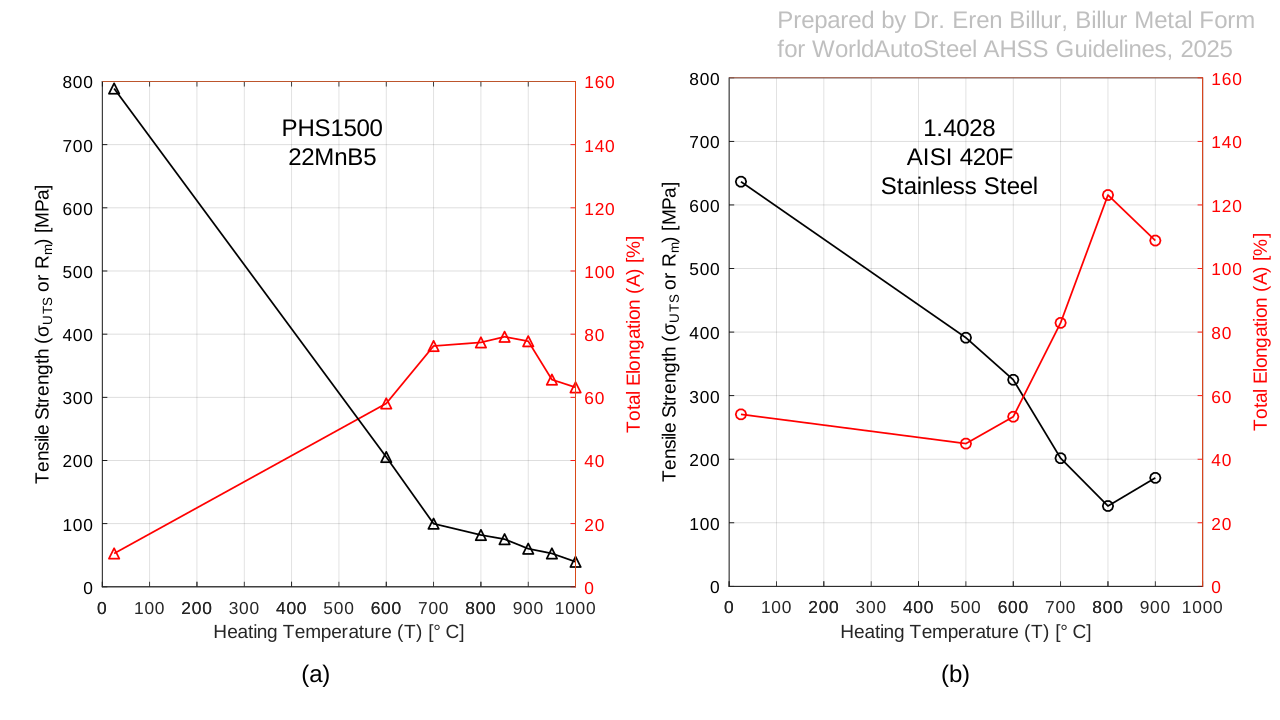

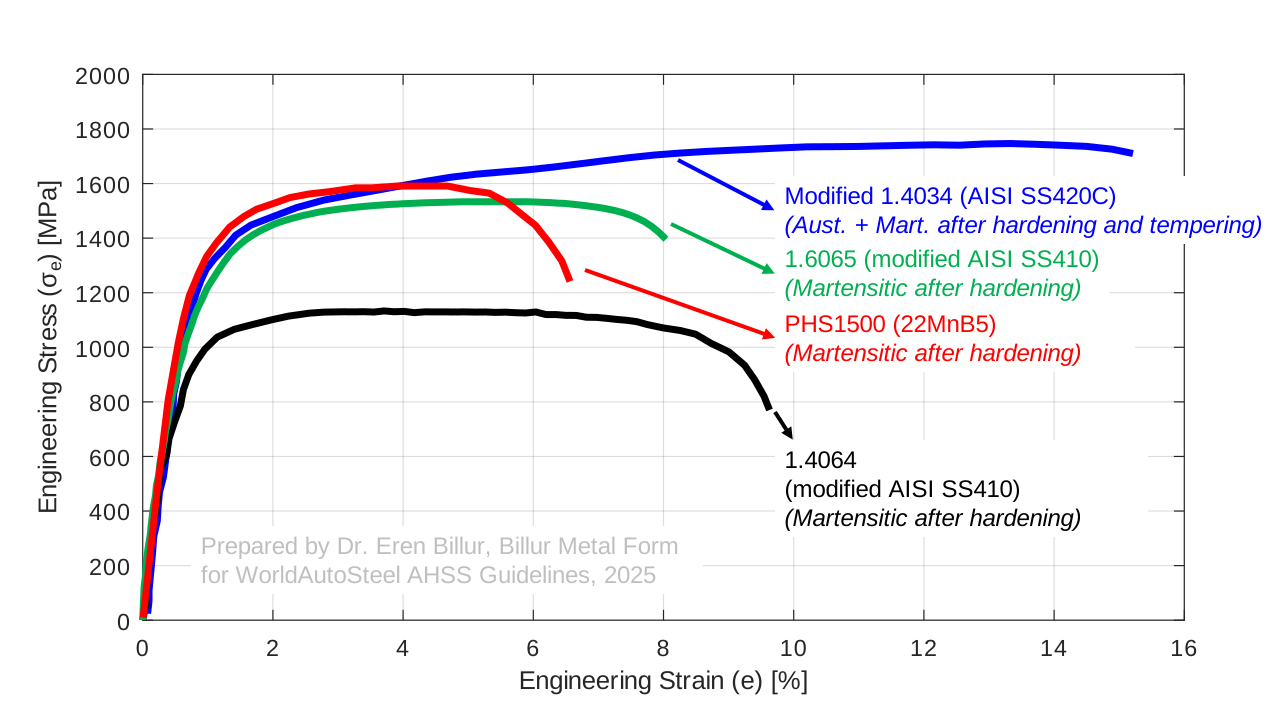
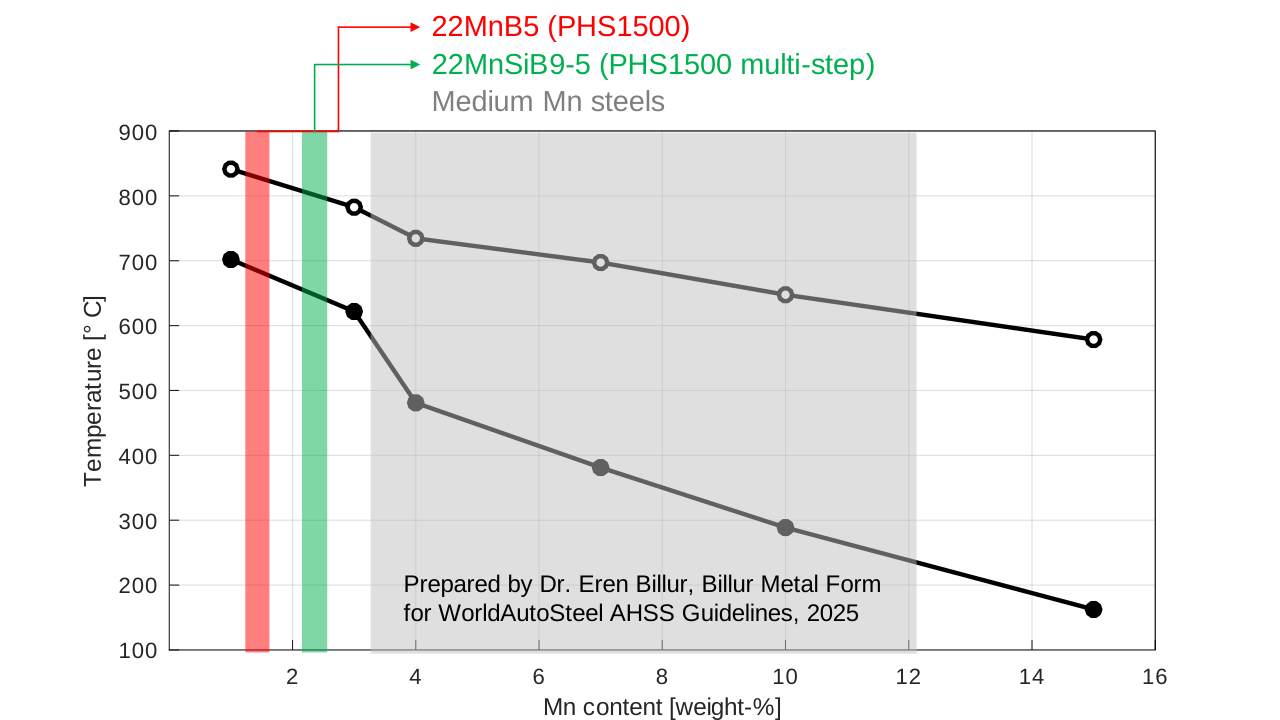
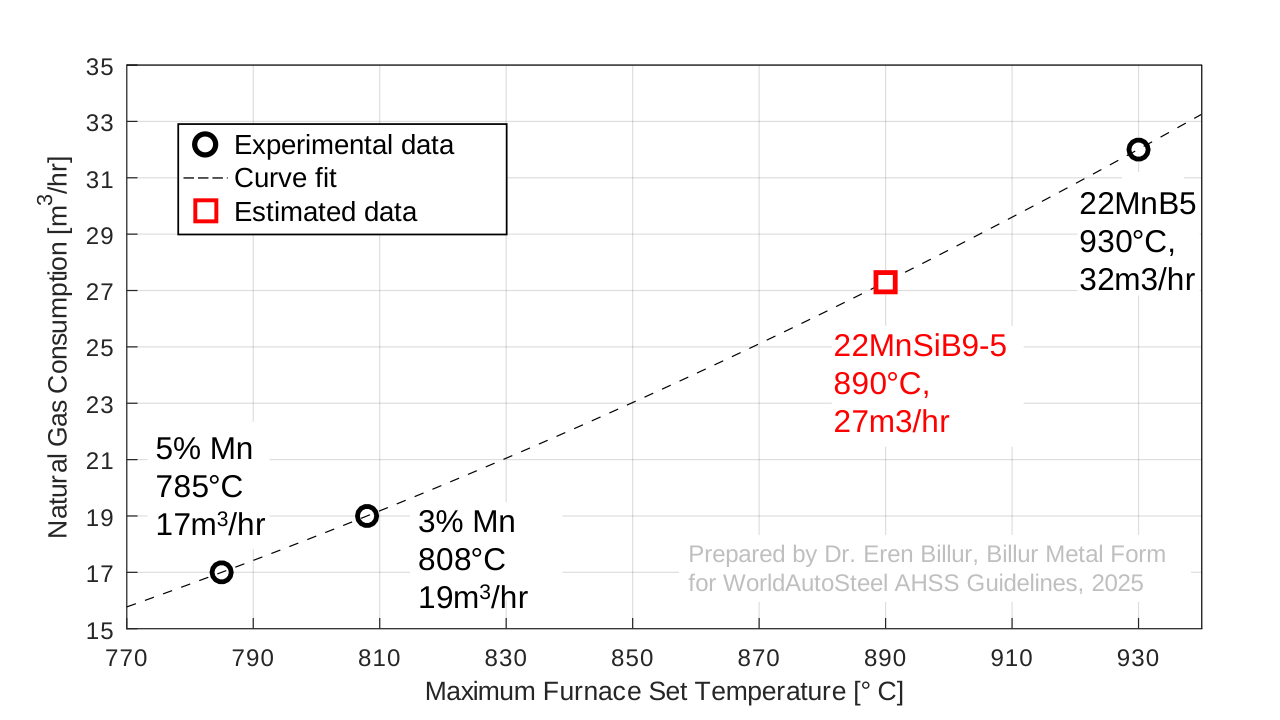
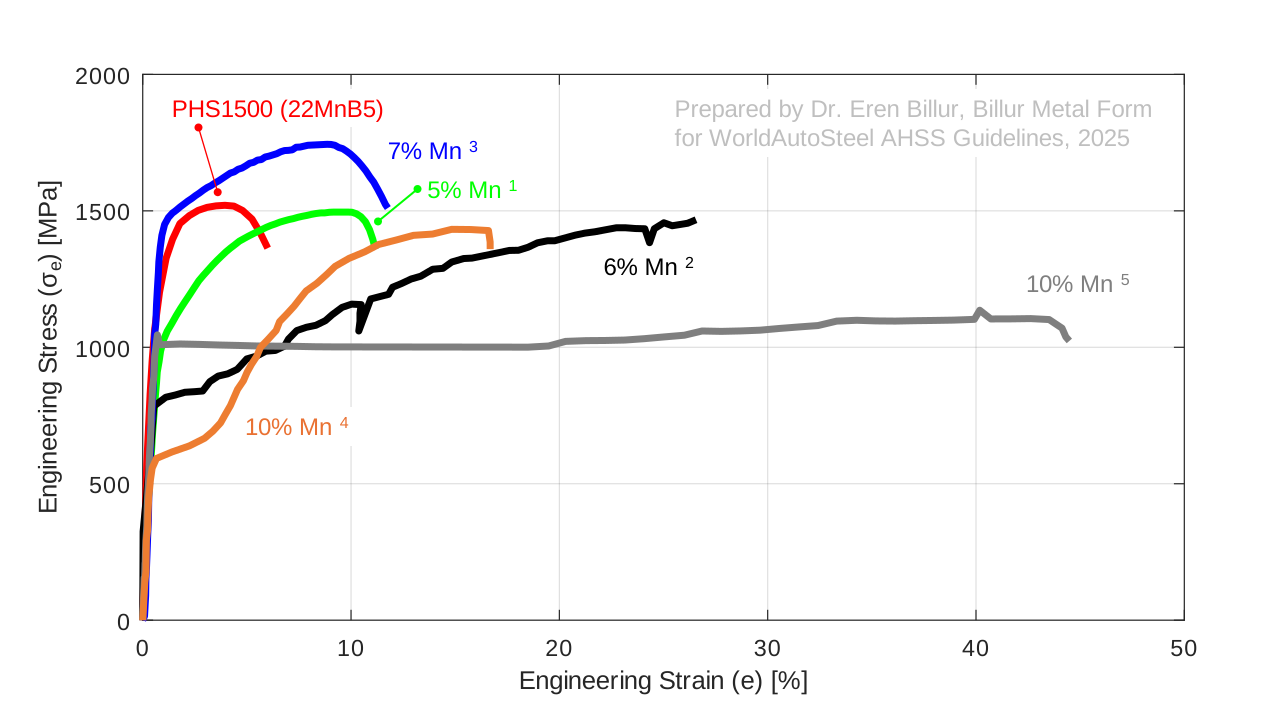
![Figure 28: Engineering stress-strain curves of 4% Mn steel, heated to different temperature (760. 800 and 840°C). Phase fractions are also affected by the heating temperature (re-created after [CITATION 20]).](https://ahssinsights.org/wp-content/uploads/2025/09/PHS-Grades-Figure-28.svg)