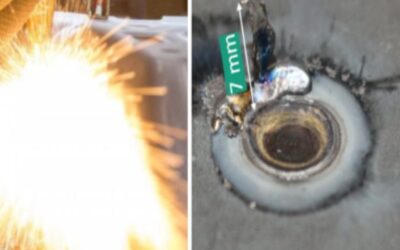
Resistance spot welding (RSW) is the most utilized joining process in car body assembly with exceptionally high demands on quality and reproducibility. Expulsion in RSW leads to ejection of metal from the weld and can cause equipment deterioration and re-working. As...
Digitalization In Tailor Welded Blanking: Combining Numerical Simulations To Process Increasing Material Strengths
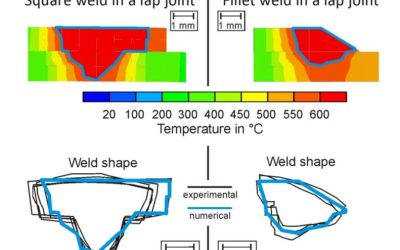
Efficient energy and resource use in automotive engineering is a major challenge that can only be overcome with innovative solutions, like digitalization in welding steel.
WorldAutoSteel Releases Latest AHSS Application Guidelines
Smarter Engineering for Tomorrow’s Vehicles In the fast-evolving world of automotive engineering, the ability to innovate safely and efficiently is paramount. Advanced High-Strength Steels (AHSS) have become the backbone of modern vehicle design. In less than a...
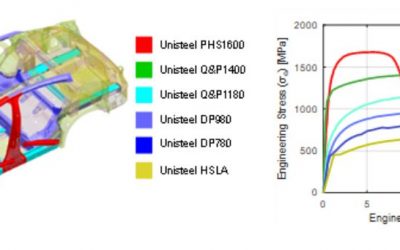
Mild Steels to Advanced Steels: The Phases Make The Difference
Steel’s performance starts at the atomic scale, where tiny changes in how iron and carbon atoms arrange themselves create dramatically different properties. This article explores how those atomic structures evolve into the ferrite, austenite, and advanced...
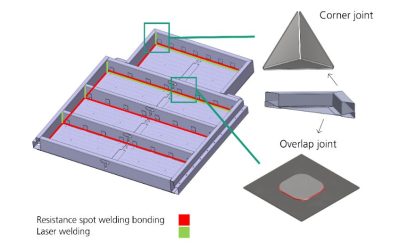
Life Cycle Assessment of Welding Methods for EV Battery Enclosures | Environmental Impact Comparison
With the rise of electric vehicles, evaluating the environmental impact of each manufacturing process is essential. This article presents an EV battery enclosure welding LCA to compare the sustainability of different joining methods. As automotive manufacturers strive...
Press Hardening Steel Grades: Unlocking Strength Through Innovation
You’ll find most of this content as part of our page on Press Hardening Steel Grades, but this month, we want to highlight it in our AHSS Insights blog. Thanks to Eren Billur, Ph.D., President, Billur Metal Form, for providing this information. What...
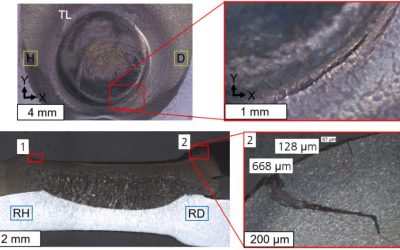
Four Steps to Mitigate Liquid Metal Embrittlement When Welding Steel
Liquid Metal Embrittlement (LME) during Resistance Spot Welding (RSW) can cause cracks when welding advanced high strength steels. Recent advances in steel metallurgy, resistance spot welding processing and accompanying simulation tools have substantially improved the...
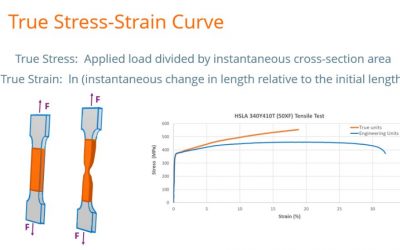
Tensile Testing: Engineering Stress-Strain Curves vs. True Stress-Strain Curves
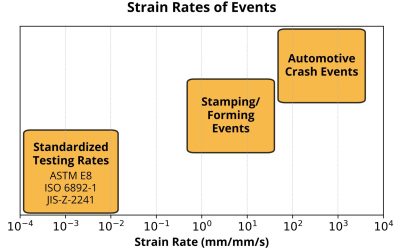
Tensile testing is one of the most basic formability characterization methods available. Results from tensile testing are a key input into metal forming simulations, but if the right information isn’t included, the simulation will not accurately reflect material behavior. Metal forming simulation is particularly beneficial on the value-added parts made from advanced high strength steels, since accurate simulations allow for optimal processing with minimal recuts … at least when the right information is used as inputs.
Resistance Spot Welding with Advanced High-Strength Steels: Cold Stamped and Hot Formed
The discussions relative to cold stamping are applicable to any forming operation occurring at room temperature such as roll forming, hydroforming, or conventional stamping. Similarly, hot stamping refers to any set of operations using Press Hardening Steels (or Press...
Cold Stamped or Hot Formed? Part II
Grade Options and Corrosion Protection Considerations When Deciding How A Part Gets Formed Automakers contemplating whether a part is cold stamped or hot formed must consider numerous ramifications impacting multiple departments. Our prior blog on this topic...