
WorldAutoSteel periodically invites outside experts to contribute their knowledge on pertinent topics. Here, Danny Schaeffler, President of Engineering Quality Solutions and our Technical Editor for Metallurgy and Forming, worked with Trey Leonard, Ph.D. Founder and CEO, Standard Mechanics, LLC to bring you this overview of several aspects of High Strain Rate testing. You’ll find portions of this content as part of our page on High Strain Rate Testing, but this month, we want to highlight it in our AHSS Insights blog.
High strain rate testing is not an abstract materials exercise in the automotive industry—it is a targeted characterization tool used to ensure that advanced high-strength steels (AHSS) perform as expected during forming and crash events. In the context of automotive body structures, the relevant question is not simply “what is the strength of this steel,” but rather “how does this steel behave when deformed at rates representative of an actual event?”
Why Strain Rate Sensitivity Matters for AHSS Crash Performance
Modern vehicle structures rely heavily on AHSS grades to meet increasingly stringent requirements for crashworthiness and mass reduction. Components such as B-pillars, rocker reinforcements, crash rails, and door intrusion beams are designed to absorb energy through controlled deformation. During a crash, these components experience strain rates on the order of 10² to 10³ s⁻¹ —several orders of magnitude higher than the ~10⁻⁴ s⁻¹ strain rates in conventional tensile testing (Figure 1). As a result, properties like yield strength and ultimate tensile strength derived from these quasi-static tests are insufficient descriptors of in-service behavior.
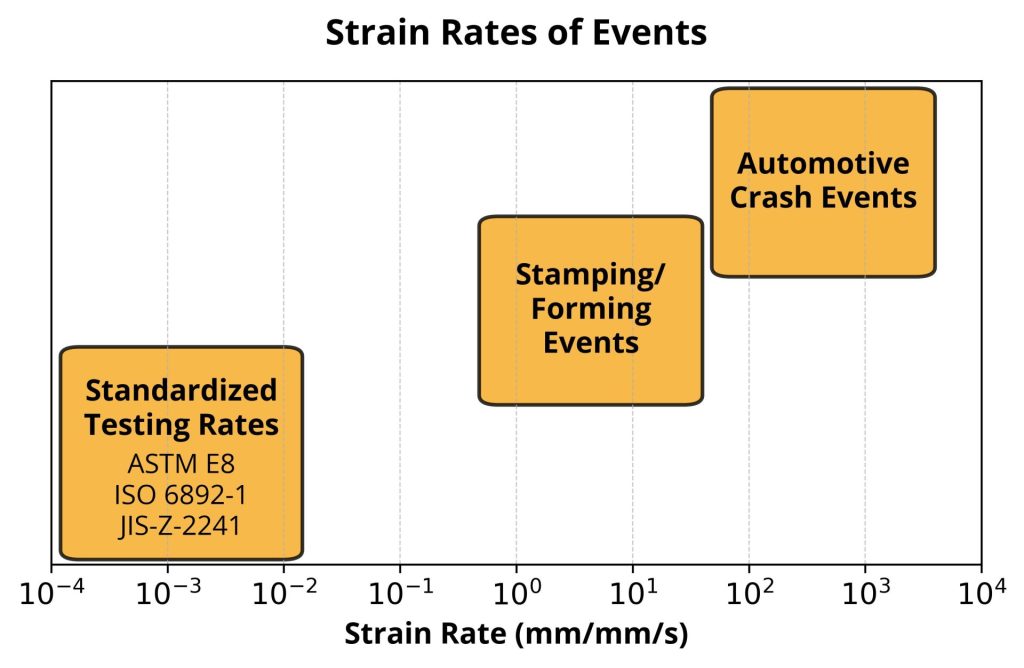
Figure 1 Strain Rates of Various Events Including Testing, Forming, and Crash
For steels used in these applications, strain rate sensitivity becomes a primary material characteristic. Most automotive steels exhibit positive strain rate sensitivity, meaning their flow stress increases with increasing strain rate. From a design standpoint, this could be advantageous: higher dynamic strength translates to improved energy absorption and greater resistance to intrusion during a crash. However, the magnitude of this effect varies across steel families. Dual-phase (DP) steels, for example, can show a more pronounced increase in flow stress compared to transformation-induced plasticity (TRIP) steels, while martensitic grades may exhibit relatively lower sensitivity. These differences must be quantified experimentally to ensure that simulation models accurately capture the structural response.
Modeling Strain Rate Sensitivity — Cowper-Symonds vs. Johnson-Cook
This is where high strain rate testing becomes directly integrated into the material characterization workflow. Automotive OEMs and suppliers generate stress-strain curves across a range of strain rates, typically spanning quasi-static (~10⁻⁴ s⁻¹), intermediate (~1 to 10² s⁻¹), and high-rate (~10² to 10³ s⁻¹) regimes. These datasets are then used to calibrate constitutive models implemented in crash simulation software such as LS-DYNA or Abaqus. Models like Cowper–Symonds or Johnson–Cook incorporate strain rate terms that scale the flow stress, but their predictive capability depends entirely on the quality and range of the underlying experimental data (Figure 2, Figure 3, Figure 4).
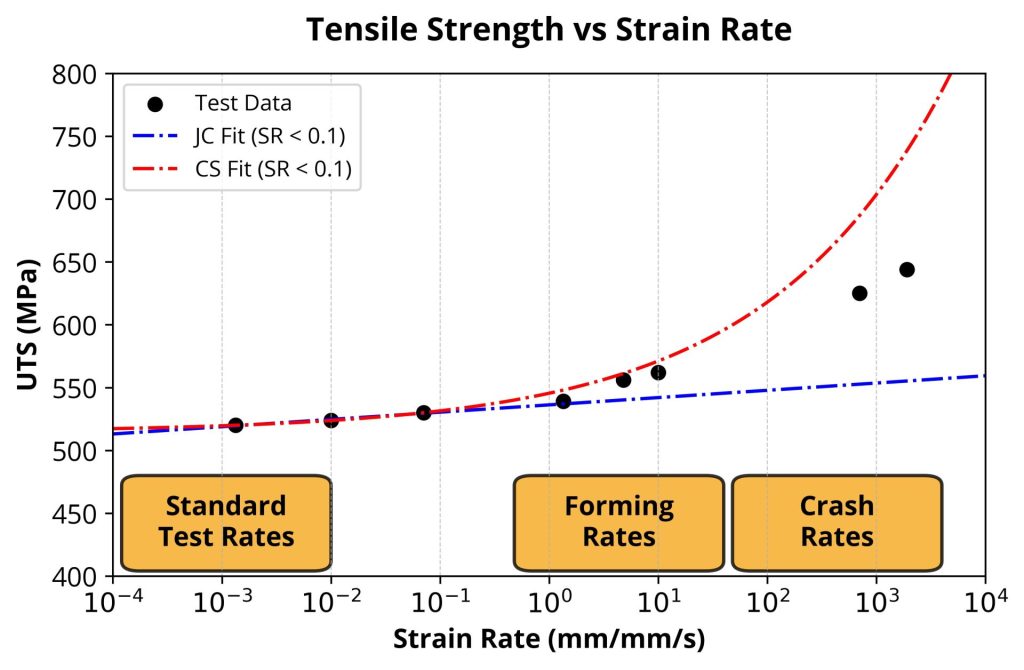
Figure 2 Cowper-Symonds and Johnson-Cook Strain Rate Sensitivity Model fit to Low-Rate Experimental Data
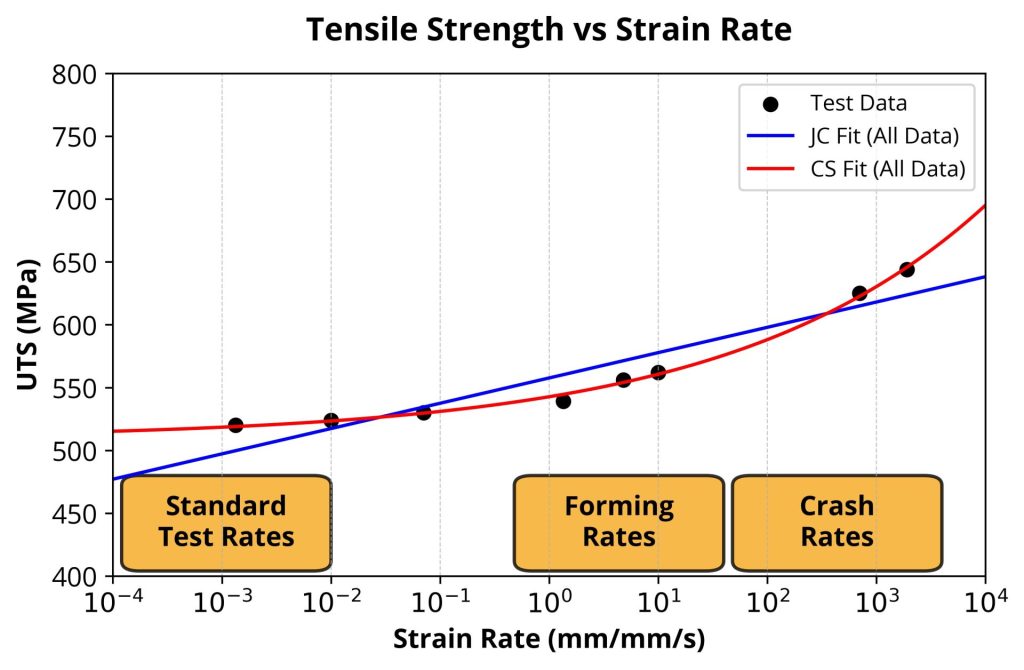
Figure 3 Cowper-Symonds and Johnson-Cook Strain Rate Sensitivity Model fit to All Experimental Data
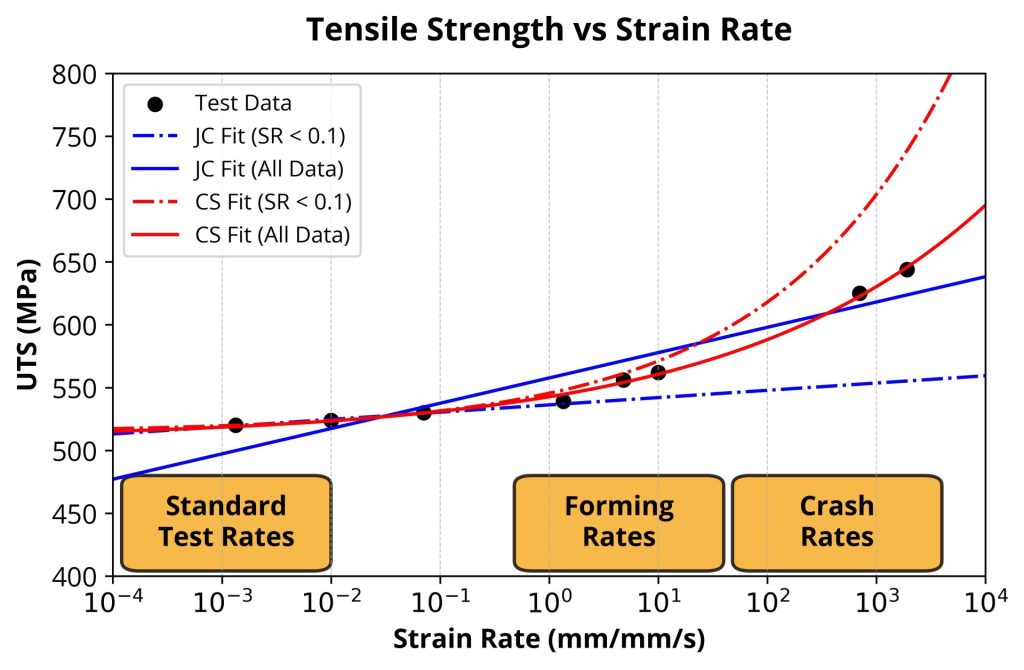
Figure 4 Cowper-Symonds and Johnson-Cook Strain Rate Sensitivity Model fit to Low-Rate and All Experimental Data
Testing Methods — From Servo-Hydraulic Systems to Split Hopkinson Bar
The testing approach itself is tailored to the strain rate regime of interest. For intermediate rates relevant to forming-to-crash transitions, servo-hydraulic test systems are commonly used. These systems are modified with high-flow servo valves and low-compliance load trains to achieve rapid loading. For higher strain rates typical of crash events, split Hopkinson bar techniques are employed.
Specimen Design and Digital Image Correlation (DIC) Strain Measurement
Specimen geometry and preparation are also influenced by the intended application. Sheet steels used in automotive structures are typically tested in configurations that preserve their rolling direction and thickness, as anisotropy can influence both strength and failure behavior. In addition, special specimen geometries that induce non-uniaxial stress conditions (notched-tensile and tensile-shear specimens) are critical to understand failure modes such as fracture strain and localization, both of which directly impact crash performance.
As a result, full-field strain measurement techniques like digital image correlation (DIC) are widely adopted (Figure 5). DIC enables accurate capture of strain localization and strain rate distribution across various specimen geometries, which is particularly important for calibrating damage and failure models such as Hosford-Coulomb and General Incremental Stress-State dependent Damage Model (GISSMO).

Figure 5. Example of Full Field Digital Image Correlation Strain Mapping of High Strain Rate Tensile Test
Inertia, Stress Wave Propagation, and Load Ringing
Perhaps the most important factor in high strain rate testing is inertia and stress wave propagation. Automotive steels are typically tested in sheet geometries that are relatively thin. Thin specimens gripped with bulky grips often create non-uniform stress states during rapid loading. Non-uniform stress states produce oscillations (often called “load ringing”) in the resulting stress data (Figure 6). Ensuring stress equilibrium within the specimen is essential for obtaining valid data. This often requires careful design of the test setup, including grip size and specimen length.
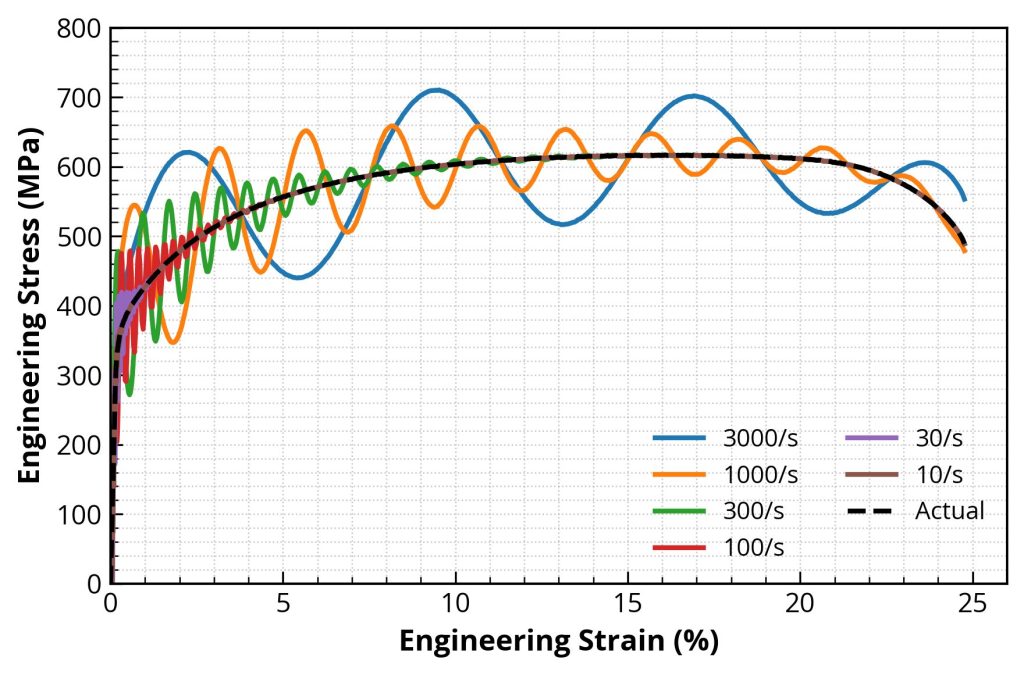
Figure 6 Example of Growth of Load Ringing in High-Strain-Rate Test Data
From Material Data to Crash Performance Prediction
From an application standpoint, the ultimate goal of high strain rate characterization is to enable accurate prediction of component-level and system-level crash behavior. For example, in a frontal collision, the progressive folding of a front rail or crash box depends on the dynamic flow stress of the steel, as well as its strain hardening and failure characteristics. Similarly, side-impact performance is heavily influenced by the behavior of B-pillar reinforcements under high-rate loading. Without accurate high strain rate data, simulations may underpredict or overpredict intrusion, energy absorption, and failure, leading to suboptimal designs or costly physical test iterations.
Standardization Challenges — ISO 26203 and Lab-to-Lab Variability
Standardization efforts, such as ISO 26203, have helped bring consistency to high strain rate tensile testing, but variability still exists across laboratories. Many factors contribute to these variances: unstandardized specimen geometries and gripping methods, variances in specimen loading conditions, lower quality strain measurement techniques, and non-optimized fixturing for wave transmission and measuring. For automotive applications, this variance places a premium on internal validation—correlating material test data with component-level crash tests to ensure that the material model behaves correctly within the simulation environment.
Key Takeaways
High strain rate testing is a foundational tool in the characterization of automotive steels, directly linking material behavior to vehicle safety performance. It provides the data necessary to describe how steels respond under crash-relevant loading conditions, informs the calibration of constitutive and failure models, and ultimately enables engineers to design lighter, safer vehicle structures with confidence in their predictive simulations.
For additional information, please visit our page on High Strain Rate Testing.
Many thanks to our authors, Trey Leonard and Dr. Danny Schaeffler.

Trey Leonard is the founder and CEO of Standard Mechanics, LLC, where he delivers advanced mechanical testing services and solutions across a wide range of applications, with expertise spanning static and dynamic formability, fatigue, and strain rate sensitivity testing.
 Danny Schaeffler is the Metallurgy and Forming Technical Editor of the AHSS Applications Guidelines available from WorldAutoSteel. He is founder and President of Engineering Quality Solutions (EQS). Danny is passionate about training new and experienced employees at manufacturing companies about how sheet metal properties impact their forming success.