Steel, and specifically advanced high strength steel, satisfies automotive industry requirements for safety, emissions, fuel efficiency, manufacturability, durability, and affordability.
Affordability
The automotive industry has adopted light-weighting as a key part of their greenhouse gas reduction strategy. This strategy, however, must be executed in an affordable manner.
Key reasons to deploy advanced high strength steels in automotive body structures include better performance in crash energy management and increased strength allowing this performance to be achieved with thinner materials, translating into lower vehicle weight. Thinner gauges mean a reduced amount of purchased material is needed to achieve this enhanced performance.
Today’s steels enable significant mass reduction, while meeting crash and other functional requirements, while preserving affordability. WorldAutoSteel vehicle programs and competitive benchmarking studies (here, here and here) have clearly demonstrated that optimized steel body structures can be constructed with little to no increases in total system cost relative to conventional body structures.
Recognizing these benefits, global automakers continue to base their fleet on steel-intensive body structures and rely on advanced high strength steel to help them meet customer expectations and government regulations in the most cost-effective way possible.
Most steel companies are extending their research and development efforts to expand the range of properties available through these new steels, to enable the production of safe and environmentally friendly vehicles.
Safety
The percentage of high strength steels used in light vehicles relative to other materials continues to grow, and much of the growth has been fueled by increasingly stringent safety regulations and ratings systems. Consumers are demanding safe cars, and governments are responding with new tests and standards that influence auto body structures, design and materials. The results of vehicle safety performance tests are therefore a strong incentive affecting consumer purchasing decisions.
In the United States, the National Highway Traffic Safety Administration (NHTSA) sets standards for vehicle safety, such as those for impact resistance, restraints, and fuel economy.N-26 Testing by the U.S. Insurance Institute for Highway Safety (IIHS) has encouraged improved frontal, side, and rear impact ratings, as well as roof strength and rollover ratings, for vehicles on the road today.I-5 Numerous New Car Assessment Programs around the world measures vehicle performance in a variety of crash tests, including front, side and pole impacts, and impacts with pedestrians with the goal of informing the public about the relative safety performance amongst vehicles. A limited number of these are shown in Citations G-5, E-13, and J-25. Citations C-35 and C-36 summarize the testing that goes into these global New Car Assessment Program standards. Meeting these standards and improving performance often requires the addition of weight to the vehicle.
Diligent application of advanced steels leads to safe, lighter-weight body structures. Tailoring the engineering design and forming approaches to the material characteristics and properties allows for optimized use of these newer grades and avoids excess or redundant mass in the structure. The FSV program showed that natural, non-linear load paths allow for more effective crash management and lighter-weight structures, attainable through design optimization and rigorous application of AHSS.
Deploying Advanced Steels in Automotive Body Structures
Several key considerations drive material selection for automotive applications, including safety, fuel efficiency, environmental performance, manufacturability, durability, and quality. For exposed parts, aesthetic concerns related to paint finish and dent resistance are also important. These factors manifest themselves differently in each component of the vehicle, and materials are selected to match each set of performance requirements in the most efficient means possible.
Crash Performance
Perhaps the most critical design considerations for a vehicle structure relate to its ability to carry the required static and dynamic loads, particularly during a crash. Both materials strategy and geometric design play important roles in determining the final load paths and part details.
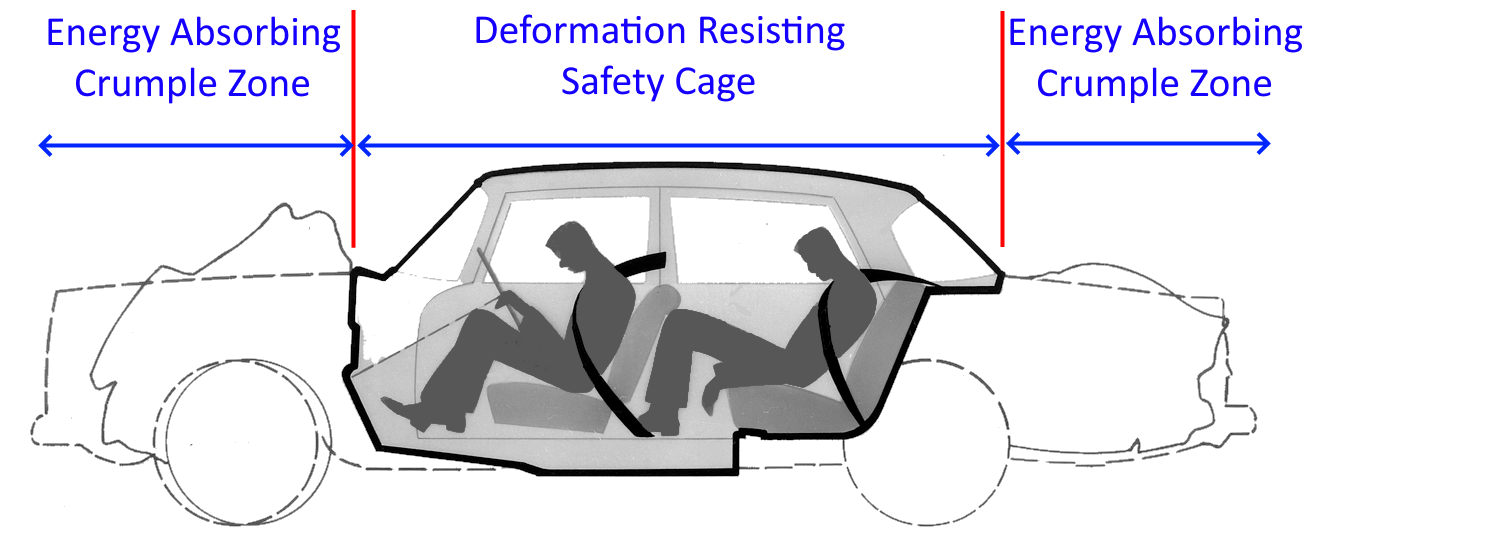
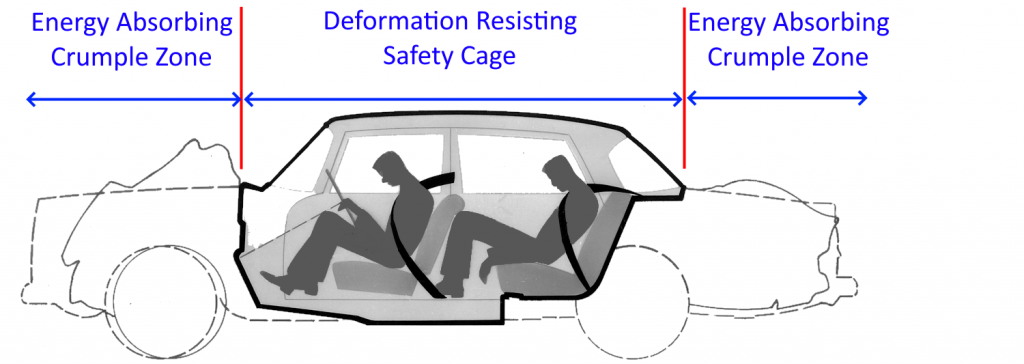
Two generalized areas of the car have very different safety requirements, as shown in Figure 1. The passenger compartment, enclosed in a rigid “safety cage,” is designed to protect the passengers in the event of a low or high-speed crash; the structure should prevent any deformation or intrusions that would compromise the integrity of the cage structure and impinge on the space around the passengers.
“Crumple zones,” located at the front and rear of the vehicle, are designed to absorb as much energy as possible in the event of a front or rear collision. By absorbing the energy over a distance, the crumple zone will cushion the impact and help preserve the structural integrity of the passenger compartment.
Table 1 presents general guidelines for materials selection in the crumple zone and the passenger compartment.
Figure 1: The major crash management zones of a vehicle.
Table 1: Steel Grade Strategies For Targeted Safety Performance
|
Crash Zone |
Performance Requirements During Crash |
Material properties to meet need |
Evidence of Performance |
Potential Steel Selection |
| Energy Absorbing Crumple Zone |
High energy absorption over a distance |
High work hardening, strength, and ductility |
Large area under the stress-strain curve |
Dual Phase,
Complex Phase,
Transformation-Induced Plasticity,
3rd Generation Steels |
| Deformation Resisting Safety Cage |
No deformation or intrusion |
High yield strength |
Highest tensile strength |
Martensite,
Press Hardening
Hot Formed,
>980 MPa Dual Phase,
>980 MPa Complex Phase |
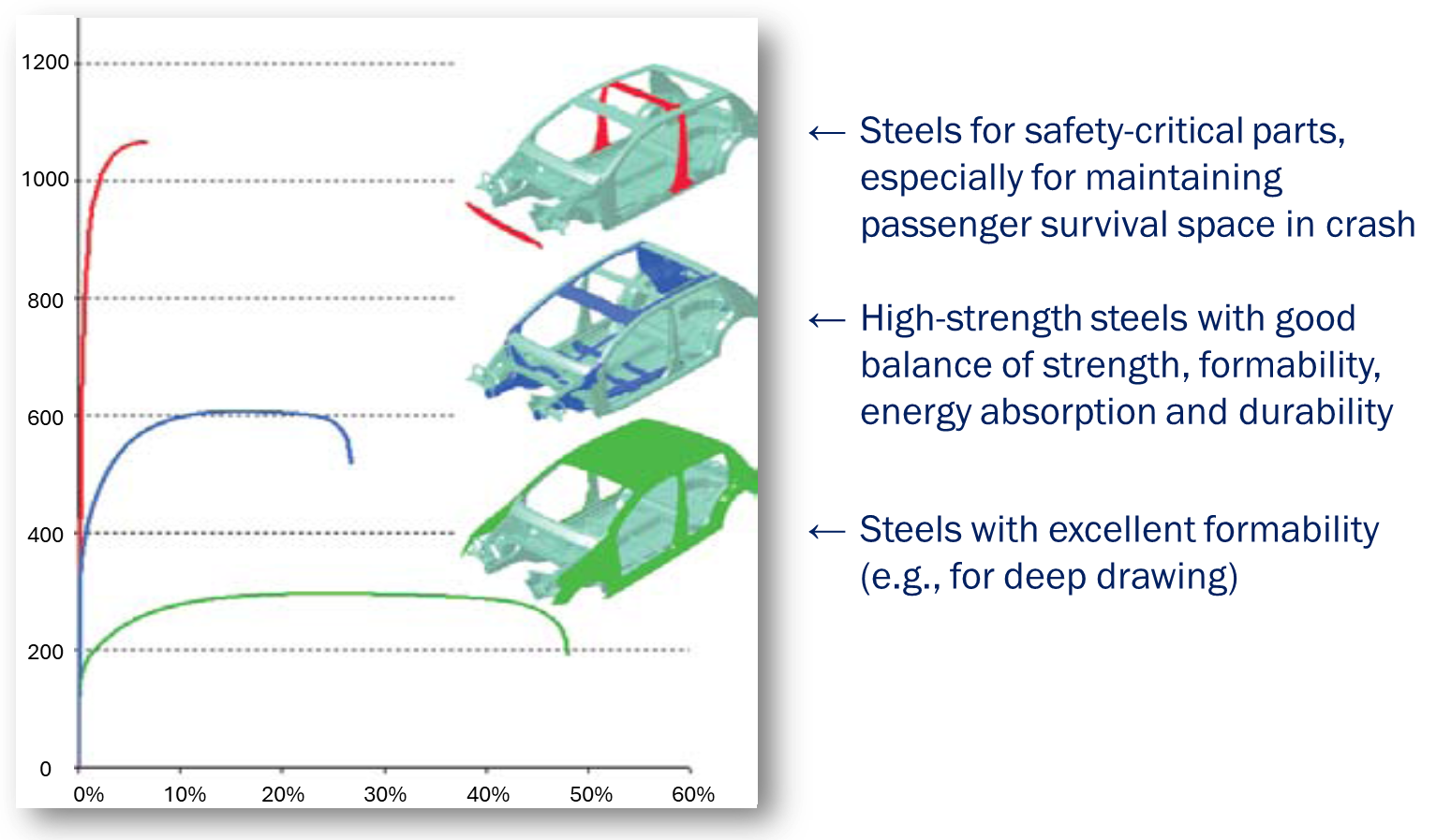
Automotive components are designed so that together they form a structure that meets all crash, safety, and functionality requirements, including those enforced by regional regulatory bodies and those set internally by car companies. Steel grade characteristics and properties guides the selection for specific applications, as shown schematically in Figure 2.C-5
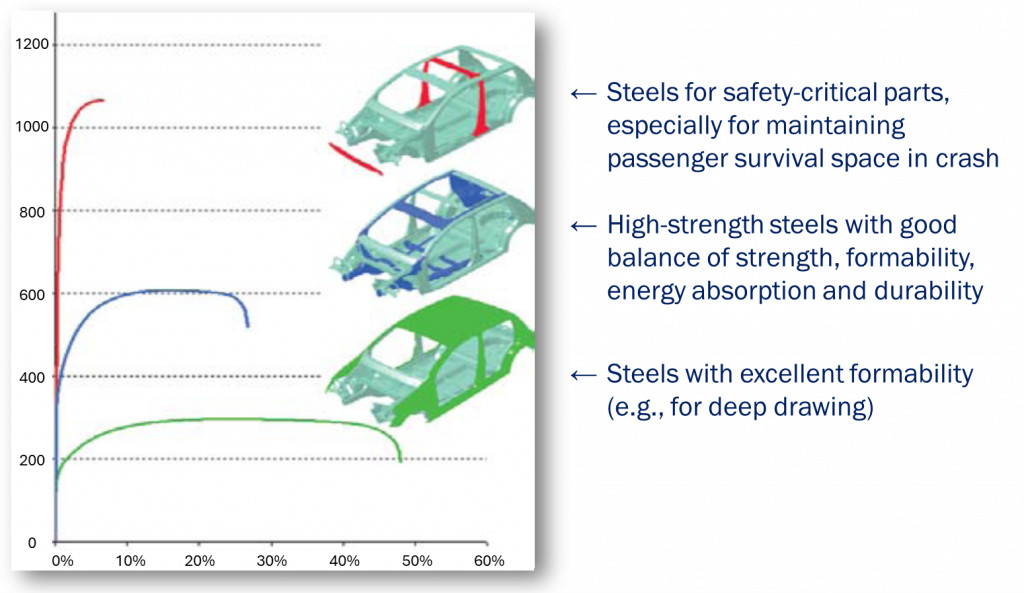
Figure 2: Comparison of stress-strain curves for different applications with body structures.C-5
Stiffness
Counter to the opinion of many, stiffness is not a function of a material’s strength. It is, however, a function of part geometry, elastic modulus and thickness. As an example of how part geometry influences stiffness, consider a sheet of paper. Stiffness improves dramatically once a crease is folded into it, yet the strength has not changed.
In automotive bodies, stiffness is related to handling and safety, as well as noise, vibration, and harshness characteristics.
A common strategy is to deploy AHSS for increased strength while decreasing weight by using thinner material. Casually applied, stiffness can suffer as a result. Geometry, specifically the moment of inertia of the cross-section about the primary load axis, plays a significant role in determining stiffness. The flexibility to adjust cross sectional and overall geometries allows for structural design solutions that more efficiently carry loads in the vehicle. The use of AHSS offers many advantages in this process because high work hardening rates increase formability, allowing for improved shapes for optimal efficiency. Additionally, AHSS typically possess high bake-hardening ability which can improve the final strength of a component after forming and paint-baking (curing).
Many lower-density metals like aluminium also have a lower elastic modulus than steels. To have an equally stiff component as one made of steel, the component from the lower-density material must have a combination of increased thickness or increased geometry. That increased thickness negates some of the perceived weight savings from the alternate material. Furthermore, lower-density materials must have sufficient ductility to be able to withstand the forming of the additional geometric features like in-part darts and beads and deeper draws associated with the increased shape required for stiffness improvement.
Forming and Manufacturability
Advanced high strength steels were developed partly to address the decreased formability typically associated with increased strength in conventional steels. AHSS grades are available at higher strength levels than conventional high strength steels, and have high work hardening and bake hardening characteristics that allow for increased formability and opportunities for additional optimization of part geometries. Both overall elongation and local elongation properties are important for formability, and global steelmakers have developed grades to address these needs.
Vehicle programs must balance performance, safety, fuel efficiency, affordability and the environment, while maintaining designs that are appealing to customers. Use of higher strength steels allows for a reduction in the sheet metal thickness and in turn vehicle mass. The increased ductility offered by Advanced High Strength Steels facilitates part consolidation also contributing to lower weight and manufacturing cost while providing an efficient way to increase component and vehicle stiffness.
Low-density materials like aluminium, magnesium and composites have widespread use in luxury class vehicles, where amenities, comfort, and speed are prioritized over affordability. Penalties for not meeting fuel economy and emissions mandates are easily absorbed in the sales price.
On mass-market vehicles, where per-unit emissions are multiplied over higher volumes, automakers target selecting the most efficient way to achieve the lowest total emissions.
Compared with the limited number of low-ductility steels available decades ago, the lower density materials would have offered an easy but costly path to lightweighting. Back then, since there were not that many high-strength options, vehicle crashworthiness was improved by increasing thickness.
However, increasing metal strength allows for a thickness reduction while maintaining crash performance. The substantially higher strength steels available today have sufficient ductility to form complex stampings from sheets thin enough to be weight-competitive with components formed from lower-density materials that must be made from higher thickness to have comparable stiffness.
The spectrum of steel grades commercially available today have:
- higher strength, greatly contributing to the crash-energy management approach.
- higher ductility that allows for additional shape to be formed into the component, also increasing stiffness and potentially allowing for part consolidation,
- higher modulus than aluminium or magnesium that inherently leads to a stiffer component.
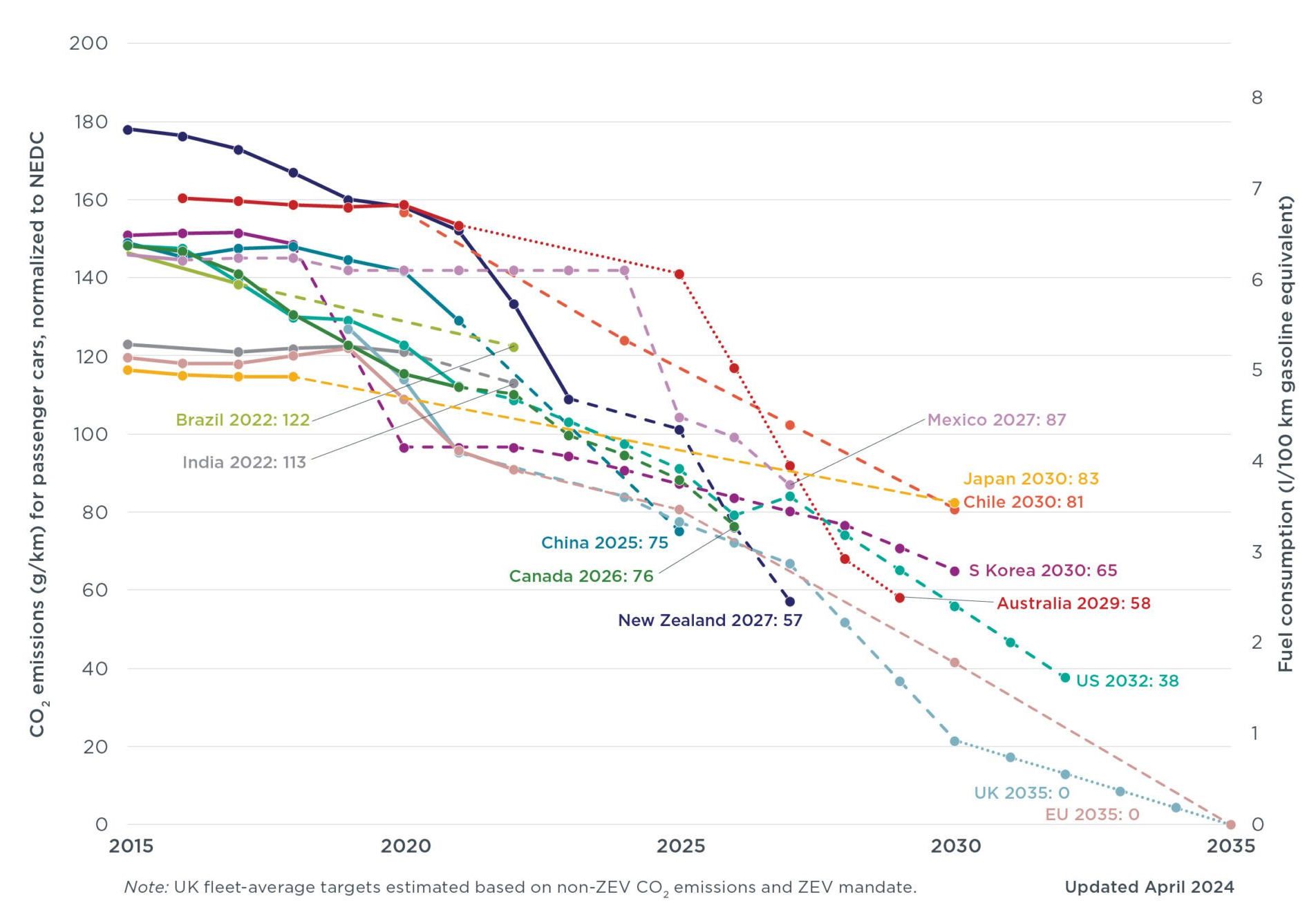
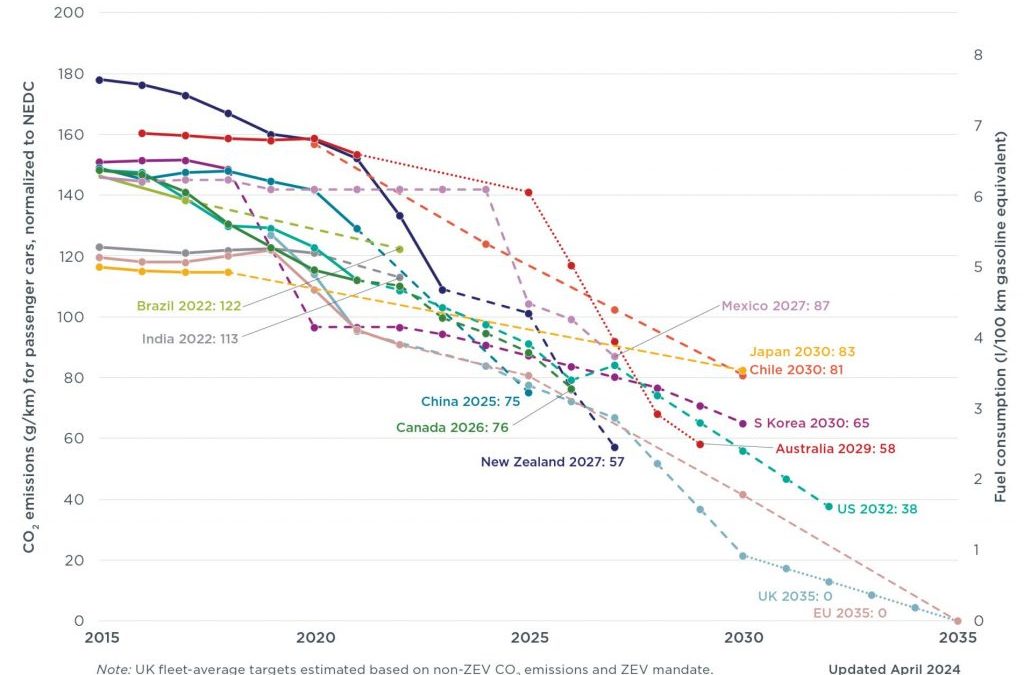
Recent years have seen an increased global sensitivity to tailpipe emissions, with Figure 1 highlighting regulations for passenger cars in different countries and regions. Many major markets have committed to fleet average emissions below 100 g CO2/km, and we’re on a negotiated global journey to Net Zero Emissions by 2050.
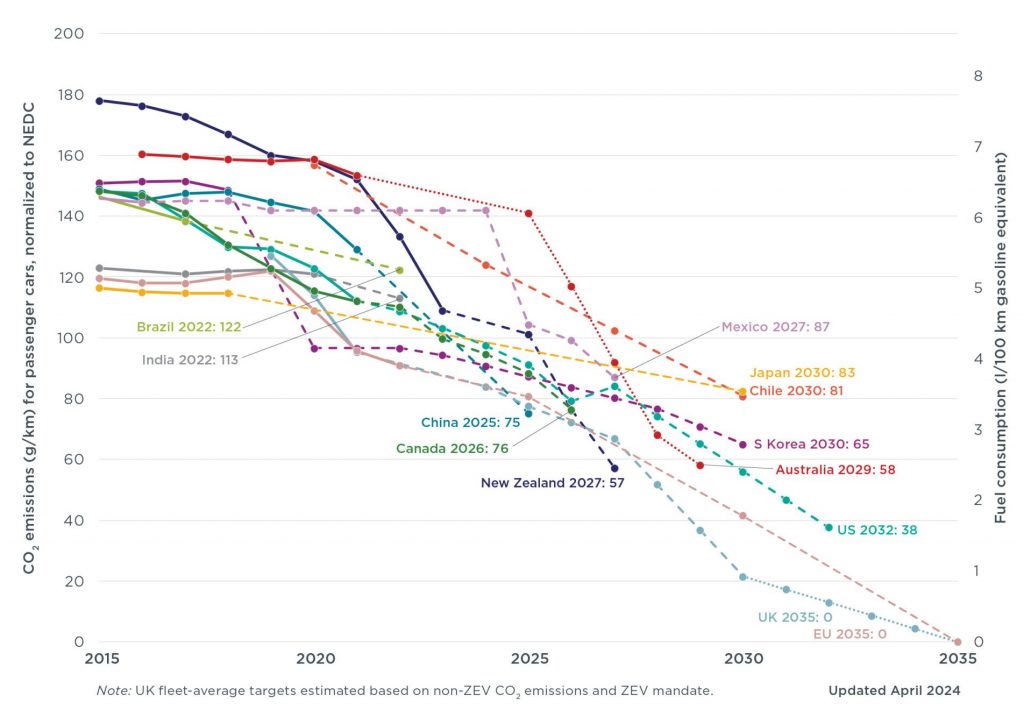
Figure 1: Passenger car emissions and fuel consumption targets, normalized to New European Driving Cycle I-2
The problem with the current regulation of automotive greenhouse gas (GHG) emissions is their focus solely on tailpipe emissions, produced from fuel combustion during vehicle use. The regulations ignore other significant sources of GHG emissions in the vehicle’s life cycle including vehicle production (including the emissions from material production) and treatment of the vehicle at the end of its useful life. This omission comes with serious risks. An unintended effect of this approach is an over-emphasis on vehicle lightweighting. While lightweighting can be an effective tool to reduce vehicle emissions, it must be done with a holistic knowledge of the implications related to the total vehicle life cycle GHG emissions.
Reducing vehicle mass decreases fuel consumption, which also reduces tailpipe emissions. This may, or may not, offset the increased production emissions from material production of the lower density materials. One possibility is that the reduction of emissions in the use phase results in overall lower emissions, but because of the trade-off between the use phase and production emissions, the result is not as low as predicted by a tailpipe-only metric – some of the use-phase savings is offset by the increased production emissions. Also possible is where the use phase savings and the production phase increase are approximately equal, resulting in no net savings at all. In the other extreme, the production emissions outweigh the use phase savings, resulting in the unintended consequences of an increase in the overall emissions. This last scenario is the very opposite of what government policy intends, but happens regularly when vehicles constructed with low density materials don’t reach their intended vehicle life.
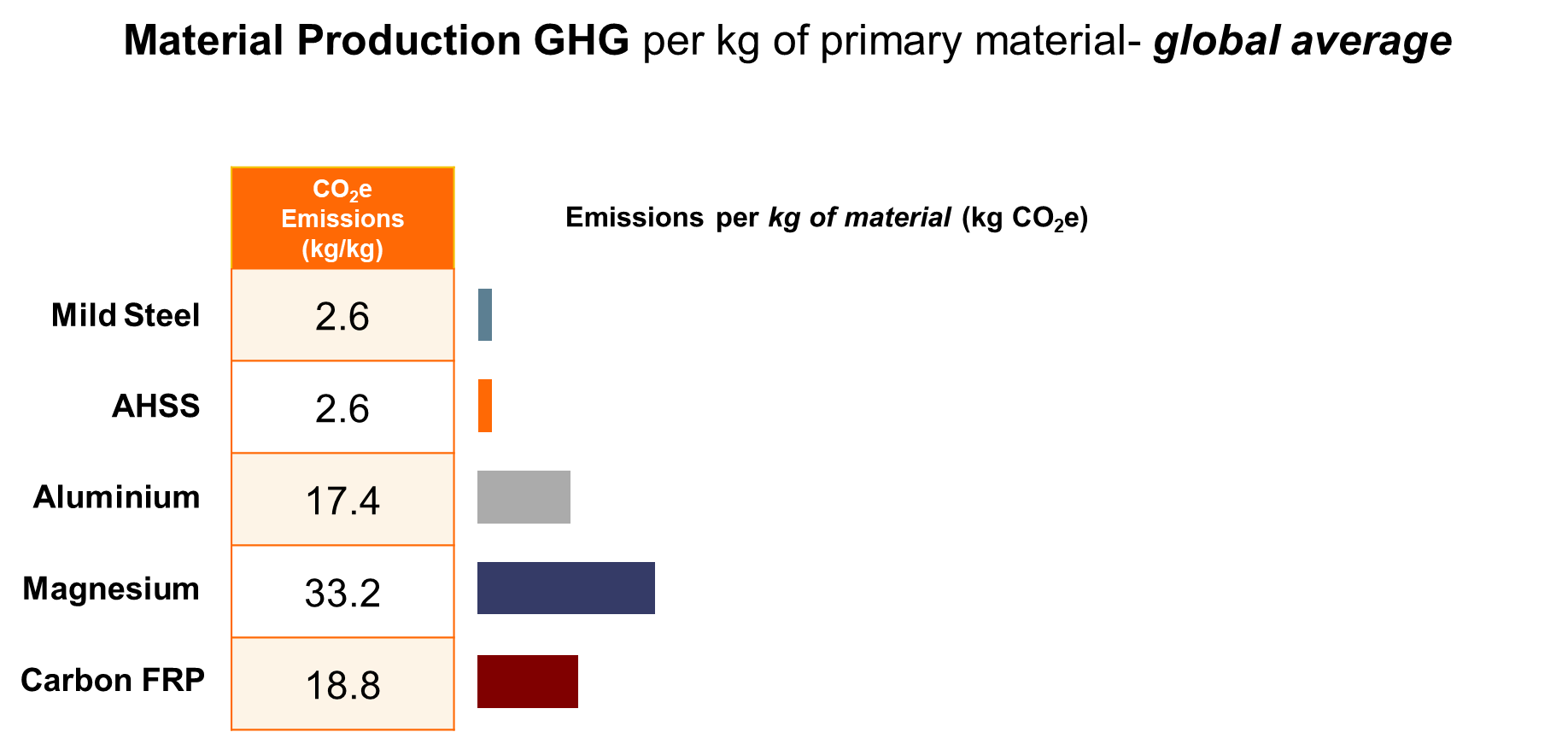
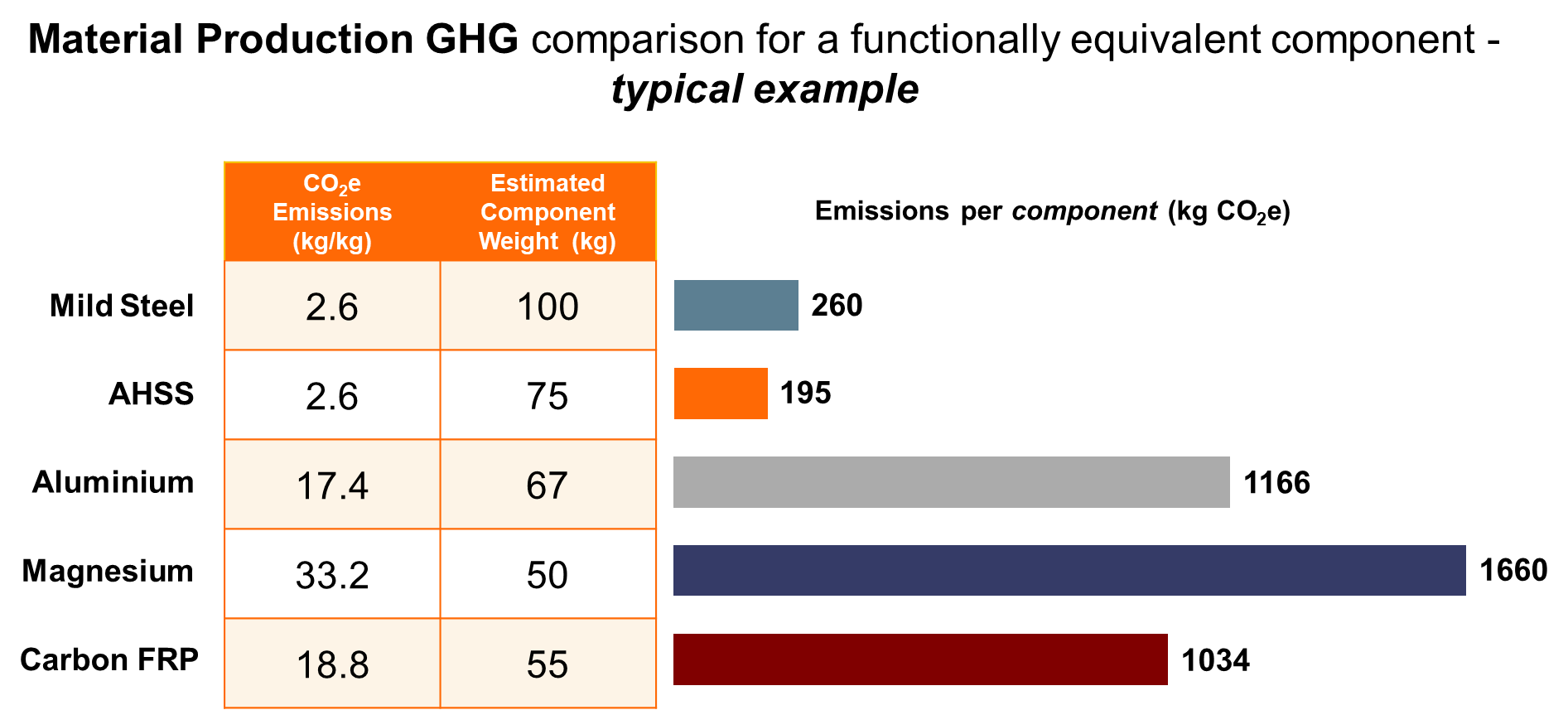
One of the perceived advantages to using materials of lower density is the expectation that they will result in lower GHG emissions. To illustrate why this is not true, consider the emissions from the material production stage of a typical automotive component. The mid-range GHG values for each material are taken from the above chart and then multiplied by the projected material weight that is required to make a hypothetical component. (The actual mass for an equivalent component varies based on the material used and the component design.)
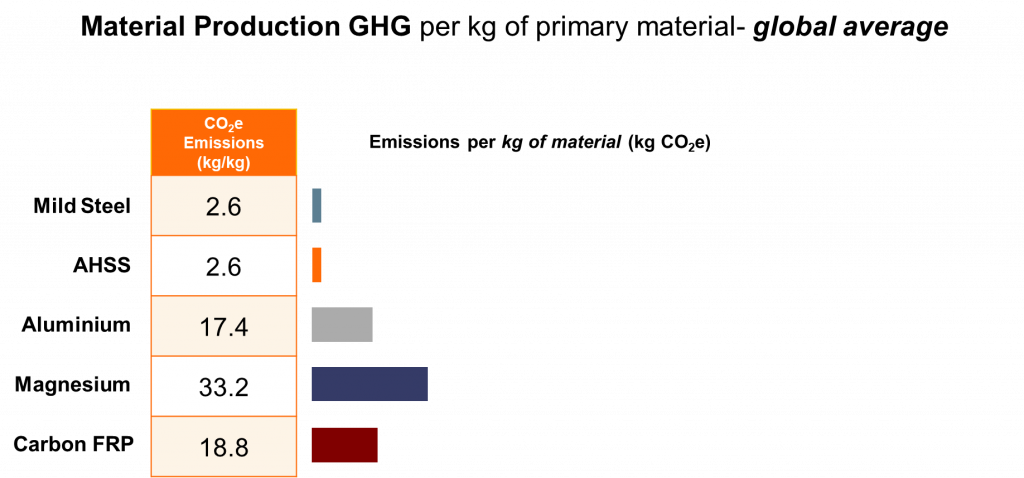
Figure 2: Material average GHG emissions from primary production, in kg CO2e per kg of material.W-40
Furthermore, low-density materials create an offsetting emissions problem, as production of these materials is GHG-intensive, and therefore costly to the environment. The production of these alternative materials can produce 7 to 20 times more emissions than steel, as shown in Figure 2.
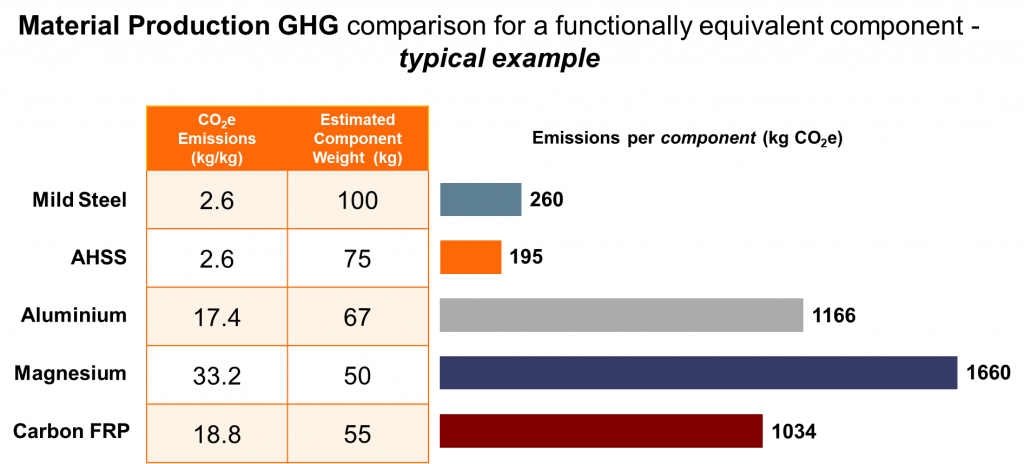
Figure 3: Material GHG emissions in kg CO2e for functionally equivalent generic components.W-40
Figure 3 shows that the use of lower density materials does not necessarily mean a reduction in greenhouse gas emissions. Although less weight is required for some alternative materials to achieve the same component functional performance, the emissions from the material production stage can still be many times higher than those of the baseline component. Therefore, the increase in material production emissions may outweigh the reduction in use phase emissions even after factoring in the mass savings benefit.
Vehicles are transitioning to alternative-energy powertrains and away from those based on fossil fuels. In these new-energy vehicles powered entirely by renewable electricity, emissions from the vehicle production stage, which includes material production, could account for as much as 95% of total emissions. In this scenario, the usage phase accounts for a mere 5% of the lifetime emissions. This is the opposite of what is found with vehicles having conventional Internal Combustion Engine (ICE) powertrains. For this reason, use of low GHG material such as steel becomes even more important as the world moves towards a renewable future.
Life Cycle Assessment
Life Cycle Assessment (LCA) is an environmental accounting methodology that considers a product’s entire life cycle, with cradle-to-grave assessments typically including impacts from raw material extraction and production (manufacturing phase), through its useful life (use phase), and to the end-of-life disposal or recycling of the product (end-of-life phase). It also takes into account the full life cycle of energy sources used across all lifecycle phases. This process illuminates any potential trade-offs between phases and highlights the true environmental impact, beyond the focus on tailpipe-only emissions.
Recent years have seen a greater adoption of using Life Cycle Assessment to assess a vehicle’s true environmental impact rather than solely focusing on what comes out of the tailpipe. LCA accounts for the total emissions including those coming from material production, vehicle use, and the chosen end-of-life path. The principles, framework, requirements and guidelines for Life Cycle Assessment are laid out in international standards ISO 14040I-3 and ISO 14044I-4.
Most major OEMs utilize some form of life cycle thinking or LCA, recognizing its importance and effectiveness in product and process design. Material producers also accept and use LCA. Together with many of their member companies, the trade associations of the steel, aluminium, and plastics industries are among the most active members of the global LCA community.
The European Union requires accounting for embedded lifecycle emissions. Following a phase-in period, there will be monetary penalties assessed against companies not providing this information. These requirements will drive OEMs to demand pertinent details from all of their material suppliers.
Environmental policies target achieving a total net reduction in emissions, including GHG (measured in carbon dioxide equivalents, or CO2e, that is a measure of all greenhouse gases attributable to a product that affect global warming potential. Thus, CO2e includes gases other than CO2.
Properly applied, LCA enables automakers to ensure that improvements in one phase are not offset by worse performance in another phase. This assessment of potential trade-offs is critical to environmental improvement. For example, if the increase in production emissions of a lightweight material is greater than the decrease in use phase emissions, vehicle light-weighting in this manner counter-productively increases total emissions.
LCA can be used to assess a broad array of environmental impacts beyond the global warming potential of greenhouse gases, including acidification, ecotoxicity, and ozone depletion.
The Path To Net Zero Emissions
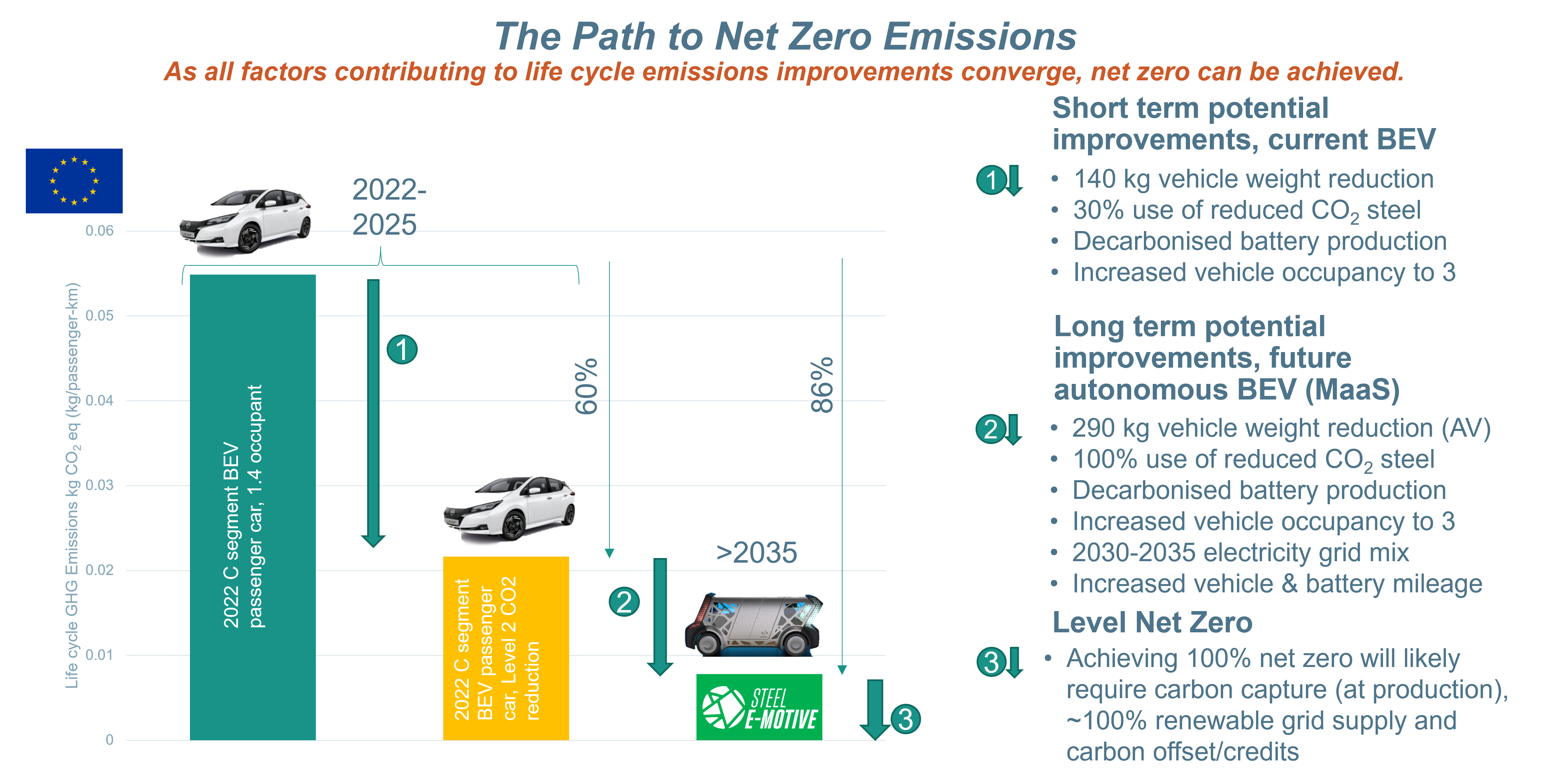
Fully autonomous Mobility as a Service vehicles such as the Steel E-Motive concept have the potential to address the ongoing and future requirements for decarbonisation of passenger transportation. Figure 4 shows the emissions walk-down beginning with a present-day C-sized BEV operating as a taxi.
Near term, a 60% reduction in Life Cycle emissions can be realized by an increased use of reduced CO2 steel and decarbonized battery production, along with an increased use of ride-sharing. Through 2035, as all available emissions reduction strategies are deployed – including autonomous MaaS vehicles with increased occupancy and extended vehicle and battery lives – an 86% reduction in emissions from a 2022 baseline is feasible.
Achieving Net Zero post 2035 requires carbon capture technologies, 100% renewable grid supplies, and carbon offsets or credits.
Each of these steps are described in detail within the Steel E-Motive Engineering Report.
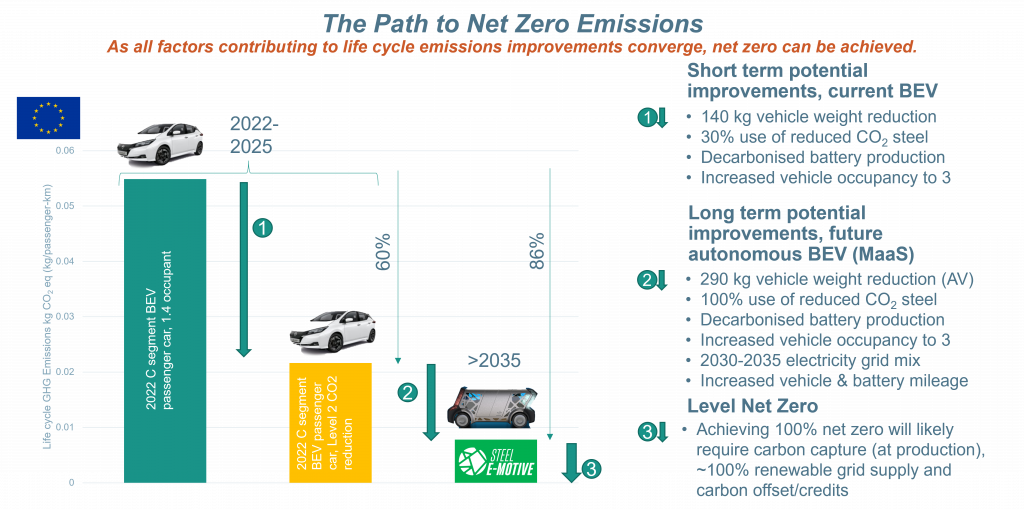
Figure 4: The Path to Net Zero Vehicle Emissions
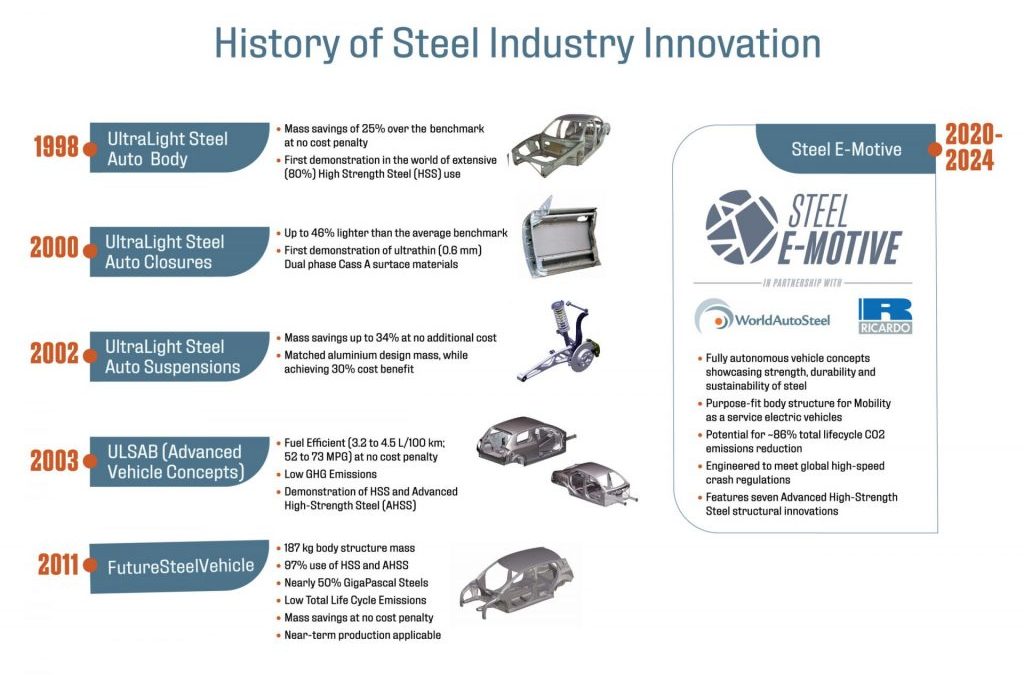
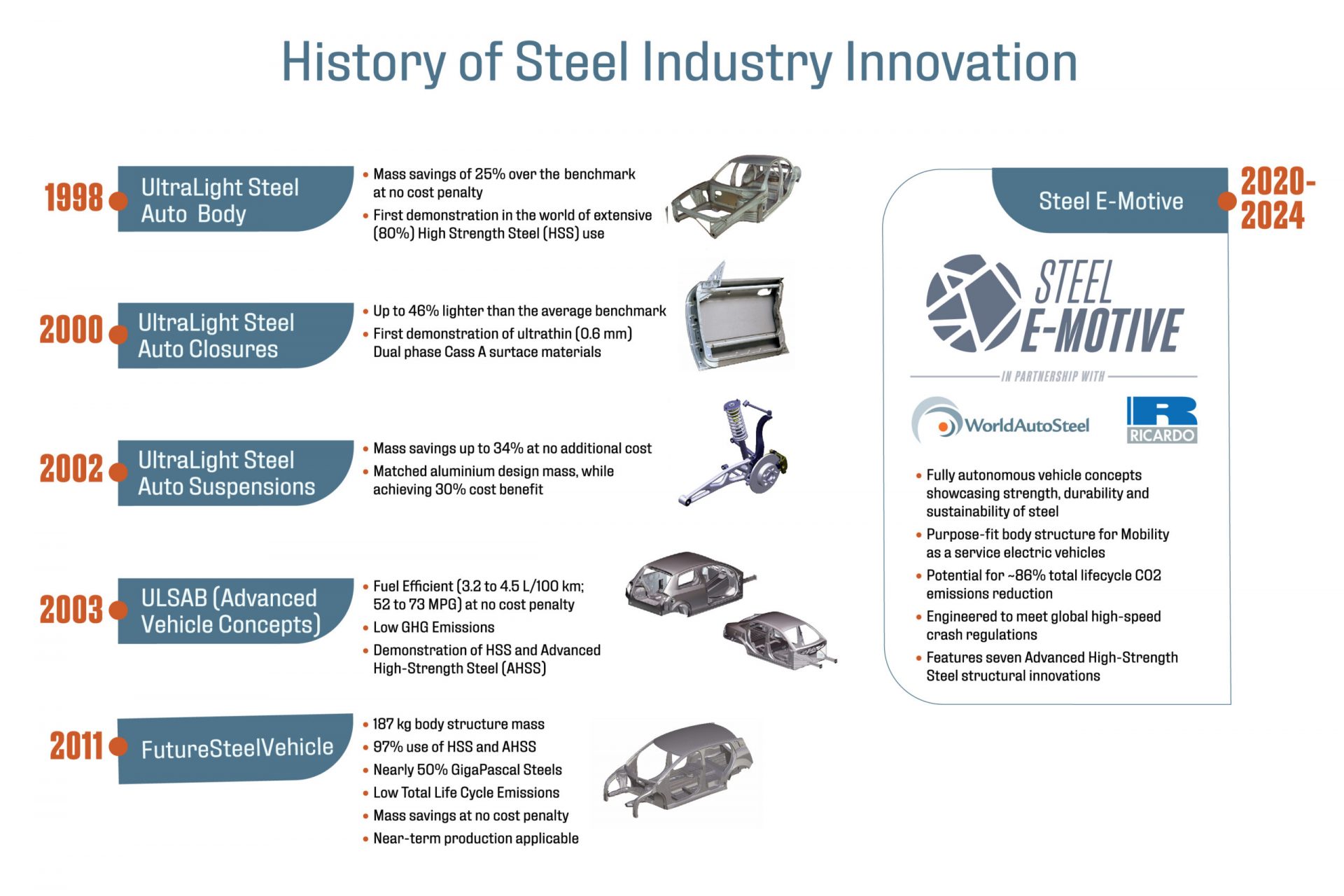
A consortium of 35 global sheet steel producers representing 22 countries began the UltraLight Steel Auto Body (ULSAB) program in 1994 with the goal of designing a lightweight steel auto body structure that would meet existing and proposed safety and performance targets.
The body-in-white (BIW) unveiled in 1998 validated the design concepts of the program, with the demonstration hardware achieving a 25 percent reduction of vehicle body structure weight at no cost penalty compared to conventional steel body structures of that time. ULSAB proved to be lightweight, structurally sound, safe, executable, and affordable.
ULSAB received wide acceptance by the automotive industry, to the point where is spawned three other steel consortia projects covering closures UltraLight Steel Auto Closures (ULSAC), suspensions UltraLight Steel Auto Suspensions (ULSAS) and full vehicle design UltraLight Steel Auto Body – Advanced Vehicle Concepts (ULSAB-AVC). Each one used an increasing percentage of high strength steels and Advanced High-Strength Steels (AHSS), along with advanced fabrication technologies such as tailored blanks, hydroformed tubes and continuous laser welding, each enhancing structural efficiency. At that time, AHSS use was in its infancy, and provided combinations of strength and ductility that were never-before realized, while still allowing for use of existing stamping and assembly fabrication equipment and production methods.
By 2008, the steel company consortium evolved into WorldAutoSteel, which began another program called FutureSteelVehicle (FSV), where steel members accelerated the development and deployment of new AHSS grades, further stretching the envelope for strength and ductility levels. FutureSteelVehicle took automotive steel applications to GigaPascal strength AHSS and added the dimension of designing for reduced life cycle emissions. W-11
FutureSteelVehicle featured clean-sheet steel body structure designs for advanced powertrains, including full battery electric vehicle (BEV), plug-in hybrid and hydrogen fuel cells – and demonstrated that sophisticated steel grades combined with engineering optimisation could reduce mass by more than 35 percent over a benchmark vehicle and reduced total life cycle emissions by nearly 70 percent. This was accomplished while meeting a broad list of global crash and durability requirements and enabled five-star safety ratings while avoiding high-cost penalties for mass reduction.W-11 More information about the FutureSteelVehicle is found here with greater details shown here: FutureSteelVehicle Reports
Steel E-Motive represents fully autonomous electric ride sharing vehicle concepts showcasing the strength and durability of steel with a critical focus on sustainability for reaching net zero emissions targets. The results are sustainable comfortable, safe and affordable body structures that support automakers in the continued development of Mobility as a Service (MaaS) ride sharing models. Some highlights of the Steel E-Motive program can be found here.
Another consortium, the Auto/Steel Partnership (A/SP) engages in research and demonstrates the value of AHSS through several programs. One such project, the Lightweight Front End Structure, used a holistic approach to meet goals of more than 20 percent weight reduction while maintaining crash worthiness.J-26 A-79 Manufacturability was examined and emphasized throughout this project. Another key program, the Future Generation Passenger Compartment project, examined the effect of mass compounding.A-80 U-15
Over the years since ULSAB, the successes of AHSS have motivated steel companies to continue research on both new types and grades of AHSS and to then bring these new steels to production. Essential for the growing use of AHSS has been the simultaneous development of new processes and equipment to produce and form the material. Some of these processes are described throughout these guidelines.
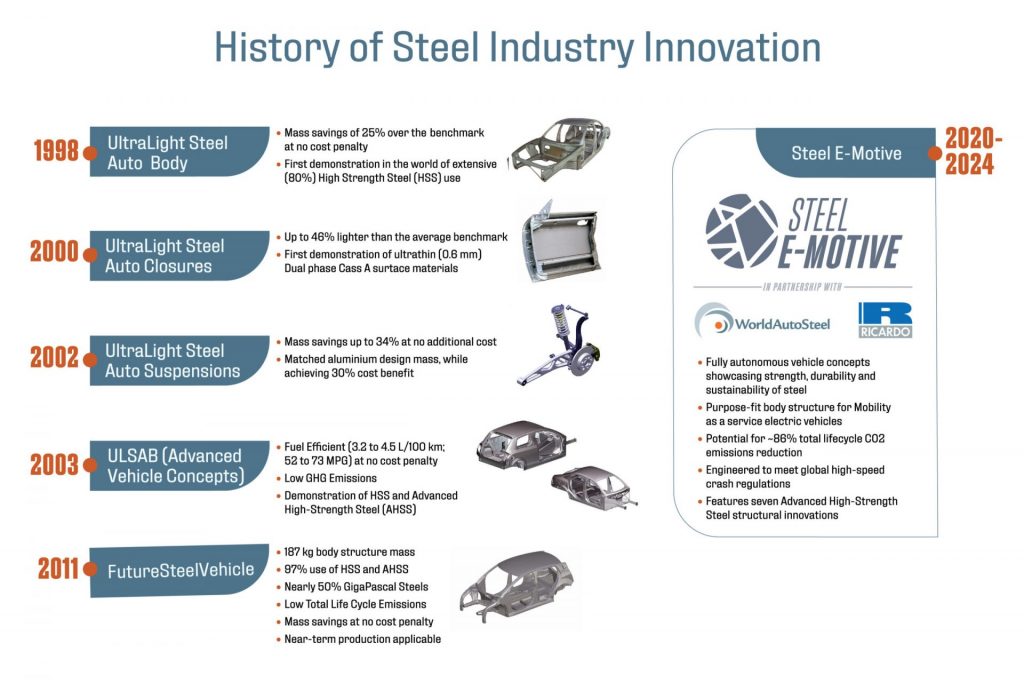
Figure 1: WorldAutoSteel Vehicle Development Programs.
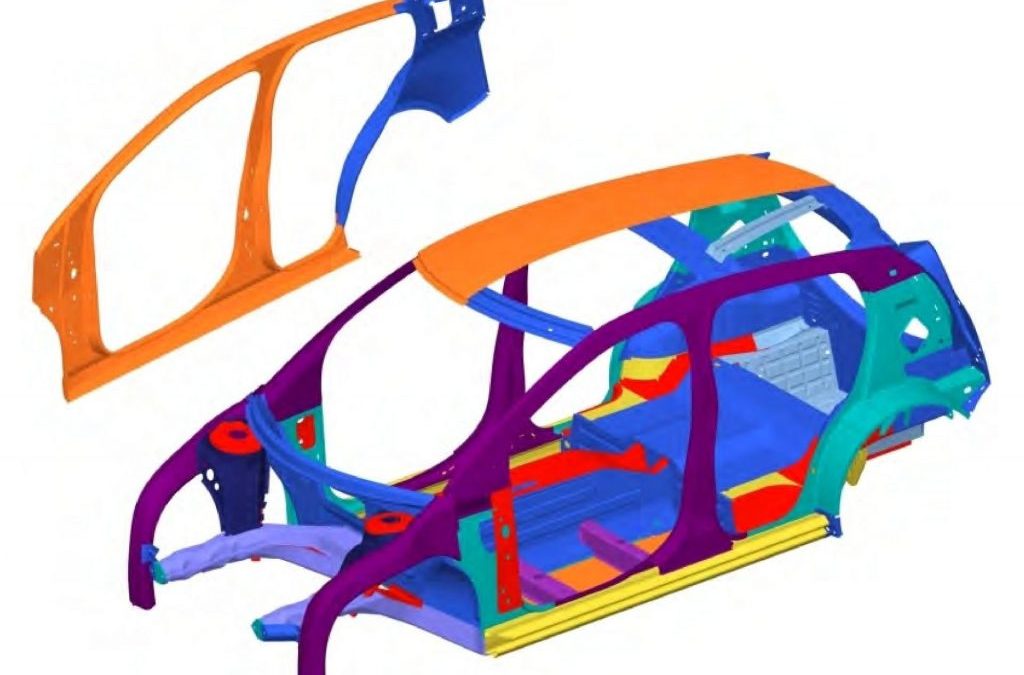
Started in 2008, the FutureSteelVehicle (FSV) program built on more than a decade of work finding ways to decrease vehicle mass, reduce cost and meet comprehensive crash safety standards, all in pursuit of a smaller environmental footprint. FSV validated wide ranging research into the practical use of AHSS, innovative design and manufacturing technologies, and proposed specific examples for electrified vehicles (Figure 1). FSV used Life Cycle Analysis (LCA) to select the steels and manufacturing techniques that result in the lowest total carbon footprint, going beyond accounting only for emissions in the use phase.
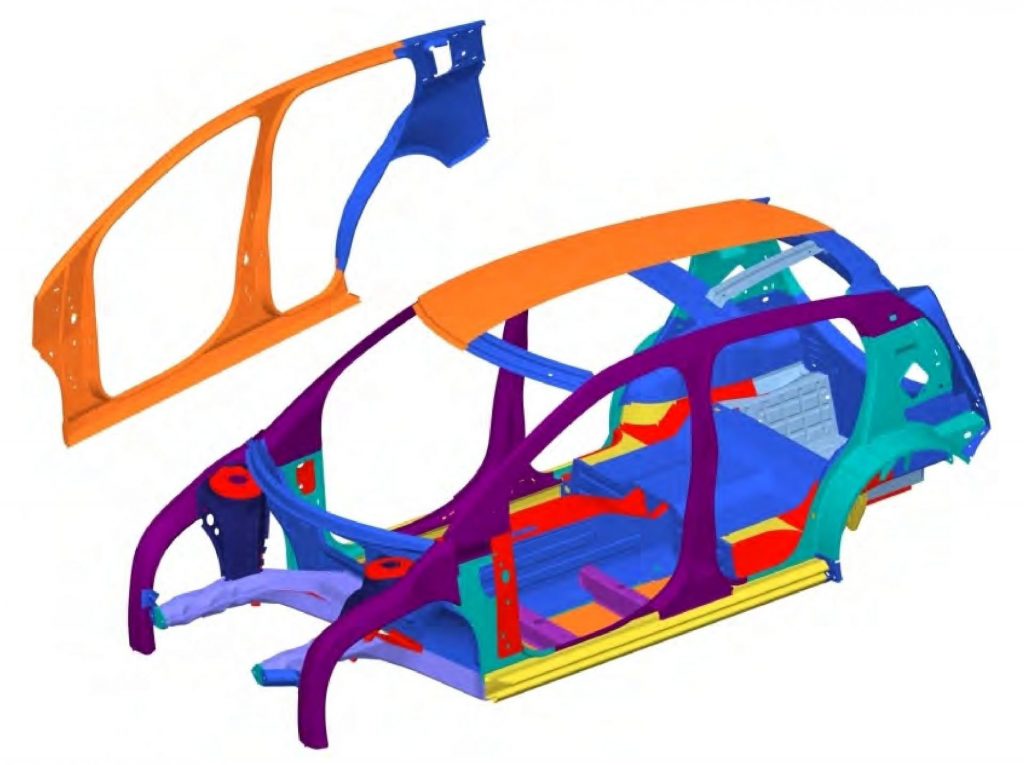
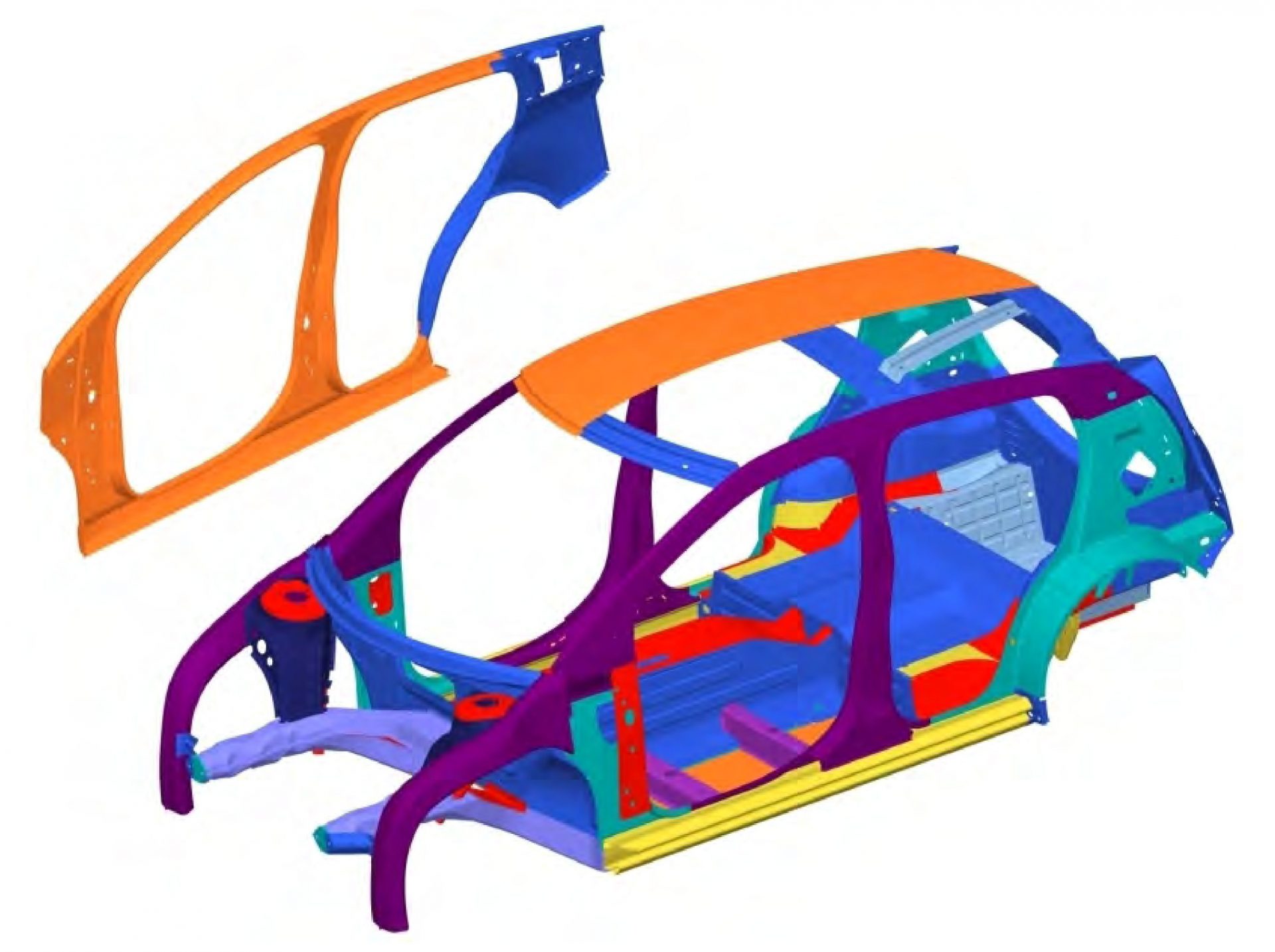
Figure 1: FutureSteelVehicle Battery Electric Vehicle Concept W-11, W-12
FutureSteelVehicle drew from a broad portfolio of steel types and grades, in a range of properties from mild to GigaPascal strength levels, applying a vast array of manufacturing processes. With advanced optimization algorithms, FSV incorporated hundreds of variables in the design process to identify a wide band of solutions. This approach integrated vehicle design, powertrain design and packaging, occupant space, passenger ingress/egress, driver sight angles, NVH, and aerodynamics to achieve a body structure that works in harmony with all vehicle requirements related to more stringent emissions and fuel efficiency standards while meeting safety (crash) standards and affordability.
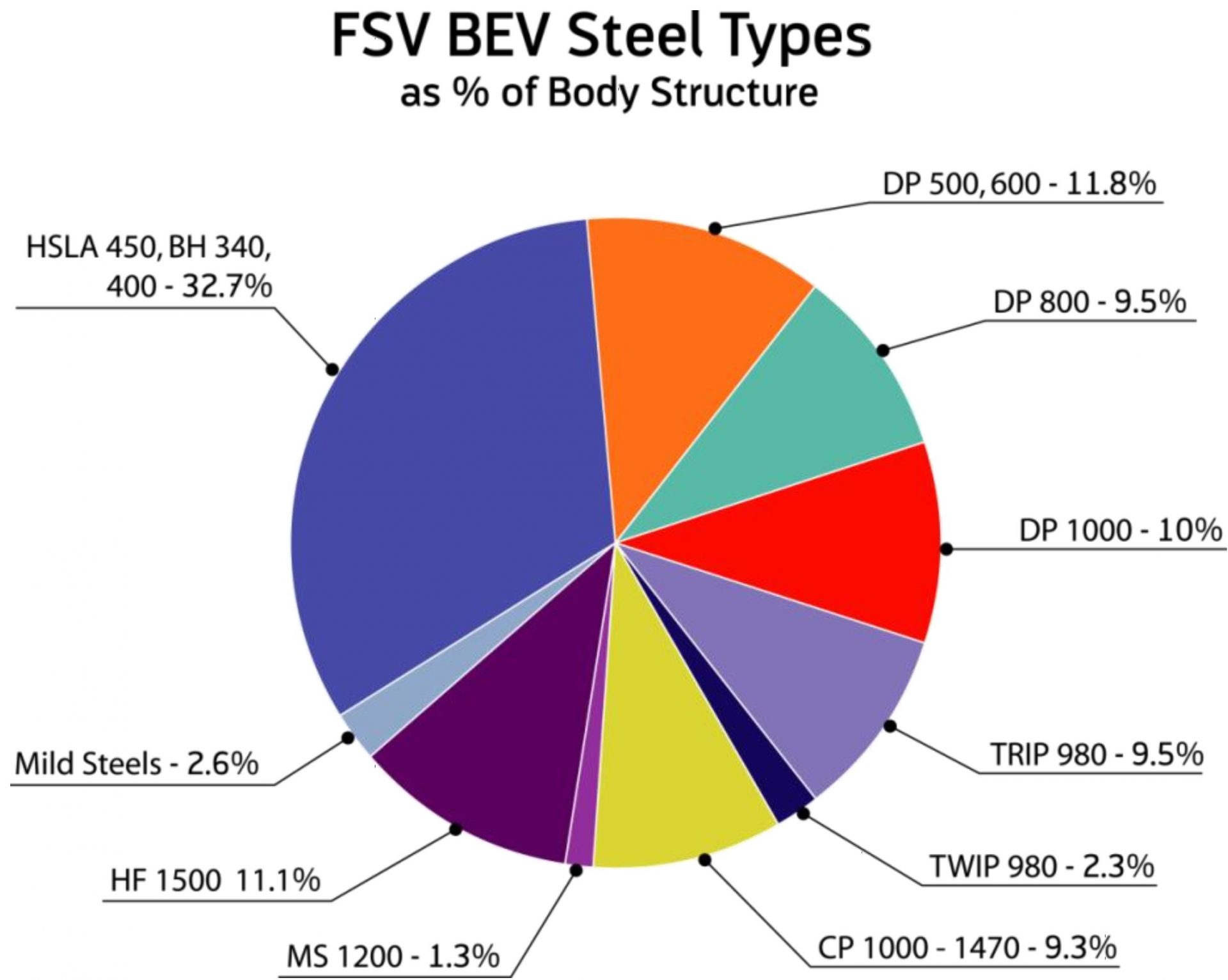
The FSV project included structural variants for battery electric (BEV), plug-in hybrids (PHEV-20 and PHEV-40) and fuel cell (FCEV) powertrains, these same design attributes can be applied to conventional ICE-powered vehicles as well. Figure 2 highlights the FSV body materials breakdown.
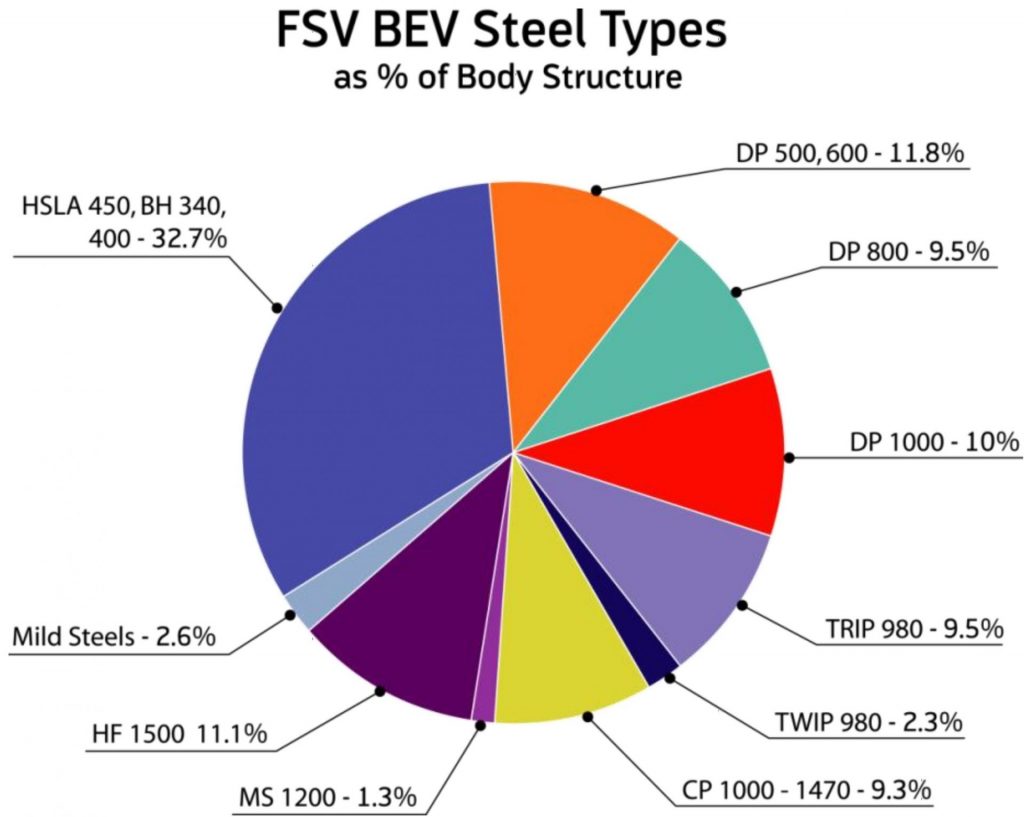
Figure 2: Future Steel Vehicle Body Materials Usage
Lower Weight
Extensive use of a broad portfolio of AHSS grades, coupled with engineering design optimization, enabled a robust body structure that is feasible to produce and achieves 5-star crash performance against all global crash standards, while also exceeding mass reduction targets. A lower weight, mass-efficient body creates opportunities for downsizing sub-systems, including the powertrain, and promotes reductions in overall vehicle mass. As an example, the body structure mass achievement for the FSV BEV variant is 177 kg W-39, including the battery tray – a component unique to a Battery Electric Vehicle. This compares quite favorably with the 2010 VW Polo, at 231 kg, which was recognized as Car of the Year in Europe because of its mass-efficient design but carries a lighter ICE gasoline powertrain. Table 1 highlights some of the benchmarking comparisons.
| Table 1: FSV Benchmarking |
| Vehicle |
Class |
Powertrain |
Curb Weight |
Body Mass |
Fuel Consumption (NEDC) |
| FSV – BEV |
B+ |
BEV |
958 kg |
177 kg |
2.42 l/100 km (equiv) |
| ULSAB – AVC |
C |
ICE-G |
933 kg |
202 kg |
4.40 l/100 km |
| VW Polo |
B |
ICE-G |
1067 kg |
231 kg |
5.70 l/100 km |
Lower Cost
Steel is the most cost-competitive material for car bodies. It is economical to fabricate into components and sub-systems and to assemble into the total body-structure assembly. The resulting cost estimate of $1,115 to manufacture and assemble the complete FSV body validated this proposition and represents no cost penalty compared to vehicles at that time.
Lowest Total Lifetime Emissions
FutureSteelVehicle demonstrated the importance of Life Cycle Assessment as an integral element of a vehicle design process. In combination with optimizing the design for mass, cost, and functionality, FSV integrated into all analyses an accounting for its complete environmental footprint as measured in CO2e. It more appropriately comprehends the entire lifetime carbon footprint of the vehicle, not simply the use phase. This includes the entire fuel production cycle (well to pump), the fuel usage cycle (pump to wheels), the production of raw materials, as well as disposal/recycling.
FSV demonstrated that the coupling of a lightweight, AHSS body structure with a battery-electric powertrain results in a 50 to 70 percent reduction in total life cycle emissions, compared to equivalently sized vehicles with conventional gasoline ICEs W-12. Furthermore, based on the new steels’ light weighting capabilities, steel is the only material to realize emission reductions in all life cycle phases. Table 2 summarizes total vehicle carbon footprint and emissions performance by life cycle phase.
|
Table 2: FSV comparison between U.S. and Europe energy grids
|
|
Vehicle/Powertrain
|
Material & Recycling
(kg CO2e)
|
Use Phase
(kg CO2e)
|
Total Life Cycle
(kg CO2e)
|
| Polo V ICEg |
1,479
|
32,655
|
34,134
|
| FSV BEV USA grid |
1,328
|
13,844
|
15,172
|
| FSV BEV Europe grid |
1,328
|
9,670
|
10,998
|
| FSV vs. Polo V – USA grid |
– 56% CO2e reduction
|
| FSV vs. Polo V – Europe grid |
– 68% CO2e reduction
|
Safety
The FSV design anticipated increasingly stringent crash safety standards over the decade following its release and was designed to meet European and U.S. 5-Star crash safety performance requirements over that time W-12. Using the latest holistic design and material optimization approaches combined with steel’s unmatched capabilities for design and manufacturing efficiency, the final FSV design comprised optimized, mass-efficient shapes that met or exceeded these global crash safety requirements.
Automakers face conflicting constraints when designing new body structures:
- With escalating concerns about human-induced green-house gases, global legislators have passed increasingly stringent vehicle emissions regulations, with even more aggressive targets planned for the coming years. Lighter weight body structures promote reduced vehicle emissions.
- Fuel price increases lead to greater consumer sensitivity to vehicle fuel economy. Lighter weight body structures also promote improved fuel economy.
- One of the easiest ways to reduce vehicle weight is to use thinner metal. To maintain crash performance, this thickness reduction must be accompanied by an increase in the strength of the sheet metal grade. Since thickness and stiffness are related, decreases in thickness must be accompanied by other methods to increase stiffness: either using a high-modulus material like steel, and/or using design features like darts or beads to lock in the shape. The chosen grade must be sufficiently formable to successfully incorporate these features.
- Automaker marketing departments highlight spacious interiors. Greater room can be accomplished by making larger vehicles, but the extra weight does not support mass reduction. On the other hand, use of more formable steels is a cost-effective way to increase packaging efficiency. New vehicle designs with complex geometries are aesthetically pleasing, but are difficult to form and join unless the chosen alloy has the necessary balance between strength and ductility.
- Global crash and safety regulations must be contemplated, especially if one body architecture will be used as the basis for vehicles intended for sale in multiple regions around the world. Increasing sheet metal thickness improves crash performance, so any reduction in thickness must be paired with using high strength grades where the deformation characteristics can be tuned to optimize crash energy management.
- All of these challenges must be addressed with sustainability in mind.
The global steel industry continues to develop new grades of steel defined by ever-increasing strength and ductility, continually reinventing this diverse material to address these challenges faced by automakers. Advanced High-Strength Steels (AHSS) are characterized by unique microstructures and metallurgical properties that allow OEMs to meet the diverse functional requirements of today’s vehicles.
Worldwide working groups within WorldAutoSteel member companies created the AHSS Application Guidelines to explain how and why AHSS steels are different from traditional higher strength steels in terms of press-forming, fabrication and joining for automotive underbody, structural, and body panel applications. This website provides in-depth current information on a wide range of topics related to successful application of these steels.
Automotive companies around the world have adopted different specification criteria. Steel companies have different production capabilities and commercial availability. As a result, the typical mechanical properties provided on this website simply illustrate the broad range of AHSS grades that may be available worldwide.
In addition, regional test procedures will cause a systematic variation in some properties measured on the same steel sample. One example is total elongation, where both measurement gauge length and gauge width are a function of the standard to which the test is conducted (ASTM, DIN, or JIS, also known as ISO I, II, or III), with these differences impacting the measured value. In addition, property requirements can be defined relative to either the rolling direction or transverse direction. Therefore, communication directly with individual steel companies is imperative to determine grade availability along with specific test procedures, associated parameters, and steel properties.