Forming simulation of cold forming processes has matured to the point where most commercial simulation software packages easily predict global formability concerns such as necking failures. The strain distribution and final mechanical properties in the formed part...
Lubrication
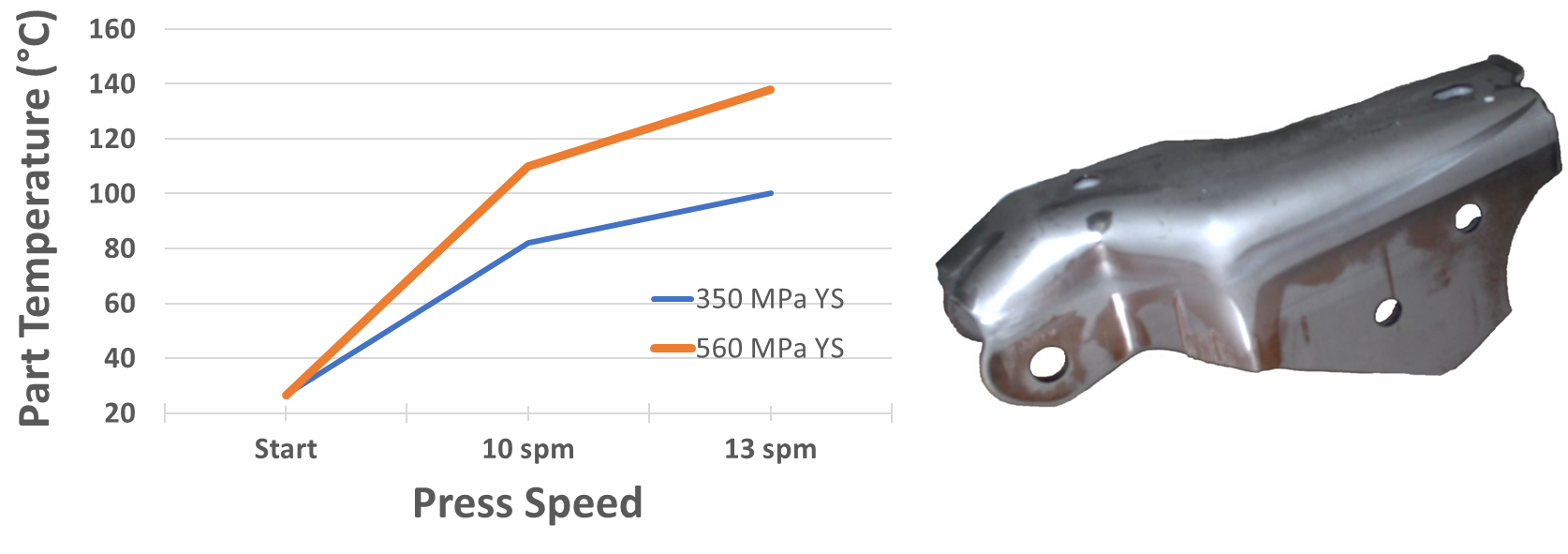
Lubricant Functions and Requirements AHSS Energy, Heat and Lubrication Lubricant Selection Key Points Lubrication is a key input into the sheet metal forming process. The chosen lube, application method, distribution, and cleaning method influences forming and...
Bulge and Dome Testing
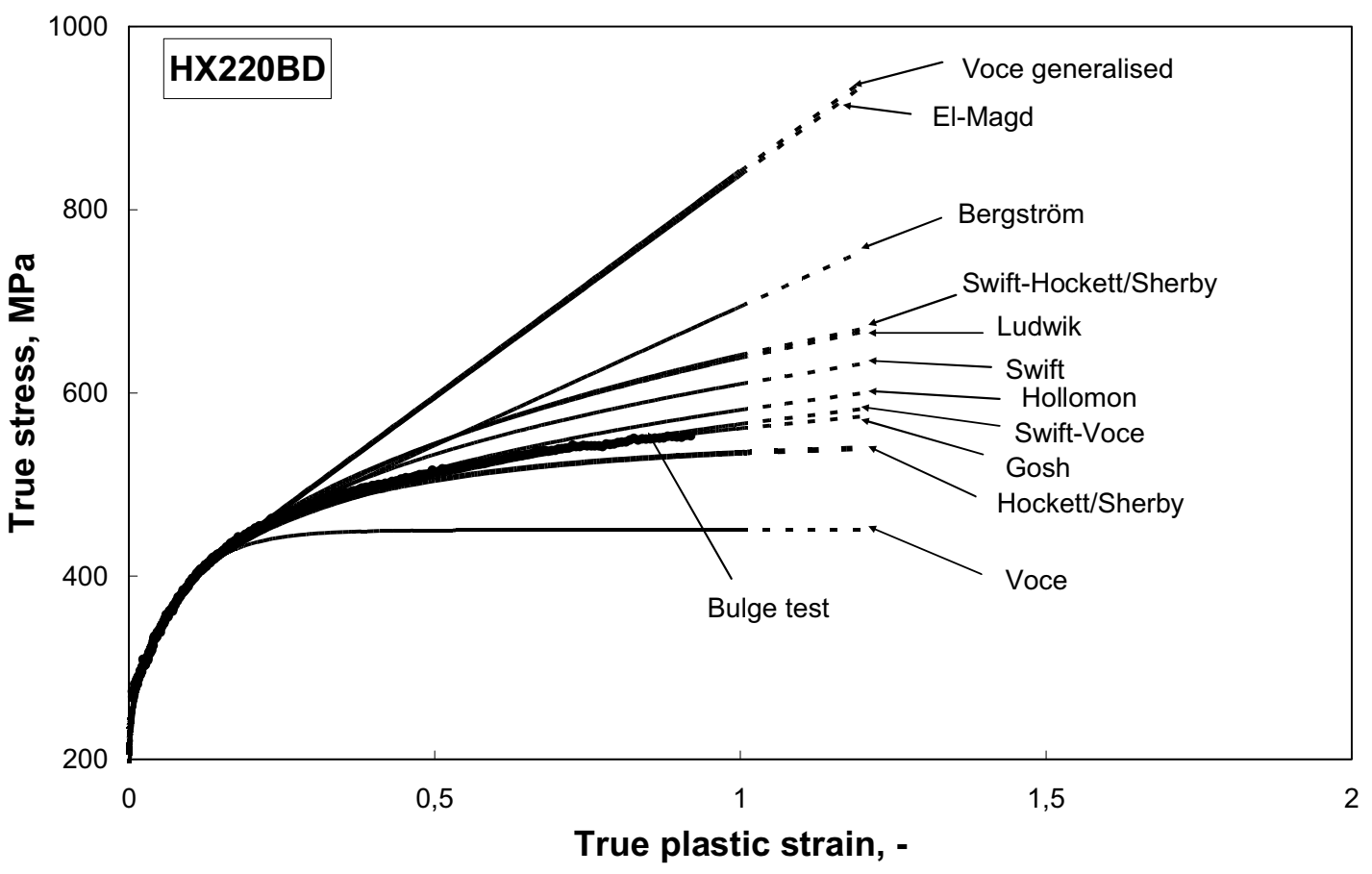
Local necking during uniaxial tensile testing limits the characterization of the stress-strain response to true strain values below uniform elongation. Extrapolating the true stress – true strain curve beyond uniform elongation requires selecting a hardening law on...
FLCs and FLDs
placeholder
Effect GA-Coating Evolution PHS
This article summarizes a paper, entitled "Effect of GA-Coating Evolution during Press-Hardening on Fiber Laser Lap Welding Behavior of 22MnB5 Steel", by M. H. Razmpoosh, et al.R-4 The study investigates the effects of Fe-Zn diffusion layer on laser lap-joining...
Formability
Formability is simply the ability of a sheet metal product to be formed into the desired shape reliably and repeatedly using the selected metal grade and stamping system parameters like the forming process, lubrication, die materials, and tool coatings. Successful...
Laser Blanking
Conventional blanking requires high press forces to shear the sheet metal. As steel strength increases, snap-through tonnage also increases, potentially leading to press and tooling damage. Over time, clearances may change, affecting edge quality. Shearing results in...
Young’s Modulus
Young's Modulus